How to Get to Pamukkale
Most people come from Istanbul, Izmir, or Selçuk — either as a standalone trip or a stop on a road trip down the Aegean coast. There are four ways to get to Pamukkale.
By flight: Fly into Denizli Cardak Airport, then take a bus or cab about 65 km to Pamukkale. If you’re doing Ephesus first, fly into Izmir instead, get yourself to Selçuk, then drive south from there.
By car: The one we took as part of our Turkey roadtrip. From Selçuk it’s 2.5 hours on good roads. From Istanbul it’s about 6 hours — long, but fine if you’re road-tripping. The other reason to drive: you can stop at Aphrodisias on your way out. It’s 100 km from Pamukkale, almost nobody goes there, and also happens to be one of my favourite sites in Turkey.
By bus: Overnight buses run from Istanbul and Izmir to Denizli. From Denizli, dolmuş (minibuses) leave for Pamukkale every 30 minutes and take about 30–40 minutes. Cheap and reliable. Just slow.
By private tour: Tours run from Istanbul, Selçuk, and Cappadocia. Useful if you don’t have a car and don’t want to figure out the connections yourself.
Best Time to Visit Pamukkale
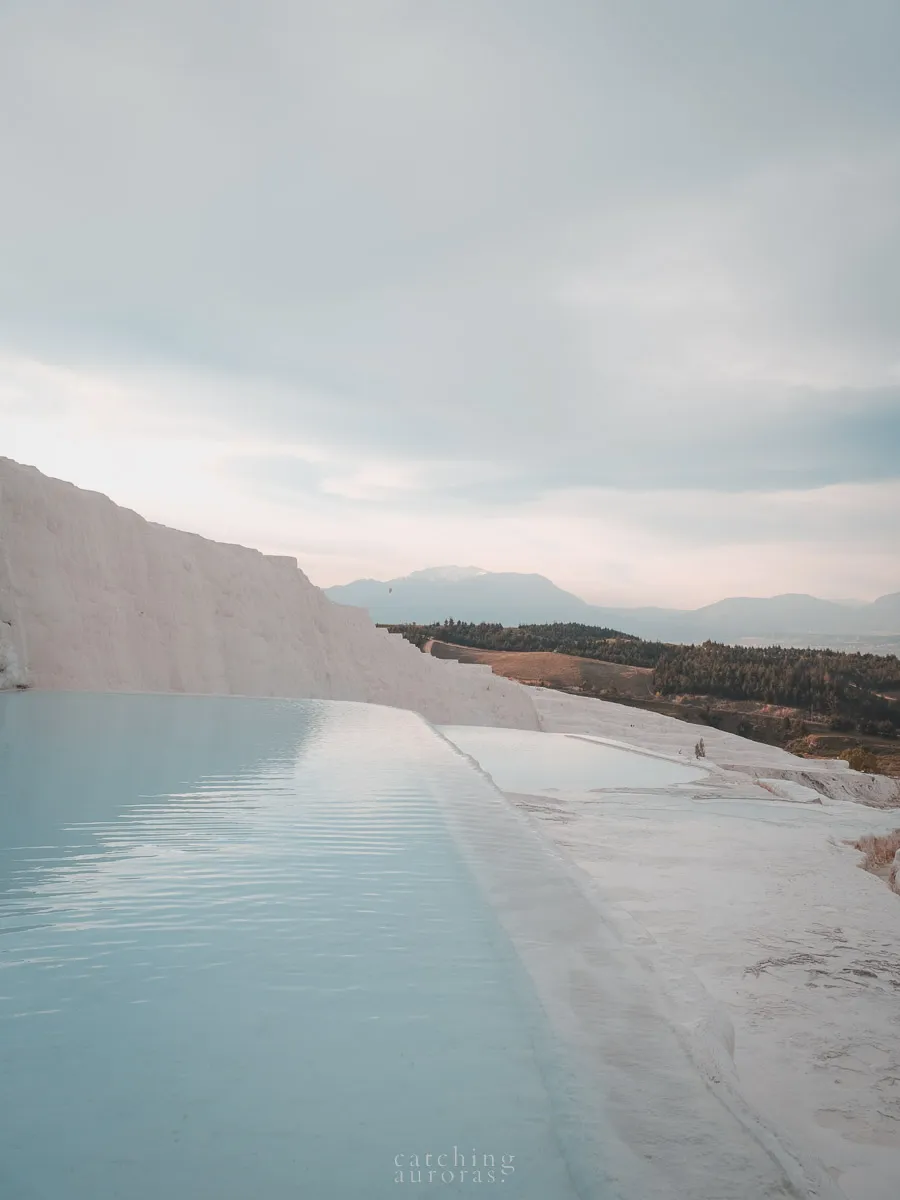
Spring (April–June) is the right time to go. Mild temperatures, the landscape still green, and you won’t hit peak summer crowds. We visited in early April – the pools at the top of the terraces were cold, and some were shallow, but the lack of crowds more than made up for it. The light on those white terraces that morning has stayed with me till today.
Autumn (September–October) is just as good — better for swimming, actually. Warm water, cooler air, crowds thinned out.
Summer (July–August): The pools are fuller and the water is warm, but Pamukkale in summer is packed. Come early to get ahead of the crowds, and know that midday is a sweaty, slow-moving affair.
Winter (December–March): Quieter, more atmospheric. Some pools may be dry. Dress warmly as the terraces will be cold.
Pamukkale Entrance Fees
Entrance fee: 30 Euros per person (as of July 2026). This covers the travertine terraces, Hierapolis ruins — including the theatre, Ploutonion, and Sanctuary of Apollo — and the Pamukkale Museum. Cleopatra’s Antique Pools are not included and cost extra.
Museum passes: Pamukkale is included in both the Turkey Museum Pass and the Aegean Museum Pass. No separate ticket is needed; scan at the gate.
Parking: Around 50 TL at the South Entrance. The lot is large and fits tour buses. The North Entrance also has parking but the walk to the terraces is longer from there.
Pamukkale Entrances and Opening Hours
The opening hours to Hierapolis are 6:30 AM to 8 PM. The opening time depends on the entrance you choose to enter the site from. There are three entrances to the site.
The North Entrance opens at 8:00 AM and is farthest from the travertines. You will need to walk for a bit before you reach the terraces or you can choose to hire a golf cart to take you there directly.
The Town Entrance also opens at 8:00 AM and is in the Pamukkale town. You will need to remove your shoes and walk up the terraces if you choose this entrance. The way can be a bit tricky as the travertines are slippery in some places and sharp in others.
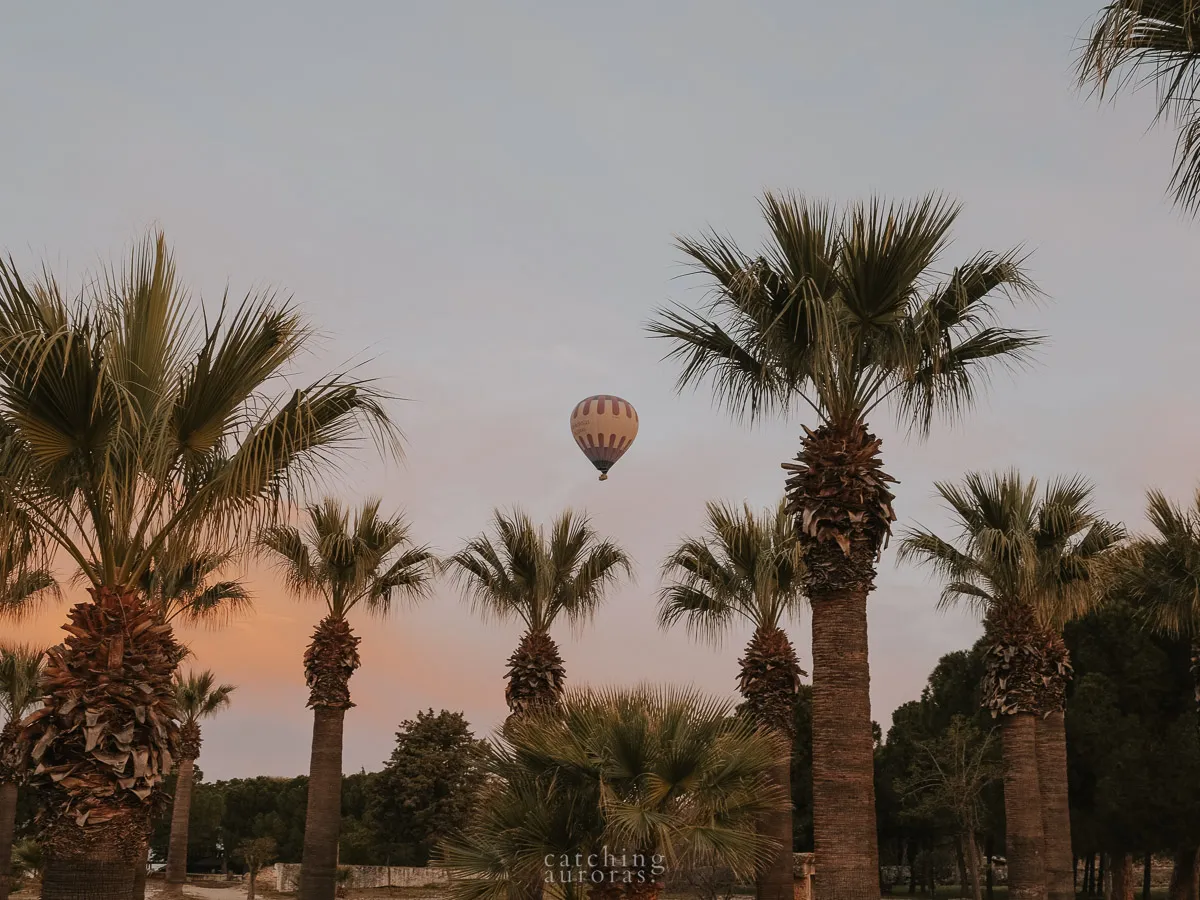
The South Entrance is a little farther away from the town entrance but opens the earliest at 6:30 AM. If you want to experience sunrise and hot air baloons over the terraces, this is the entrance you need to take. Parking costs 50TL as mentioned above.
Things to do in Pamukkale
From the travertines to the Hierapolis there are a lot of things to do in Pamukkale.
1. Walk the travertine terraces
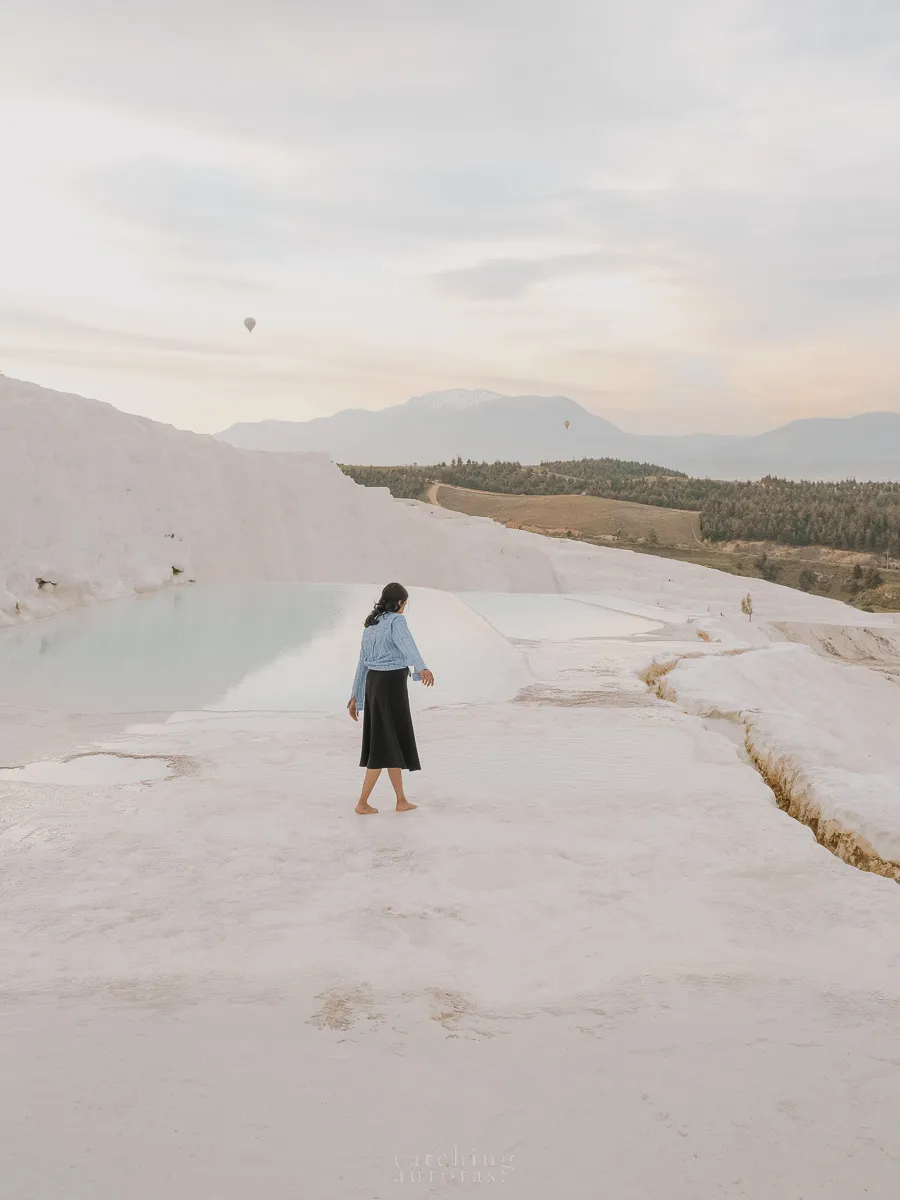
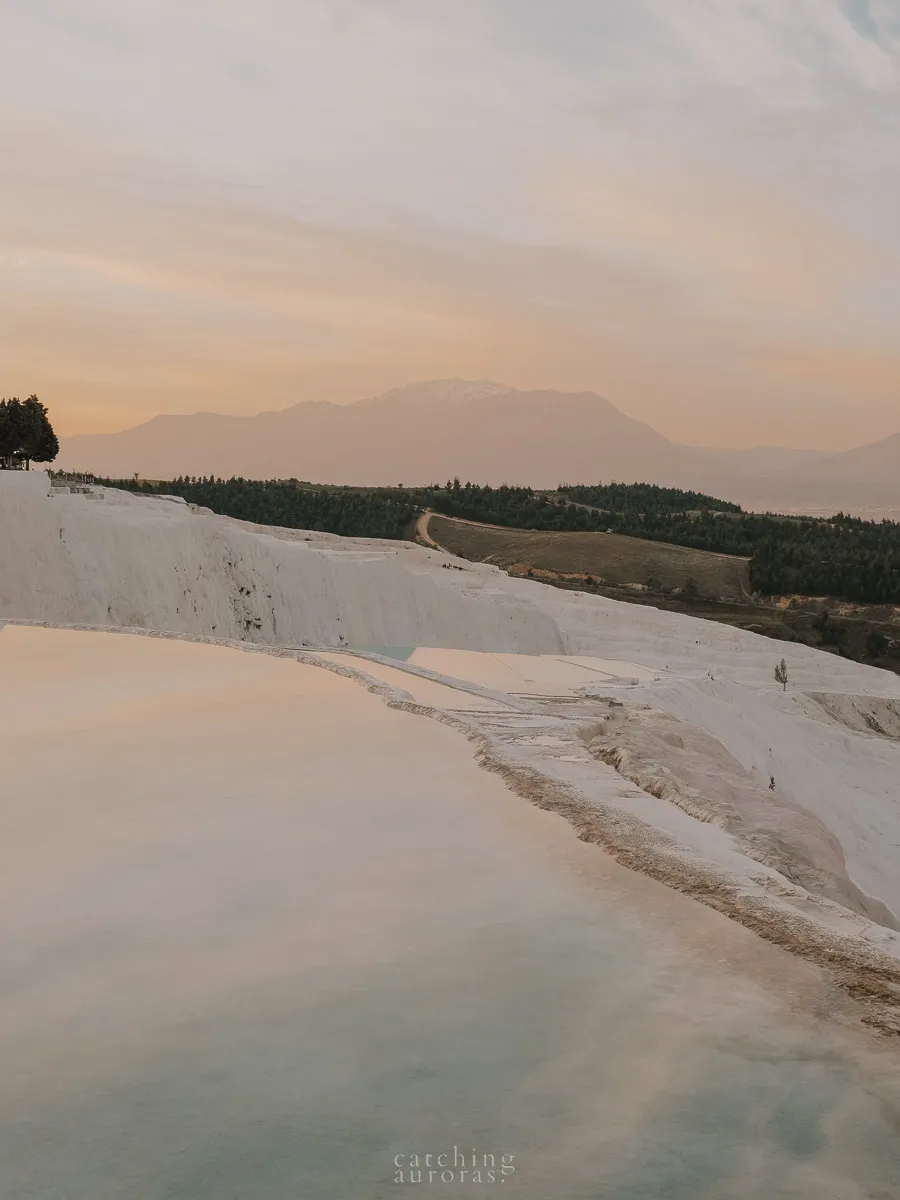
The terraces are made of travertines – limestone built up by the thermal springs over centuries. This sediment gives the terraces its iconic snowy white hue. Pamukkale means “Cotton Castle” and up close, you can see why that name is accurate. The water coming down the terraces can be anywhere from 35°C to 100°C. It pools in the limestone hollows where you can dip your toes in. You have to remove your shoes before stepping on the travertines – there are shoe-drop points but you can also get a shoe bag to carry your slippers with you as you walk down the terraces.
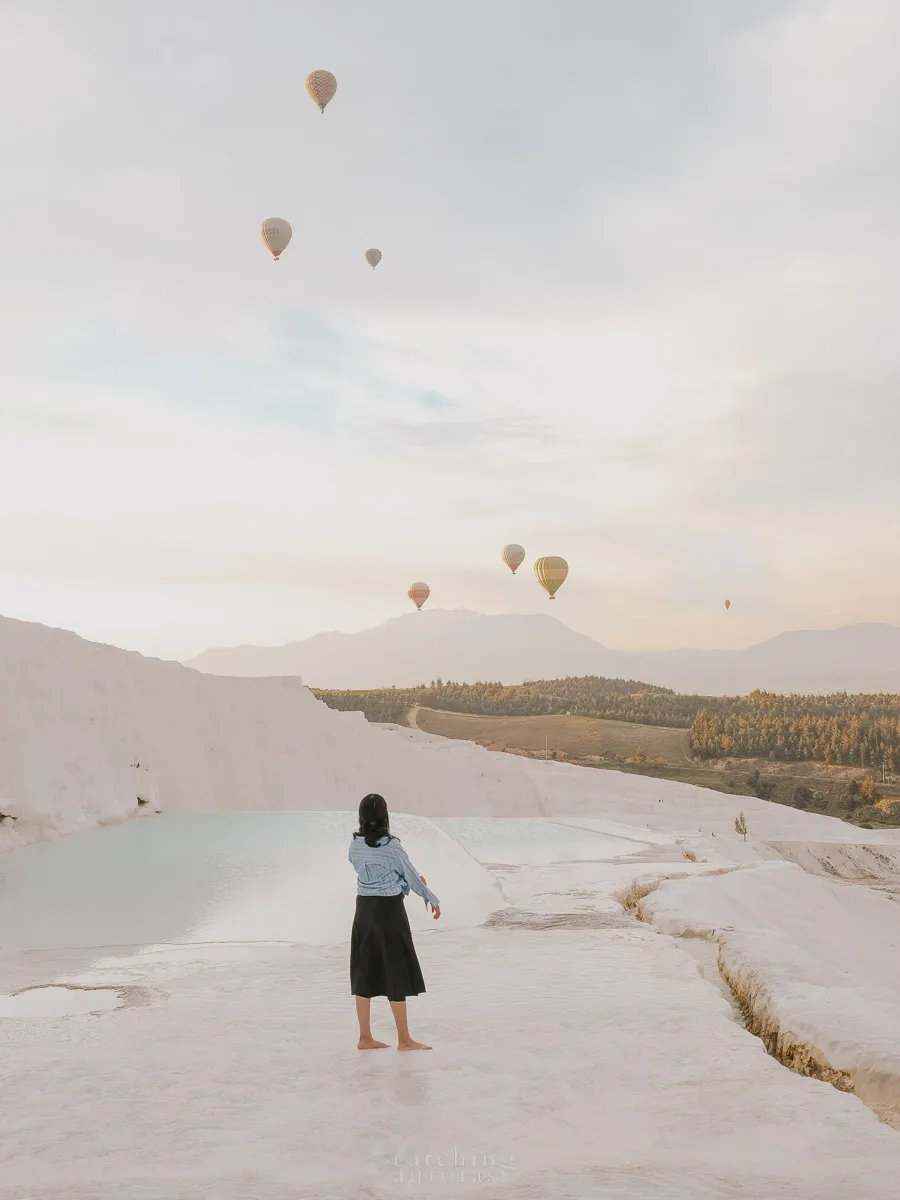
Overtourism and encroachment hit the site hard for decades and some sections are visibly grey and dry. This site is now protected as a UNESCO World Heritage Site and you can see the difference between the sections that have recovered and the ones that haven’t.
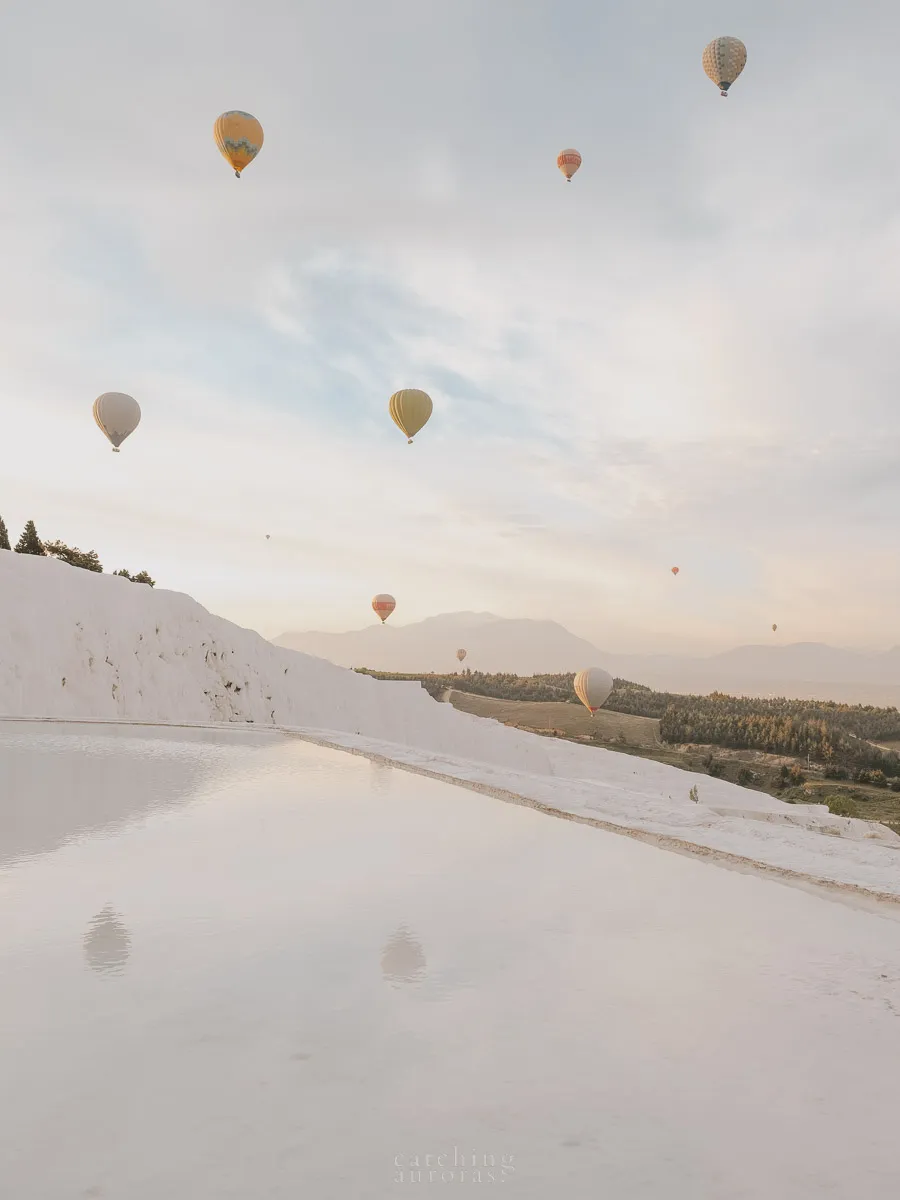
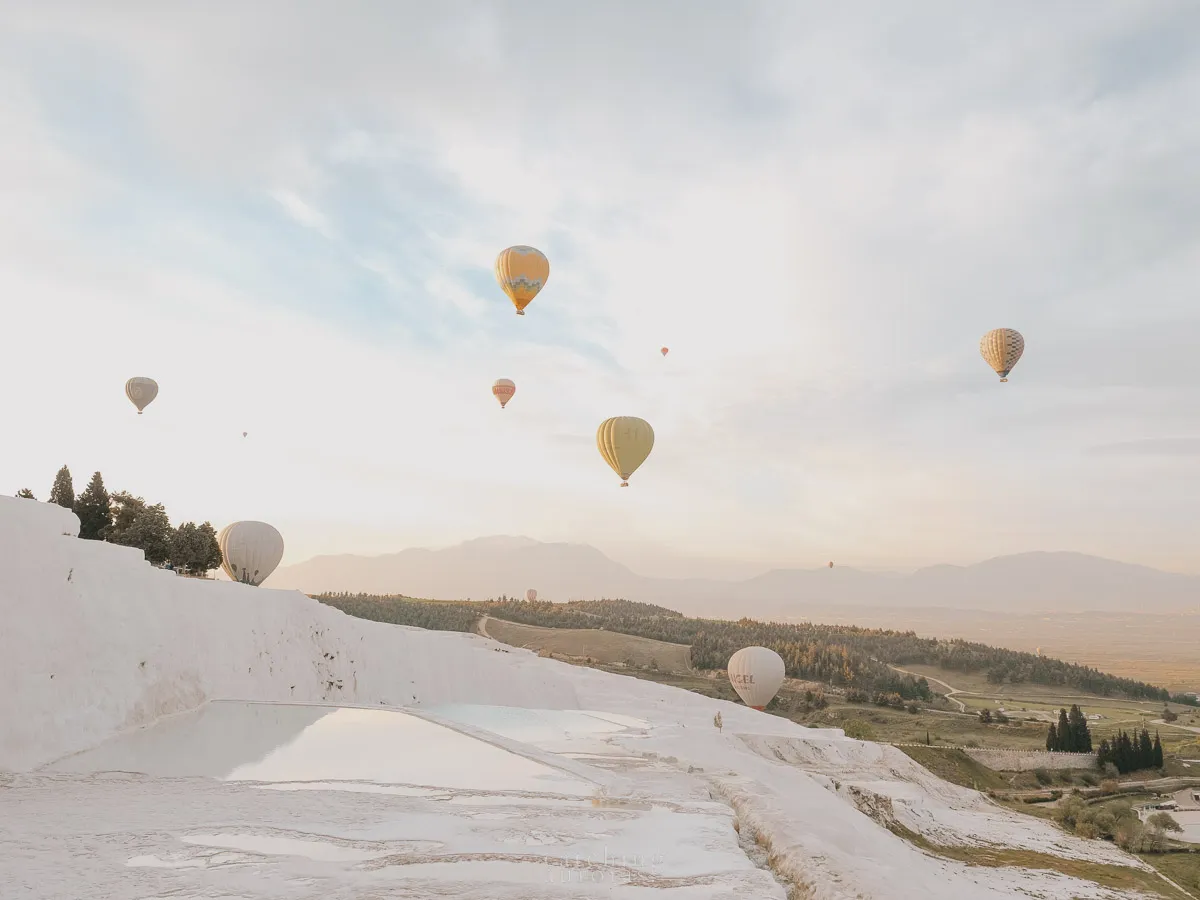
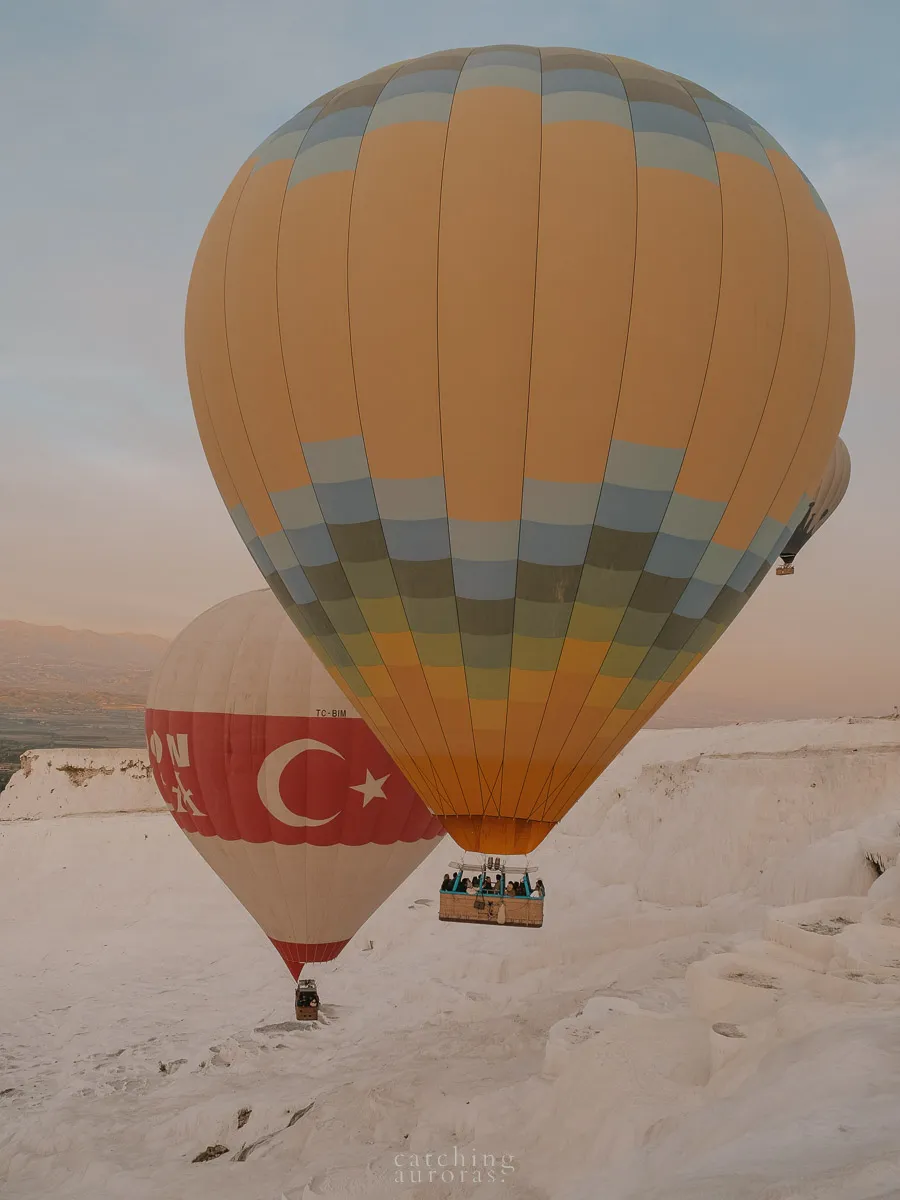
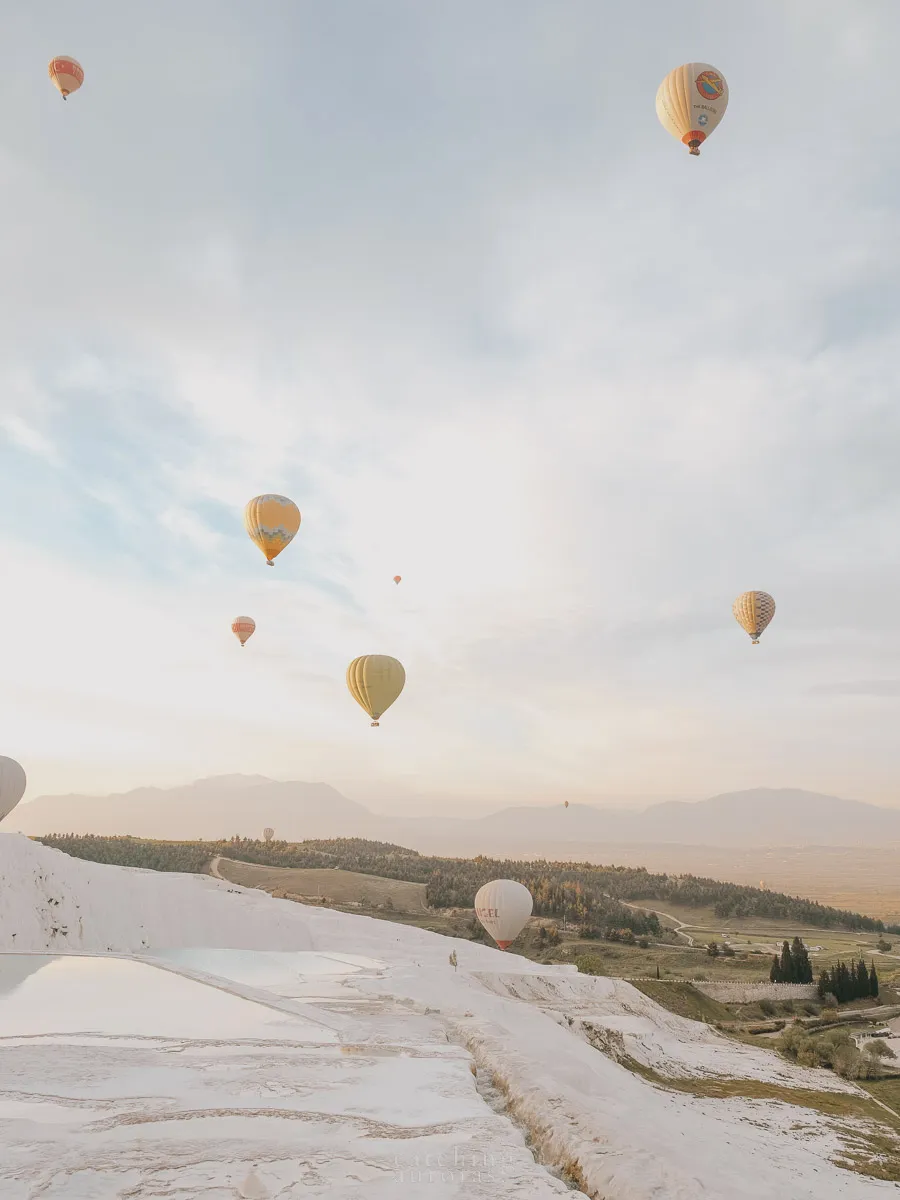
Walk along the terraces, dip your feet in the warm waters and watch hot air balloons glide overhead.
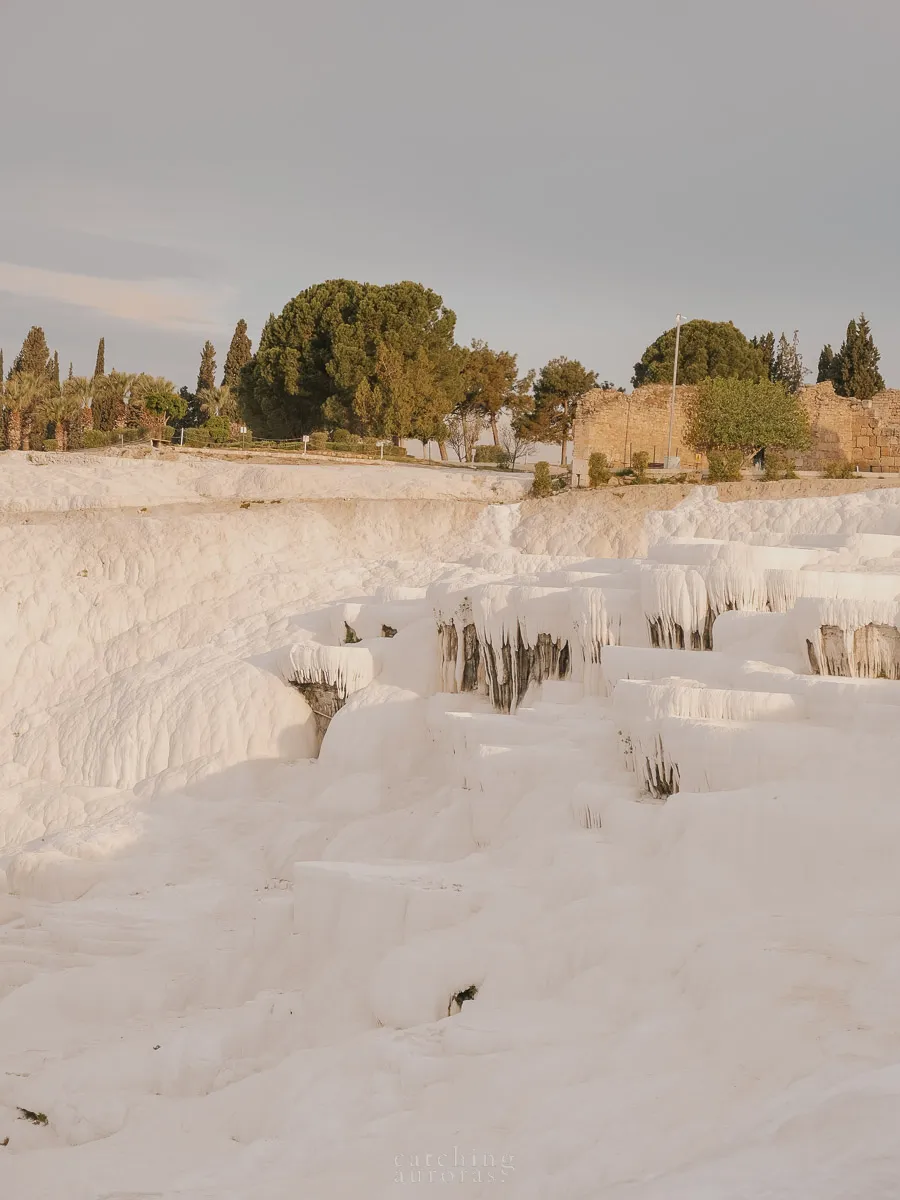
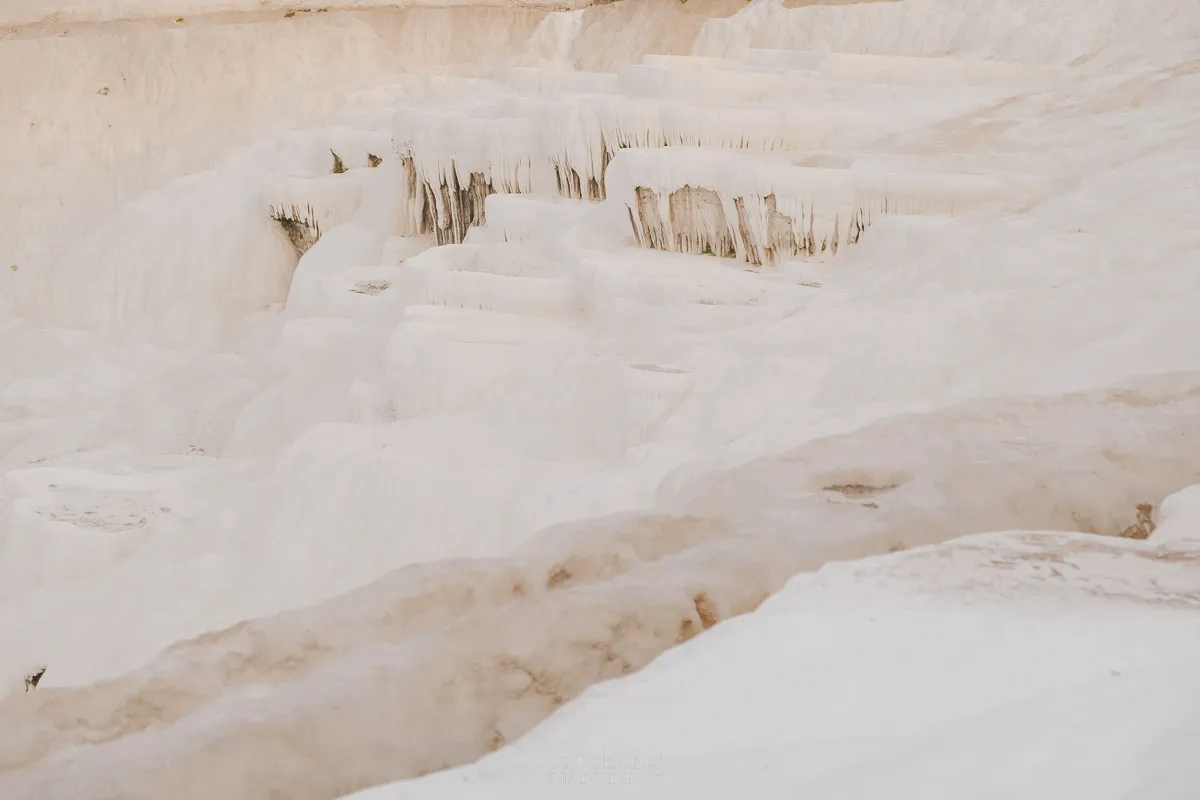
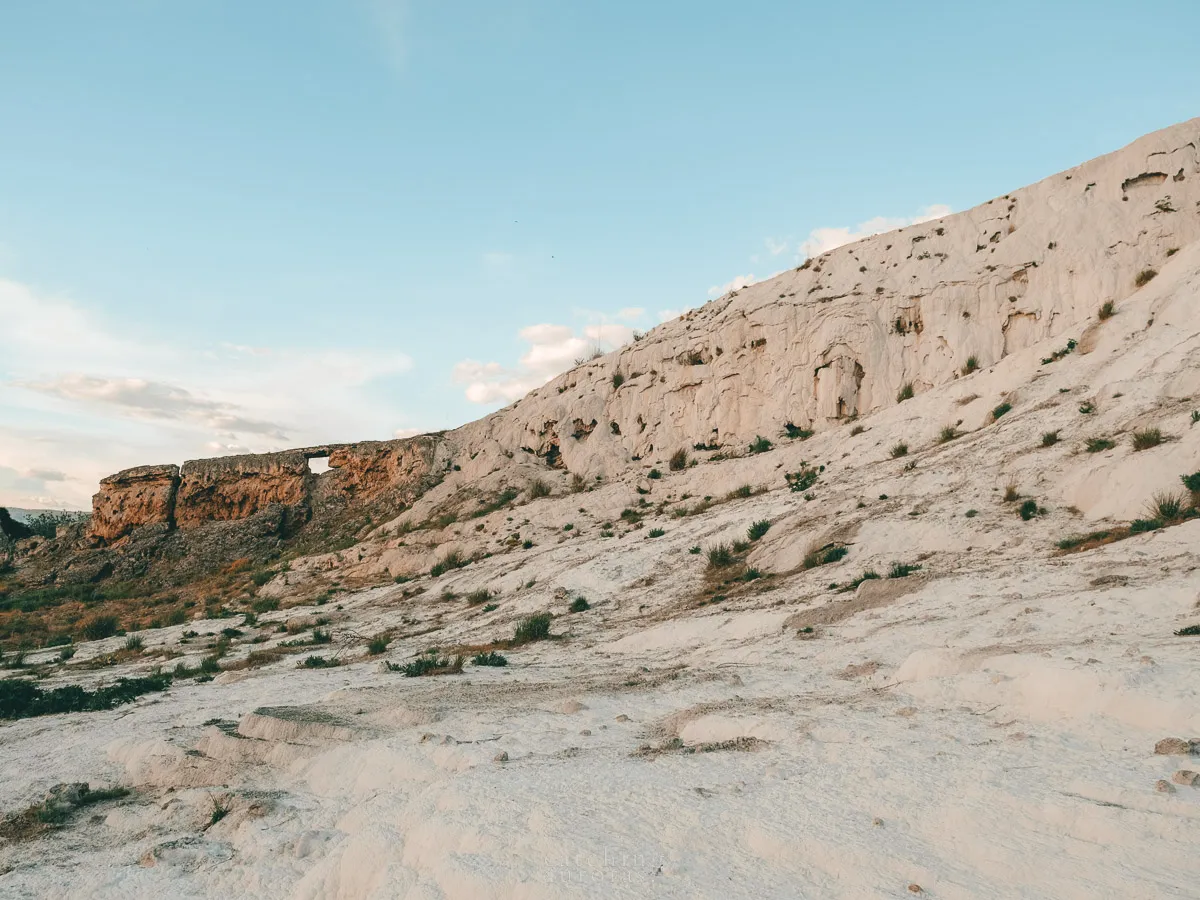
The best time to visit travertines: Early morning offers less crowds and if you are lucky, you get to photograph the terraces in a soft morning light. The pools may be in shade for most of the morning though. Sunset turns the pools a soft pink-gold. Beautiful, but also peak crowd time.
2. Explore the ancient city of Hierapolis
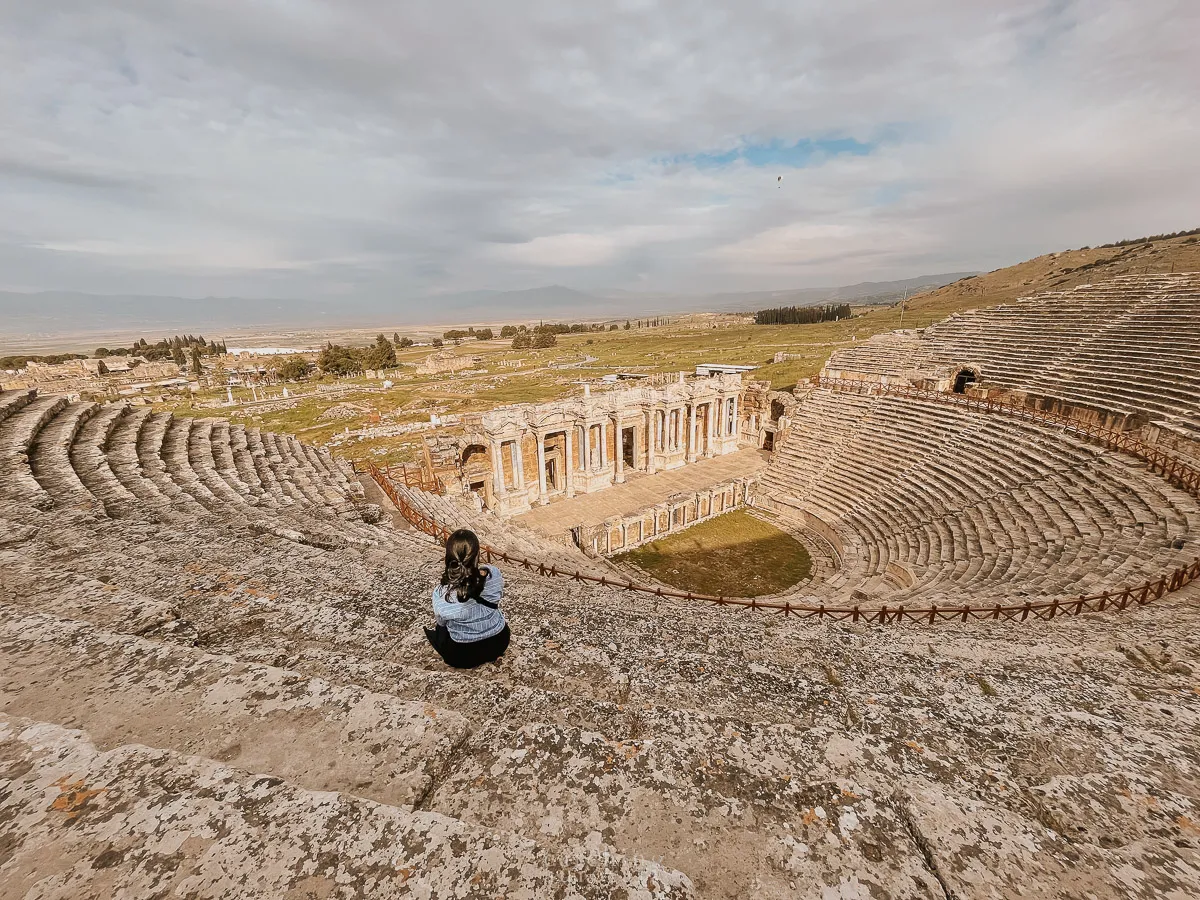
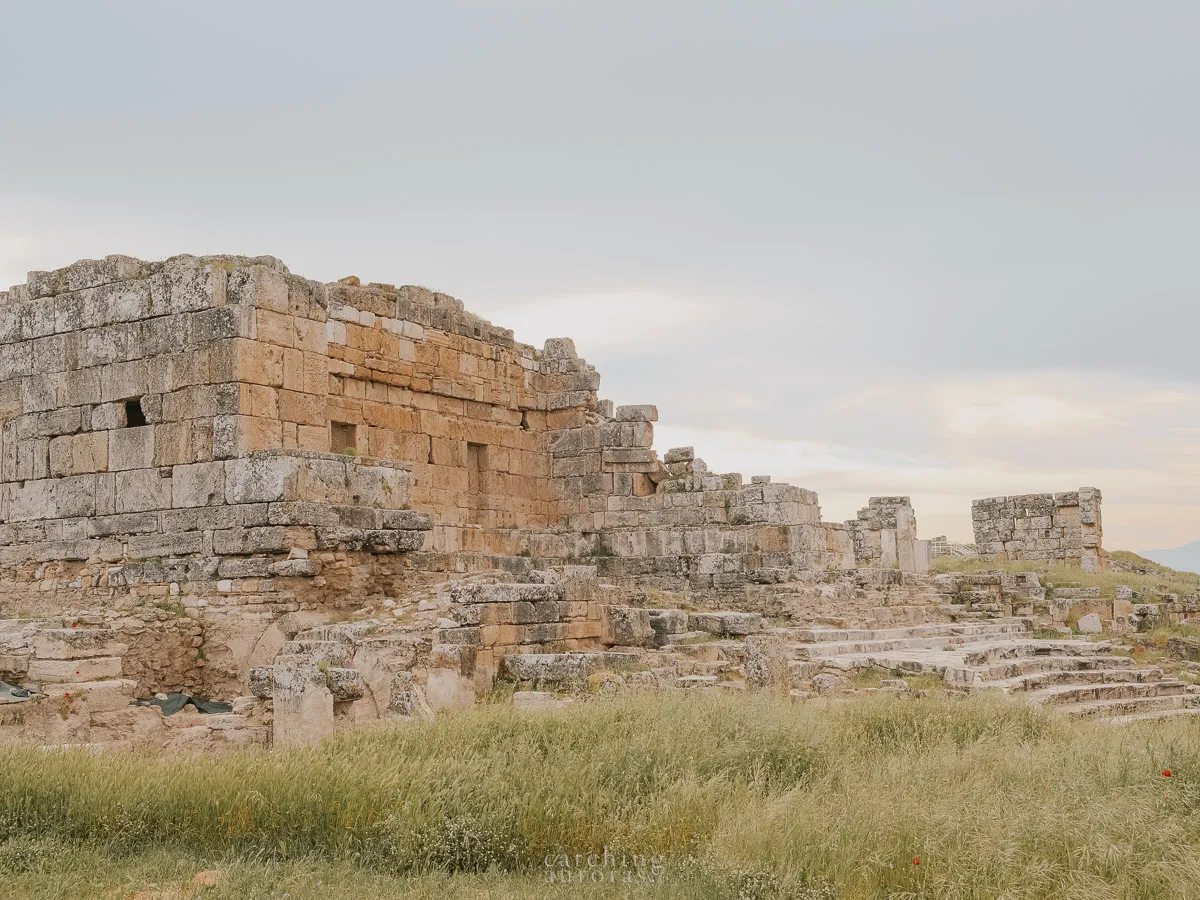
Hierapolis is built directly on top of the travertines — a city that grew up around the same thermal waters. People came here from across the world for the healing springs, which tells you the site has been pulling visitors since ancient times.
From the travertines walk towards the Ancient pools, passing The Sanctuary of Apollo, dedicated to the god Apollo, the main divinity of Hierapolis.
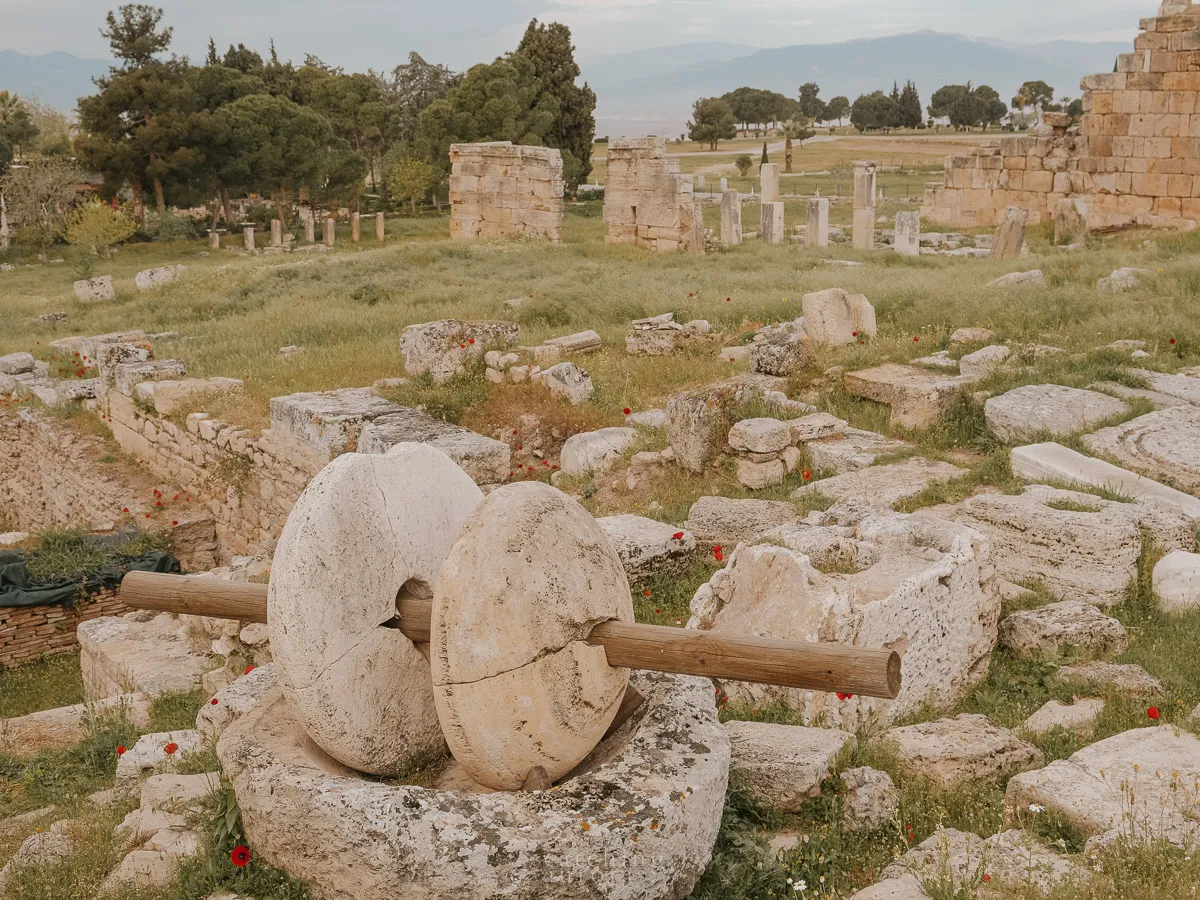
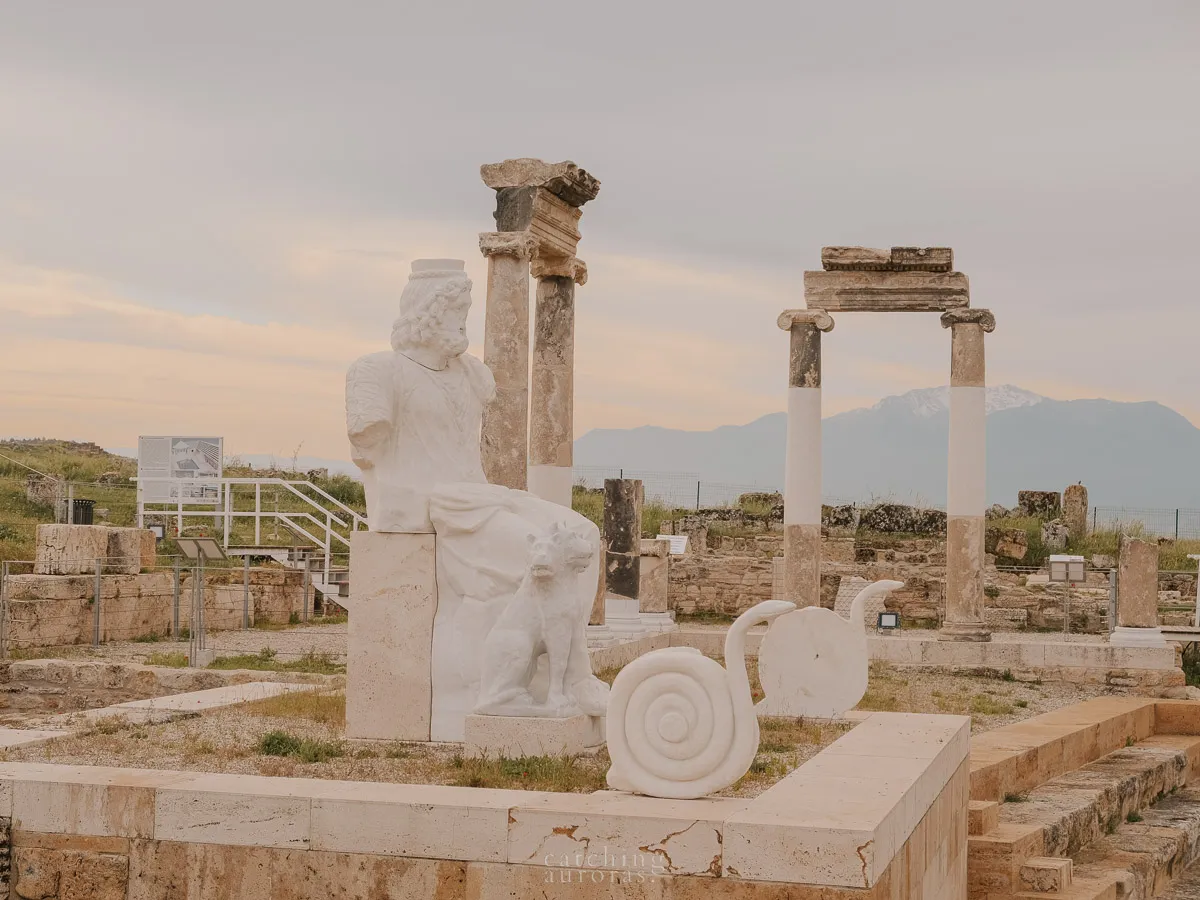
Once past the Ancient pools, you can follow clearly marked roads and head to the gated Ploutonion area. The site is built on top of a cave that emits toxic carbon dioxide gases, and was used as a ritual passage to the underworld. It is told that only the anointed priests could pass through the passage unharmed and birds and animals were sent off into the cave just to show how deadly the gases were.
The entrance to the cave (a.k.a the Underworld) is guarded by a (recreated) statue of the god Pluto (a.k.a Hades) with his three headed dog, Cerberus, and the two serpents. Totally not creepy at all.
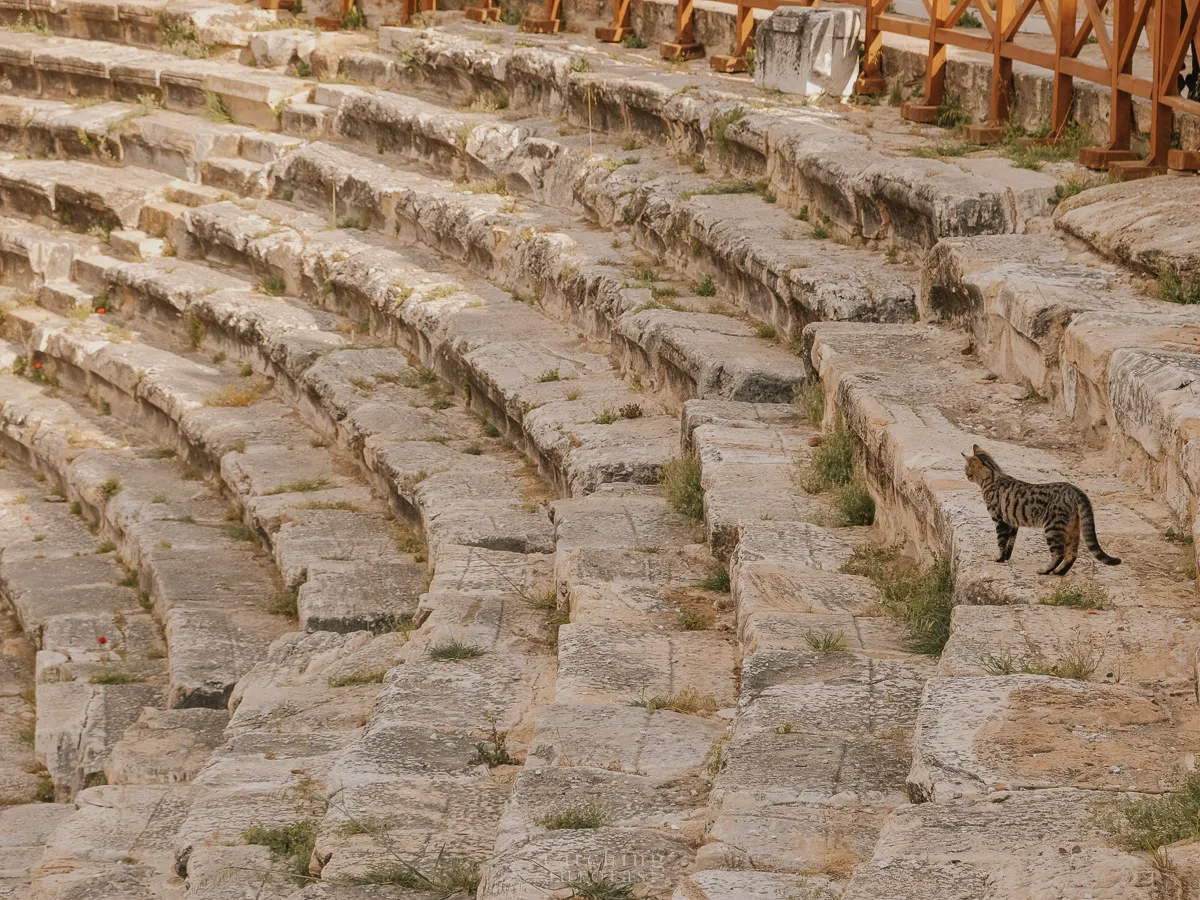
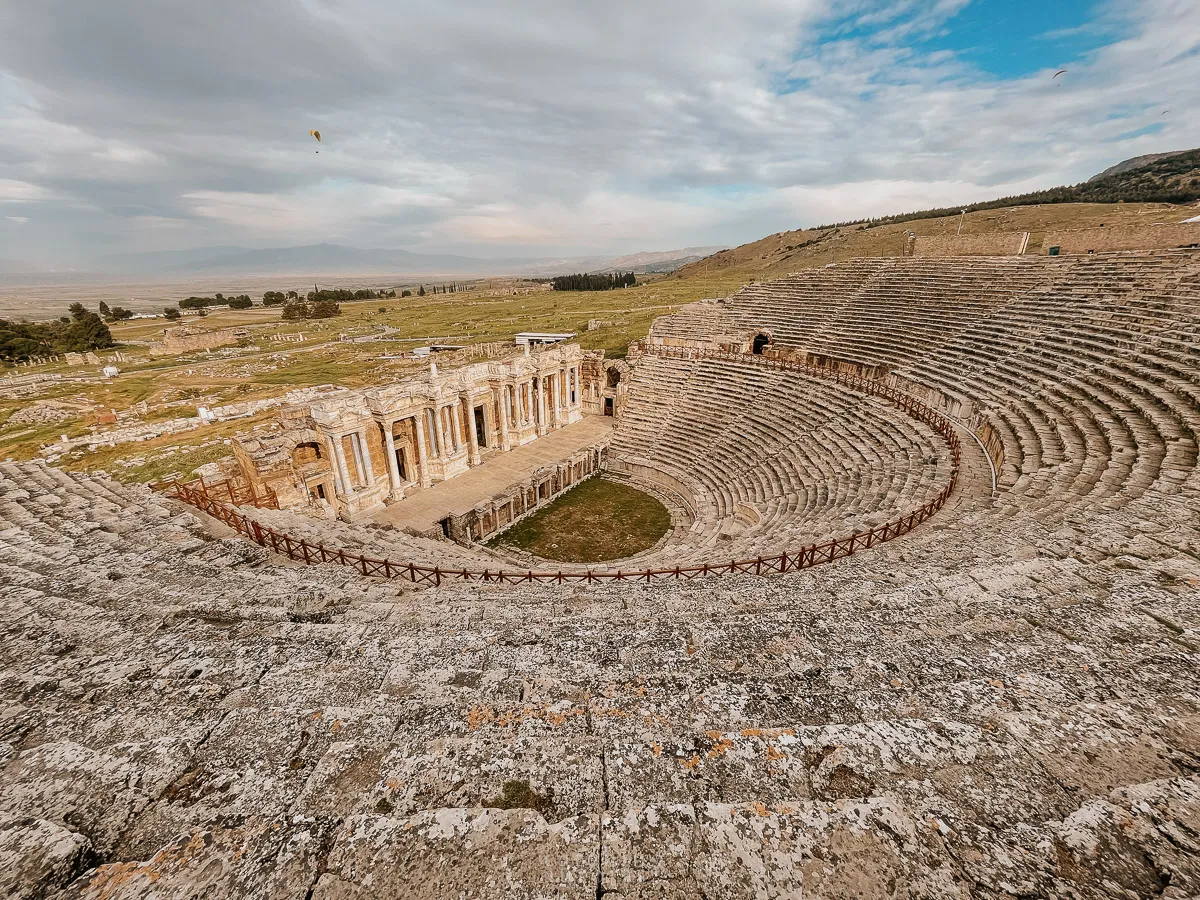
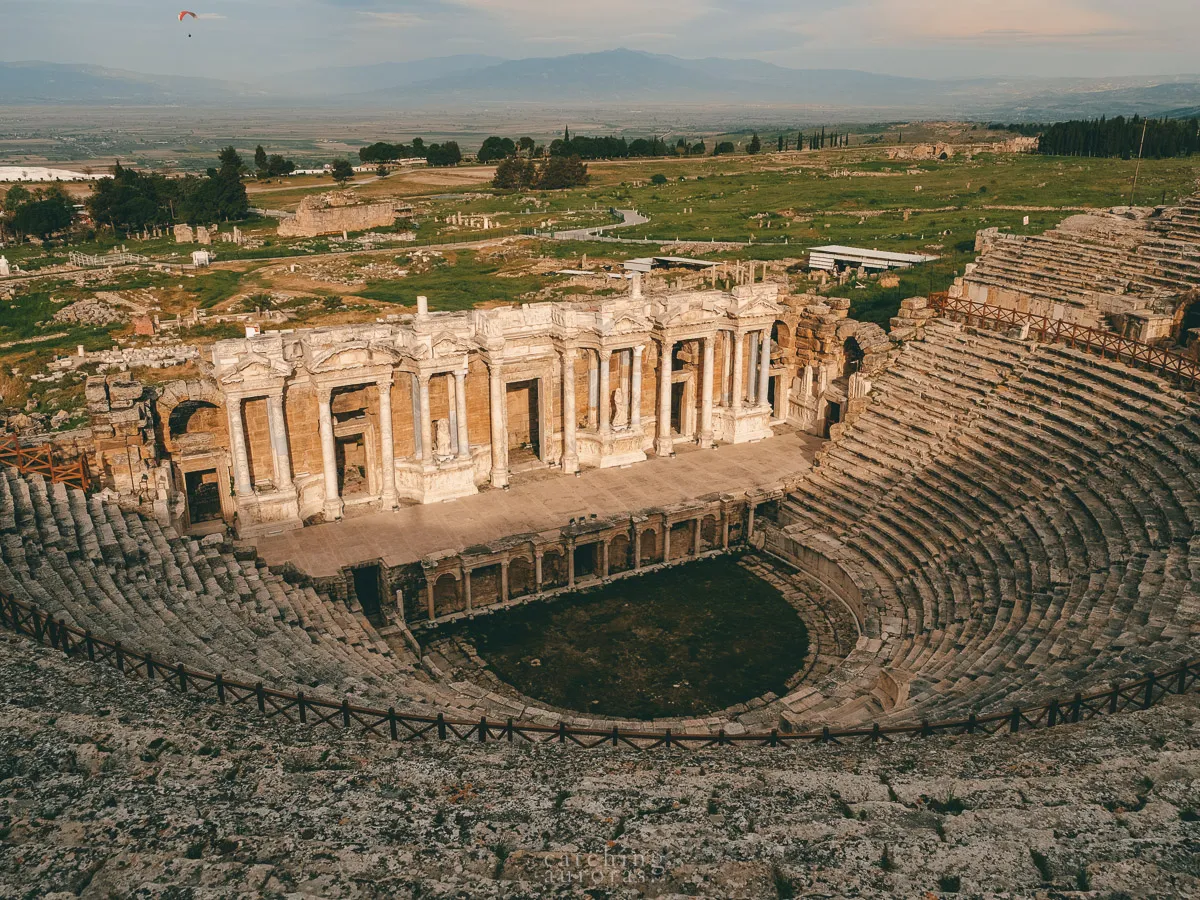
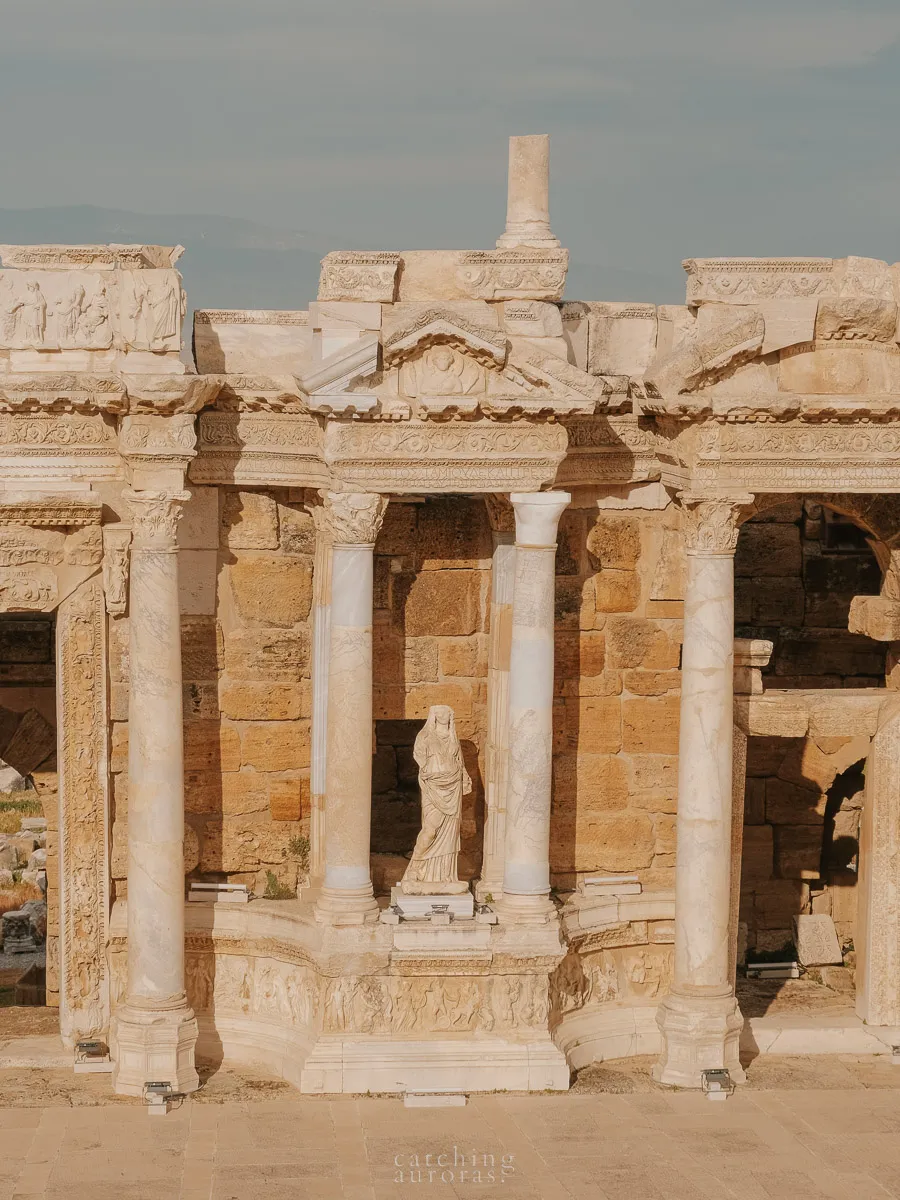
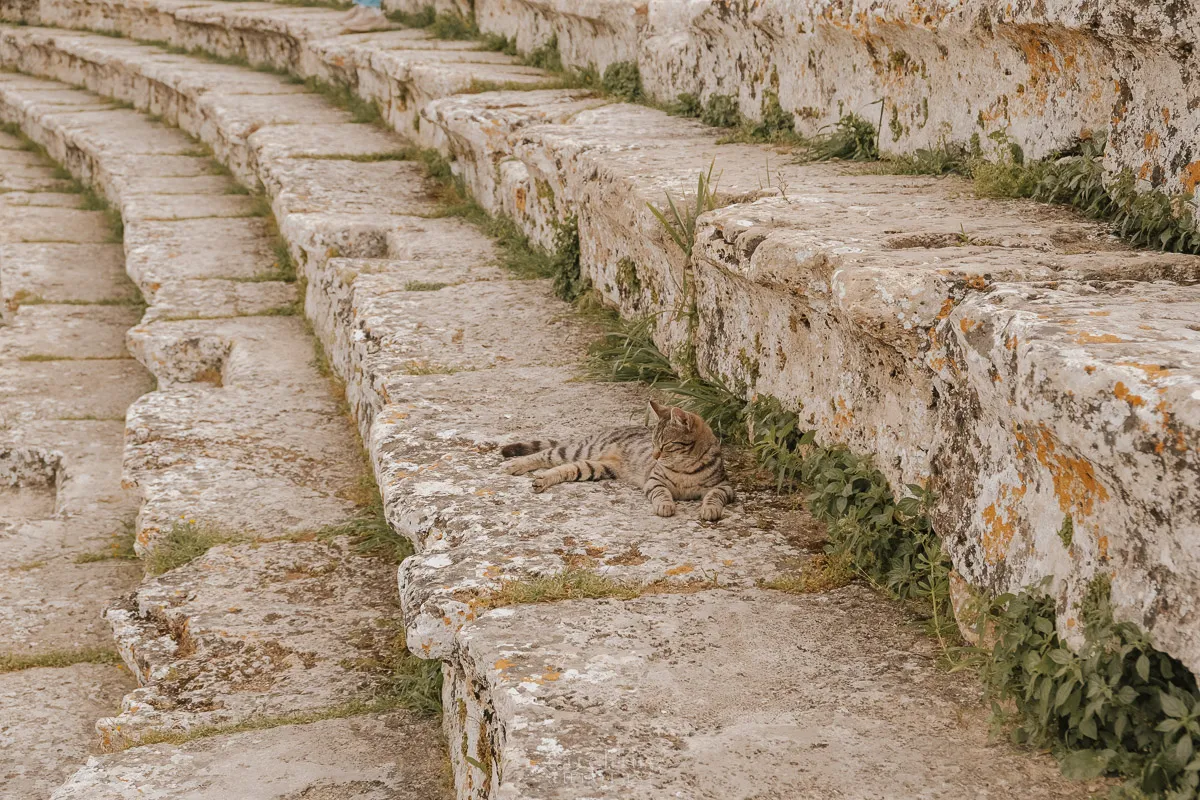
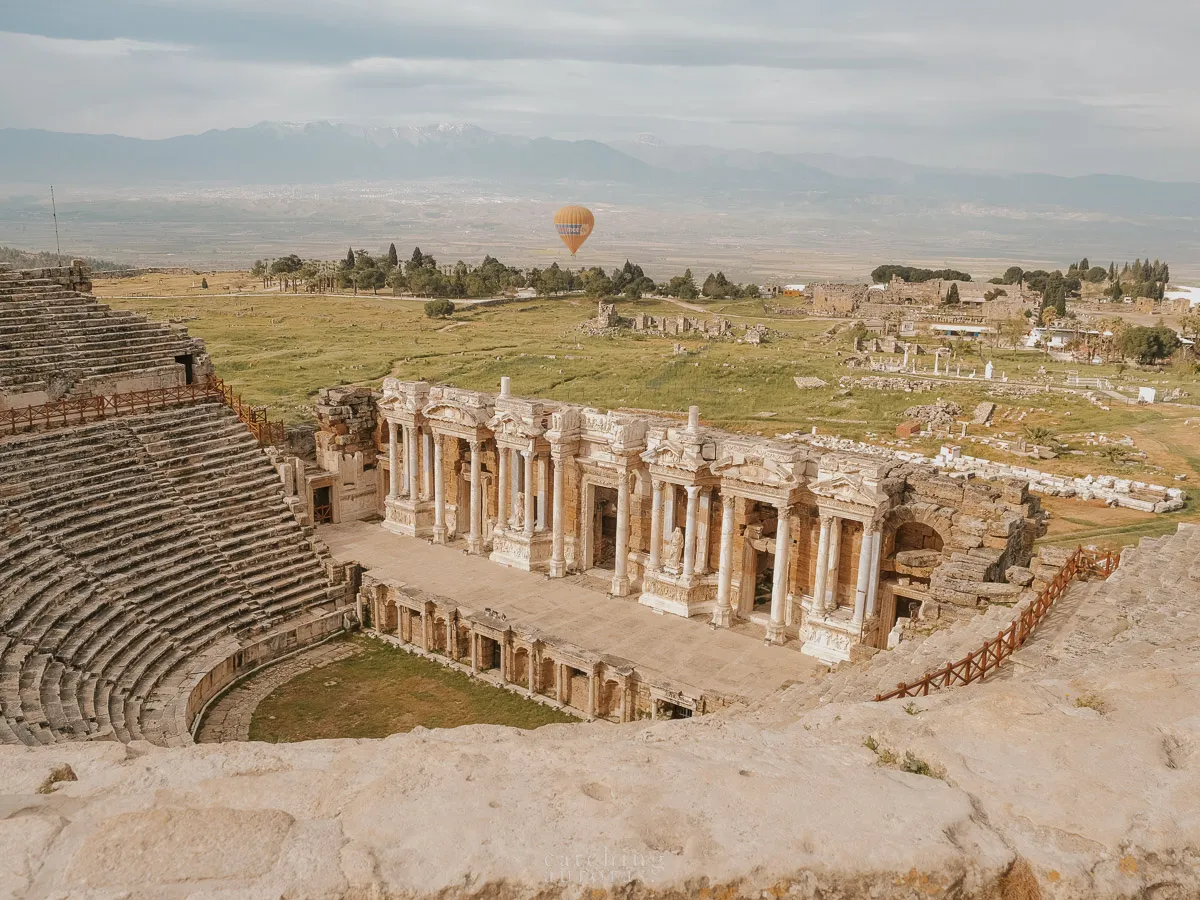
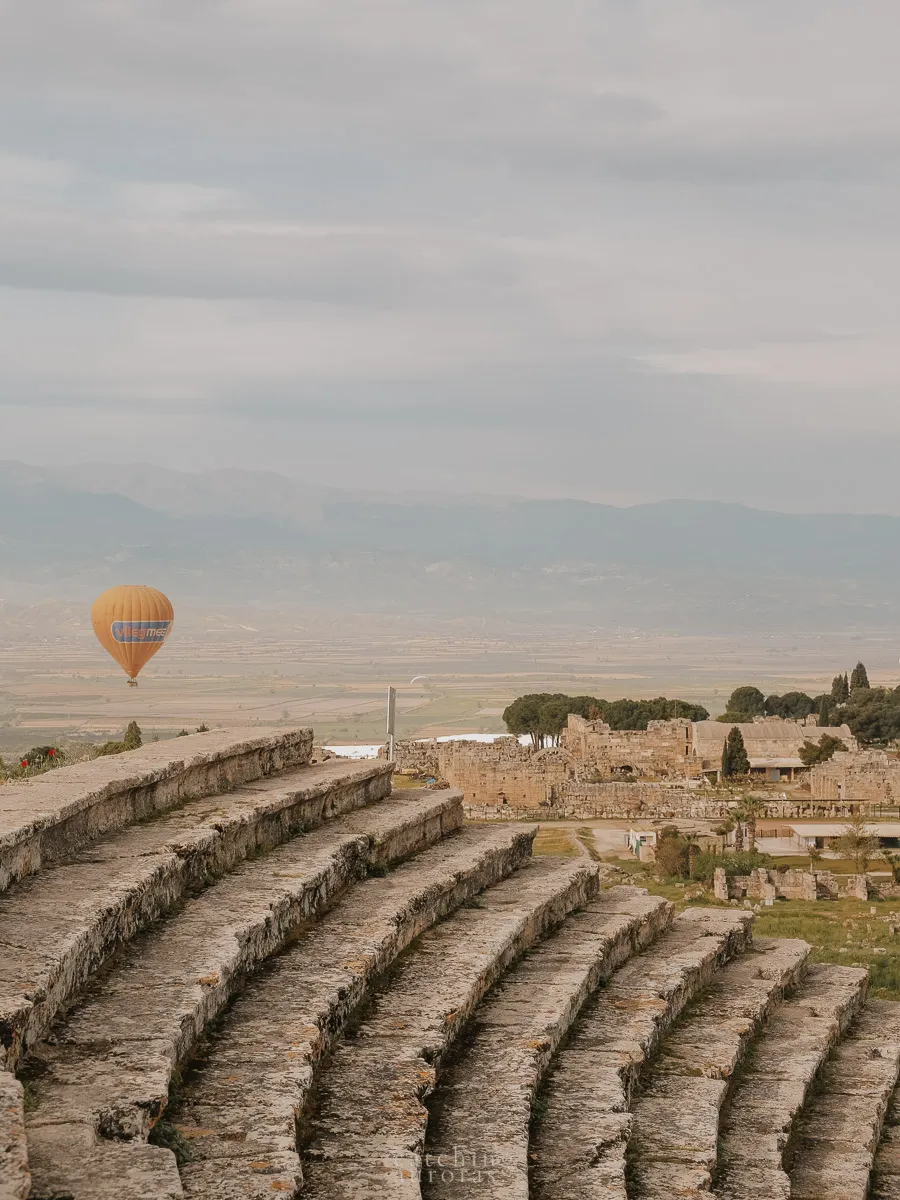
You are not done yet. From the Ploutonion, walk straight up towards the massive Theater, which is a standout. It could seat around 10,000 people and the stage building is very well preserved – reminded me of The Library of Celsus in Ephesus. It’s definitely one of the highlights of Hierapolis. A cat was asleep on the steps when we were there. Of course.
3. Swim in Cleopatra’s Antique Pools
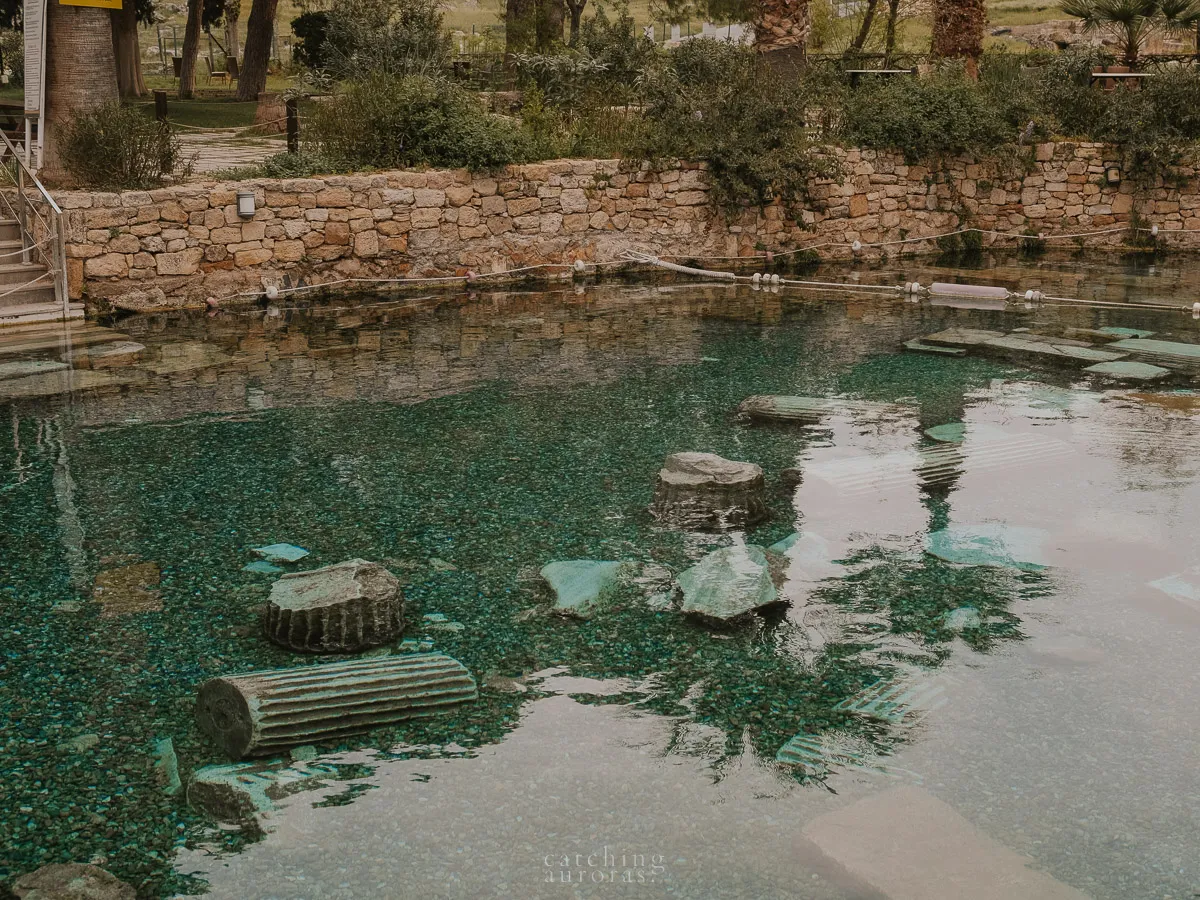
Imagine swimming in the same pool as Cleopatra! This clear pool fed with thermal water is said to have been once used by Cleopatra (historians are sceptical but we will presume the best) and is now run by a professional spa facility. You can swim alongside marble blocks and Roman columns sitting on the bottom, warm water, ruins under your feet. Sounds unreal.
This costs extra on top of your entrance ticket and isn’t covered by the Museum Pass. Changing rooms, showers (free), food, and drinks are available right there. Worth it if the weather allows and you have the time to spare.
4. Visit the Pamukkale Museum
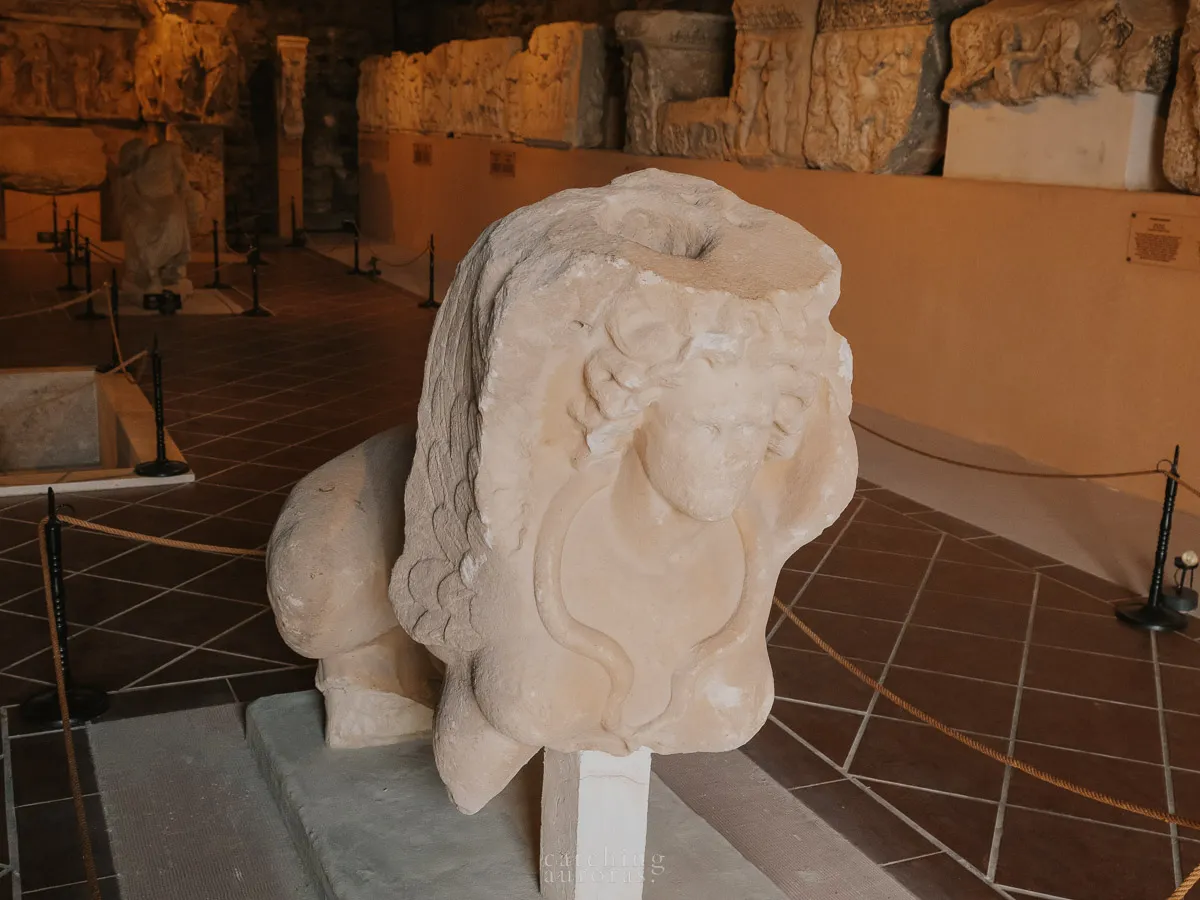
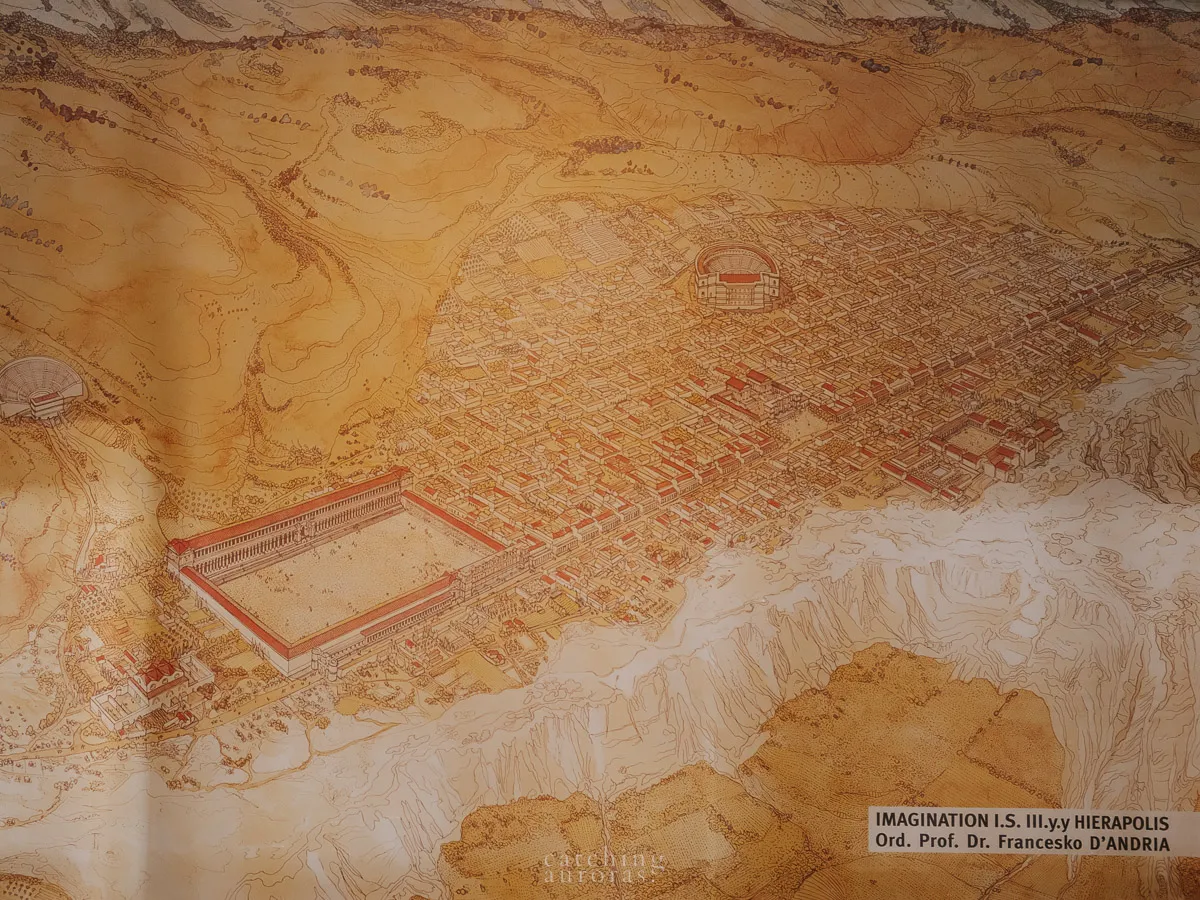
Just before you leave the premises, make sure to visit the Pamukkale Musuem which has some of the artefacts from Hierapolis, and the nearby ruins of Laodiceia.
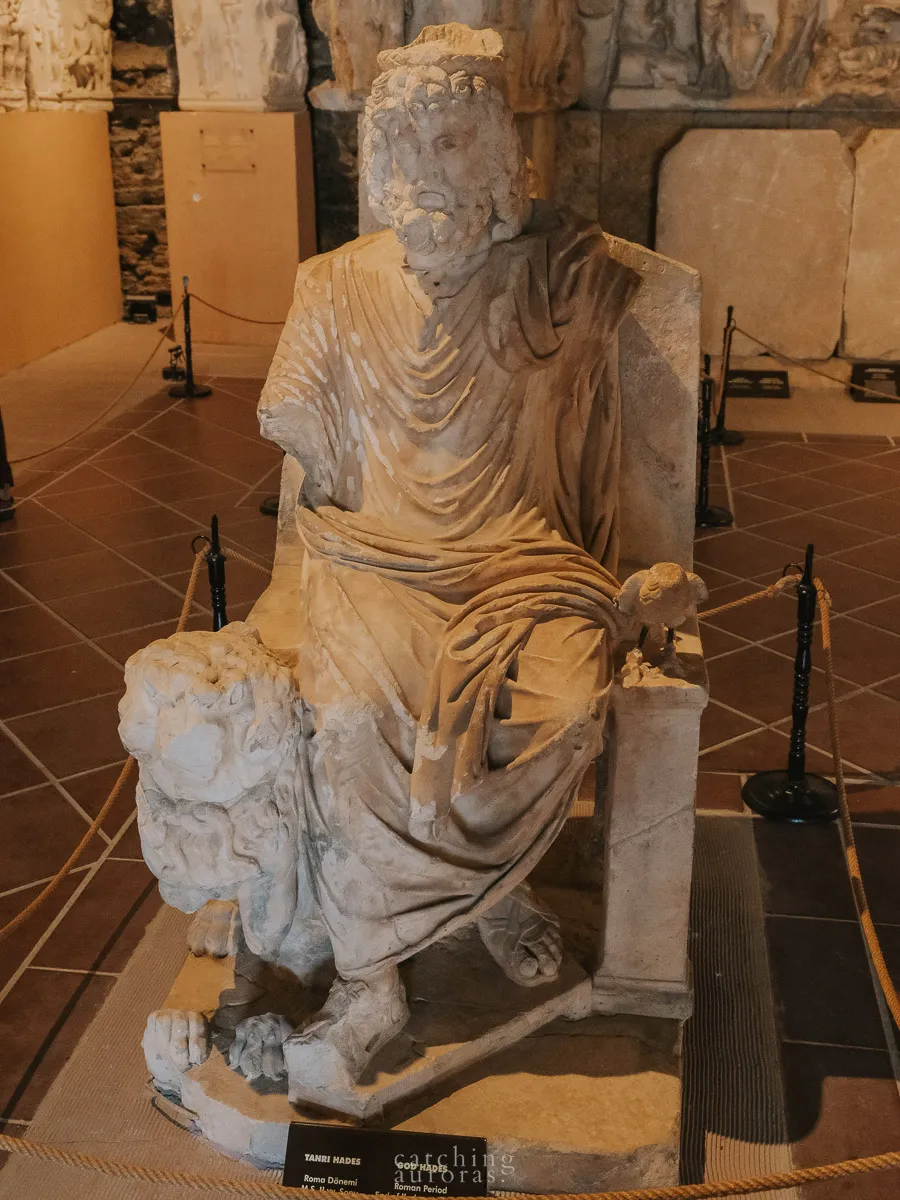
The statue of Hades with Cerberus is the one to look out for, along with the ancient map of Hieropolis city.
The museum is included in your Hierapolis ticket.
5. Go up in a Hot Air Balloon
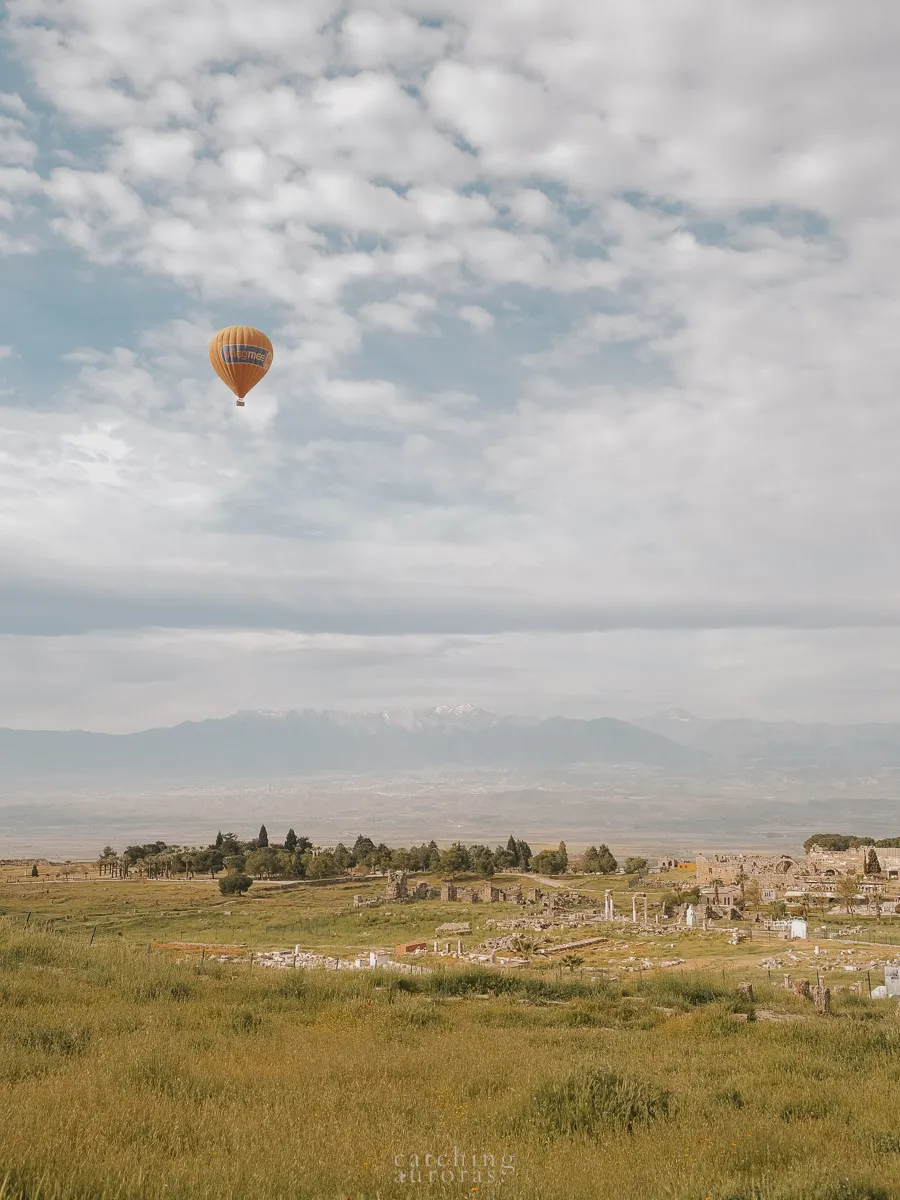
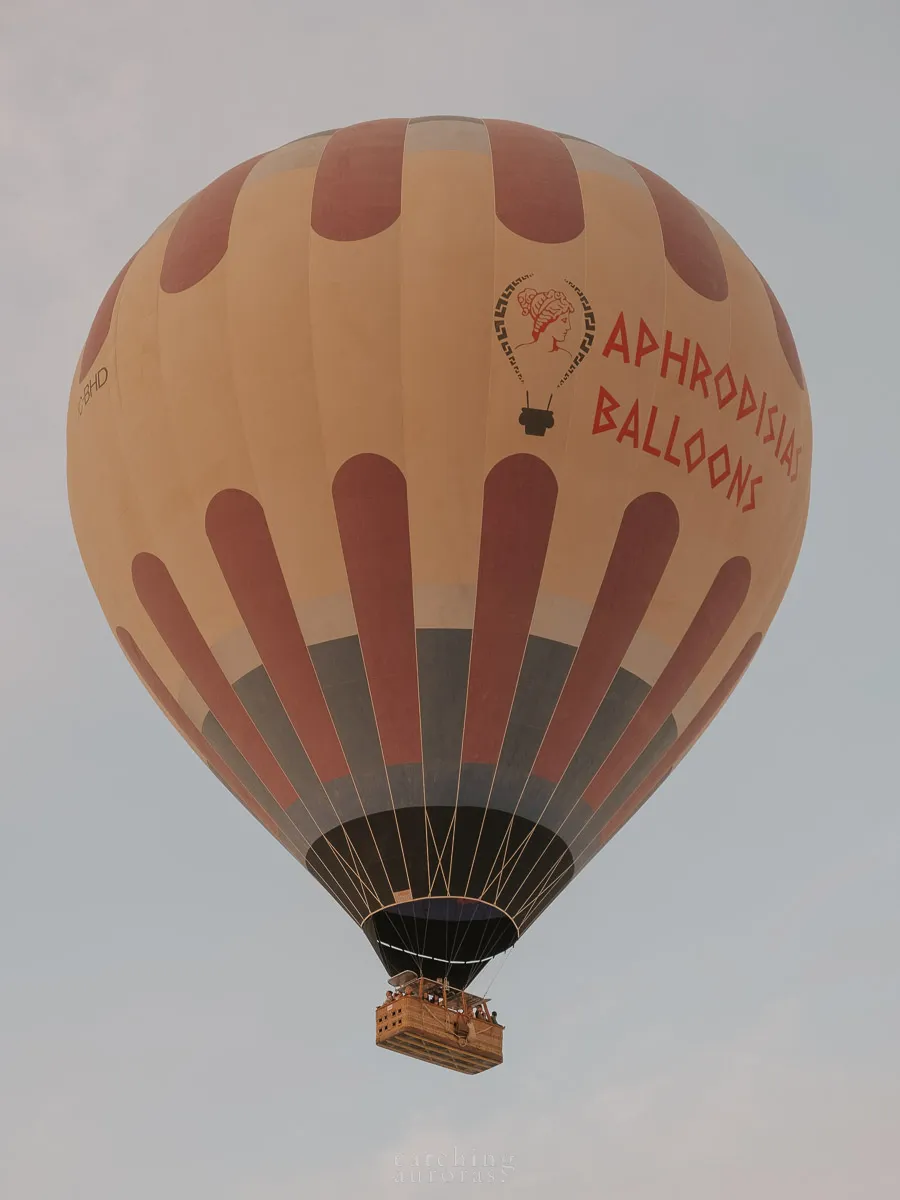
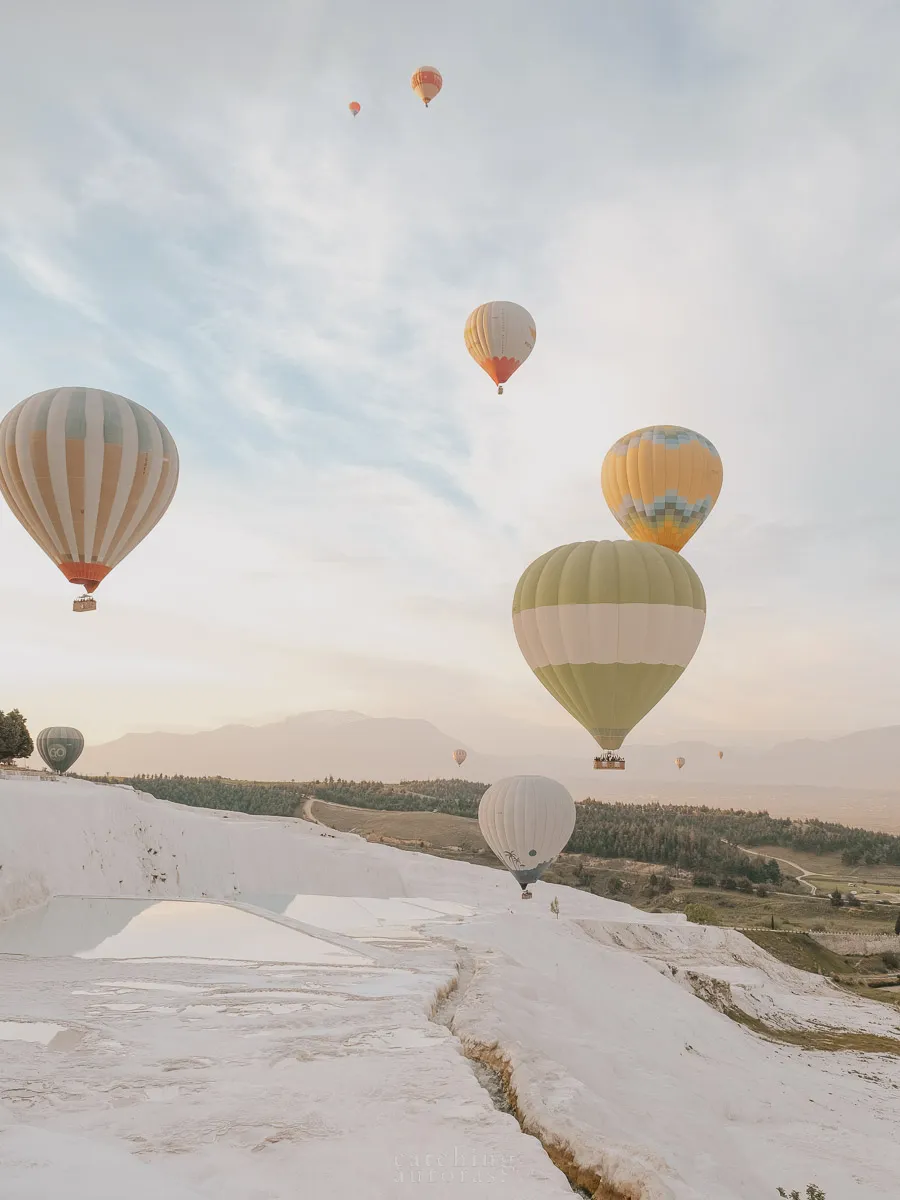
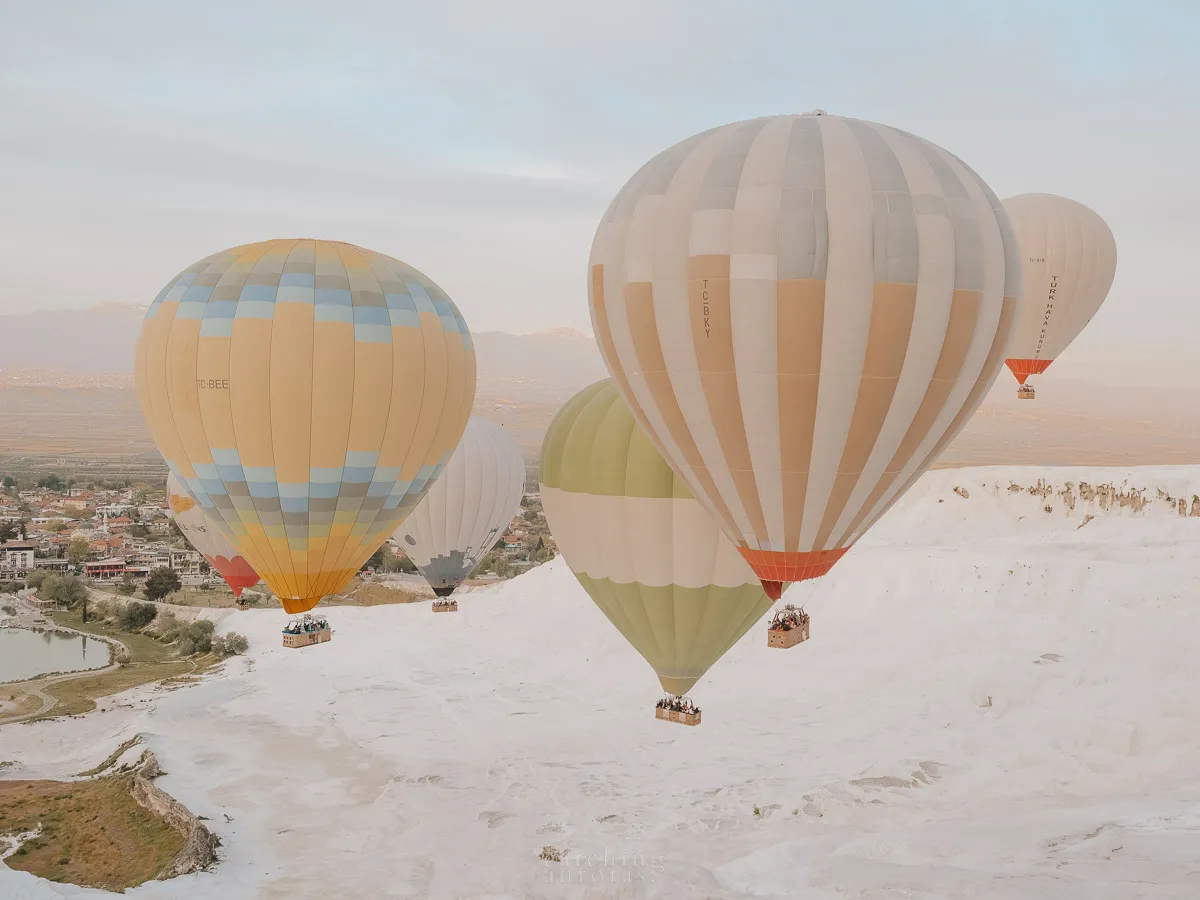
They fly here, not just Cappadocia. Far fewer balloons in the air at any one time which means you won’t get the famous hundreds-of-balloons-in-the-air shot, but flying over the travertines and Hierapolis at sunrise is its own thing. It’s cheaper than Cappadocia too. Book through your hotel the evening before; availability may be limited.
6. Paraglide over the terraces

You’ll see paragliders drifting over the site throughout the day. There are several operators in Pamukkale town. Good option if you want the view from above without balloon prices.
How to spend a day in Pamukkale
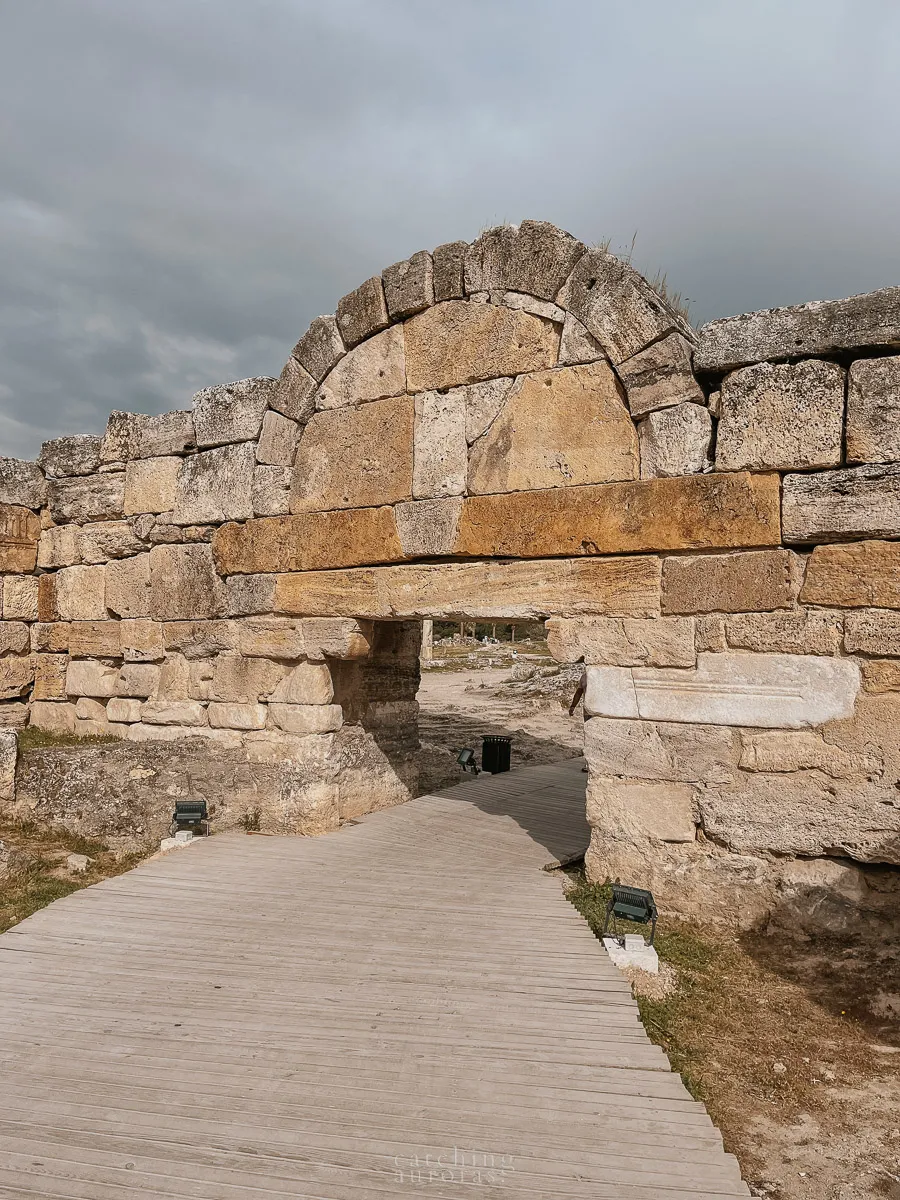
This itinerary assumes you’ve arrived the previous evening and are sleeping in Pamukkale town. You can do it as a day trip, but an overnight stay gives you the early-morning window — which is the best part.
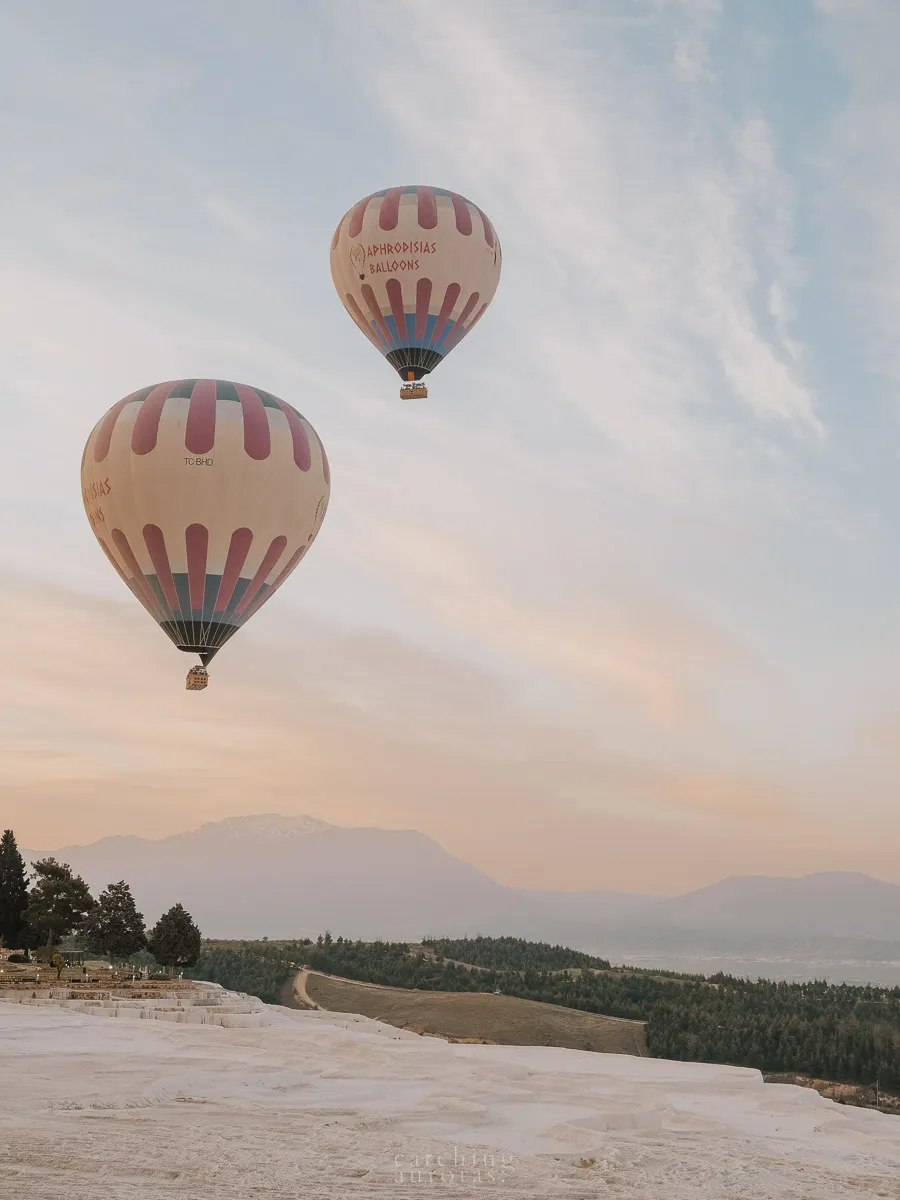
- 6:30 AM — South Entrance: Start your morning with the travertines. The terraces in early morning light with minimal people is the version of Pamukkale worth waking up for. Hot air balloons sometimes fly low over the ruins at this hour. If you are on the Balloons at this time, make your way down to the pools after you land.
- 8:30–10:30 AM — Hierapolis. Once you have had your fill of the travertines, you can make your way towards Hierapolis. Work through the ruins while the day is still cool. Apollo Sanctuary, Ploutonion, then the theatre. Take your time at the theatre.
- 10:30 AM–12 PM — Cleopatra’s Antique Pools. You can choose to have your lunch here and have a relaxing day by the pools. If this isn’t your vibe, skip to the Museum.
- 12–1 PM — Pamukkale Museum. Last stop before leaving the site. Beats the midday sun and puts everything you just saw into context.
- For dinner, I would highly recommend you make reservations at Hiera Coffee & Tea House restaurant and experience the best meal of your life. Trust me. This was one of the highlights of our Pamukkale trip. A meal here would be the perfect end to your Pamukkale trip.

If you have more time: Aphrodisias is 100 km away and about an hour by car – one of the best-preserved ancient cities in Turkey and almost nobody goes there. Laodiceia is closer (6 km from Pamukkale town), a biblical city currently being excavated.
Our Pamukkale Experience
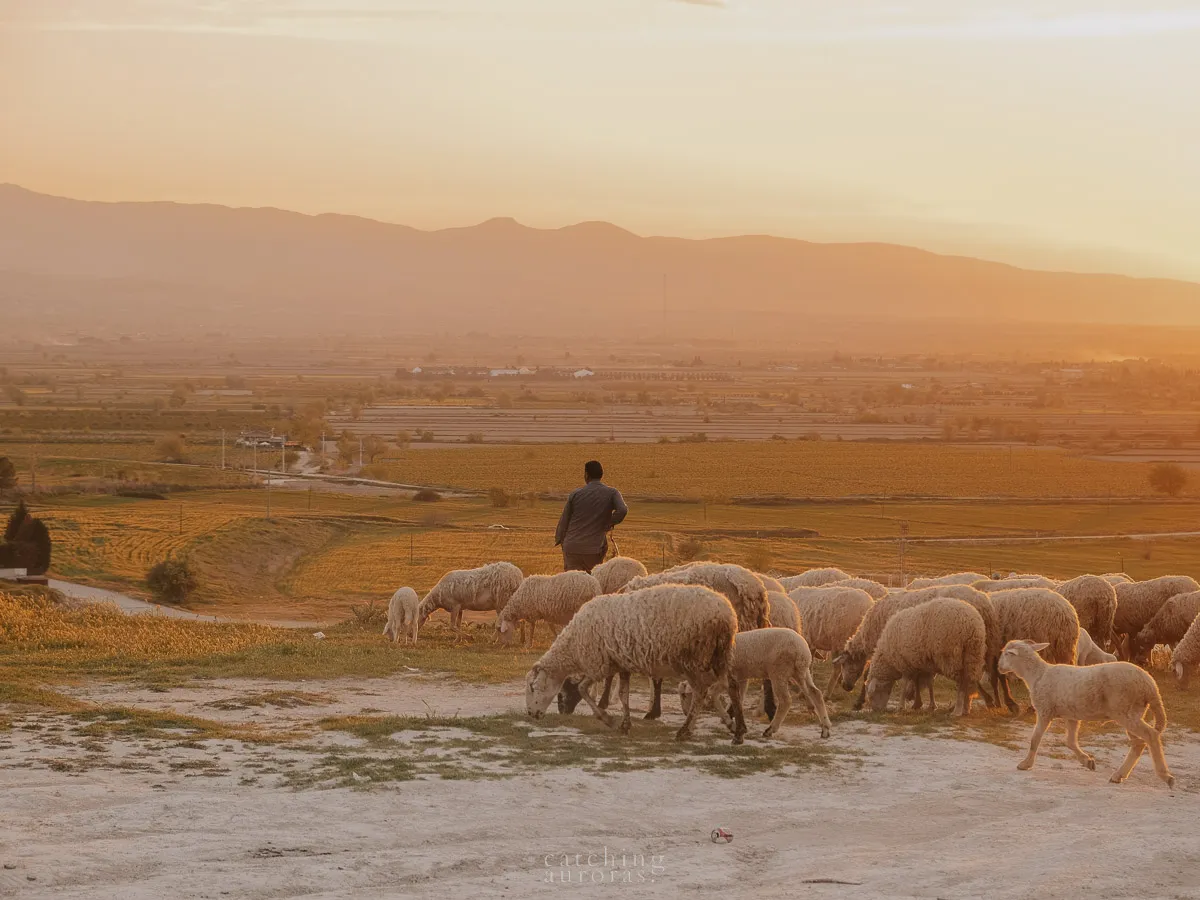
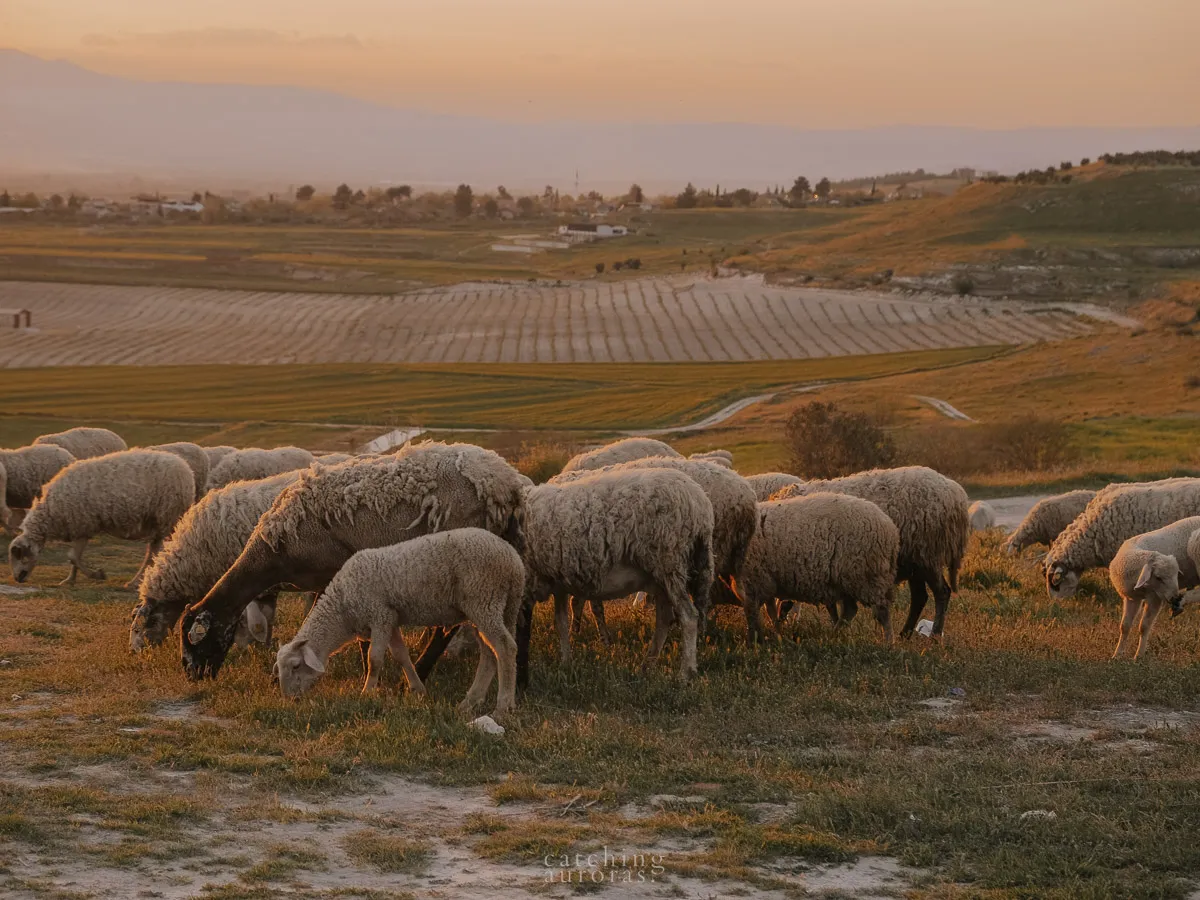
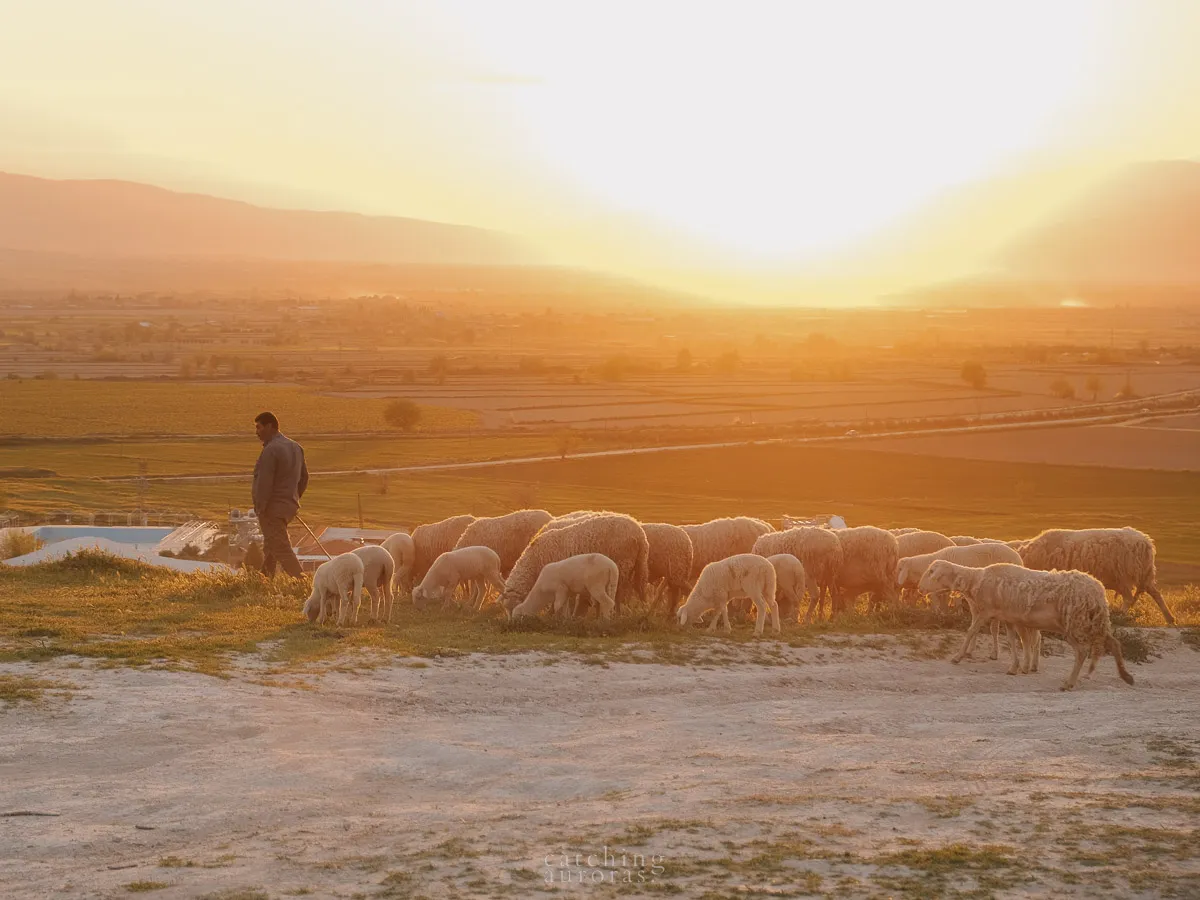
We did an epic roadtrip of West Turkey from Istanbul. As part of the roadtrip, we left Selçuk in the morning and drove 2.5 hours to Pamukkale. Checked into our hotel, relaxed and then left in the evening to explore the unmapped terraces that was suggested by a backpacker we met in Cappadocia. While they were unfortunately dry and grey, we ended up stumbling onto a camping site which overlooked the green fields of Pamukkale. The idyllic landscape with sheep wandering by and watching the sun go down – these are the kind of moments I crave for when I travel. We had made a dinner reservation at Hiera Coffee & Tea House Restaurant and oh boy! The food was amazing, the service was unlike anything we had experienced before and we were completely thrown by the bill – it was so cheap! We were still talking about it days later. Make a reservation and visit this place. Best dinner of the Turkey trip, hands down.
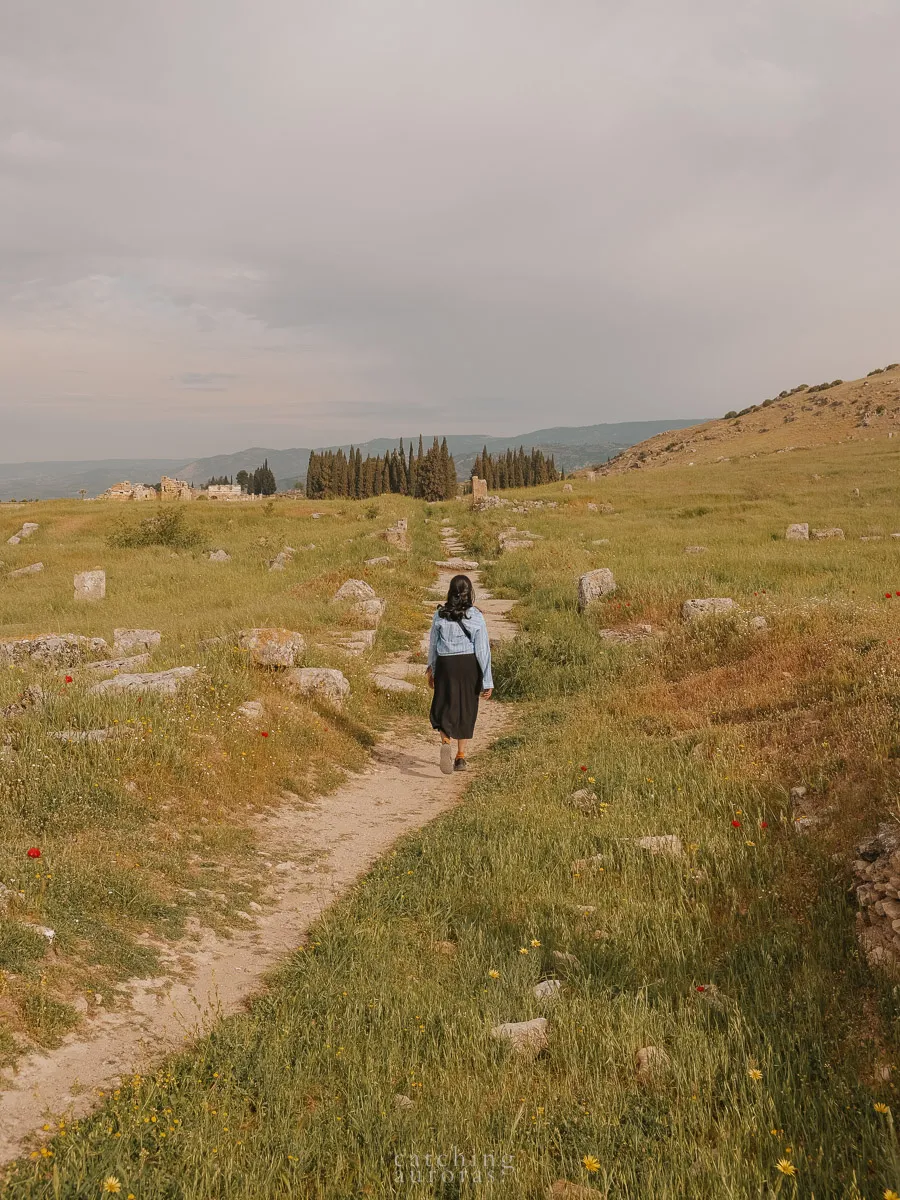
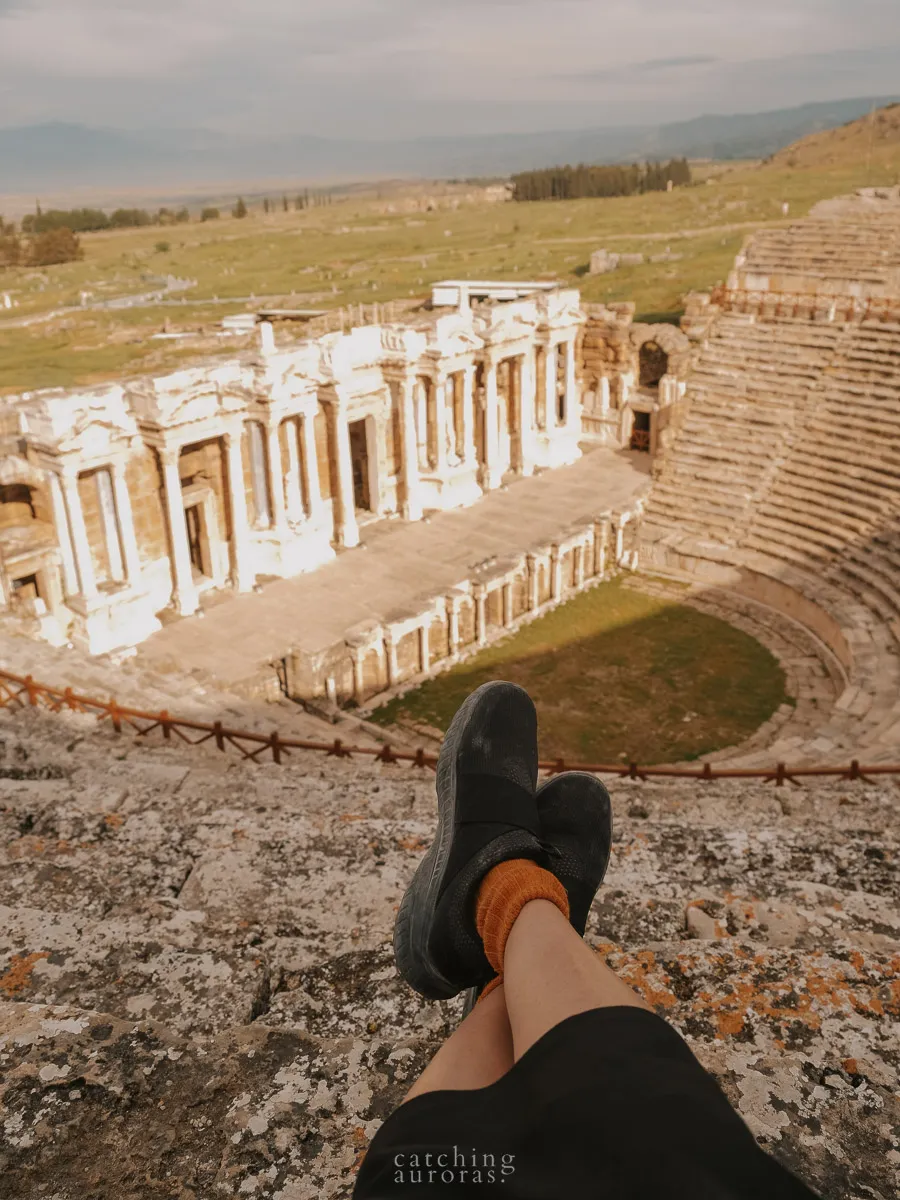
The next day, we basically followed the itinerary mentioned above. We started with the travertines in the morning at 6:30 AM, followed by Hierapolis. The weather wasn’t that great for swimming, so we skipped the pools and checked out of our hotel to head towards the next stop in our road trip – Aphrodisias.
Pamukkale turned out to be one of my favourite cities in Turkey and I want to come back, just to stay longer. I would love to spend an entire day by the travertines and take my time visiting the surrounding ruins of Aphrodisias and Laodiceia.
Where to stay in Pamukkale?
Plenty of budget friendly and luxury options available. The luxury ones are the ones that are closest to the terraces which also offer private thermal water pools and taps in your bathroom.
The budget friendly ones, like the one we stayed in, are pretty cheap, offer amazing breakfast spreads and are only 5-10 mins away from the terraces by car.
Tips for Pamukkale
- Carry a spare bag or plastic cover for your slippers. You will need to take them off before stepping foot on the terraces and it becomes a hassle to carry them in your hand all the way.
- Turkey Pass and Aegean Pass both cover Pamukkale site, so you don’t have to buy a separate ticket here.
- Hierapolis, the travertines, the antique pools and the museum are all within the same site so plan to visit them all in one go.
- Carry swimming clothes, sunscreen and a hat if you are planning to swim and spend a lot of time by the pools. There is limited shade and the sun is blinding as it reflects off the pools.
- Golf carts are available for rent inside to go between the different sites.
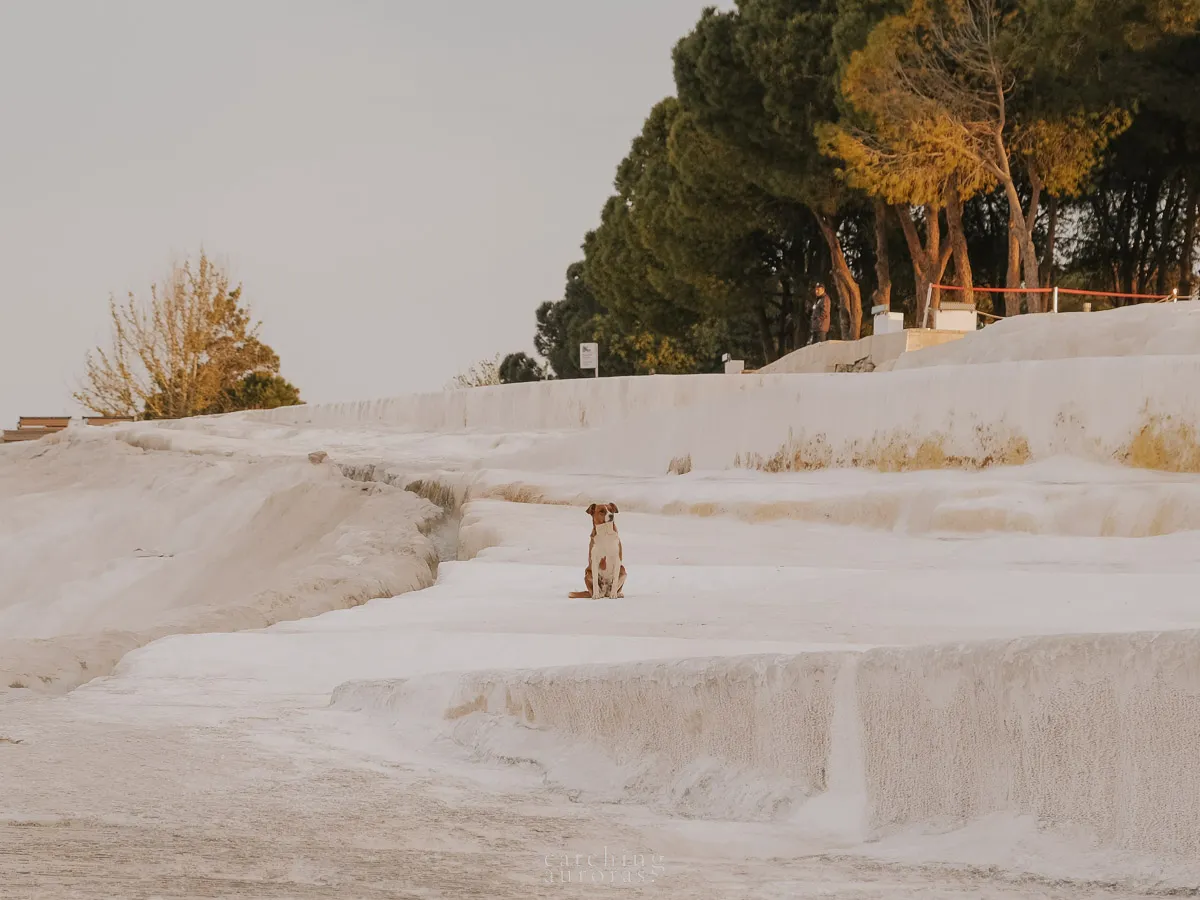
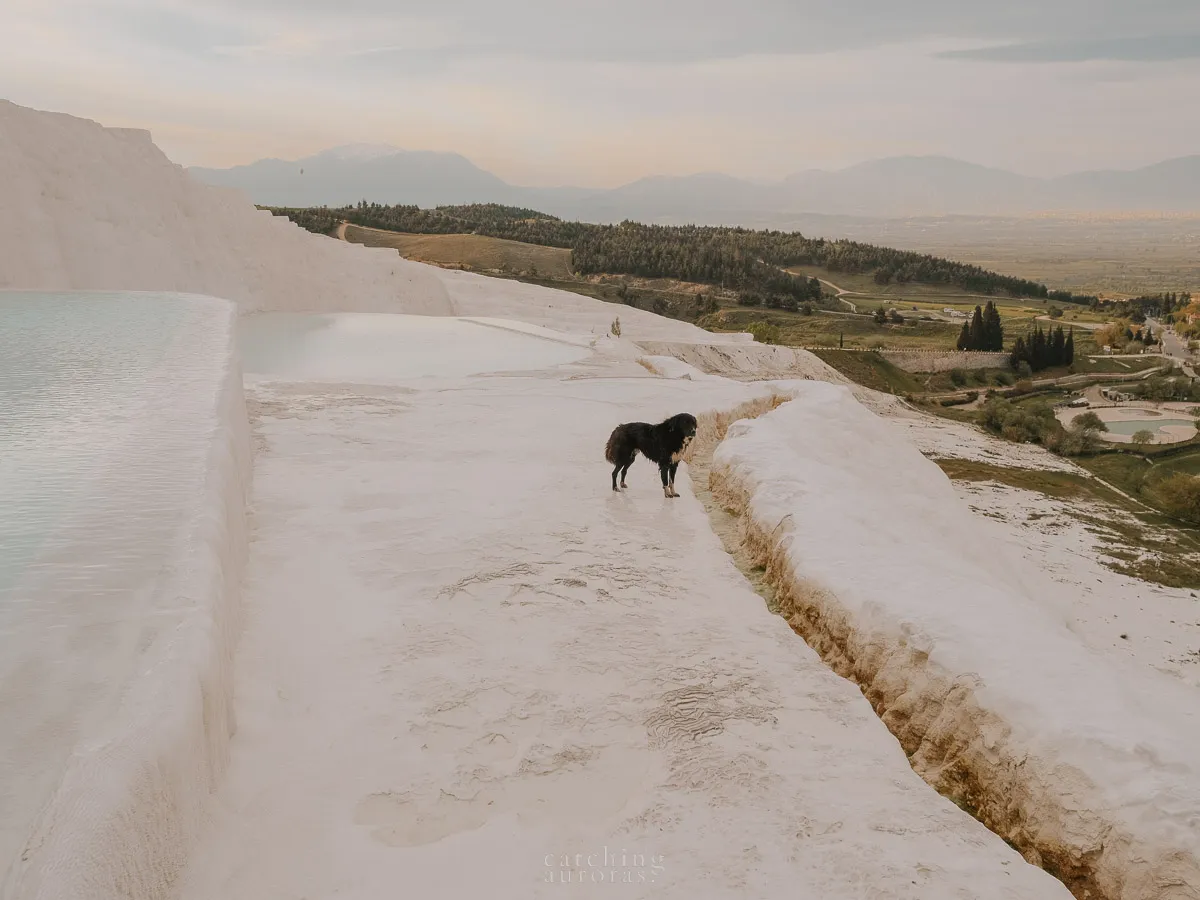
I will now leave you with the cutest doggos who were our only company at the travertines.