We visited Ephesus as part of our Turkey road trip along the Aegean coast. If you are into history, you can easily add Ephesus to your itinerary and combine it with a trip to Pamukkale and Bergama.
One of the best-preserved ancient cities in the Mediterranean, it’s a welcome reprieve from beaches, balloons and bazaars. This Ephesus Turkey guide covers everything you need to plan the visit: how to get there from Kuşadası or İzmir, what tickets cost, which gate to walk in from if you want the Library of Celsus all to yourself, what’s worth your time once you’re inside, and where to base yourself if you want more than a rushed afternoon. Oh, and did I mention cats? Stick around till the end to see all the floofers of Ephesus.
Why visit Ephesus
Ephesus ancient city, once the capital of Roman Asia Minor, is one of the most complete metropolises in the Mediterranean (even with 80% of it yet to be unearthed!) with full streets, a working sewer system, a theatre that seated 25,000 people, and a library façade so photogenic it’s become the unofficial symbol of Turkish archaeology.
You have a dense cluster of history in one small radius: two important Christian pilgrimage sites, one of the Seven Wonders of the Ancient World (or what’s left of it), and a wine village up in the hills. What more could you ask for?
How to get to Ephesus (from Kuşadası, İzmir, or Selçuk)
Ephesus itself sits just outside the small town of Selçuk, in the İzmir Province. Here’s how to visit Ephesus, whichever of these three towns you’re starting from.
Ephesus from Kuşadası. Kuşadası is the coastal town most cruise ships and beach-holiday travelers use as a base, and it’s the closest jumping-off point – about 20-30 minutes by road. You can either take a taxi (the fastest), a dolmuş – a shared minibus (the cheapest), or a day-trip tour. Kuşadası’s port sees a steady stream of cruise passengers with only a few hours ashore, so tours are widely popular.
Ephesus from İzmir. İzmir is the regional hub with the nearest international airport, so if you’re flying in from, say, Cappadocia or Istanbul, this is likely your entry point. From İzmir it’s around an hour by car, or you can take a regional train or bus to Selçuk and grab a short taxi ride from there to the site itself. Doable as a long day trip from İzmir, though basing yourself in Selçuk for a night makes the whole thing far less rushed.
From Selçuk. If you are wondering how to visit Ephesus from Selçuk – walk. The Lower Gate is walkable from many hotels in town, or you can take a five-minute taxi ride. We chose this as our base, and even though the food and accommodation options are limited, I’d highly recommend staying here.
Ephesus tickets and opening hours
Entrance to Ephesus costs around 40 Euros per person (or the Turkish lira equivalent) as of 2026. The Terrace Houses (a separate, roofed section of preserved multi-story homes with mosaics and frescoes) cost 15 Euros extra.
Both are covered if you have the Turkey Museum Pass or the Aegean Museum Pass.
The site is open from 8:00 AM to 7:00 PM, with hours shifting slightly by season.
Personally, I suggest getting here at opening time for the best experience. Ephesus has almost no shade, the marble reflects the sun, and by midmorning in summer the crowds from the day’s cruise ships and tour buses arrive in waves. We got here just before 8 AM and were out by 11 AM.
Upper gate vs lower gate: which way to walk
Ephesus has two entrances, and if you are figuring out how to visit Ephesus on your own, the gate you pick matters a lot.
The Upper Gate (sometimes called the Magnesia Gate) puts you near the State Agora and the Odeon, at the top of the site. From here, you walk downhill through Curetes Street, past the Terrace Houses, and arrive at the Library of Celsus near the end – which means your visit builds toward its most famous view instead of starting with it. If you are visiting the site with a guide, this is where you will most likely start. This is the recommended path: walking downhill is easier, and saving the Library of Celsus for the second half of the walk makes for a better payoff.
The Lower Gate does the reverse: you hit the Library of Celsus and the Great Theatre almost immediately, then work your way uphill against the flow of most tour groups. If your aim is to get the Library of Celsus all to yourself without any crowd, this is the gate I’d recommend.
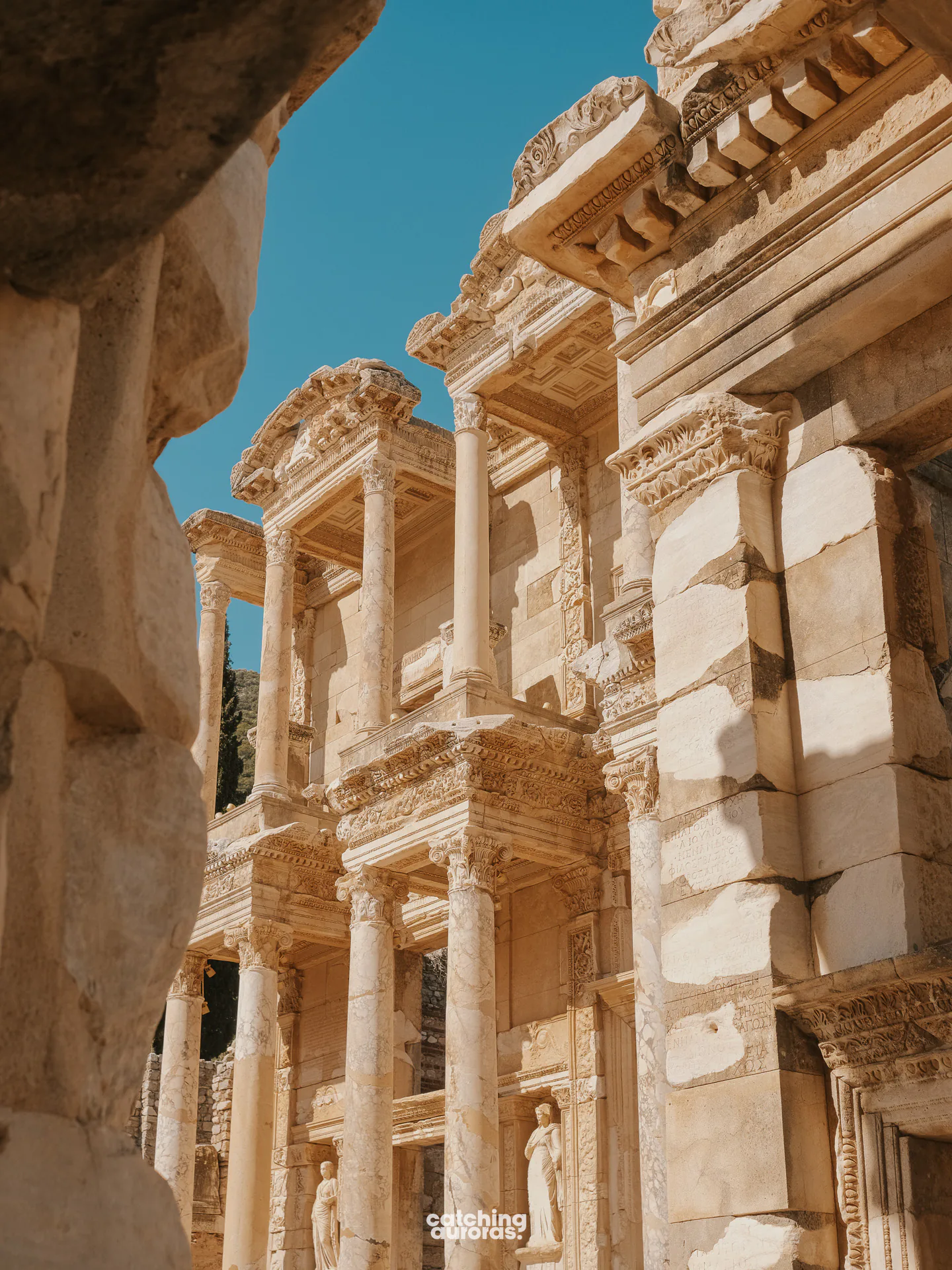
We walked up and down the length of Ephesus 4 times because of a rookie mistake. We wanted to start at the Lower Gate to get to the Library of Celsus first. However, Google Maps led us to the Upper Gate instead at 7:55 AM. And what did we see? An entire tour bus queuing up at the gate. We had no time to figure out how to get to the Lower Gate, so we entered through the Upper Gate instead. We quickly walked down to the Library, got a few shots before the crowds arrived, then walked back up to start our audio guide properly. Down again – this time actually taking in the ruins – and then one last climb back up to the parking lot.
Uff, if this sounds tiring – it is. Ephesus is not small – it’s around 1.5 km from the Upper Gate to the Lower Gate. So, don’t make our mistake. If you’re taking a taxi, confirm which gate you’re being dropped at.
What to see (Library of Celsus, Great Theatre, Terrace Houses)
Ephesus is an entire ancient city, not a single monument, so budget at least 2-3 hours to walk the whole stretch. A few things you should not miss.
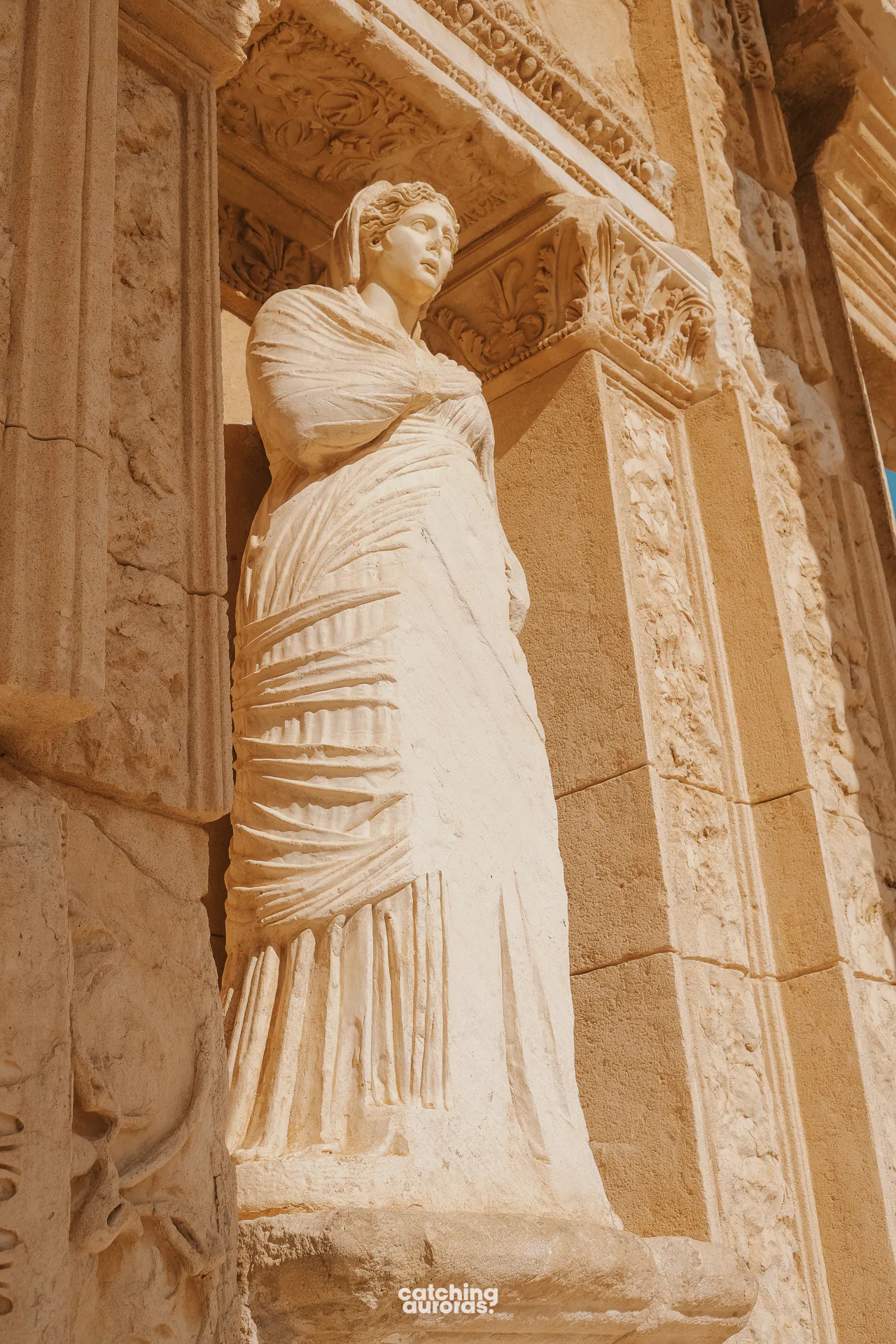
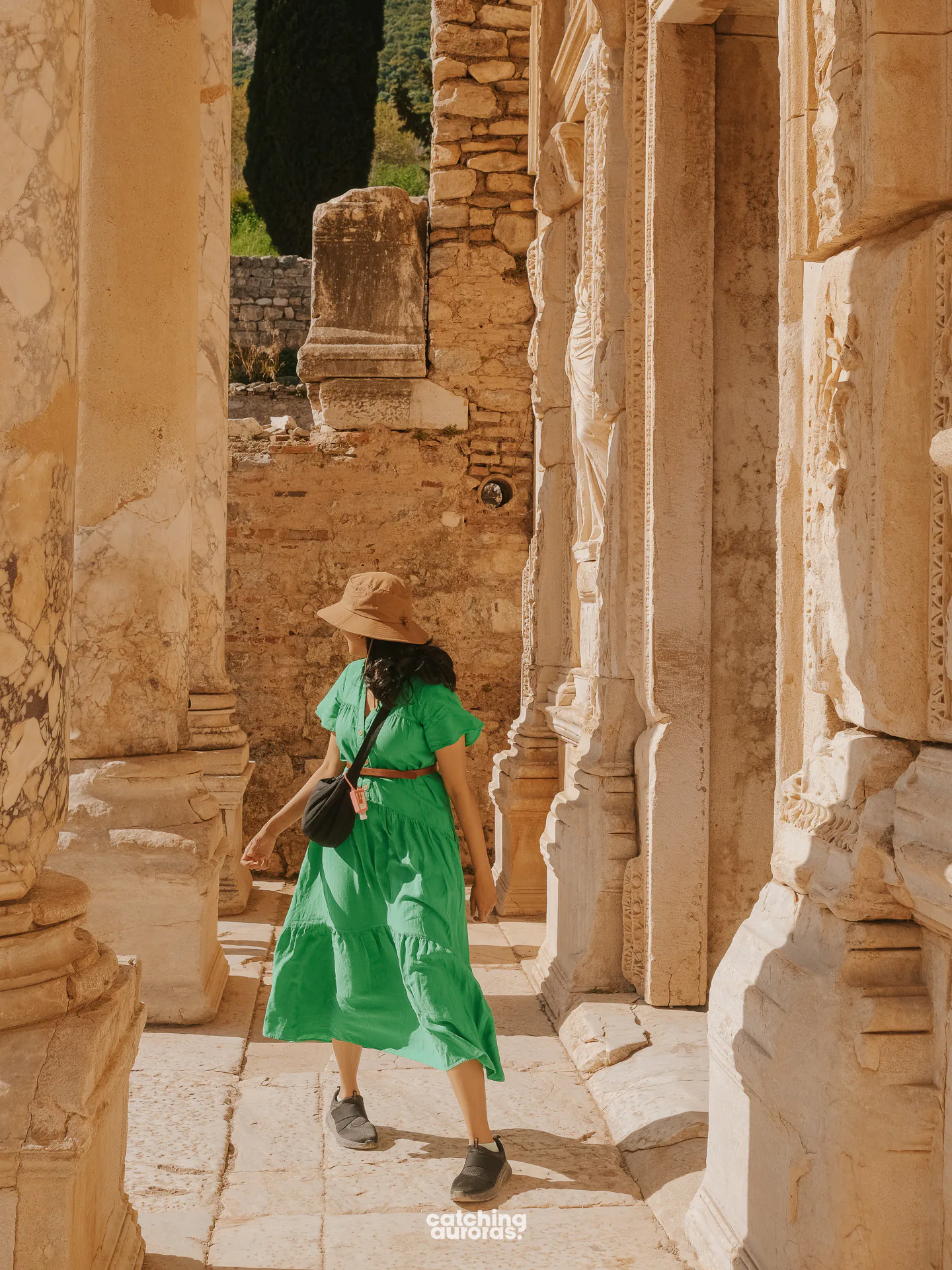
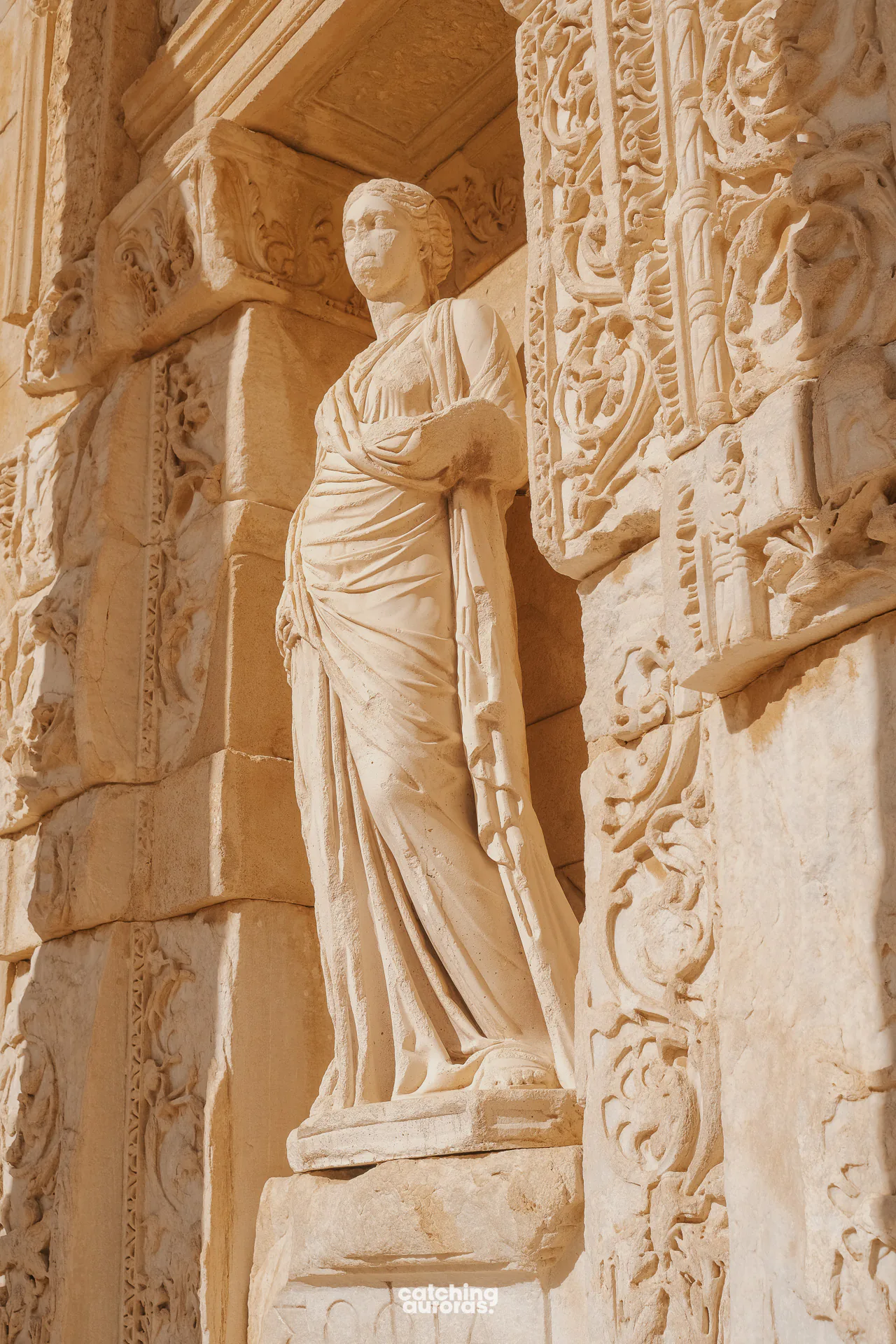
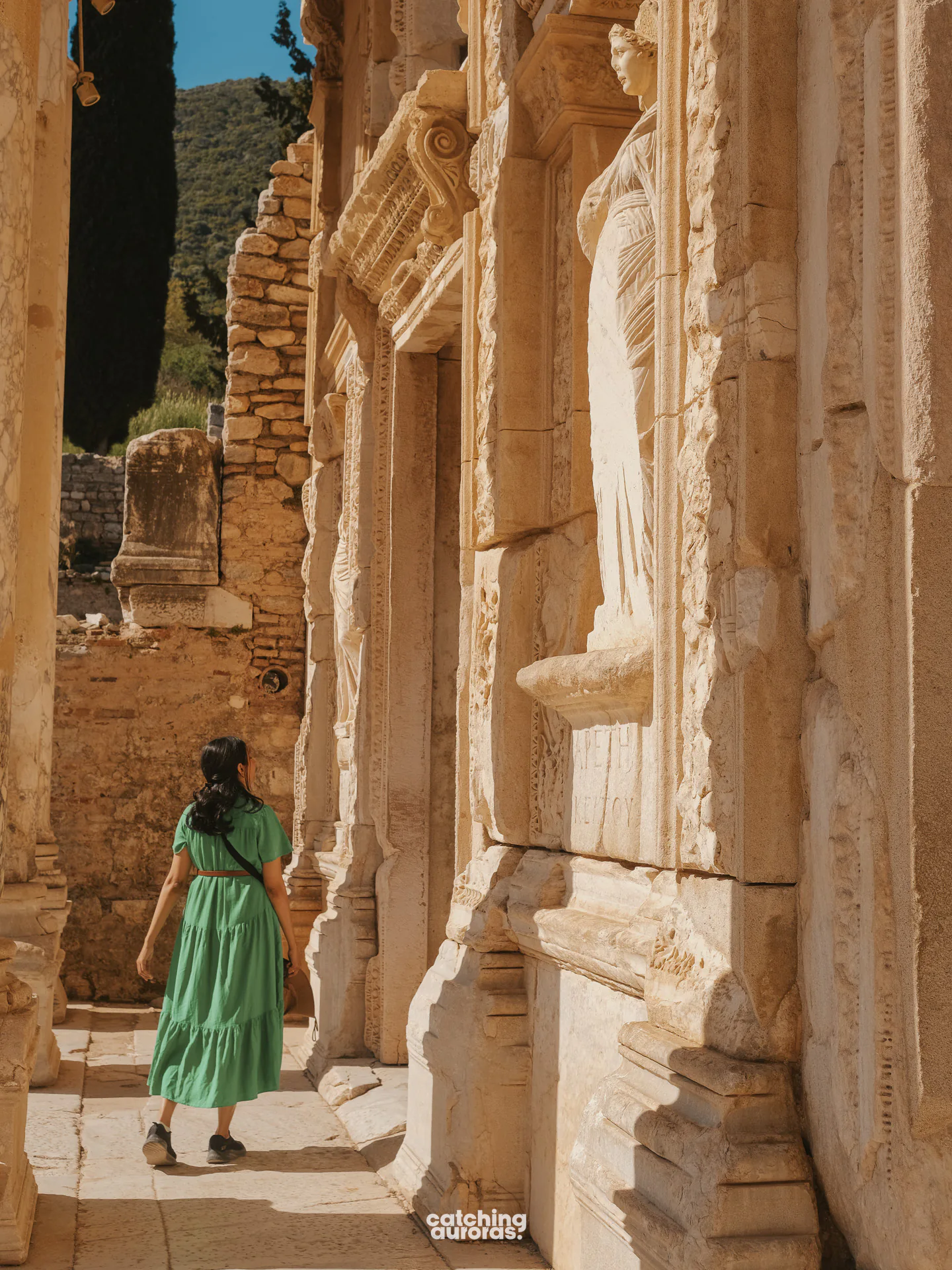
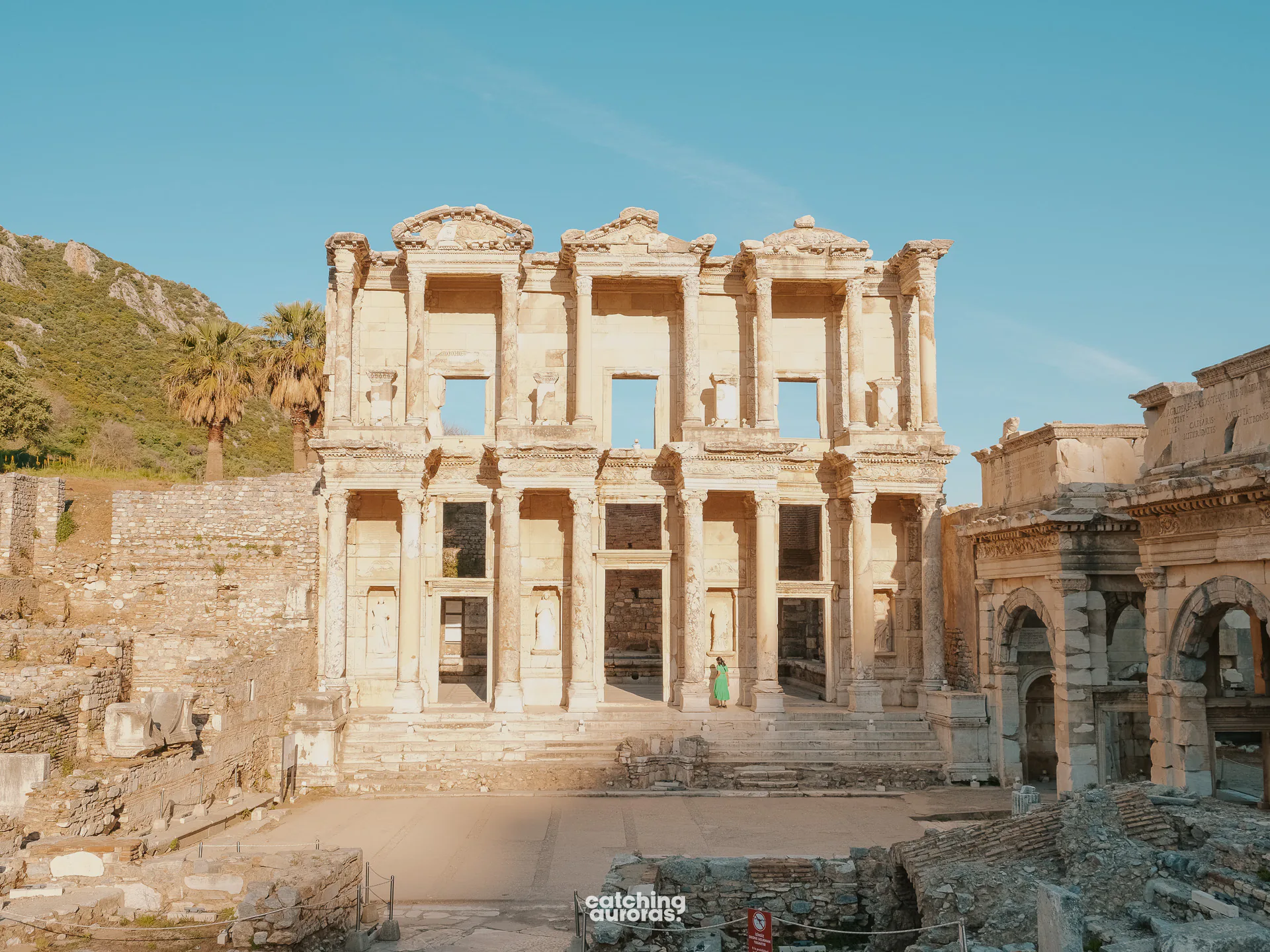
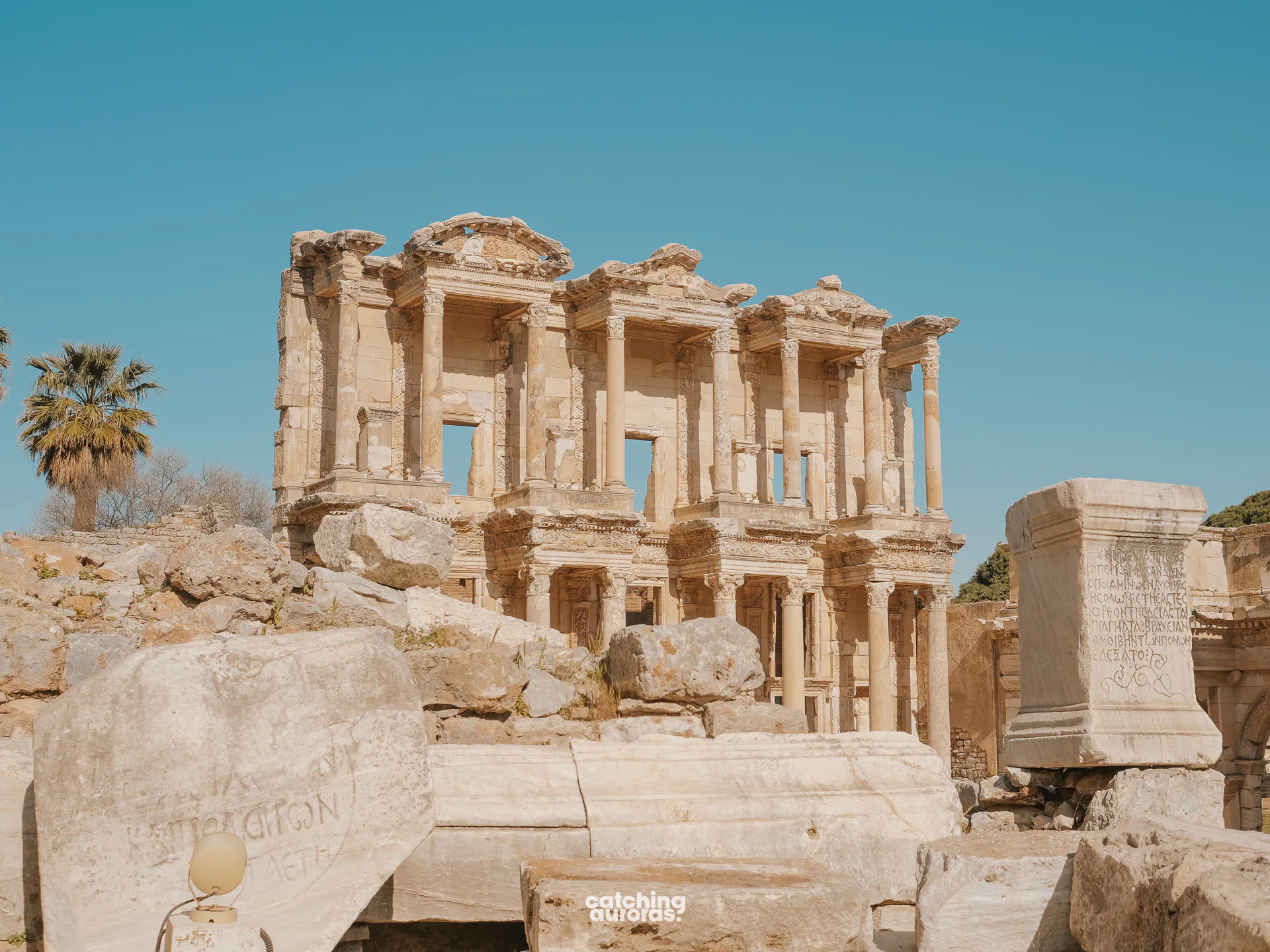
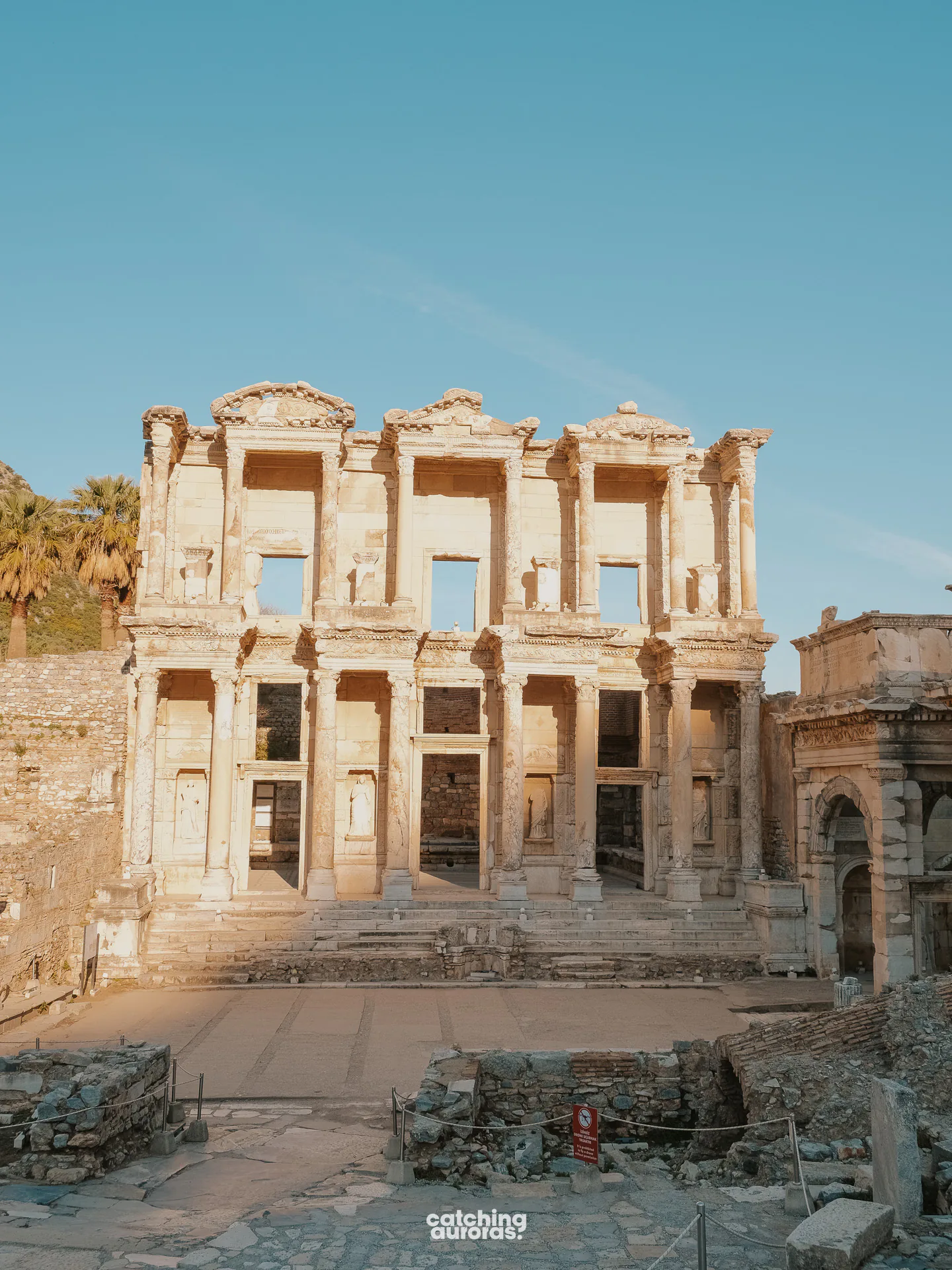
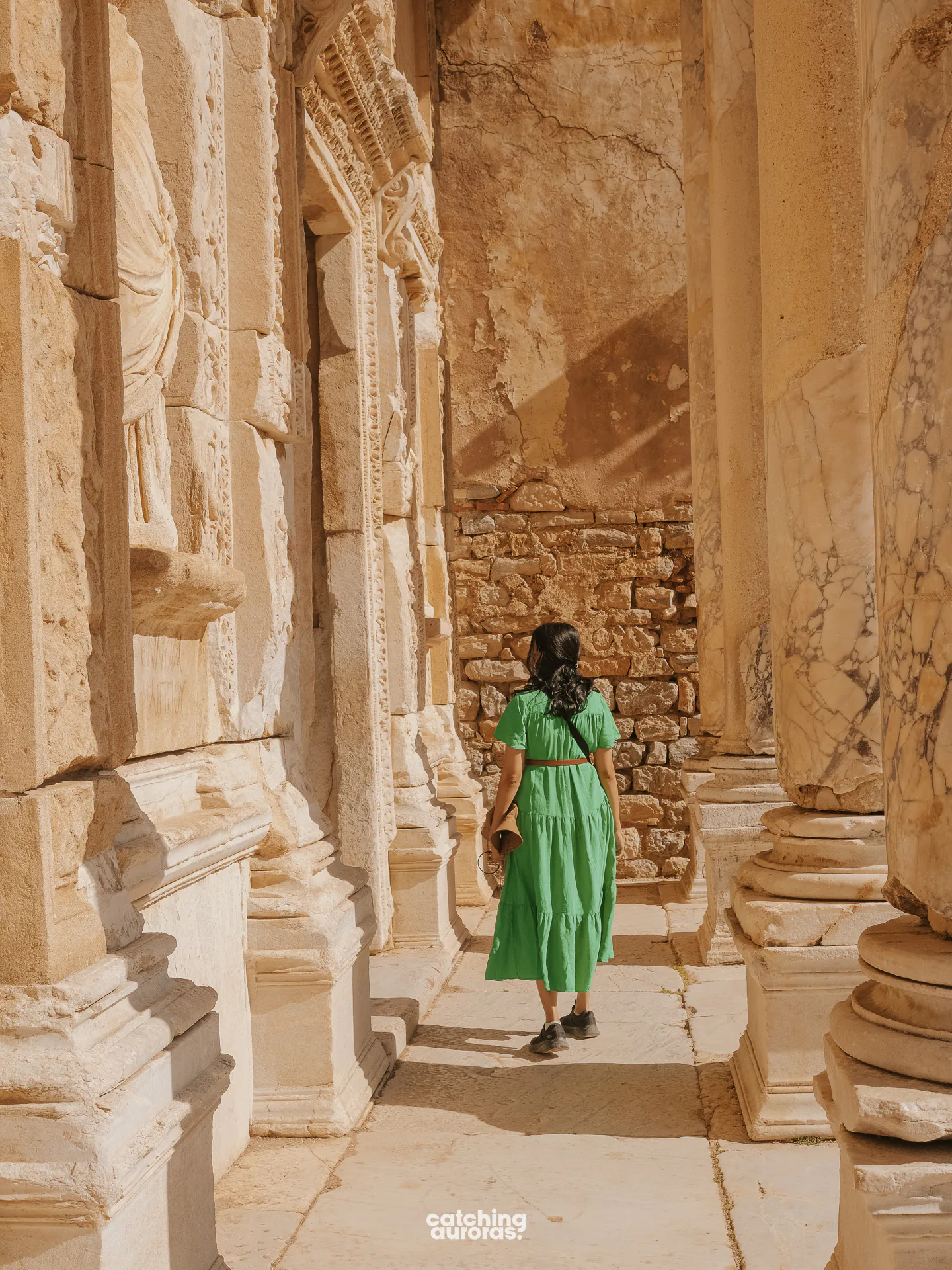
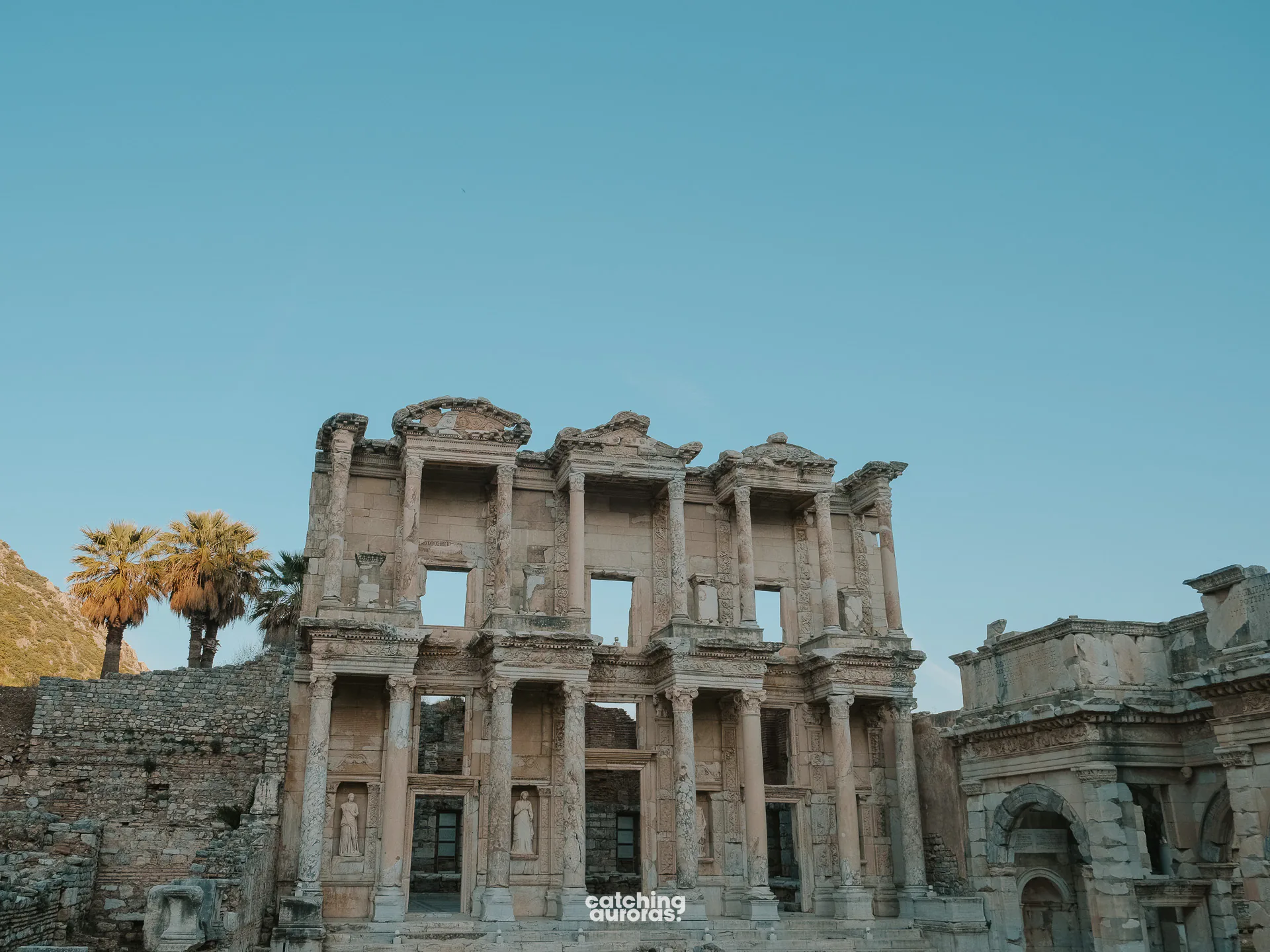
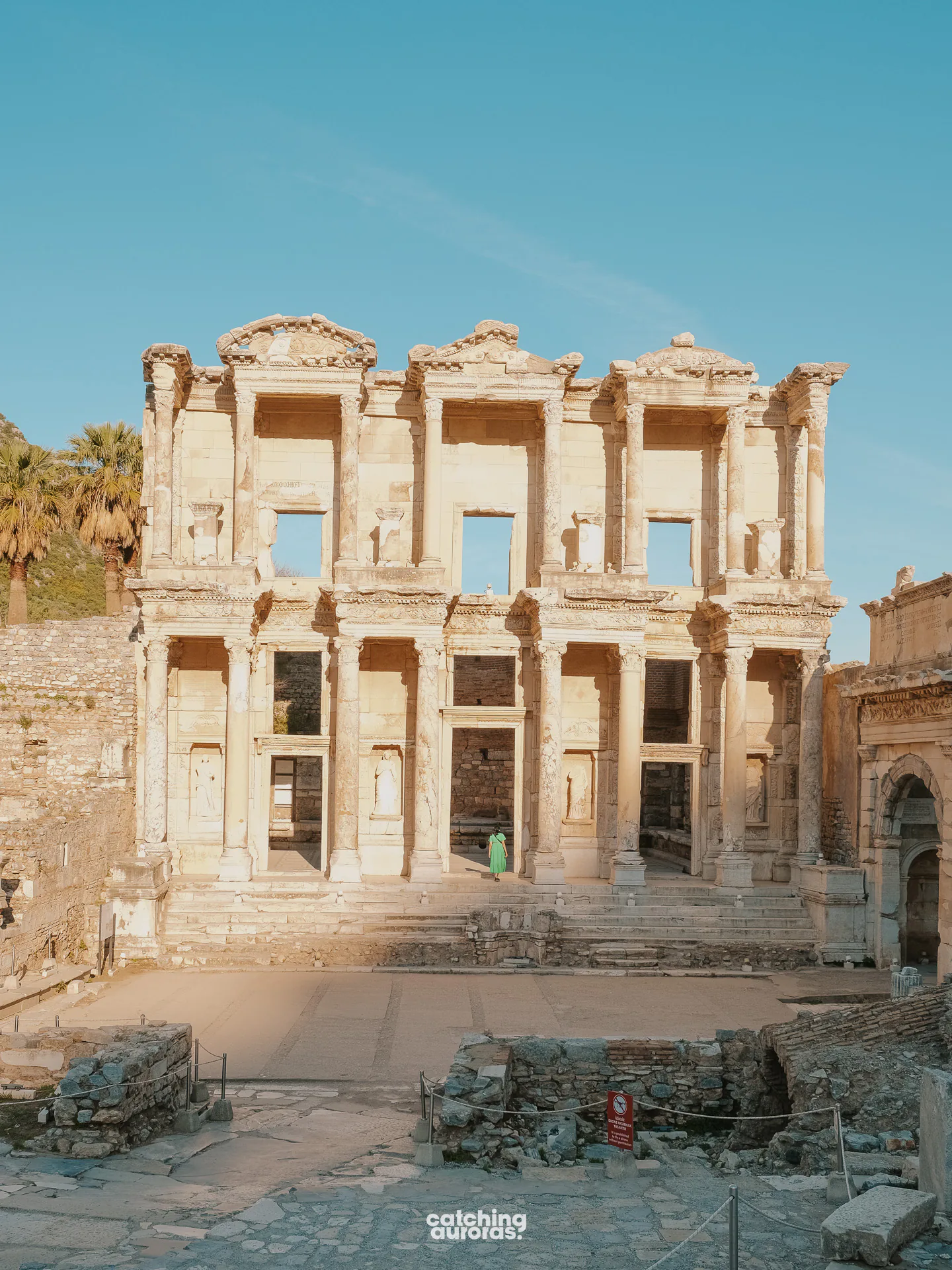
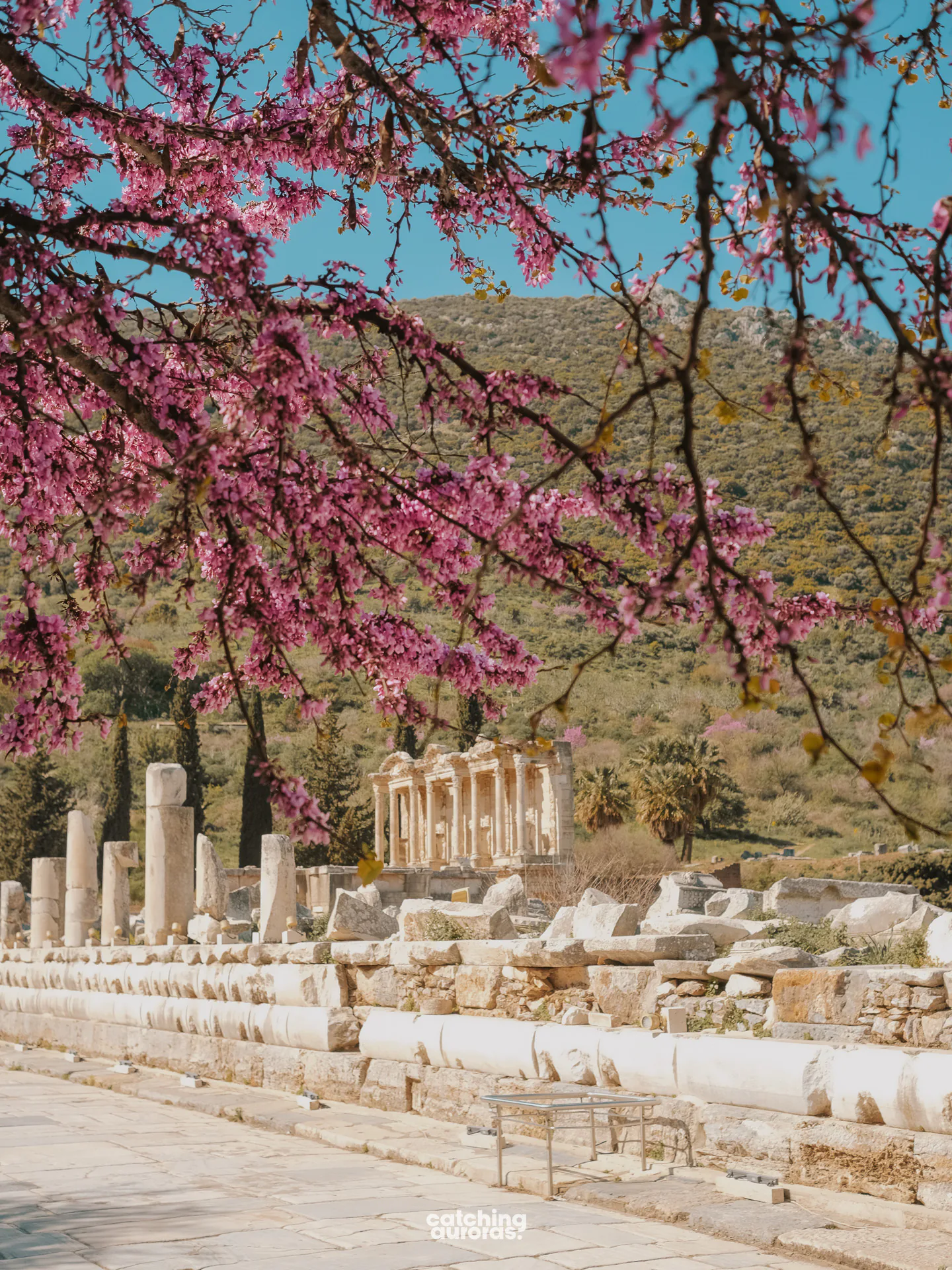
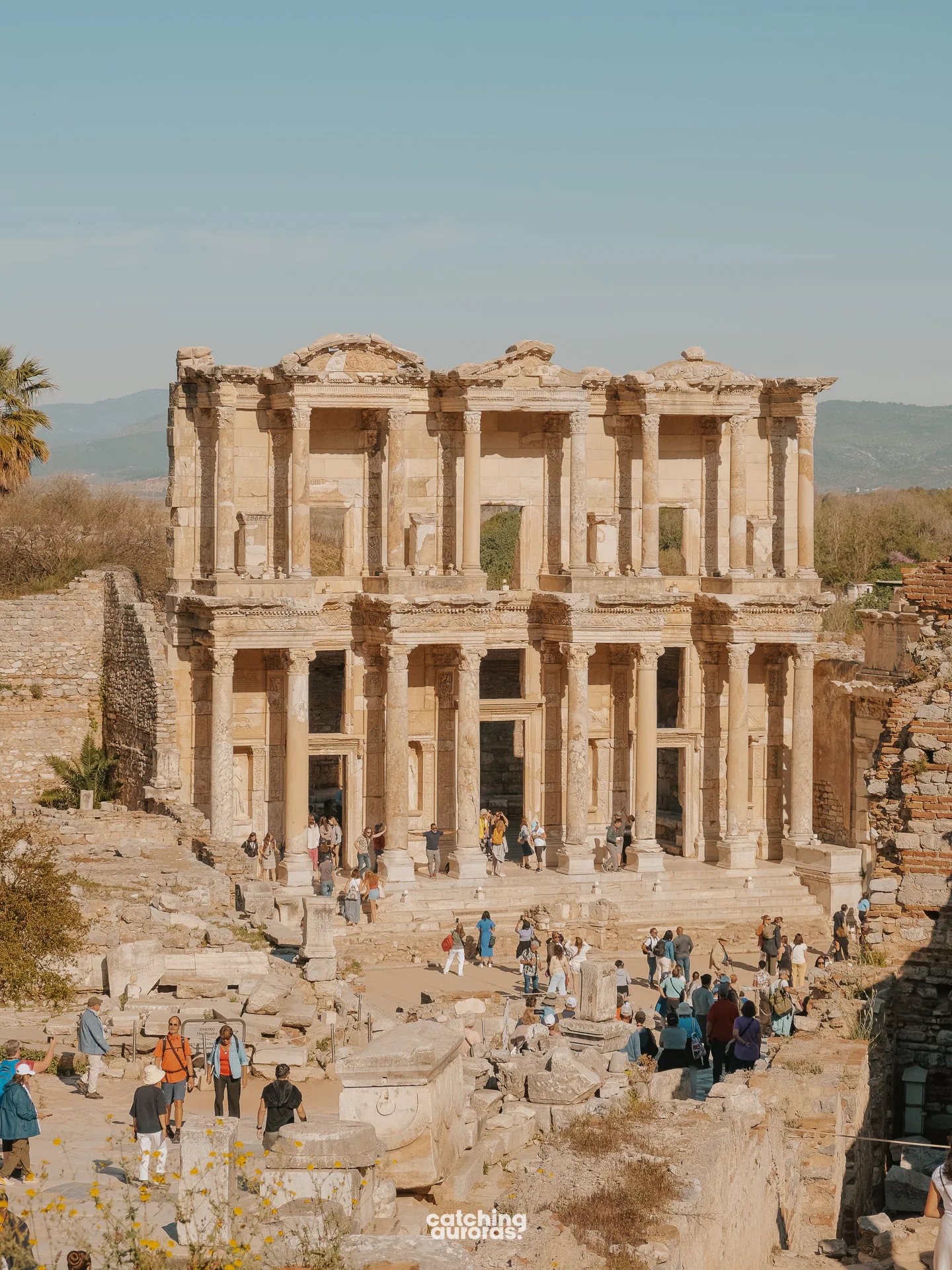
The Library of Celsus – the marble façade Ephesus is most famous for. Built in the 2nd century AD, this was once the third largest library in the world, after Alexandria and Pergamum. It’s hard to believe that two thousand years later, its iconic façade is still standing and looks just as impressive in photos. I cannot count how many pictures I took of this breathtaking beauty.
Photography tip: While reaching here at 8 gives you time to click photos with no one else in the frame, the Library looks better when the sun actually hits it. You can see the photo I clicked of it at 8 AM vs an hour later.
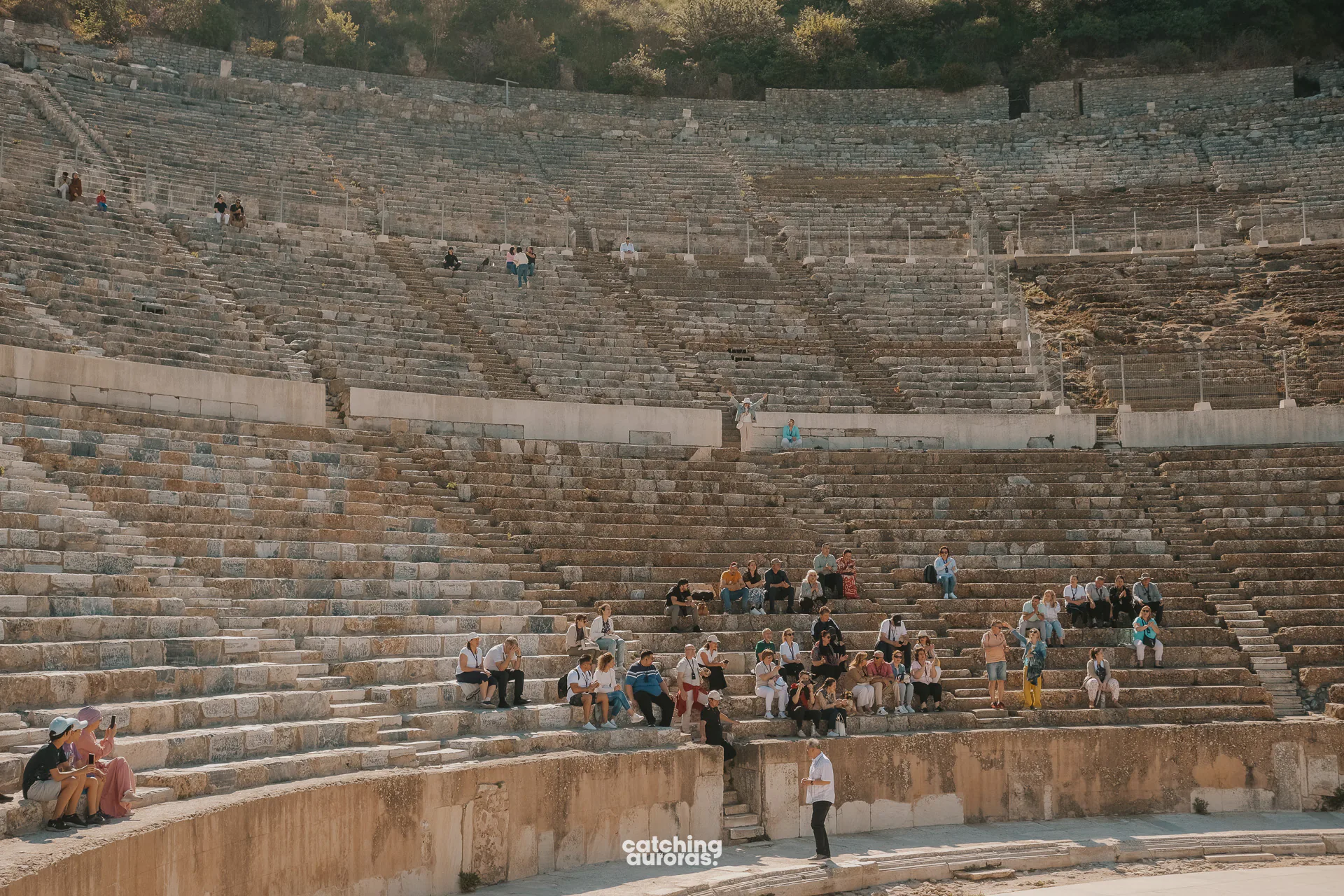
The Great Theatre – this is just past the Library of Celsus and could seat 25,000 people at its peak. The acoustics still work; we heard a tour group singing hymns to test the acoustics and it sounded so beautiful.
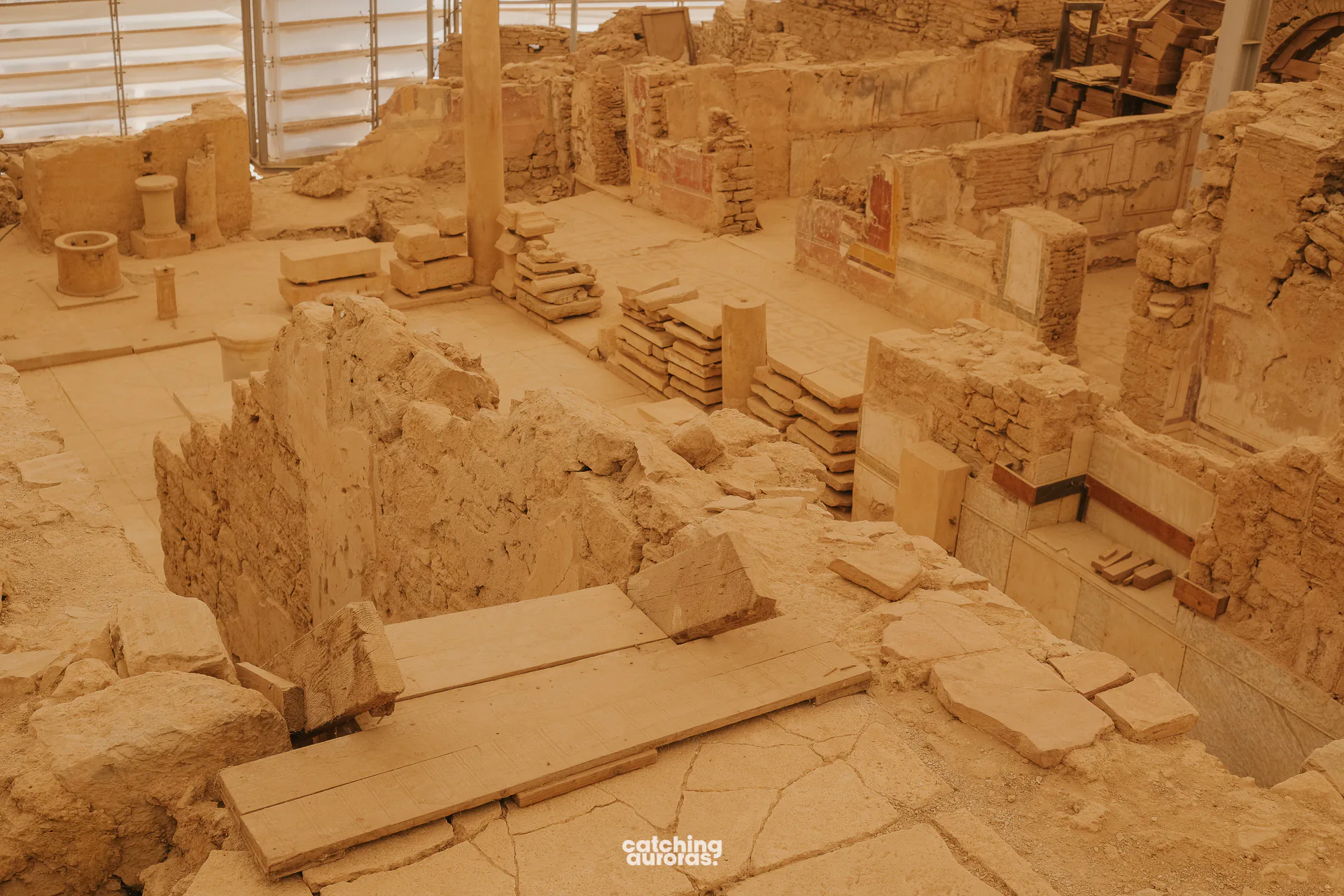
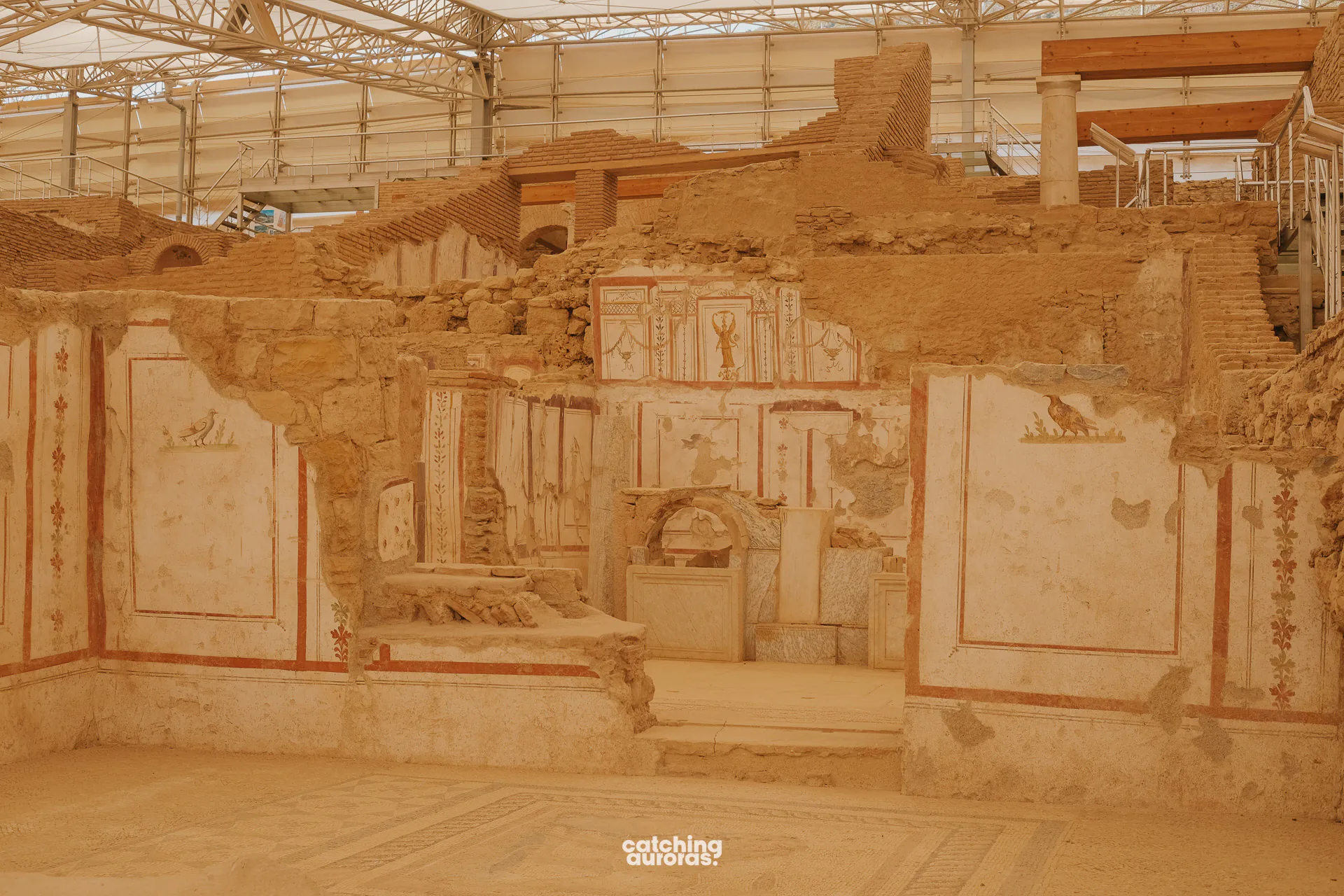
The Terrace Houses – this requires a separate ticket (15 Euros) but is included if you have a museum pass. It provides an intimate glimpse into how the wealthy lived, with mosaic floors, wall frescoes, and functioning heated water systems.
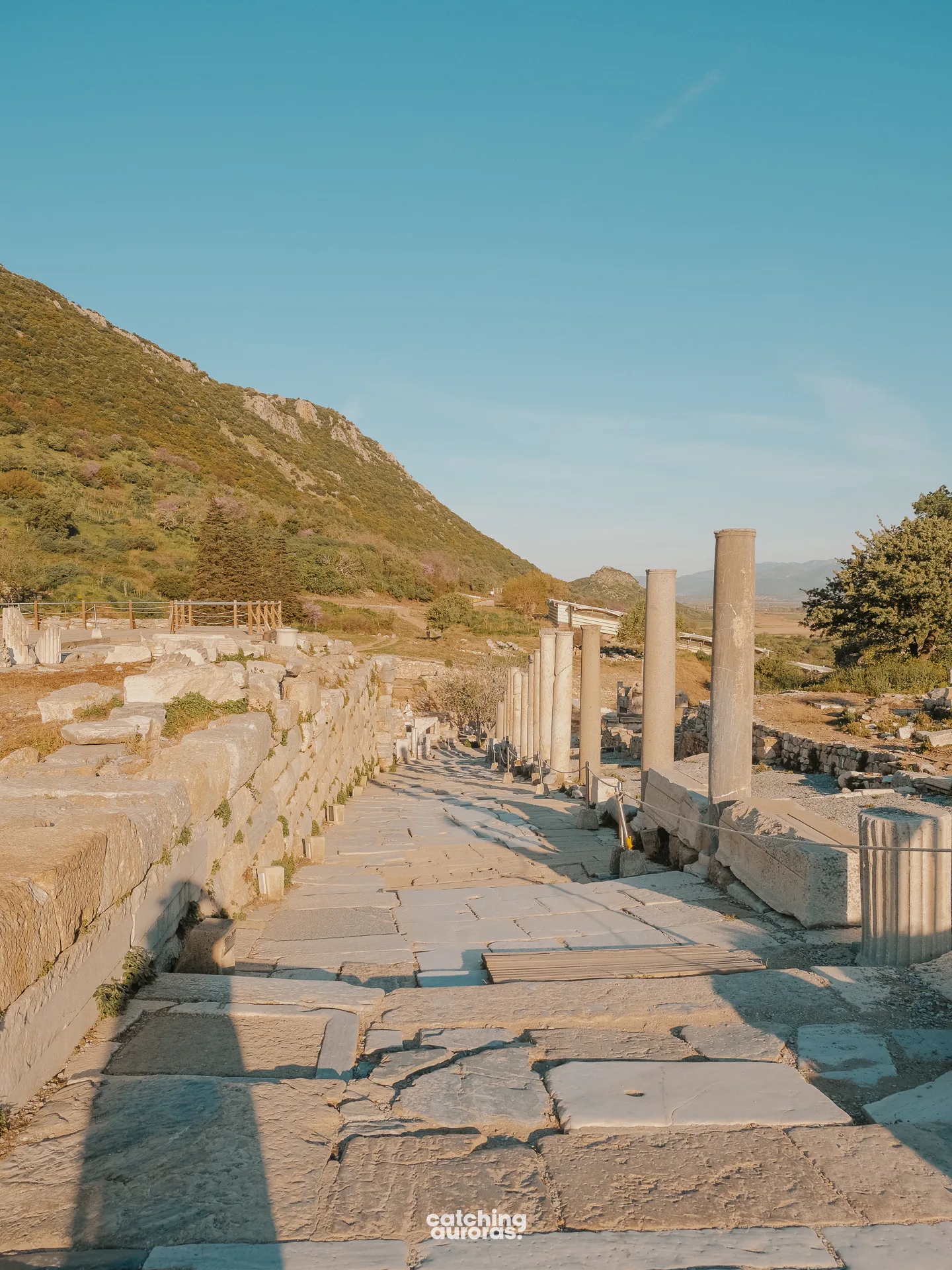
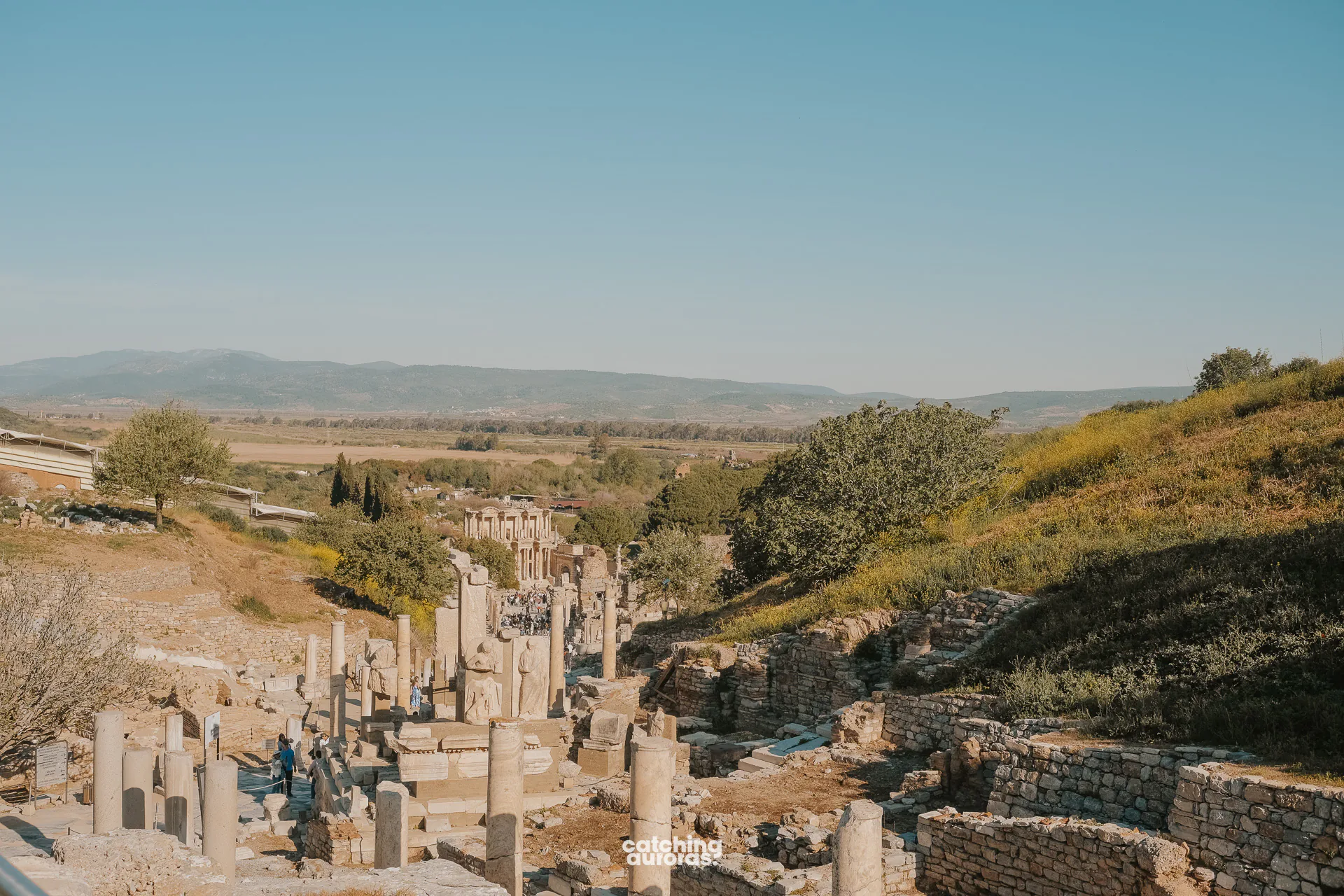
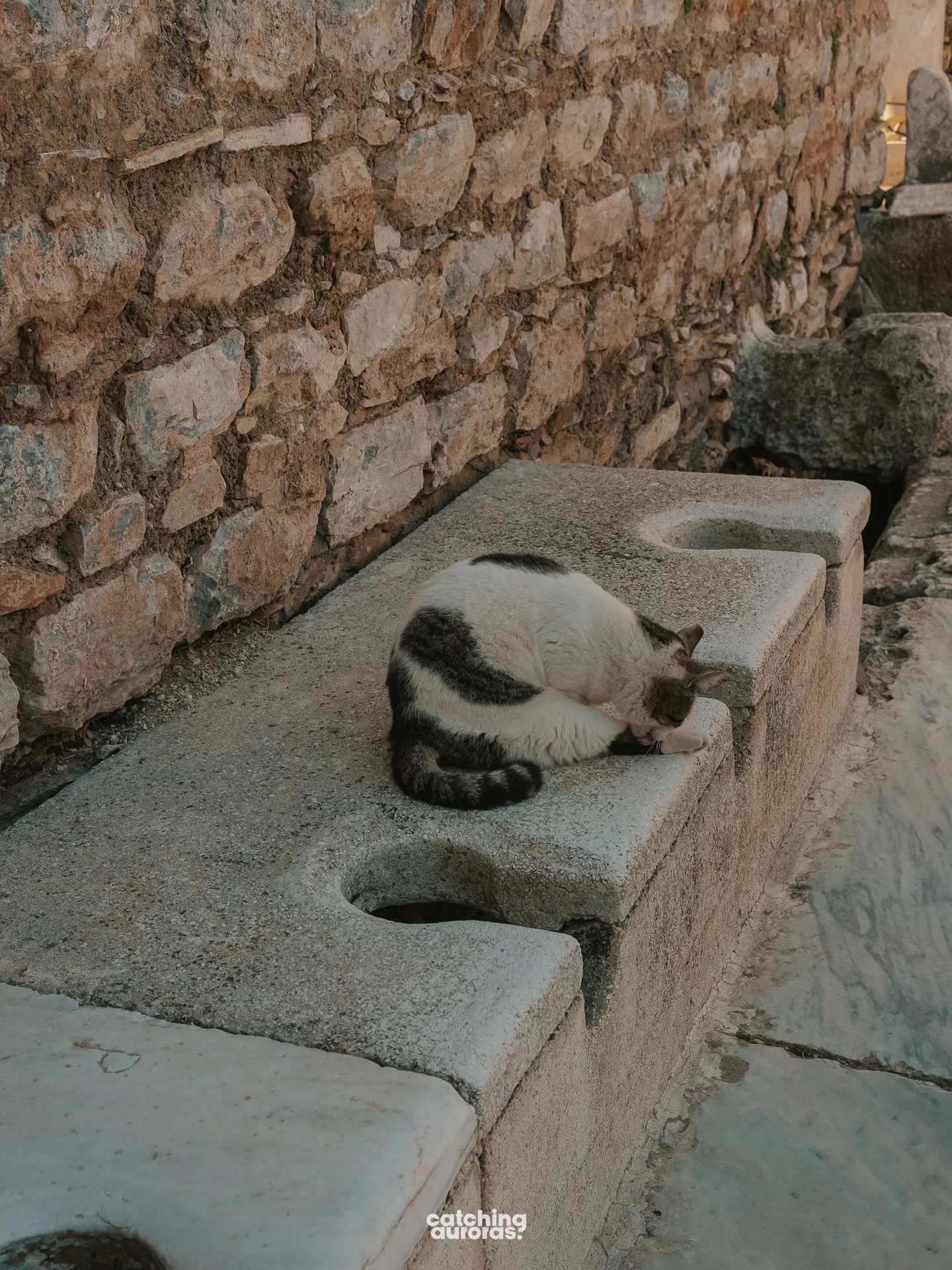
Curetes Street – the main marble thoroughfare connecting most of the site, lined with a brothel and public latrines. Fun facts: A foot imprint on the Marble Street shows the way to the brothel. And the latrines? You could pay a membership fee to reserve your own seat.
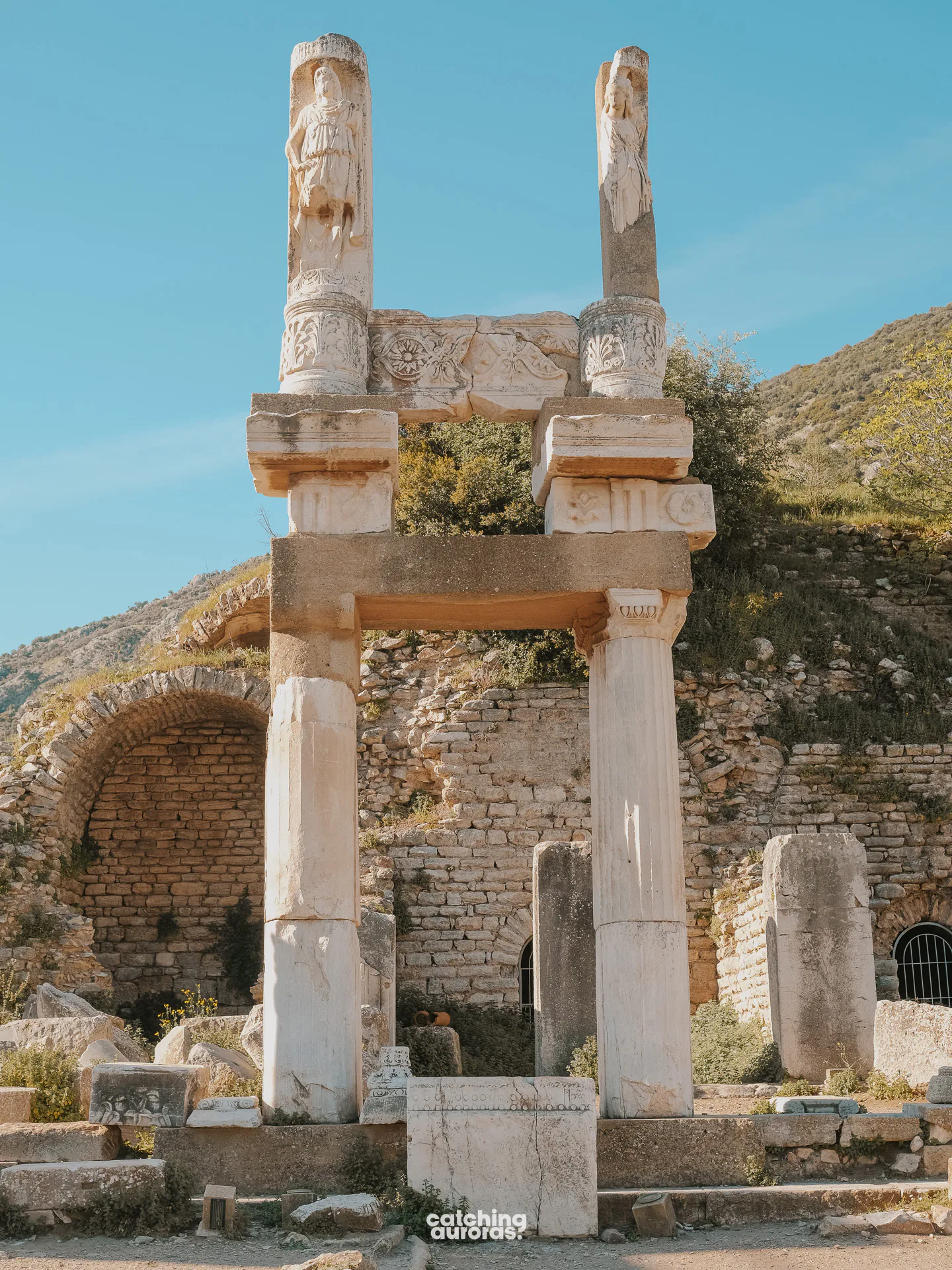
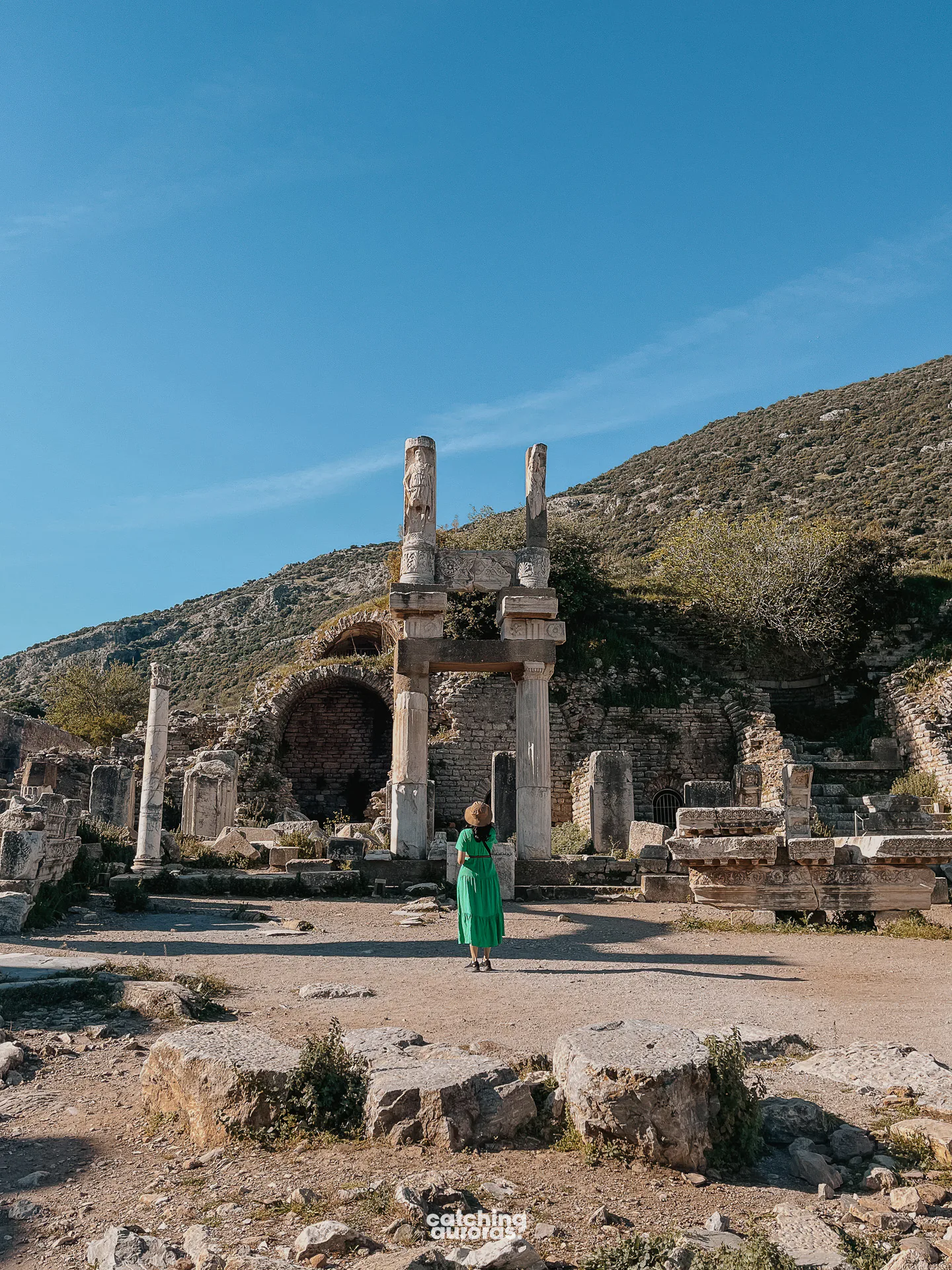
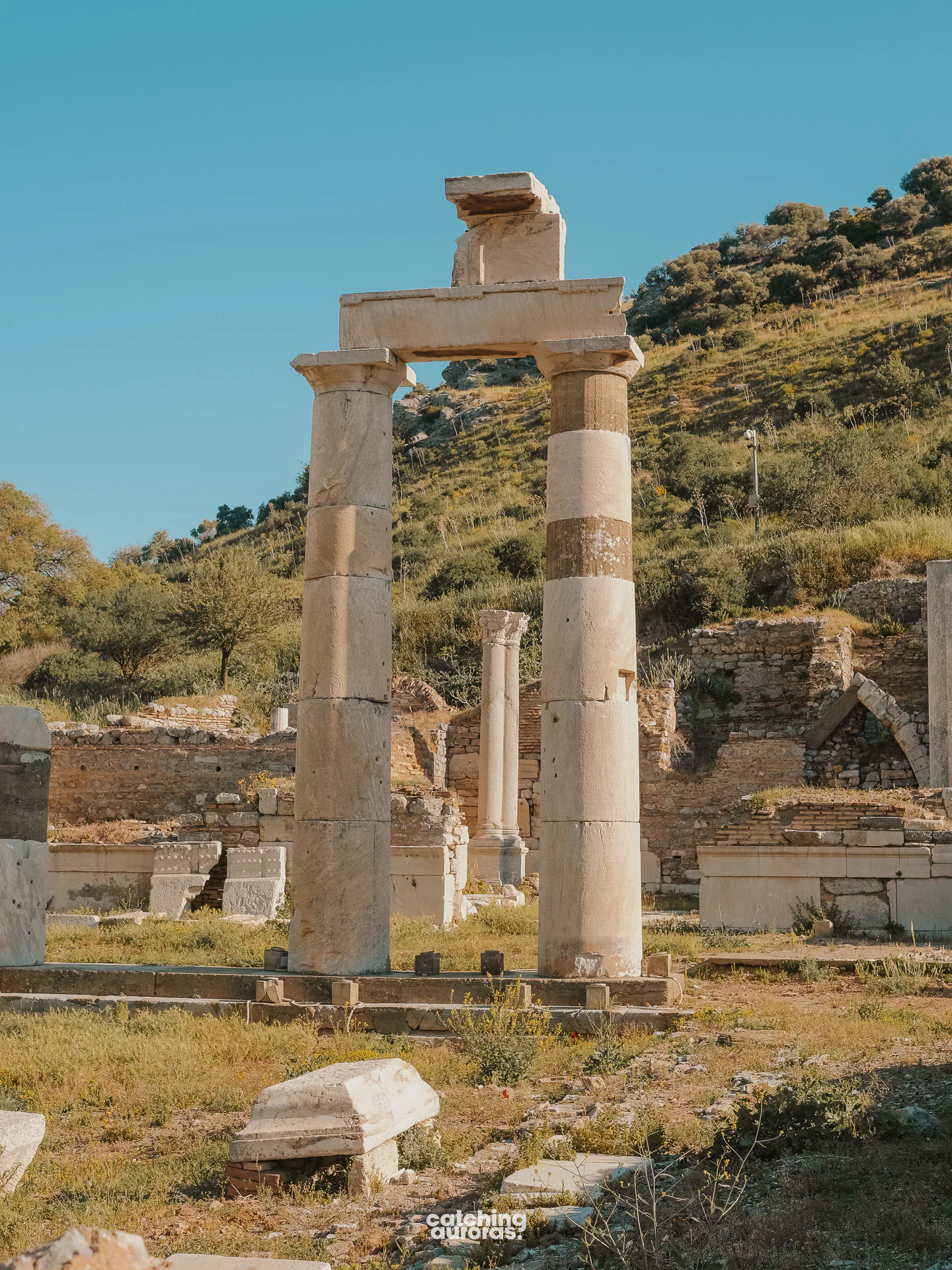
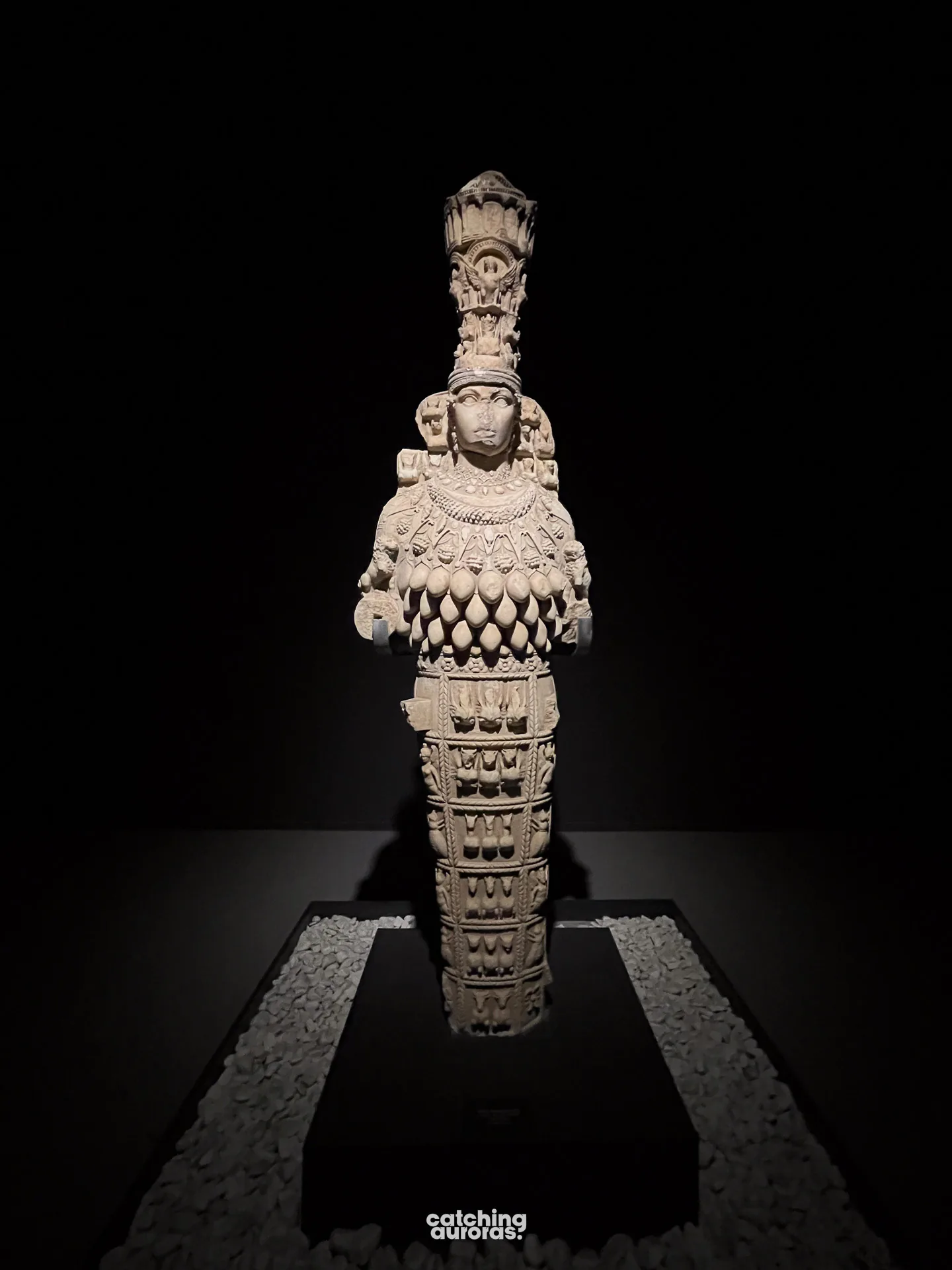
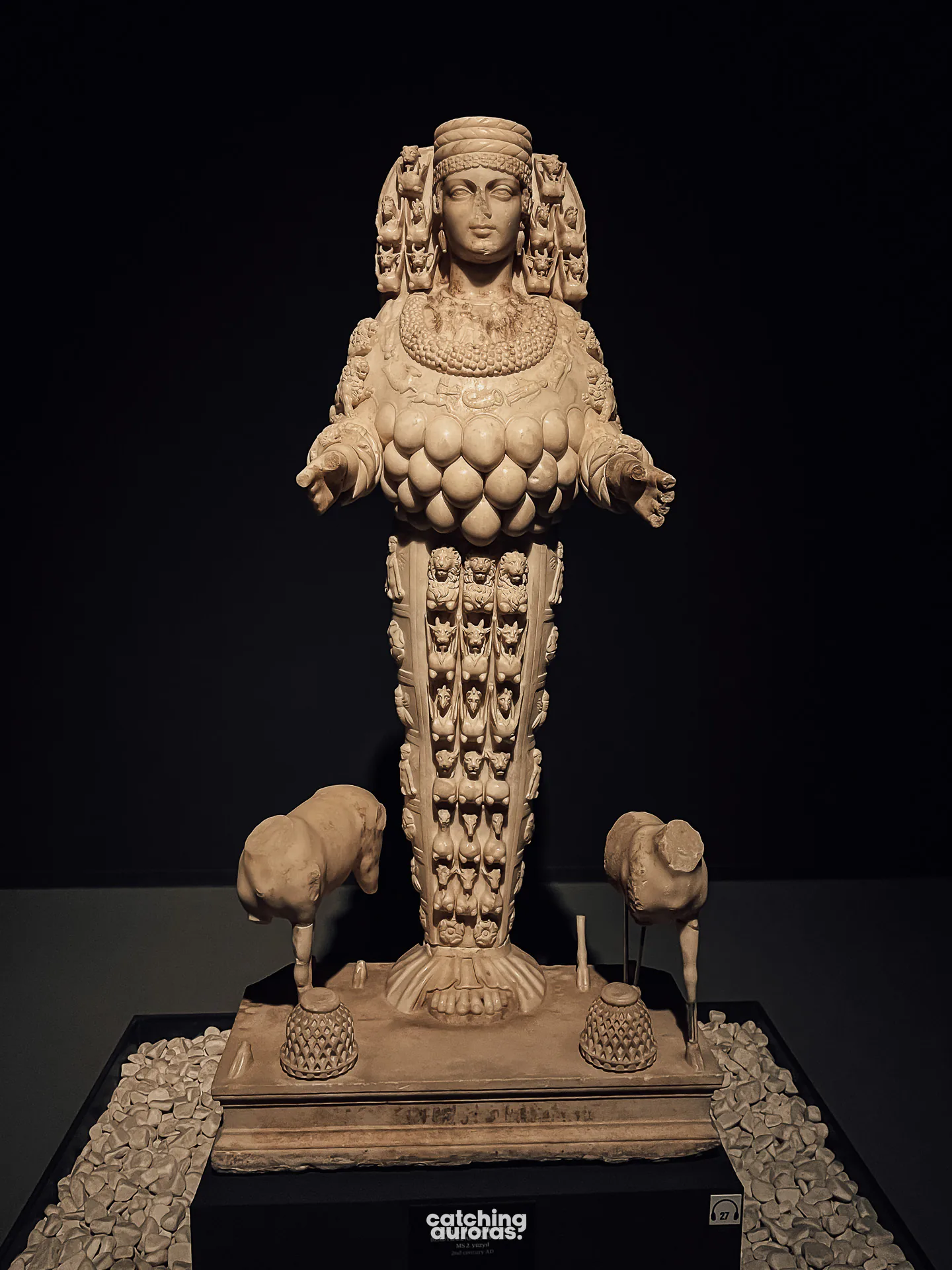
The Temple of Domitian and the Prytaneum. Interesting fact: many of the cult statues of Artemis were discovered at the Prytaneum.
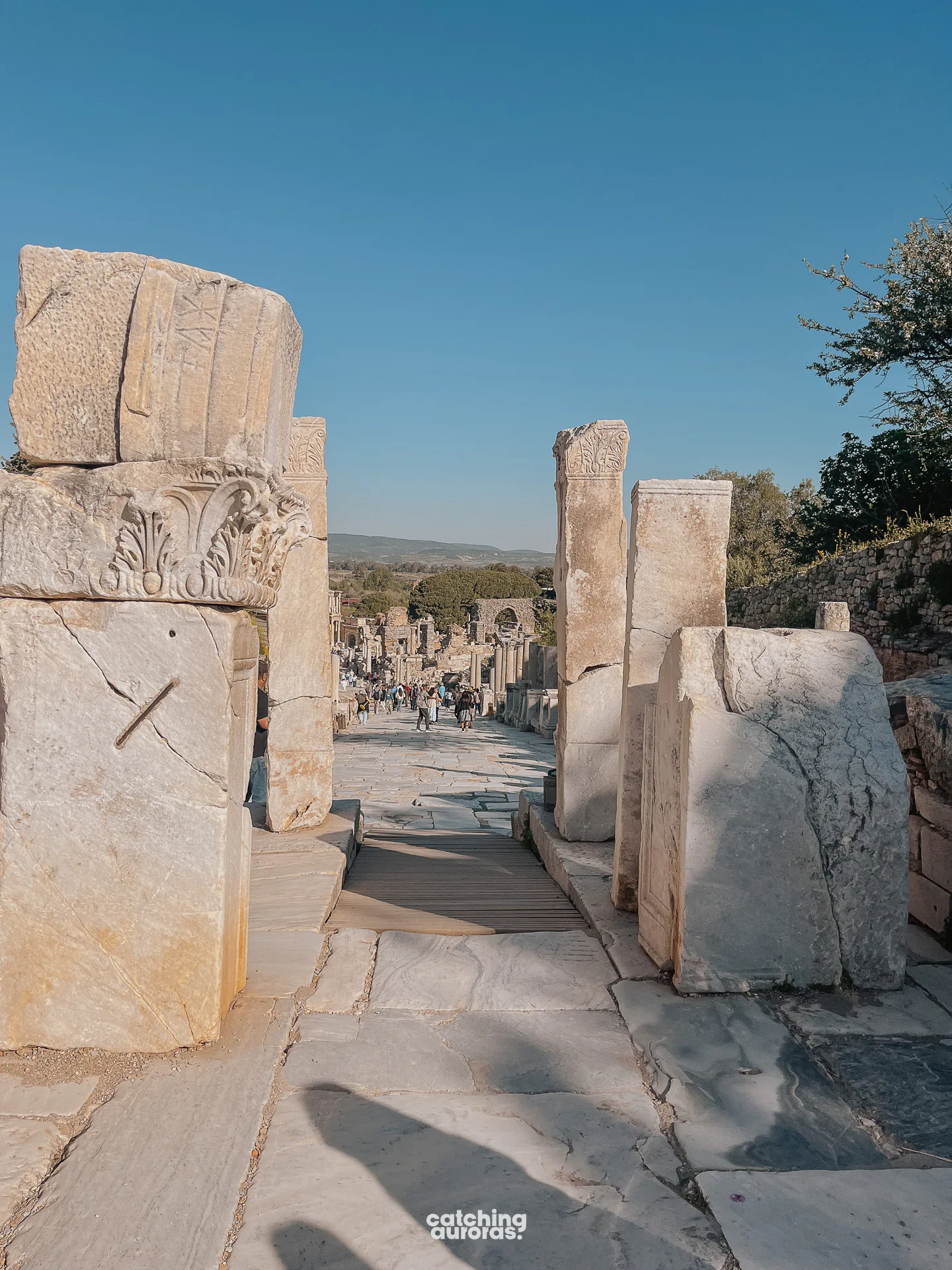
The Hercules Gate – features famous carvings of Hercules wearing the lion skin and was historically used to stop wagons from entering the pedestrian path. It is said that you have the strength of Hercules if your hands can touch the two columns as you pass through. At least that’s what the guides tell you.
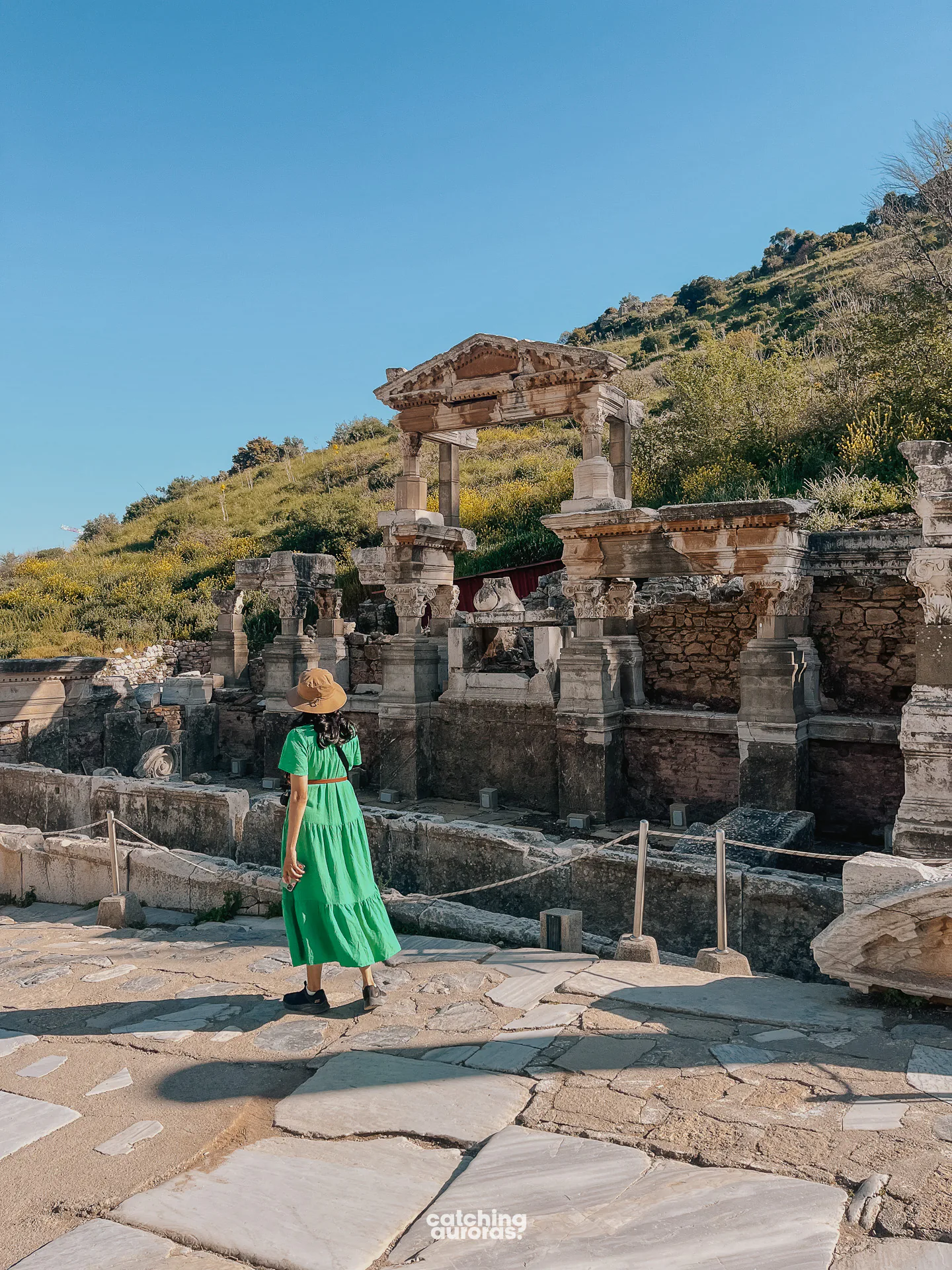
The Temple of Hadrian and Fountain of Trajan – Temple of Hadrian is another must-see attraction. Pass by these when you walk down the Curetes Street.
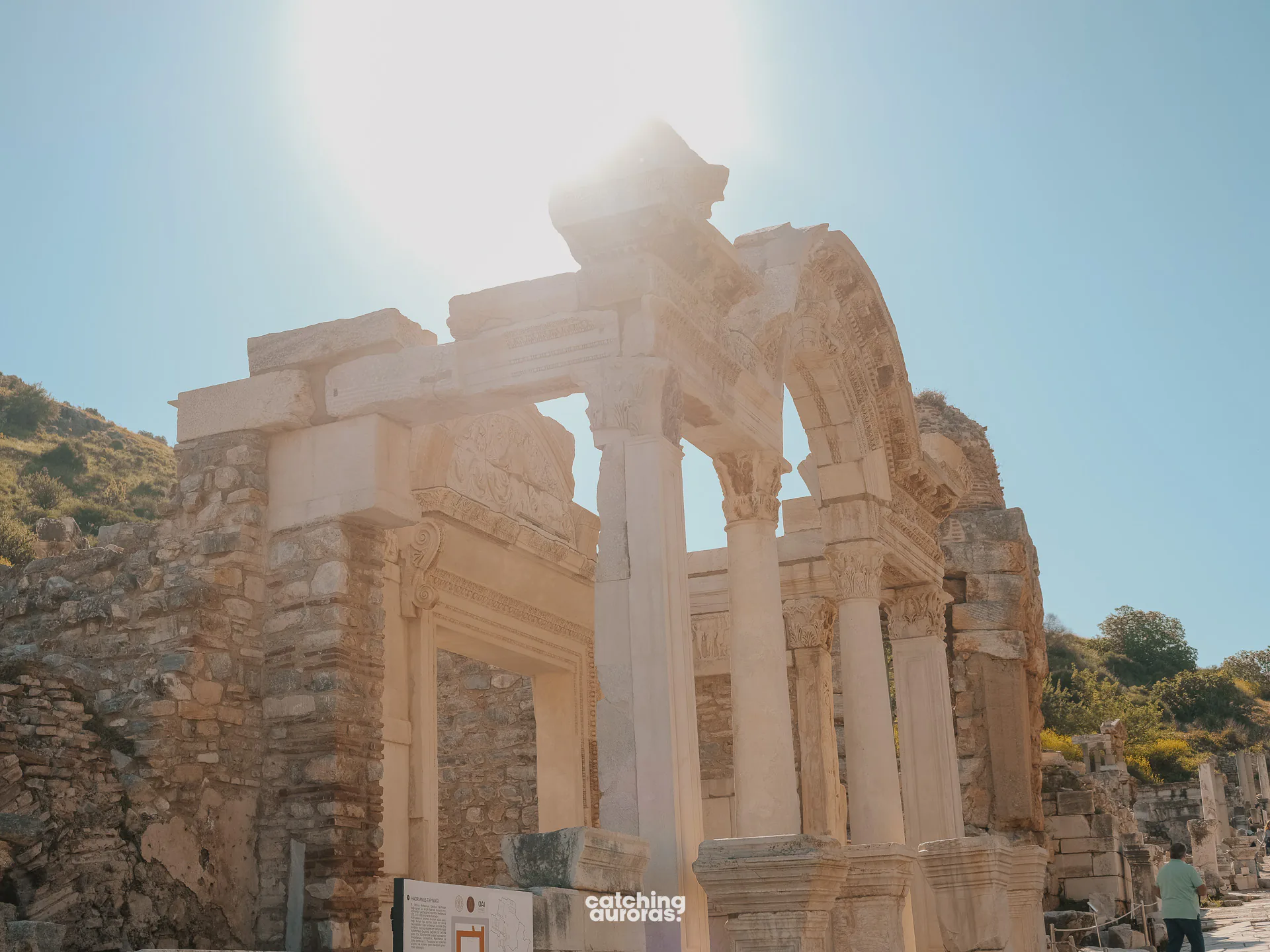
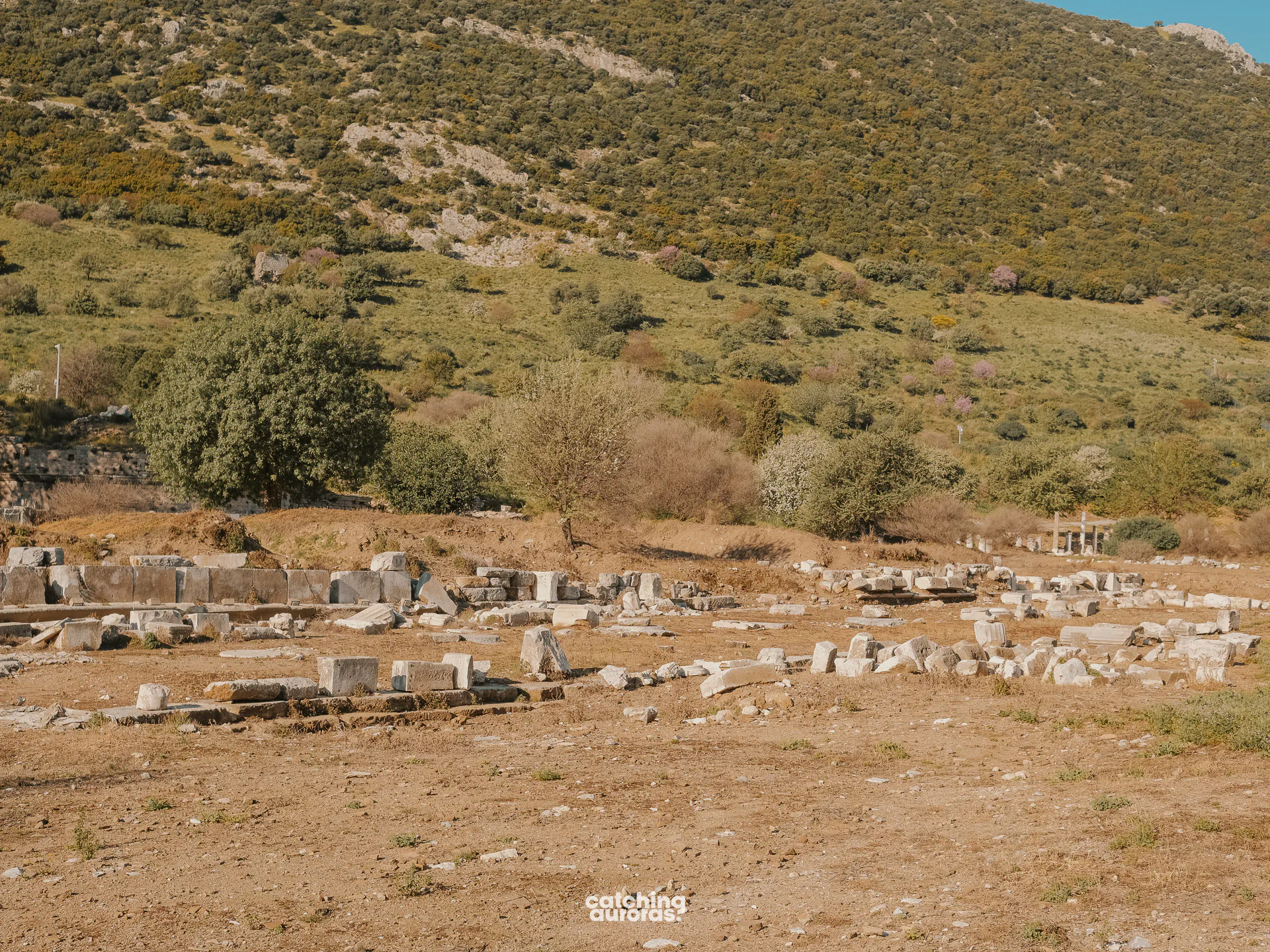
The Odeon – a smaller theatre near the Upper Gate. The State Agora – the site’s old marketplace, right next to it.
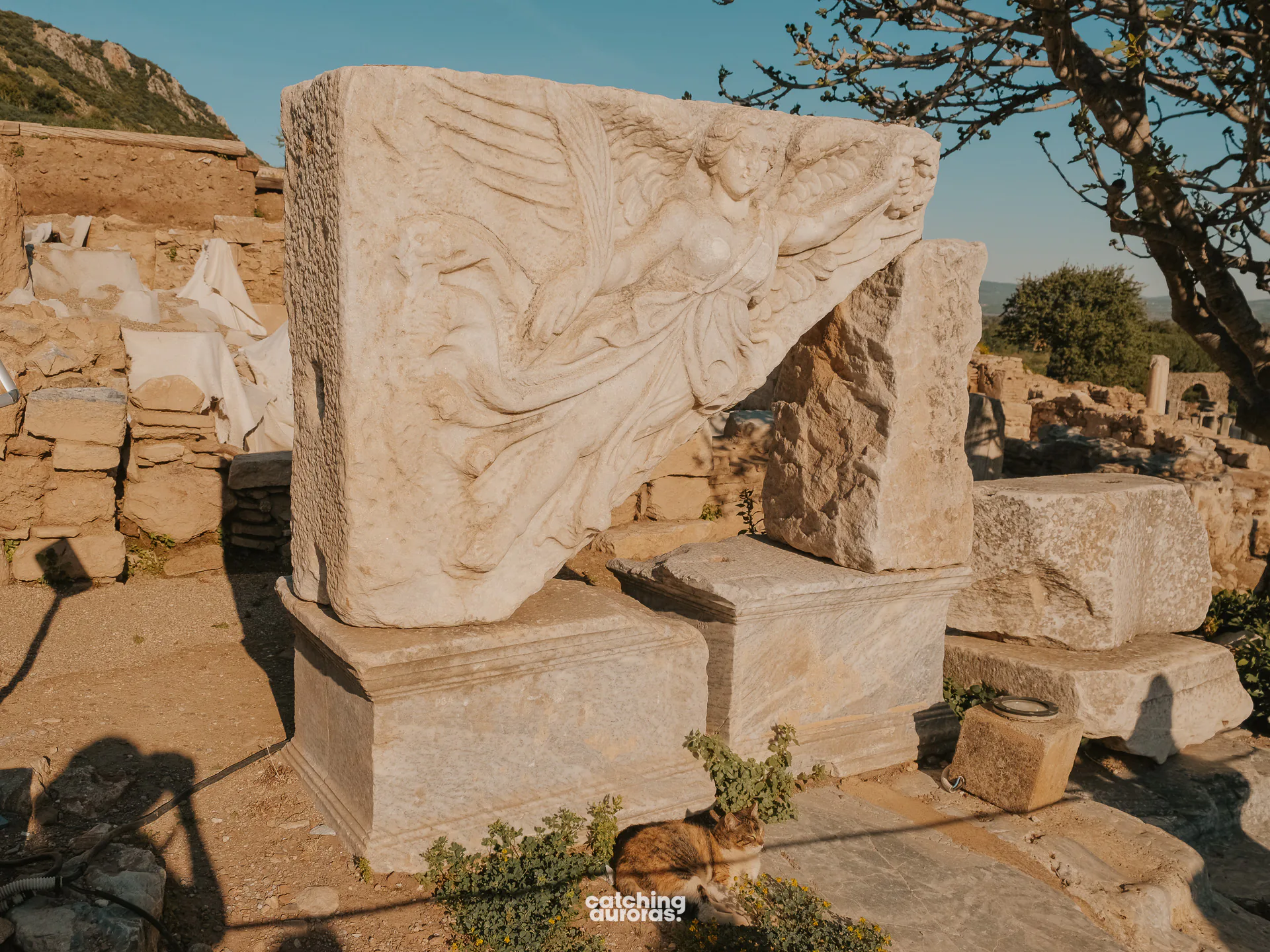
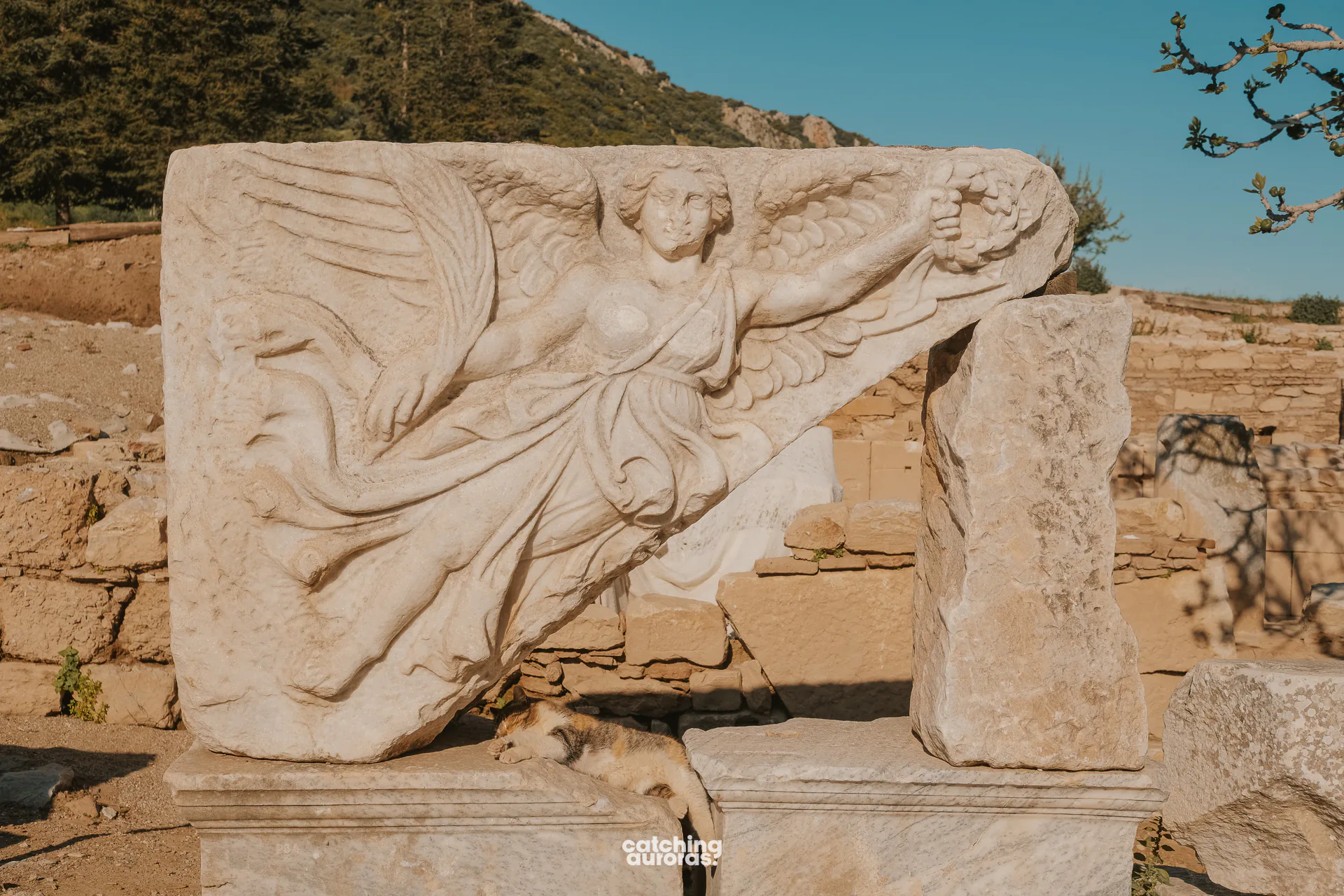
Goddess Nike – one of the most famous carvings at the site is that of Nike, the Goddess of Victory. Many think the symbol for Nike sportswear was inspired by this (notice the check mark on her dress). You will find a lot of people holding up their Nikes in front of this.
Should you hire a guide?
I’m an introvert and I will always say no to a guide because I have found that I enjoy a place more when I’m left to my own devices. That being said, Ephesus rewards having some context – a lot of what you’re looking at is just marble and column stumps unless you know what it used to be. A licensed guide (either booked ahead or hired at the entrance) will help fill that gap.
The alternative is a self-guided walk with an audio guide app or a downloaded map, which costs less and lets you linger wherever you want, even lets you walk up and down the Curetes Street 4 times – ahem – without any complaint. We listened to the Ephesus audio guide by Rick Steves, which is really well done. It starts at the Upper Gate, takes 40-60 mins, and ends at the Great Theatre.

Love history? Don’t miss out on two other ancient sites near the area – Pamukkale and Aphrodisias!
Nearby: House of Virgin Mary, Basilica of Saint John, Temple of Artemis, Ephesus Museum and Şirince
A few add-ons if you have half a day beyond Ephesus itself.
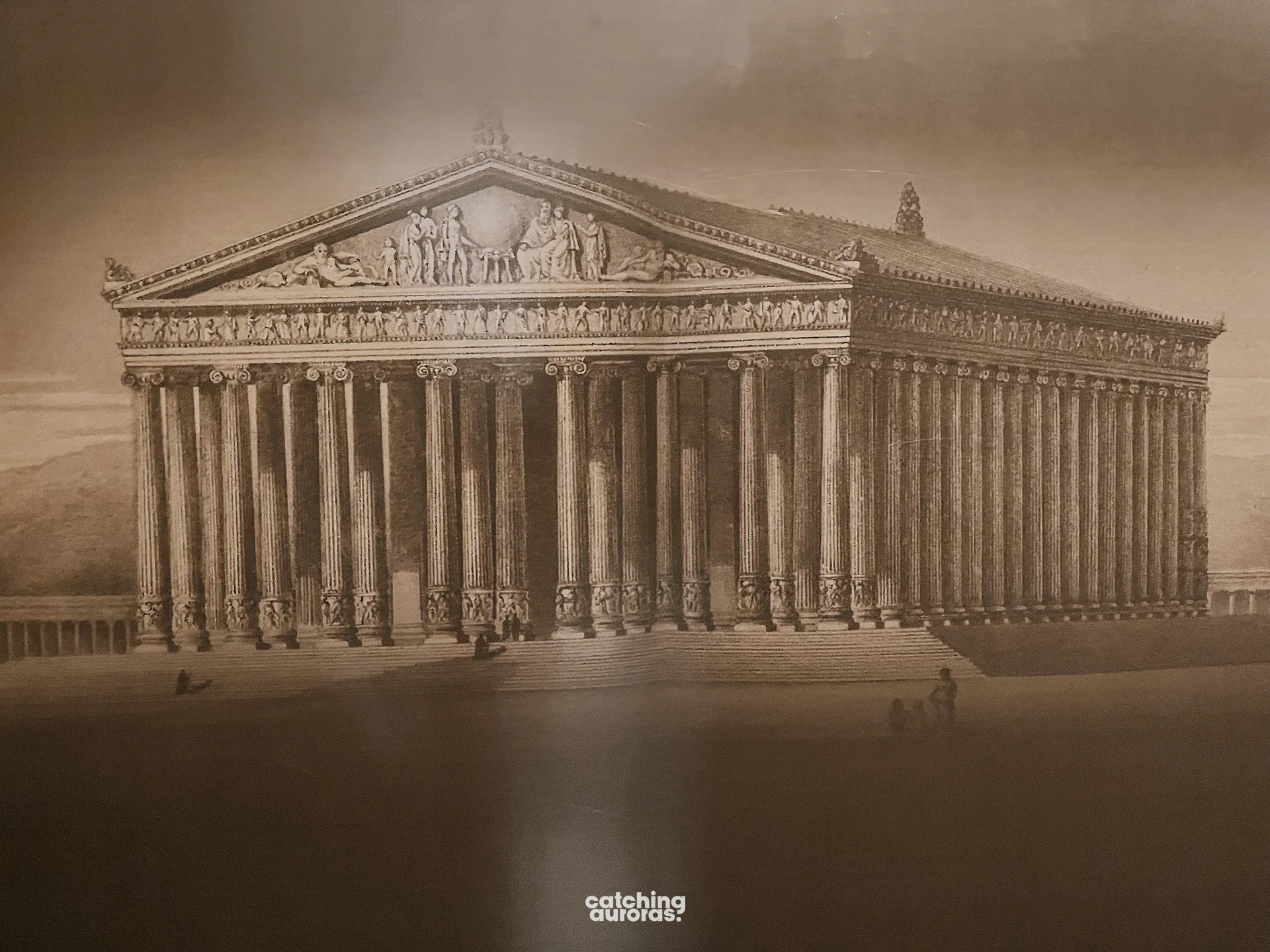
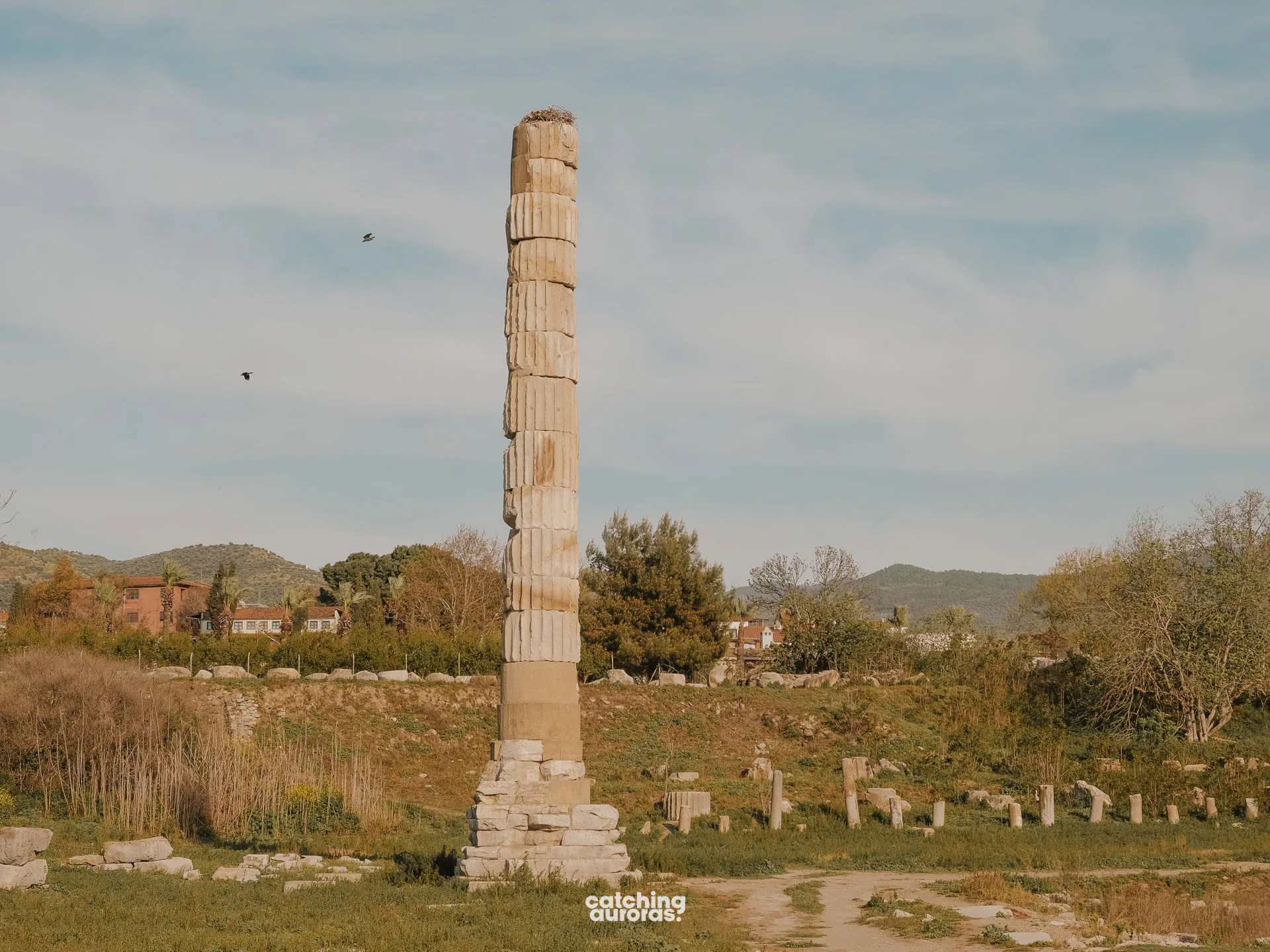
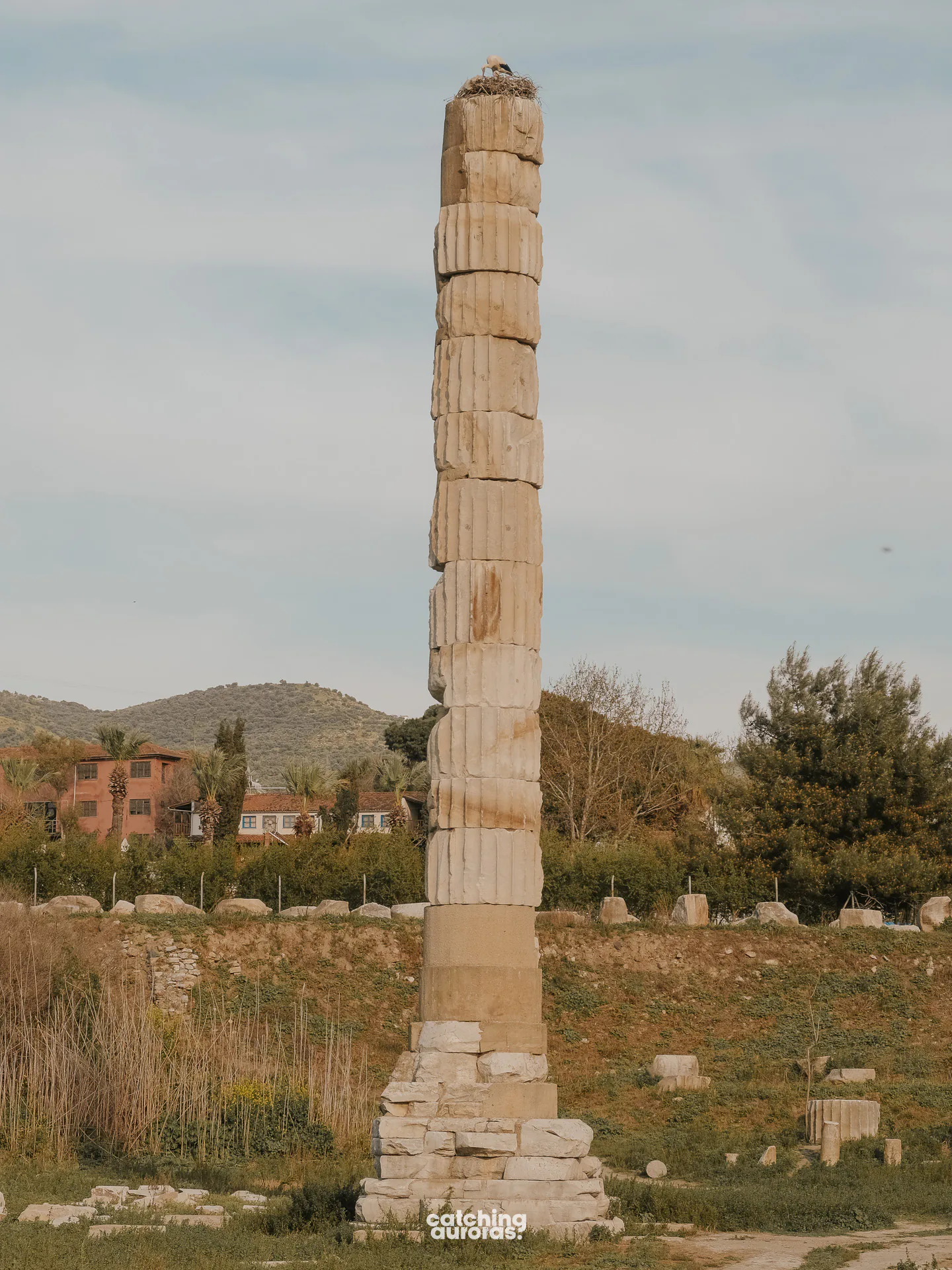
Temple of Artemis – once one of the Seven Wonders of the Ancient World, now reduced to a single reconstructed column standing in a field, with a stork’s nest usually perched on top. It was one of the biggest temples of its time, and seeing it reduced to a pillar leaves you with a strange melancholy.
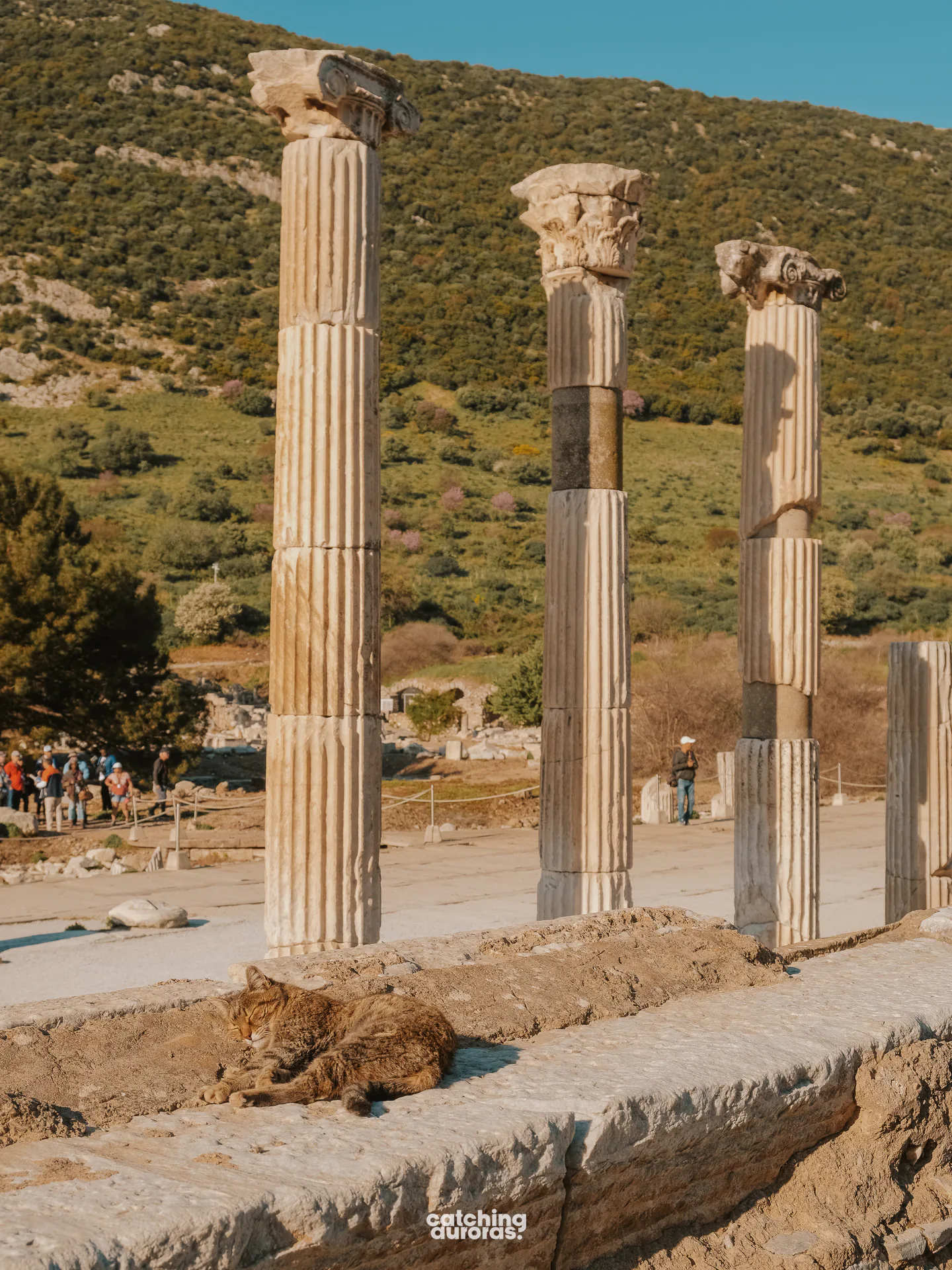
Basilica of Saint John: Built over the burial site of John the Apostle. Walkable, if you are staying in Selçuk.
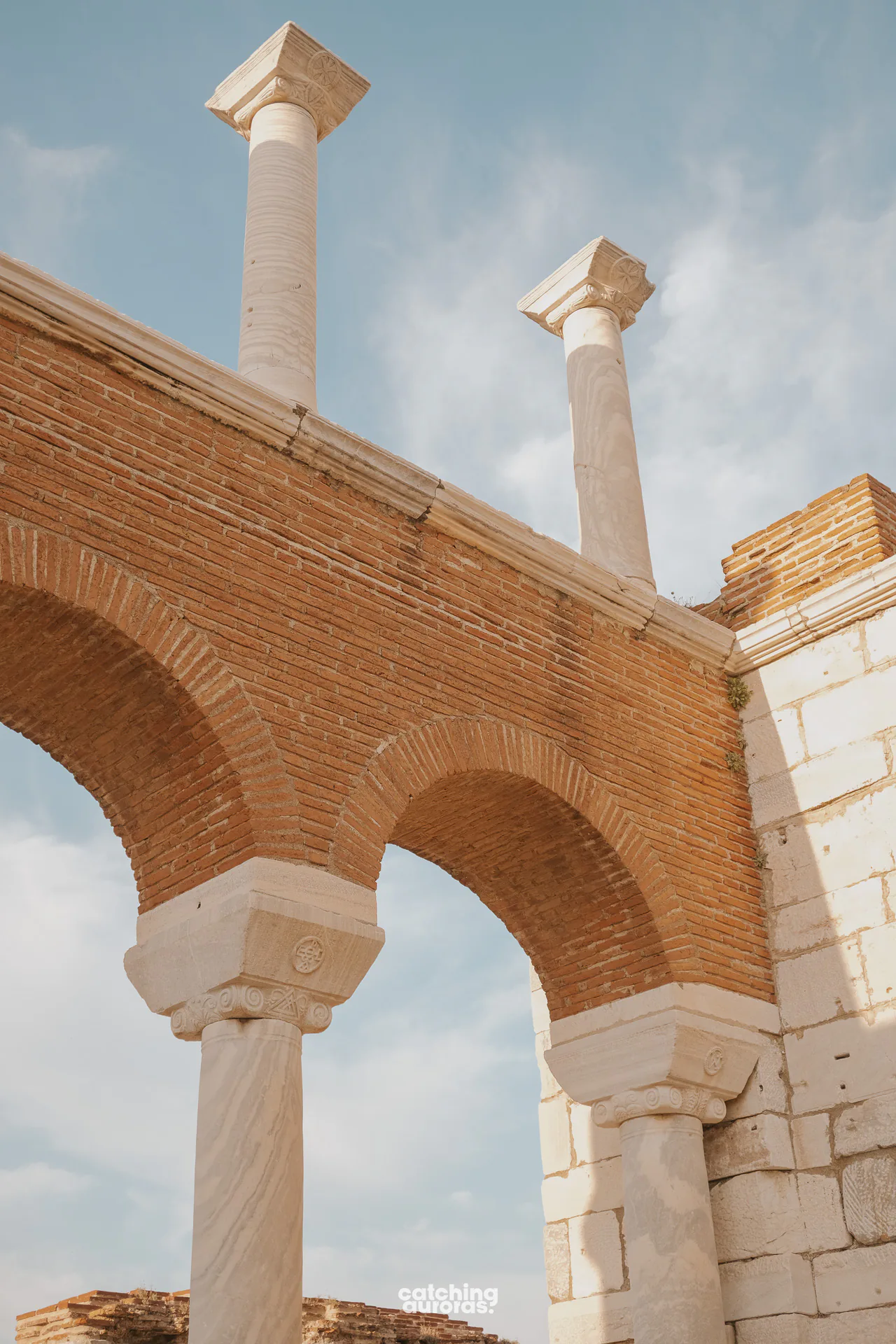
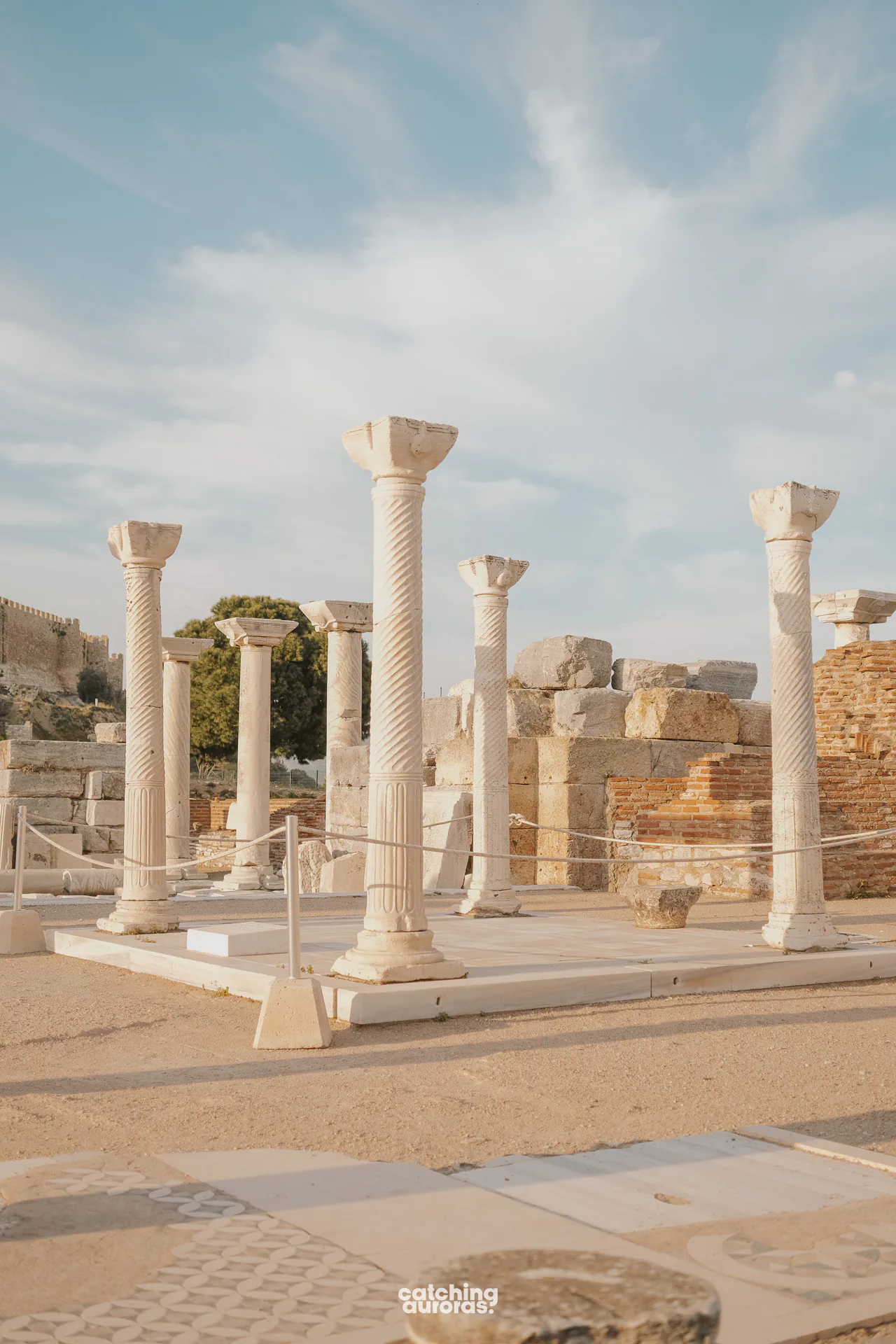
Şirince – a small hillside village about 25 minutes from Selçuk, known for home-made fruit wines. Good for lunch or a wine-tasting stop after a morning of ruins.
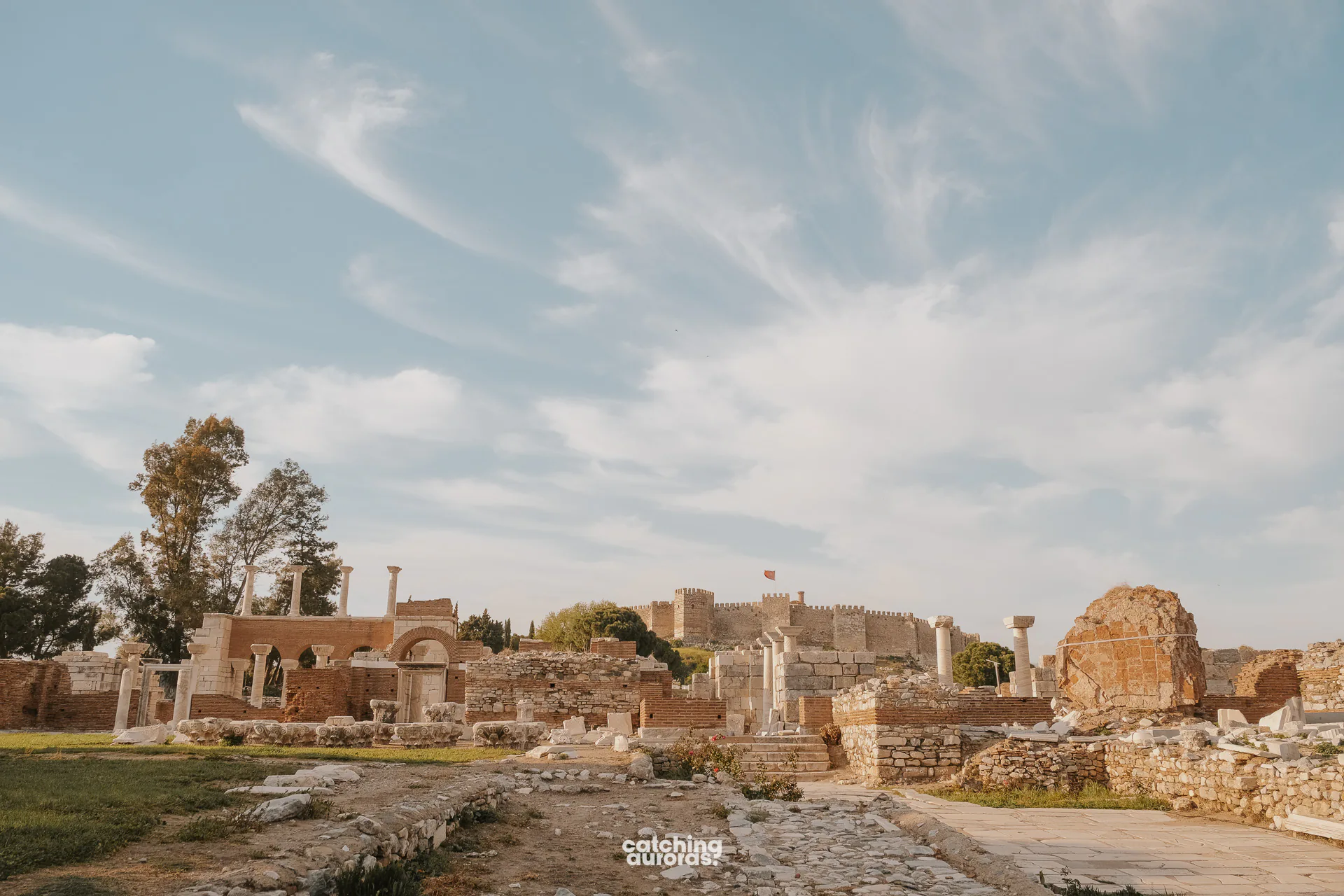
House of the Virgin Mary – a small stone chapel up in the hills above Ephesus, believed by many Catholics to be where Mary spent her final years. A short drive from the site. Haven’t been.
Ephesus Museum – hosts a lot of artifacts found in Ephesus. Worth it just to see the cult image of Artemis. Every one of them is scary and beautiful.
Best time to visit & what to bring
Best time of day: as close to opening (8 AM) as you can manage, or the last couple of hours before closing if you’re not an early riser. Midday sun on white marble with zero shade is brutal, especially June through August.
Best time of year: spring (April-May) and autumn (September-October) – warm enough, without the peak-summer heat or the cruise-ship madness in July and August.
What to bring: a hat, sunscreen, water, and closed, comfortable shoes – the Curetes Street is uneven, and you’ll be walking uphill and downhill for hours.
Where to stay near Ephesus
Selçuk – the closest base, and the best choice if Ephesus is your priority. Small, walkable, and you can be at the gate before the tour buses arrive. We loved this town, in spite of its lack of vegetarian dining options – we did end up eating dessert for dinner.

Kuşadası – a bigger coastal town with more hotel options, beaches, and nightlife, if you want Ephesus as a day trip rather than the center of your stay.
İzmir – the nearest city with an airport, useful if you’re combining Ephesus with other places in the region, though it puts you furthest from the site itself. We deliberated between İzmir and Selçuk as our base, but ultimately chose Selçuk since we wanted to be at the site as early as possible.
Cats of Ephesus
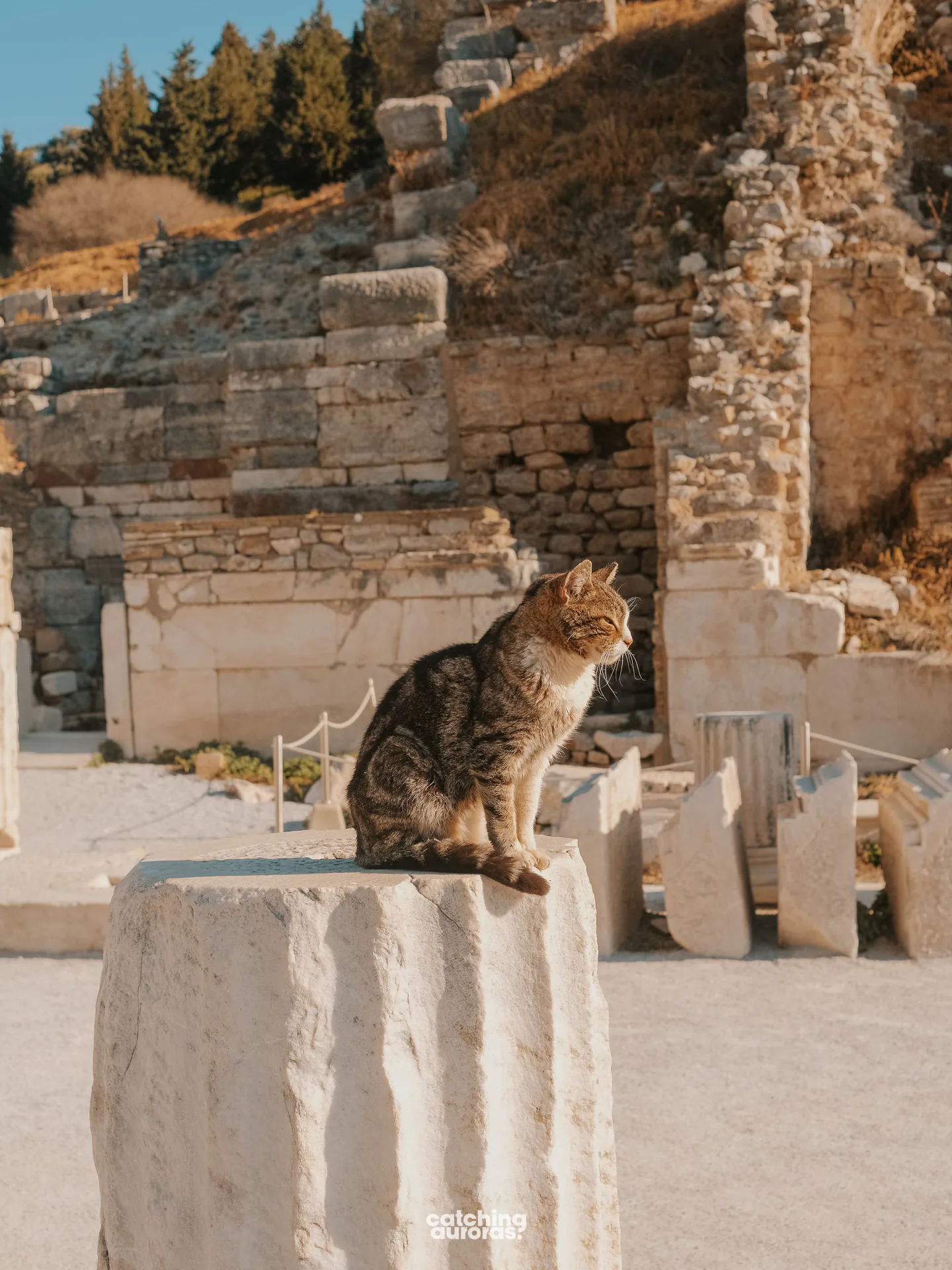
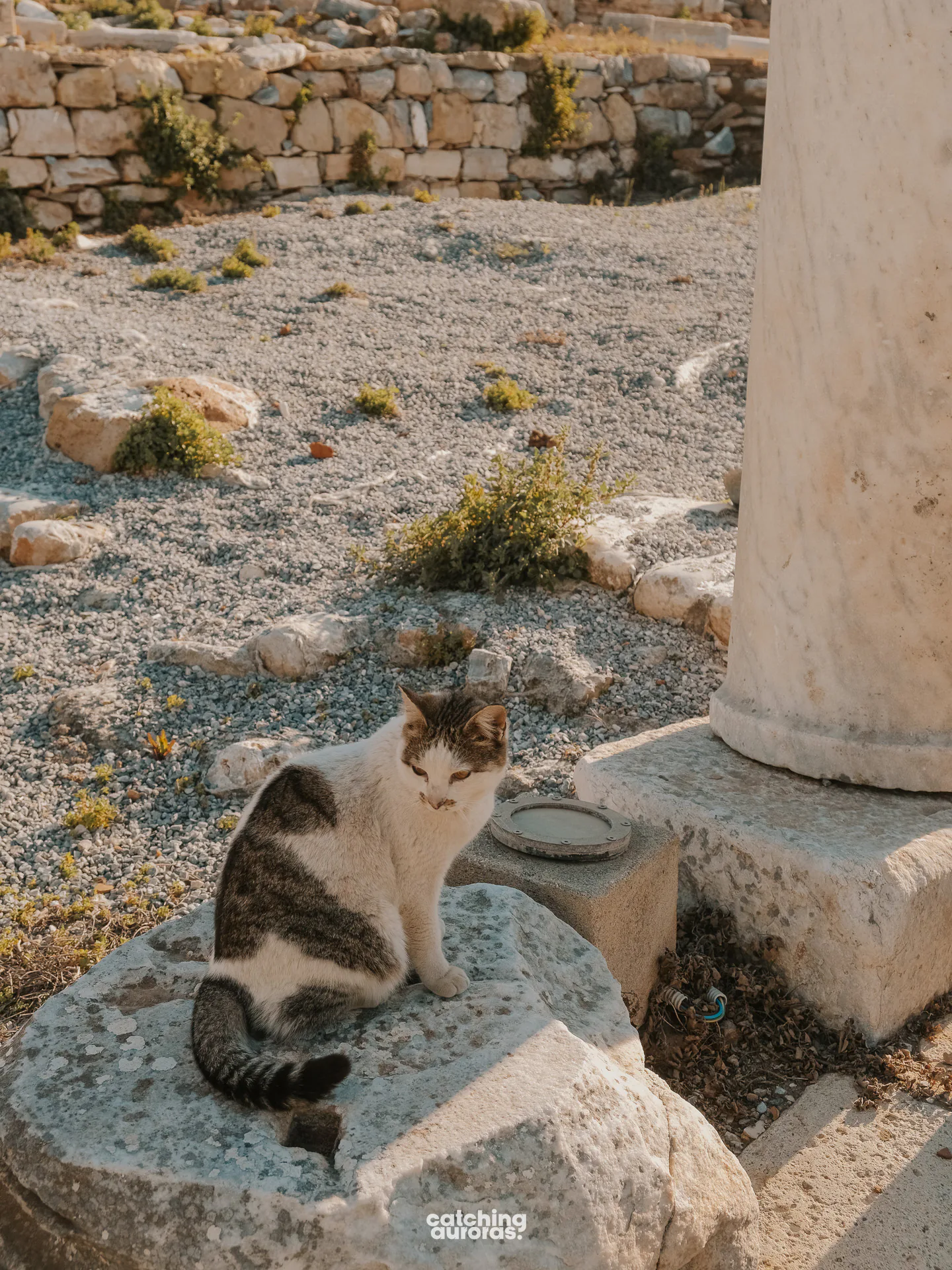
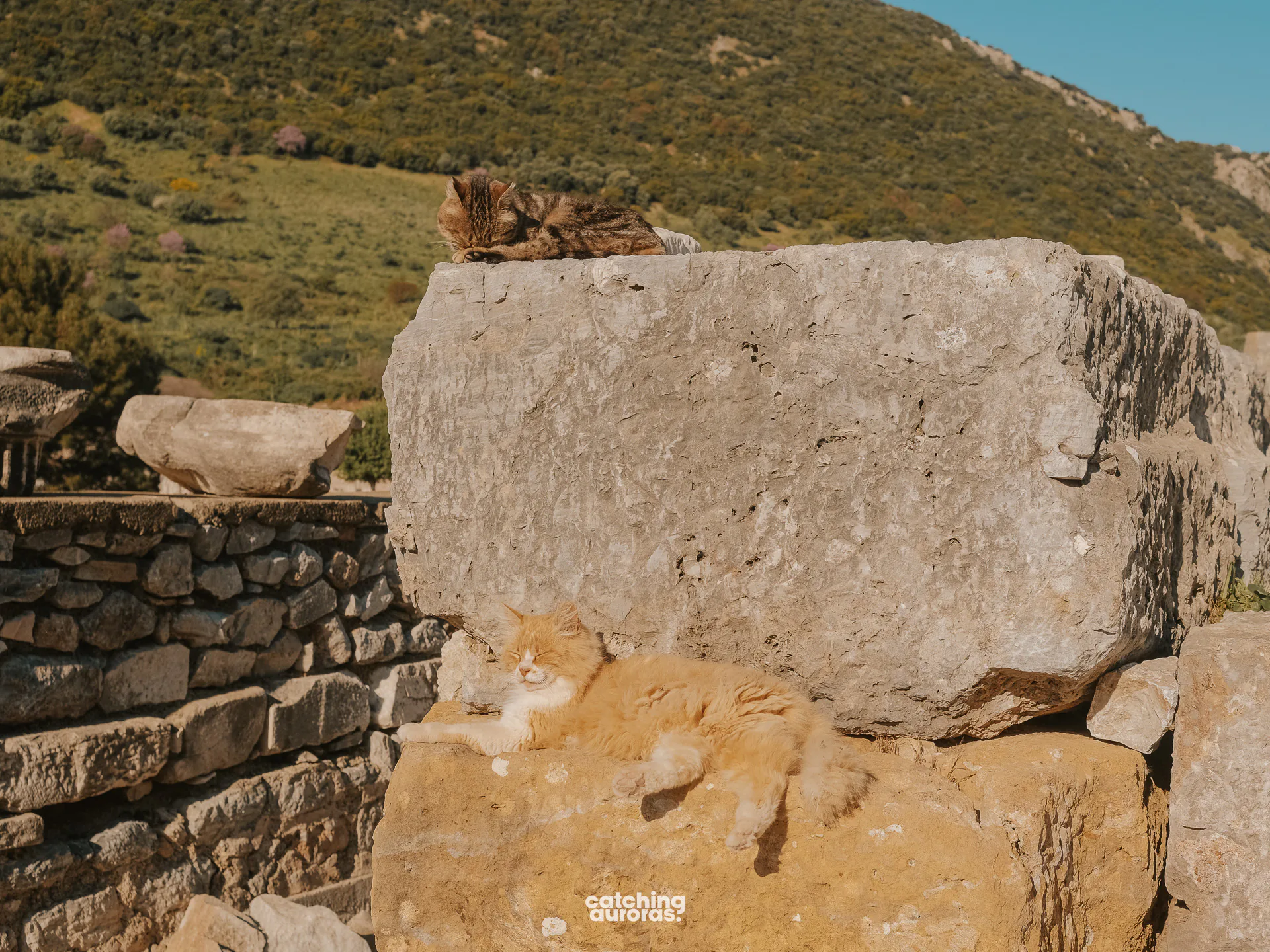
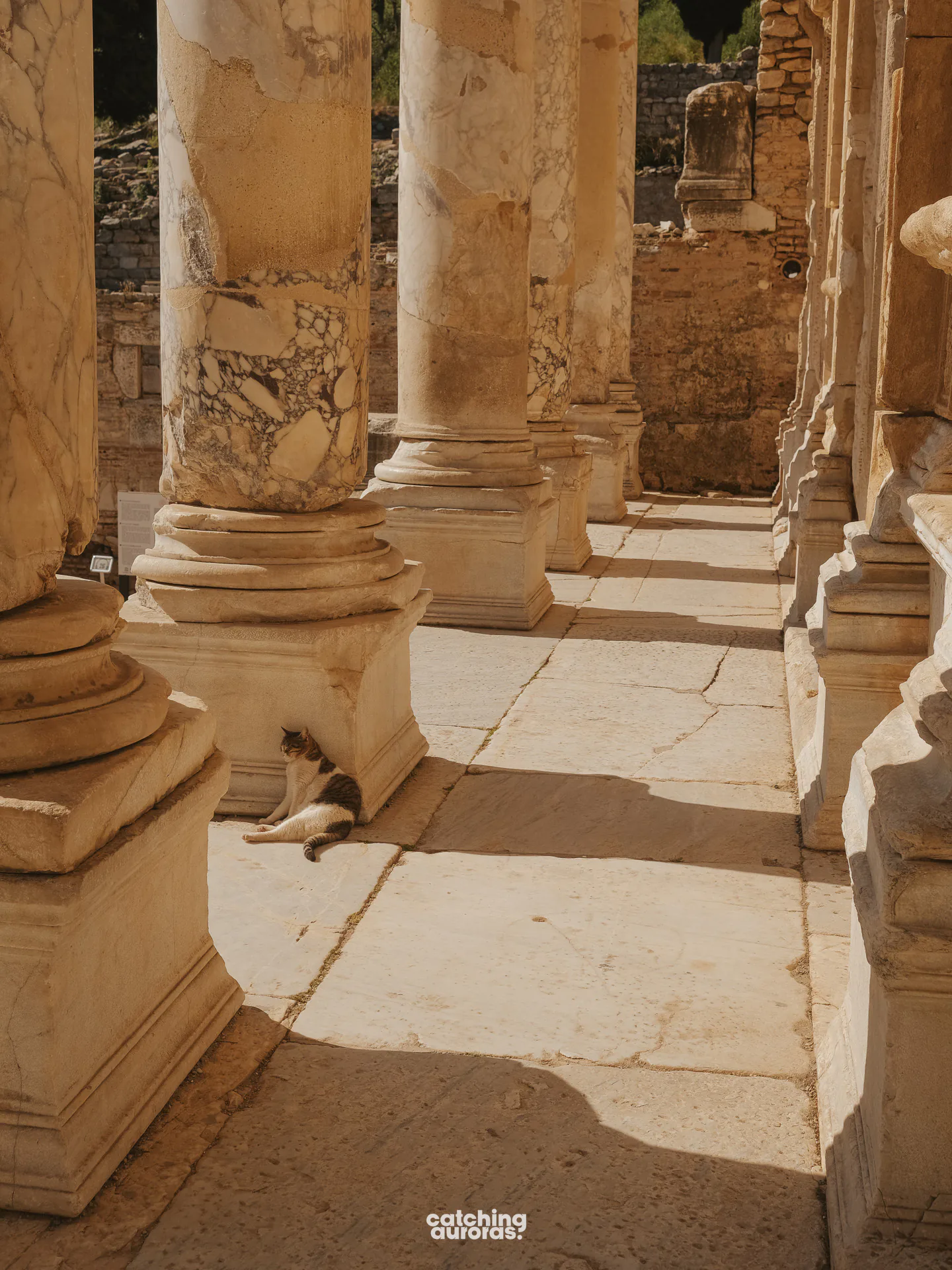
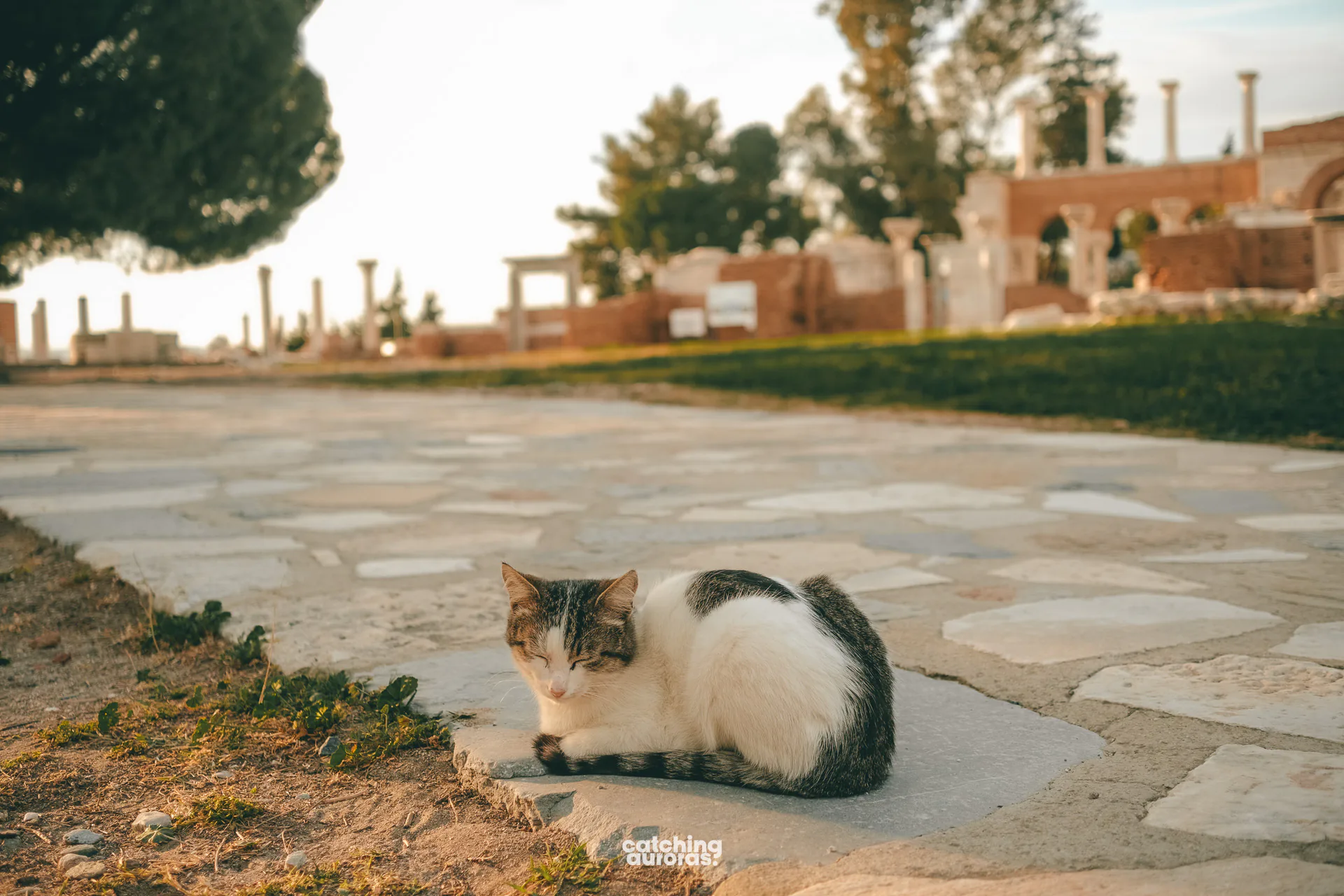
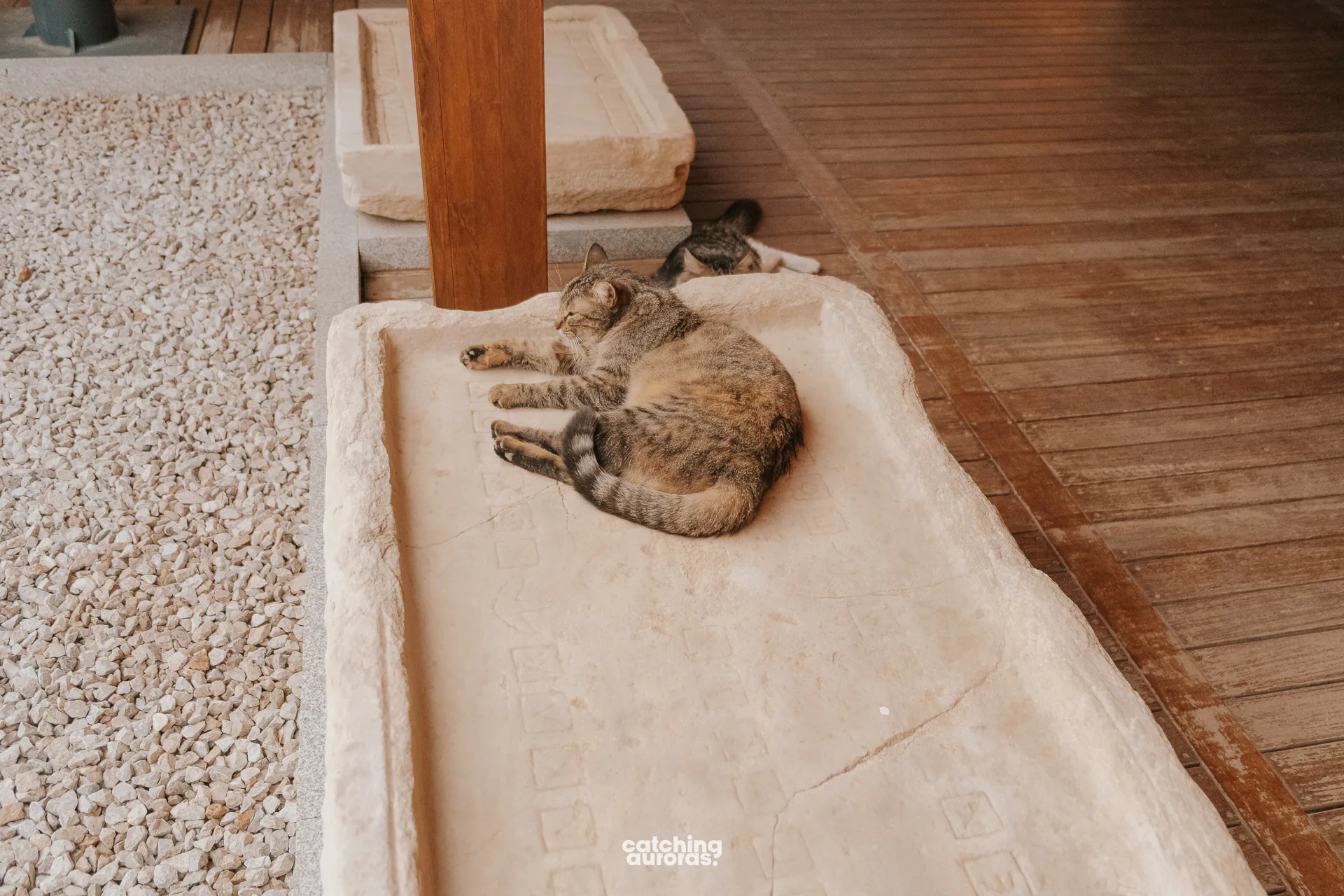
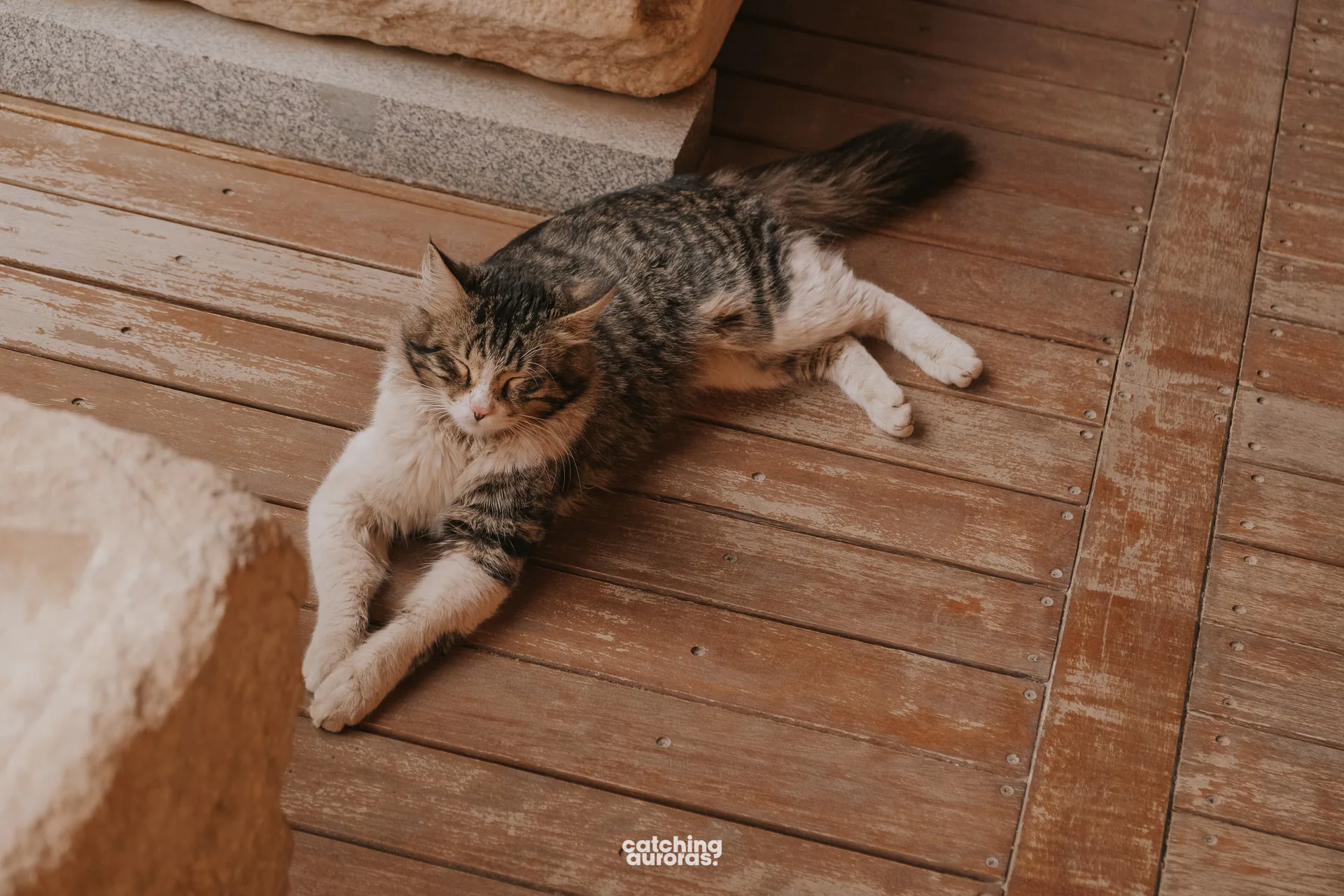
Cats don’t care if it’s a priceless monument or that it’s behind a protective fence – they will sleep where they want. And honestly, they make the monuments look even cooler, which is probably why I keep choosing to post their pics over the monuments’. Seeing as 80% of my camera roll was cat pics by the end of this trip, I think it’s only fair I close this post with these 3 sleepy kitties.
See you in the next stop on our road trip – Pamukkale!