South Korea Travel Guide
with notes for Indian travelers
Updated: August 27, 2026
Spring in South Korea, 2025, was a fairytale. Pink blooms on every sidewalk, convenience-store ramyeon eaten standing up at 11 PM, a surprise cold snap that sent us scrambling for thermals, and somewhere in there I fell down the K-beauty rabbit hole and came home with a 9-step routine.
Most people pick Korea for one of three reasons – the food, the skincare, or the K-dramas – and end up staying for the rest. Our trip split itself into three parts the way most Korea trips do: Seoul for the noise, Busan for the slowness, and Jeju for the quiet.
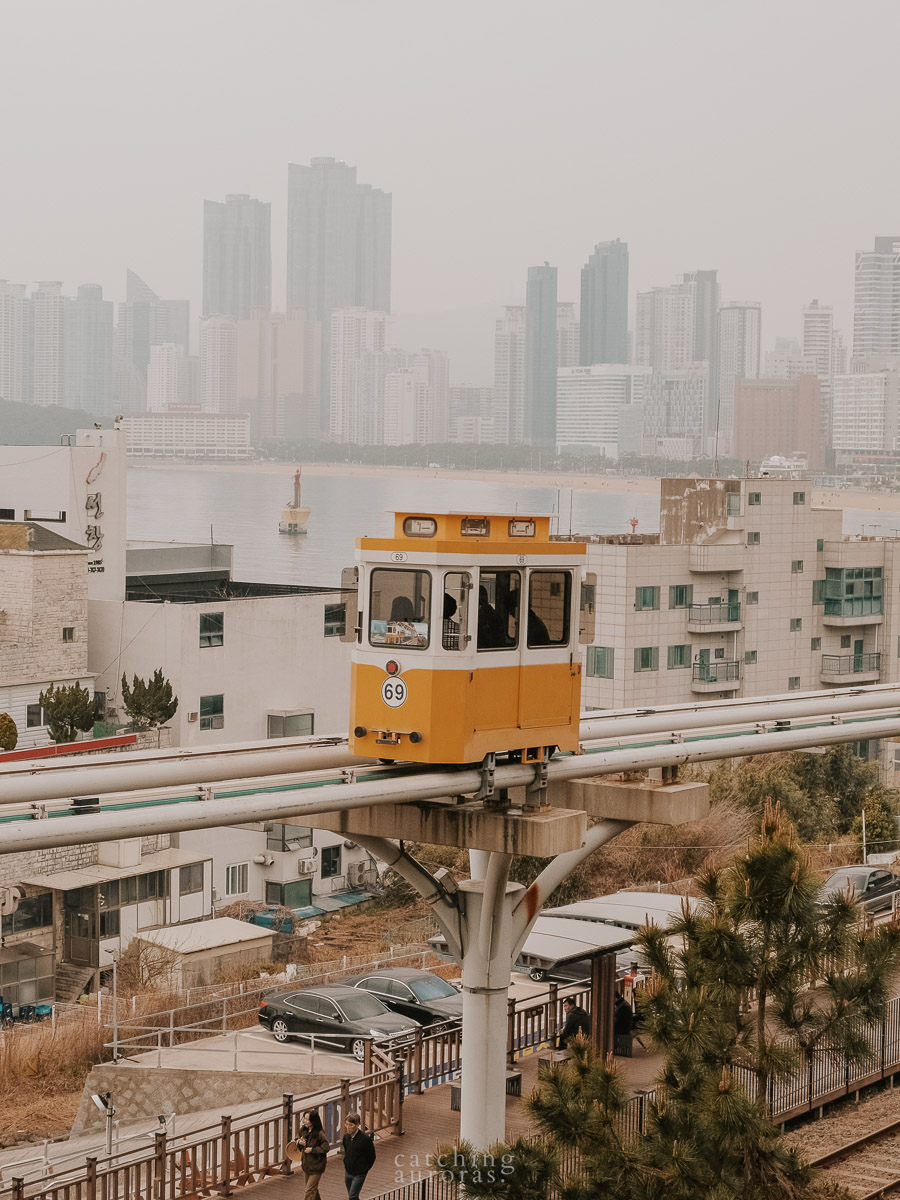
Seoul is loud in the best way. Gyeongbokgung in the morning, Hongdae after dark, and Myeongdong somewhere in between with shopping bags you didn’t plan to fill. Busan is the opposite – slower, salt-stained, the kind of city you walk through with no agenda. Gamcheon’s painted alleys, Haeundae’s quiet beach mornings, and the sky capsules to ride at sunset. Jeju is where most Korean honeymooners go, and after a few days there I understood why. Black volcanic coastlines, lava tubes you can actually walk through, and Hallasan looming over everything in the distance.
Spring, 2025
Quick Facts
Everything you need to know about South Korea.
CAPITAL
Seoul
CURRENCY
Korean Won
TIME ZONE
KST – IST +3.5h
LANGUAGE
Korean
When to Visit South Korea
Spring (Mar–May) & Autumn (Sep–Nov)
- Spring (March–May):
- Average Temperatures: 10°C to 20°C
- Crowd Level: Moderate to High
- It’s cherry blossom season in Korea! Perfect time to attend a lot of flower festivals throughout the country.
- Summer (June–August):
- Average Temperatures: 23°C to 30°C
- Crowd Level: High
- Beach season and school-holiday season, so expect crowds, humidity, and monsoon showers most afternoons.
- Autumn (September–November):
- Average Temperatures: 11°C to 25°C
- Crowd Level: Moderate
- Our second favourite. The fall colours start in the north around late September and roll south through November. Crowds thin out after Chuseok.
- Winter (December–February):
- Average Temperatures: -6°C to 5°C
- Crowd Level: Low to Moderate
- Quiet, cold (-6°C is real), and the best time for Seoul if you like museums, cafés, and jjimjilbangs more than cherry blossoms.
From India: best fares typically open 3–4 months ahead for these seasons.
Visa for Indian passport holders
Last verified - May 2026
Yes, you need one and no, the K-ETA isn't for us. Indian passport holders apply for a regular C-3-9 Short-Term Visit Visa through VFS Global in India. It's a paper application with biometrics, not an online e-visa.
Visa rules and fees change - sanity-check on VFS before you apply.
Flying in from India
Korea is 6.5 to 10 hours of flying time from any major Indian metro, with common waypoints in Singapore, Bangkok, Hong Kong, and Kuala Lumpur. Best fares typically open 3–4 months ahead for spring and autumn.
We flew Bangalore → Incheon via Singapore Airlines - a comfortable 13 hours including the layover.
We track fares on Google Flights and Skyscanner - see the tools section for links.
Currency and Budget for South Korea
| Budget | Mid-range | Splurge | |
|---|---|---|---|
| Accommodation | ₹1,200/night | ₹3,500/night | ₹8,000/night |
| Food/day | ₹800 | ₹1,800 | ₹4,000+ |
| Transport | ₹400/day | ₹800/day | Taxi |
| Daily Total | ~₹2,500 | ~₹6,000 | ₹12,000+ |
We spent roughly ₹5,500/day as a couple at mid-range, including a splurge dinner every other day.
- T-money card for subway, bus, convenience stores
- Kakao Pay accepted widely in Seoul
- International Visa/Mastercard works at most ATMs
- Cash useful at local markets and smaller restaurants
Getting Around South Korea
Fast, clean, and covers all of Seoul and Busan. Signs are in English and Korean. Google Maps works for routing.
₩1,400/ride (~₹85)Connects where metro doesn't. Color-coded by route type. Tap T-money card on entry and exit.
₩1,200/ride (~₹75)Seoul → Busan in 2.5 hours. Book on the Korail app. English interface available. Reserve window seats for the views.
₩59,800 one-way (~₹3,700)Cheaper than you'd expect - closer to Indian taxi prices than European ones. Use Kakao T app to book. International cards accepted in most taxis.
Base fare ₩4,800 (~₹300)Get a T-money card at any convenience store or airport kiosk. Works on metro, bus, and even vending machines. Costs ₩2,500 (~₹155) for the card + top up as needed.
Safety in South Korea
South Korea is widely regarded as one of the safest countries in the world for traveller, including solo female travelers.
Very safe. Well-lit streets, late-night subways, almost no street harassment. The usual city awareness applies.
Almost none. A friend left her phone in a busy bathroom in the mall by mistake and it was still there half an hour later.
Excellent hospitals in cities. Care is available but costly without insurance - travel cover recommended.
No major areas to avoid. The DMZ near the North Korean border is restricted but safe on organized tours.
If you are a person of color, you might encounter mild racial bias, especially from older generations. On the Seoul metro an older woman once came up to cuss us out while we were standing in a corner minding our business - it happens, rarely, and it stings.
Language & Greetings in South Korea
South Korea speaks Korean (한국어), written in the Hangul script. English signage exists in Seoul and tourist areas, but learning a few phrases goes a long way. Even a wobbly 안녕하세요 gets you a smile.
| Phrase | Korean | Pronunciation |
|---|---|---|
| Hello | 안녕하세요 | An-nyeong-ha-se-yo |
| Thank you | 감사합니다 | Gam-sa-ham-ni-da |
| How much? | 얼마예요? | Eol-ma-ye-yo? |
| Excuse me | 실례합니다 | Sil-rye-ham-ni-da |
| Delicious! | 맛있어요! | Ma-shi-sseo-yo! |
| Yes / No | 네 / 아니요 | Ne / A-ni-yo |
| Sorry | 죄송합니다 | Jwe-song-ham-ni-da |
| Where is…? | …어디예요? | …eo-di-ye-yo? |
Fun fact: Hangul was invented in 1443 by King Sejong specifically so common people could read and write. You can learn the entire alphabet in a weekend and it genuinely helps you navigate menus, signs, and subway stations.
Places to See in South Korea
FAQs about South Korea
What language is spoken in South Korea?
Korean. English is taught in school but most locals don’t speak it confidently outside Seoul, Busan, and tourist zones. Download Papago before you land – it’s better than Google Translate for Korean, and it works on photos of menus.
Do I need a visa to visit South Korea as an Indian?
Yes. Indian passport holders need a short-term visit visa (C-3-9), applied through VFS Global. It’s not the K-ETA – that’s only for visa-exempt nationalities. See the Visa section above for the full process. U.S. citizens can visit visa-free for up to 90 days.
Is South Korea safe for solo female travelers?
Yes, it’s one of the safest countries I’ve travelled in. Late-night metros are full of women travelling alone. The usual awareness applies, but you’ll notice within a day that the baseline feels different.
What’s the best way to get around in South Korea?
Metro inside cities, KTX between them. T-money card for everything local, Kakao T for taxis. Skip rental cars unless you’re going to Jeju as driving in Seoul is not easy.
What currency does South Korea use?
Korean Won (KRW). Cards work almost everywhere in cities, including small cafés. Keep ₩30,000–50,000 in cash for traditional markets and tiny restaurants that haven’t caught up yet.