Egypt
Egypt Travel Guide
with notes for Indian travelers
Updated: May 19, 2026
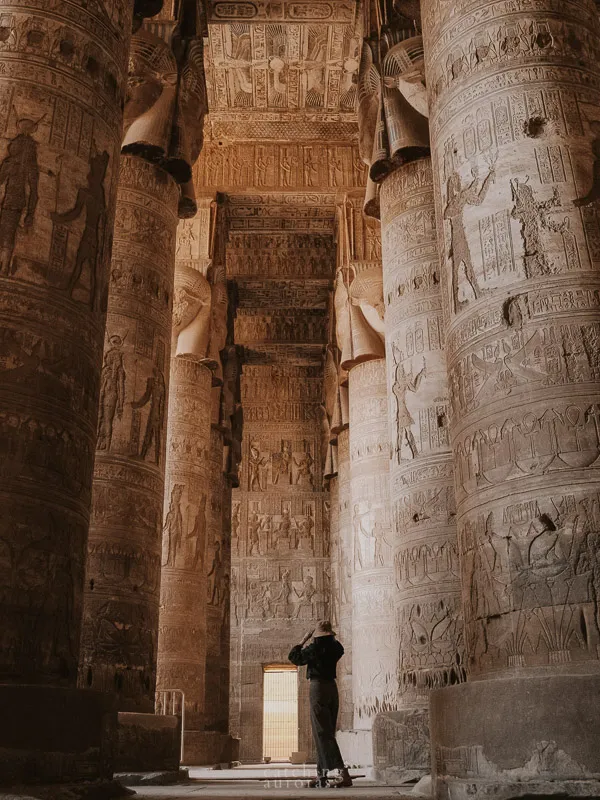
Egypt was on my bucket list before I even knew what a bucket list was. I was ten years old, reading about Ancient Egypt at the school library, and decided I was going to be an Egyptologist. I obviously didn’t become one — but earlier this year I finally made the trip, and standing inside the Hypostyle Hall at Karnak with my own two feet was the closest thing I’ve had to a full-circle moment.
We did Cairo, Luxor, Aswan and Abu Simbel over 8 days, completely DIY — no tour package, no daily guide, no Nile cruise. Just the two of us, with a Lonely Planet guide, and a lot of Google Maps. It worked. It also wasn’t easy. Egypt is loud, persistent, and at times genuinely exhausting — every temple visit comes with someone trying to “help” you for baksheesh. But the architecture, the scale, the sheer weight of history… that part I cannot oversell. It is everything ten-year-old me hoped it would be.
This guide is what I wish someone had handed me before I went. Visa numbers that are actually current, things I learned the hard way about scams, what worked for getting around without a guide, and the food we ended up eating every single day.
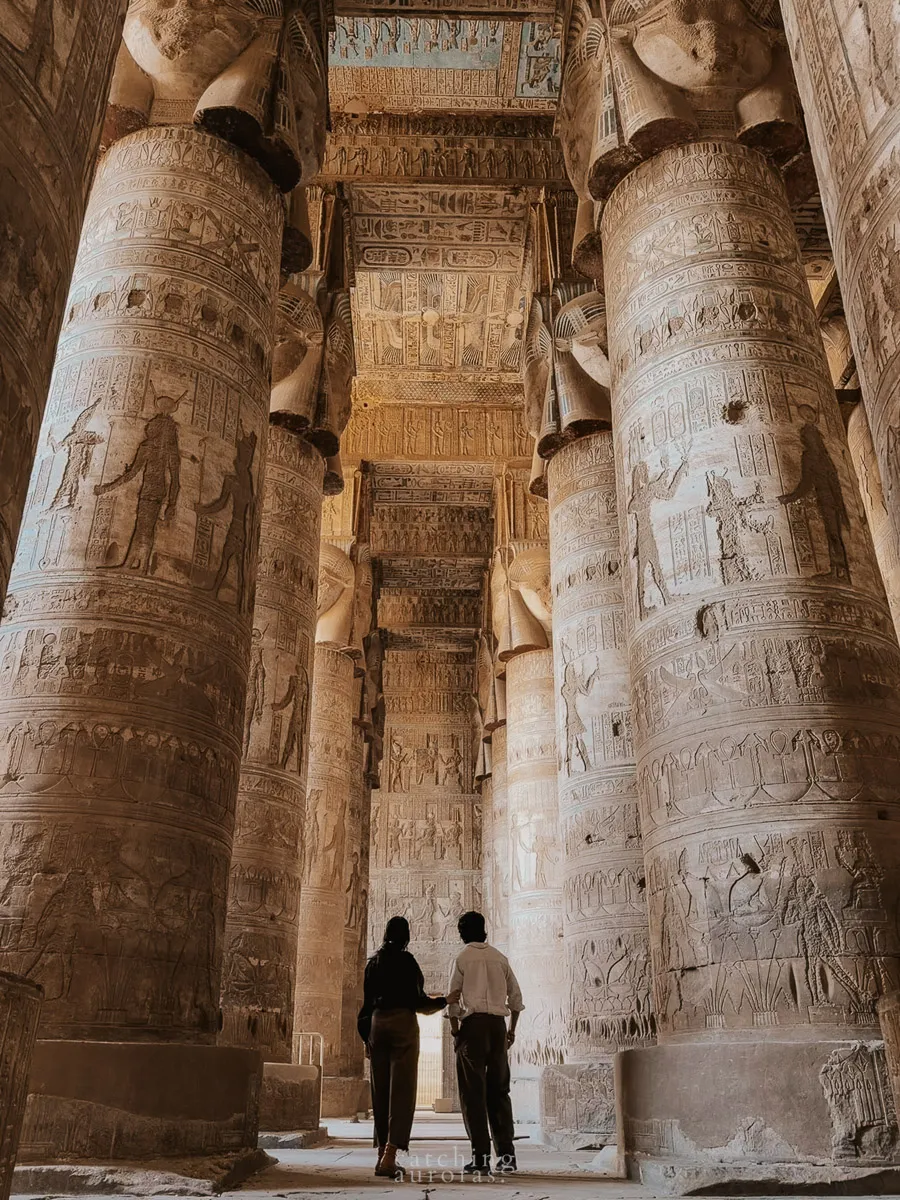
Winter, 2026
Quick Facts
Everything you need to know about Egypt.
CAPITAL
Cairo
CURRENCY
Egyptian Pound (EGP / E£)
TIME ZONE
EET – UTC +2
LANGUAGE
Arabic
When to Visit Egypt
❄️ Winter Shoulder (warm)🌧 Summer SHOULDER (COLD)❄️
JanFebMarAprMayJunJulAugSepOctNovDec
✦ Our Pick
Winter months (October-March)
We went in January and it was perfect — warm enough for the river, cool enough for the temples, and for us, early risers, not really that crowded.
Visa for Indian passport holders
Last verified — May 2026
Yes, Indian passport holders need a visa for Egypt — but the good news is it's a proper online e-Visa, no embassy run, no biometrics. You apply at the official portal visa2egypt.gov.eg, pay around US $25 for single-entry, and get the approval emailed to you in about a week.
Visa type
e-Visa (Tourist) — single or multiple entry
Validity
90 days from issue · 30 days stay per entry
Fee
Single entry: US $25 (≈ ₹2,200) · Multiple entry: US $60 (≈ ₹5,300)
Processing
5–7 working days (apply at least 7 days before travel)
Apply at
Online only or through agents.
Visa-on-arrival
Available ($25, 30 days) — but the e-Visa is faster and avoids airport queues
Visa rules and fees change — check before you apply.
Flying in from India
I believe there is a ~7h direct flight from Delhi launched recently. From everywhere else in India you're still routing through Doha, Dubai, Muscat, or Kuwait, which adds 4–8 hours of layover but often comes out cheaper.
I flew Bangalore → Cairo via Abu Dhabi — a 13 hours flight including the layover.
We track fares on Google Flights and Skyscanner — see the tools section for links.
Currency and Budget for Egypt
₹100 ≈ E£57
| Budget | Mid-range | Splurge | |
|---|---|---|---|
| Accommodation | ₹1,200/night | ₹5,000+/night | ₹20,000+/night |
| Food/day | ₹500 | ₹1,200 | ₹3,500+ |
| Sites & Transport | ₹1,200/day(entry tickets + local trains/Uber) | ₹2,000/day(entry +private taxis between sites) | ₹5,000+/day (private driver, guide) |
| Daily Total | ~₹2,900 | ~₹8,200 | ₹28,000+ |
Honestly, I would say that even for a budget trip, the cost of entering the sites becomes way too much and its not something you can avoid at all. I have probably low-balled the entry ticket pricing here.
Payment Tips
- Cash is genuinely king. Carry small notes (E£10, E£20, E£50) for tips, taxis, bottled water, and bathroom attendants.
- Cab drivers first try to transact in USD or Euros, due to EGP devaluation. Honestly, you could get by even if you didn’t have any EGP with you.
- ATMs work with international Visa/Mastercard at most bank branches. Banque Misr, CIB, and QNB are reliable. Avoid standalone ATMs in tourist areas — higher fees and the occasional skimming risk.
- Cards work in mid-range hotels, decent restaurants, and most museums. Almost nowhere else.
- Tipping (baksheesh) is its own ecosystem — budget E£500–800/day for tips alone if you’re touring sites. More on that in Etiquette below.
Getting Around Egypt
Domestic Flights
- EgyptAir flies Cairo to Luxor / Aswan / Hurghada in about an hour. Worth it if you’re short on time; trains are part of the experience if you’re not.
Bus
- Buses (GoBus, Blue Bus) are cheaper than trains, slower, less comfortable. Useful for Hurghada and Sinai.
Trains
- The state-run sleeper trains run Cairo → Luxor → Aswan and are the most relaxing way to cover the country. Book through the official site or at the station counter — agents at hotels will mark up by 50%+. Expect delays as everything runs on “Egyptian time”. Tickets are charged more for a foreigner and sometimes is the same as the flight prices.
- For travel inside Cairo, Cairo Metro is genuinely useful and costs about E£10. Three lines, basic English signage, fastest way across the city.
Taxi
- Uber and Careem work in Cairo, Alexandria, and Hurghada — use them. Always cheaper and less stressful than haggling with street taxis.
- In Luxor and Aswan you’ll mostly use taxis or feluccas. There is no Uber here but Careem and InDrive work.
Ferry / Nile Cruise / Felucca
- Nile cruises — Run between Luxor and Aswan (3–5 nights, stopping at Edfu and Kom Ombo); ₹40,000+ per person for a decent one and not worth it unless you genuinely want the floating-hotel experience — the same temples are easy day trips by train or taxi.
- Public ferry (Luxor) — The local boat between East Bank and West Bank costs E£10(they charged us E£50), runs all day, and is what locals use; ignore the touts at the dock offering a “private” motorboat.
- Felucca rides — Traditional wooden sailboats on the Nile, best done at sunset in Aswan around Elephantine Island; agree the price upfront (E£200–400 per boat per hour, not per person).
To travel to Abu Simbel from Aswan, you will need to either book a tour, a shared mini bus or hire a private car. More about our experience in our Abu Simbel post.
Safety in Egypt
Safety Rating
Egypt felt physically safe but what's exhausting isn't crime, it's the constant low-level pressure: touts, hawkers, "free" things that aren't free, and the assumption that you, as an obvious tourist, exist to be sold to. By day three you'll have your "no thank you" voice down. Keep it polite, keep it firm, and don't engage.
Solo Female Travel
Doable but more demanding than most Asian destinations. Dress modestly outside Red Sea resorts (shoulders and knees covered, especially in Upper Egypt and Cairo's older quarters). Catcalling happens; physical safety is generally fine.
Pickpocketing/Scams
Petty pickpocketing is rare. Scams are constant — fake "free" perfume samples, "the temple is closed, come to my shop instead", inflated taxi fares, drivers tripling the agreed price at the destination. Agree every price in writing or on a calculator screen before you start.
Health & Medical
Private hospitals in Cairo (As-Salam International, Dar Al Fouad) are good but expensive; travel insurance is non-negotiable.
Tap water is not safe to drink — buy bottled (large jerrycans are cheaper)
Areas to Know
Sinai's interior and the Western Desert near the Libyan border are still subject to travel advisories — stick to the Nile Valley, Cairo/Giza, Alexandria, and the Red Sea coast (Sharm el-Sheikh, Hurghada, Marsa Alam). Don't photograph military or police installations, including some bridges and government buildings.
Language & Greetings in Egypt
Egypt speaks Egyptian Arabic. English is decent in Cairo and tourist sites; in smaller towns and at temples, a few Arabic phrases will earn you genuine smiles and (sometimes) a better price.
| Phrase | Arabic (Phonetic) |
|---|---|
| Hello | As-salaam alaikum |
| Hello (casual reply) | Wa alaikum as-salaam |
| Thank you | Shukran |
| No, thank you | La, shukran (you will use this 50× a day) |
✦
Fun fact: Egyptians speak Egyptian Arabic — the dialect, not classical Arabic — and it's the most widely understood Arabic in the region thanks to Egyptian films and music.
Places to See in Egypt
Egypt’s tourist map is essentially a long line down the Nile. Cairo and Giza are at the top (north), Luxor sits about 650 km south, Aswan another 230 km south of Luxor, and Abu Simbel another 280 km south of Aswan — almost at the Sudanese border. You don’t need to figure out a route; the country gives you one.
FAQs about Egypt
Is Egypt safe for tourists in 2026?
Yes, Egypt is considered safe in major tourist areas like Cairo, Luxor, Aswan, and the Red Sea resorts. But stay aware of conflicts in the surrounding countries and plan ahead.
Do I need a visa for Egypt?
Most travelers need a visa, which can usually be obtained as an e-visa or on arrival depending on your nationality.
How many days do you need in Egypt?
Ideally 7–10 days to cover Cairo, Luxor, and Aswan. Add more time if you want a Red Sea stay or a slower itinerary.
Is a Nile cruise worth it?
Maybe, if you are going with a reputed company. However, if you are short on time and budget, I would suggest you to skip it and just do a Felucca ride on the Nile instead.
What should I wear in Egypt?
Light, breathable clothing that covers shoulders and knees is recommended—especially for women in non-touristy areas.
Can you visit the pyramids independently?
Yes, absolutely. We are all about DIY travel everywhere we go and Egypt was no different. Check out my blog posts to know how you can travel around Egypt without a guide.
Do people speak English in Egypt?
Yes, English is widely spoken in tourist areas, hotels, and by guides.