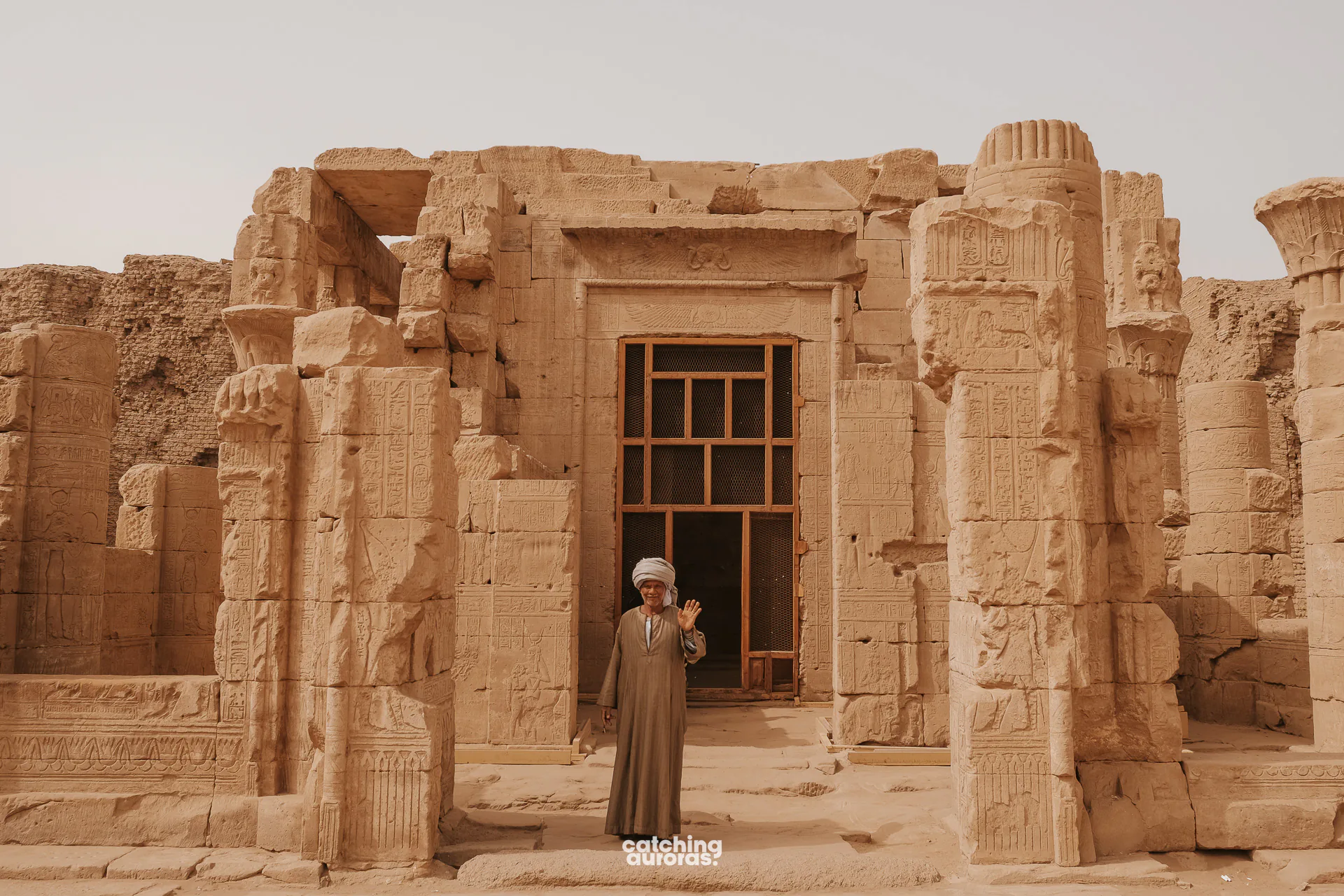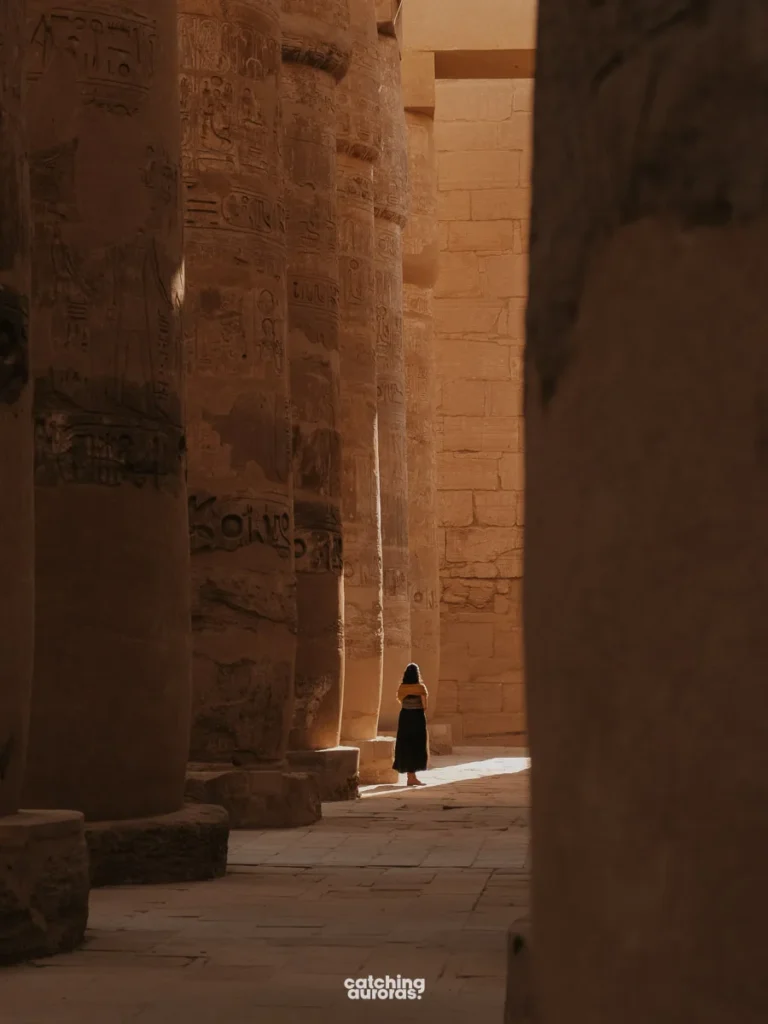
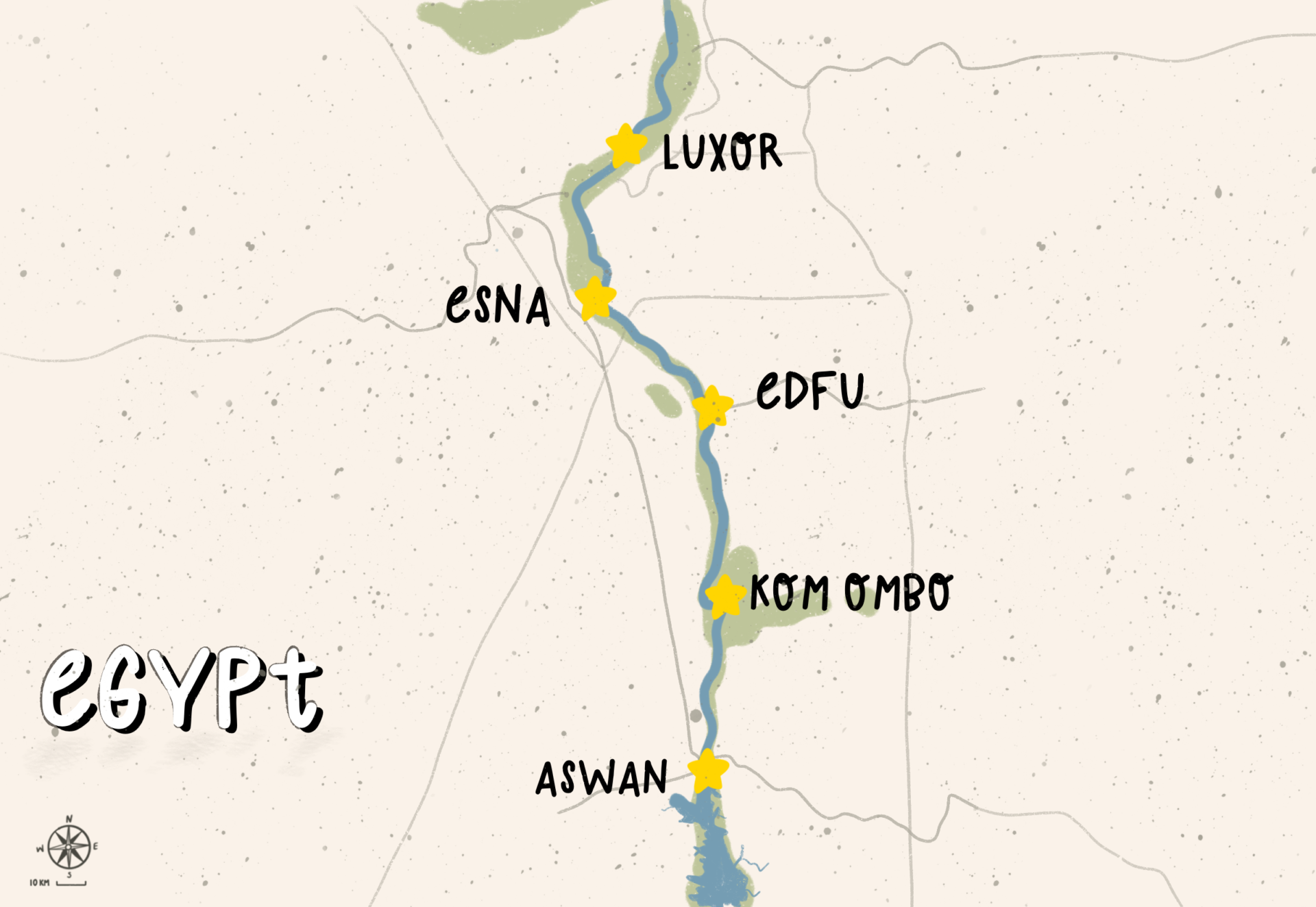
If you’re in Egypt for the history, stop at Kom Ombo, Edfu and Esna on the drive from Aswan to Luxor. Kom Ombo is a double temple built for two gods. Edfu is one of the most complete temples in Egypt. Esna hides a painted ceiling and the most colourful columns you will ever see. And they all appear along the way as you travel northward.
This guide to Kom Ombo, Edfu and Esna temples contains the route we took, what to look for at each temple, and what we paid.
Aswan to Luxor via the temples: at a glance
| Our route / planning note | |
|---|---|
| Direction | Aswan → Kom Ombo → Edfu → Esna → Luxor |
| Transport | Private car |
| Departure / arrival | 7:00 AM departure from Aswan and 3:30 PM arrival in Luxor |
| Temple time | Allow roughly 45–75 minutes at Kom Ombo, 60–75 minutes at Edfu and 45–75 minutes at Esna |
| Day length | A full travel day once the three visits, food and road breaks are included |
| Tickets | Separate entry at each temple; EGP 1,200 per person for all three (Jan 2026) |
| Best reason to do it | Esna’s painted ceiling. Kom Ombo by the river is a close second. |
How to get from Aswan to Luxor with temple stops
Train & Flight
I’ll start with the two options that won’t let you stop at any of the three temples mentioned (so not really an option at all as far as this post is concerned). The train is cheap but worth considering only if you are tired or all templed-up. There are no direct flights between Aswan and Luxor and it also costs a lot, so this is only an option if you want me to judge you (just… why?). These are not options if you are looking to stop by Kom Ombo, Edfu or Esna.
Private Car
Hiring a car for the journey between Aswan and Luxor is the best option in my opinion. With your own driver, you pick the stops and how long you stay. We decided to book a driver after reading some reviews on Google and that was the best decision since we were able to start early, stay as long as we wanted in each of the temples and even add a third stop, Esna.
The price for the car depends on the number of stops. It’s cheaper by USD 10 – USD 20 if you choose to stop at only Kom Ombo and Edfu. We paid USD 100 for 3 stops (not including the tip paid to the driver).
Be sure to ask how long the driver will wait, whether parking and any detours are included, and where you will be dropped in Luxor.
Nile Cruise
Another popular way tourists visit Kom Ombo and Edfu is as part of a Nile cruise. Usually these cruises will stop right at Kom Ombo temple, which is by the river, and at Edfu, which is 2 km inland, so cruise passengers ride over in horse carts. Esna temple is usually not part of the package. Nile cruises are super expensive, multi-day affairs that I didn’t opt for. Prices vary from as low as USD 500 per person to USD 3000 per person.
Organised tours
You can also book popular tours via third-party companies that will take you to Kom Ombo and Edfu temples as a day trip or as a stop on the way to Luxor. You don’t get to choose the time you spend at each of the temples nor do you get the option to add or remove a stop. Still, tours are a good option if you are not comfortable DIYing the trip.
You can also approach the three temples from the other direction if you are travelling from Luxor to Aswan. Your path will then be Luxor -> Esna -> Edfu -> Kom Ombo -> Aswan.
Kom Ombo Temple: the double temple of Sobek and Horus
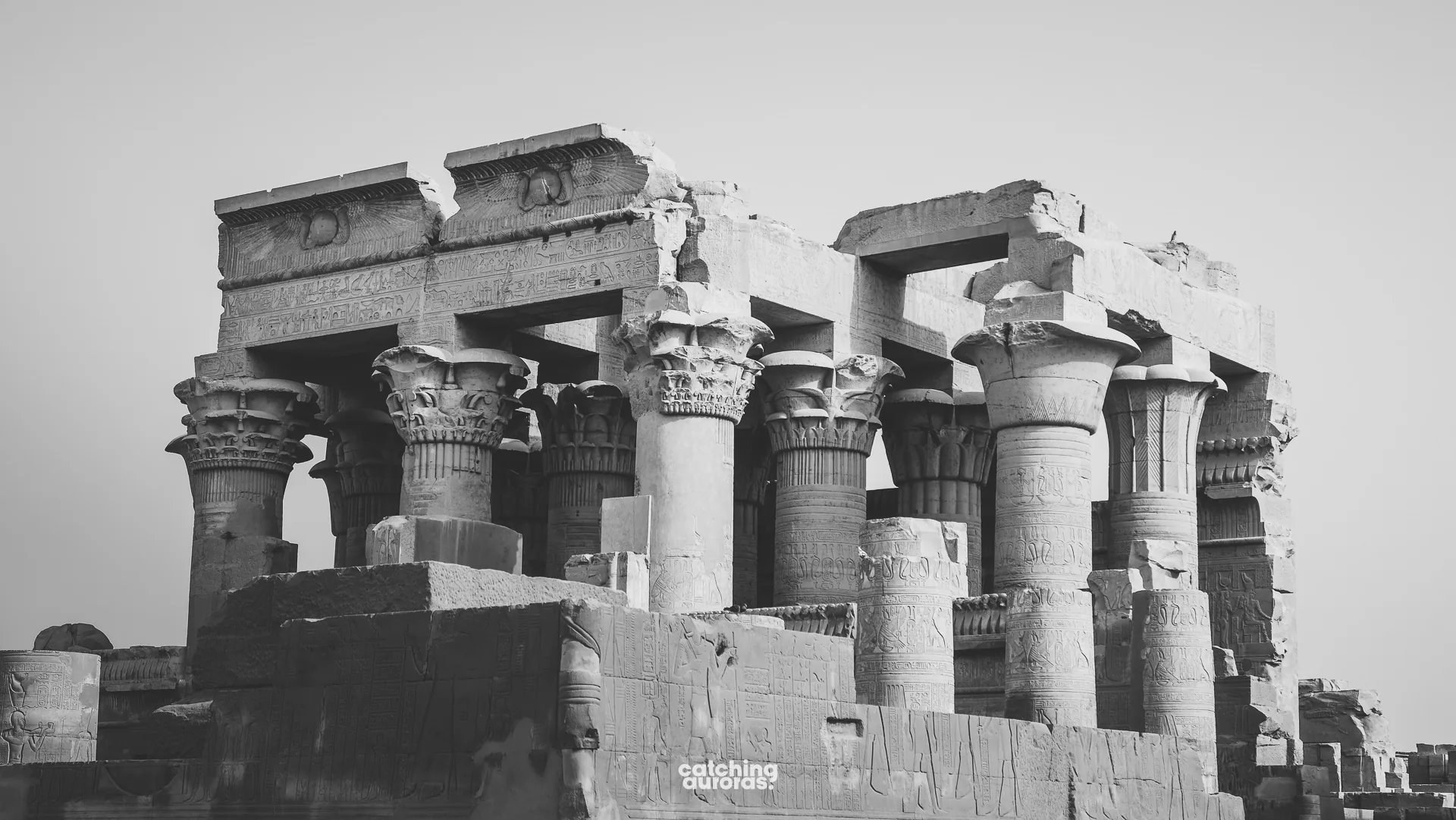
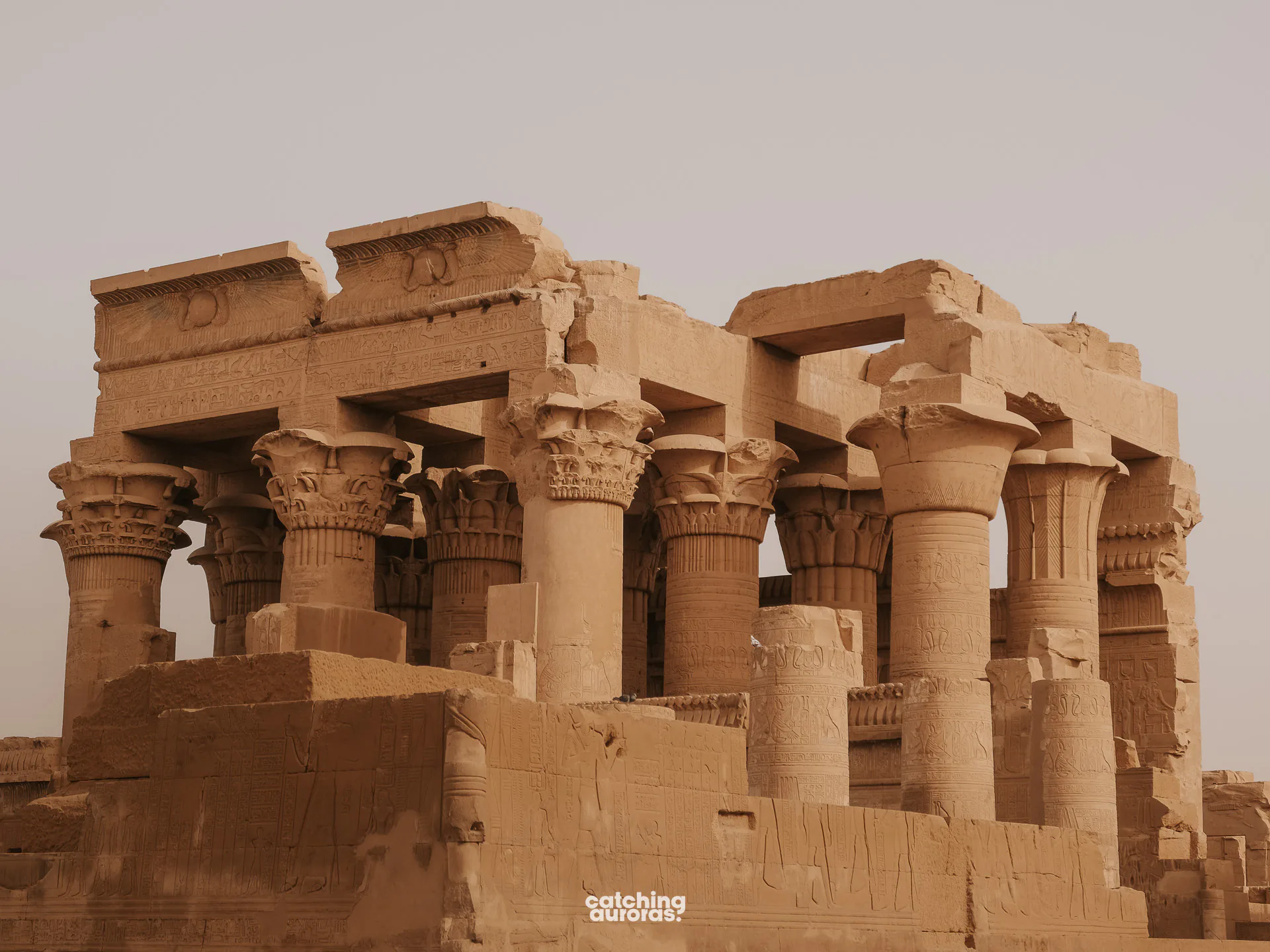
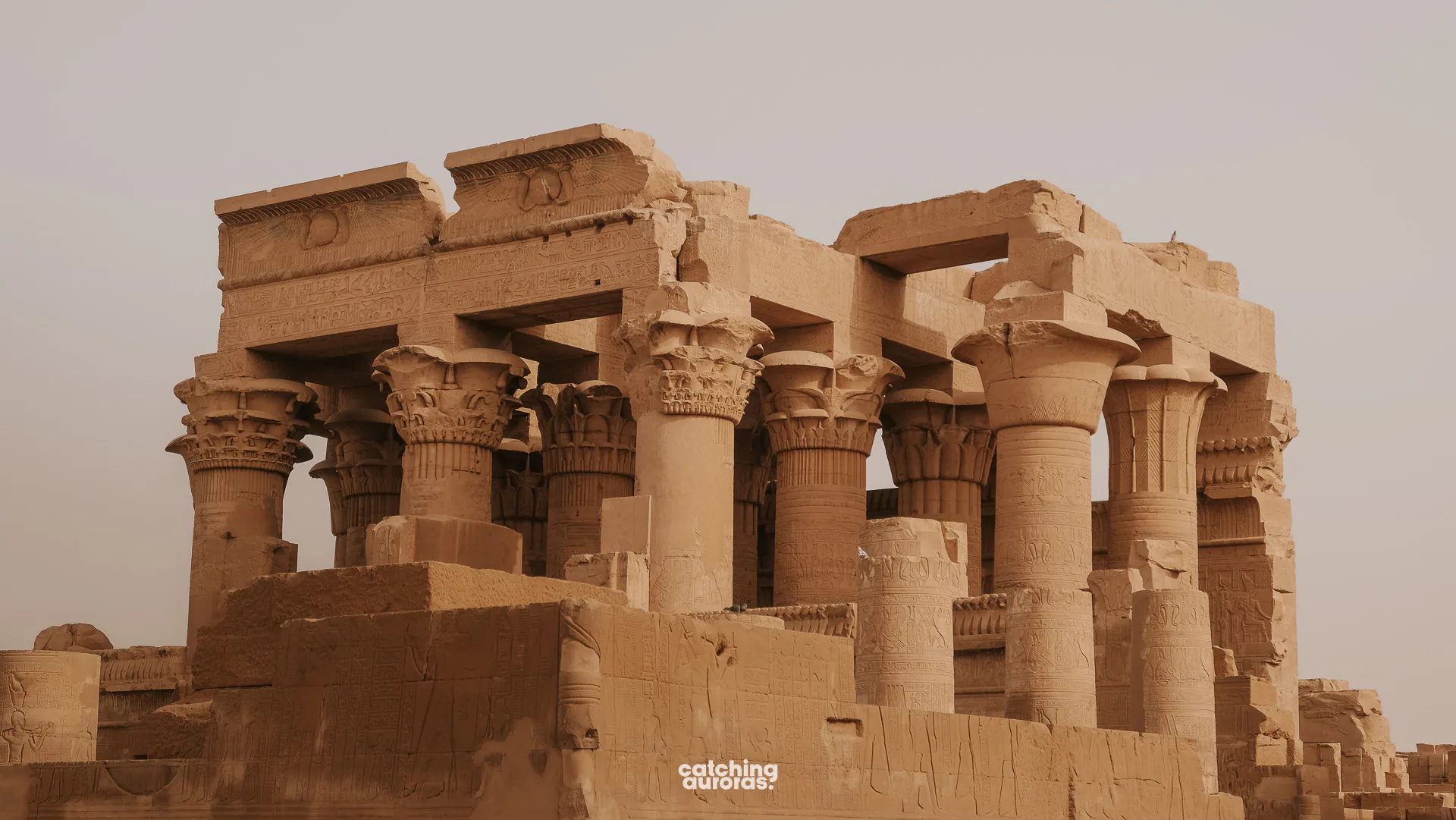
Kom Ombo is the most unusual of the three temples because it was built for two gods at once. The southern side (or the right side) belongs to Sobek, the crocodile god associated with the Nile, fertility and inundation. The northern side (left side) belongs to Harwer/Haroeris, or Horus the Elder. From the entrance, two parallel passages run through the columned halls to two sanctuaries. Once you see the paired arrangement, the reliefs and the building itself start to make sense.
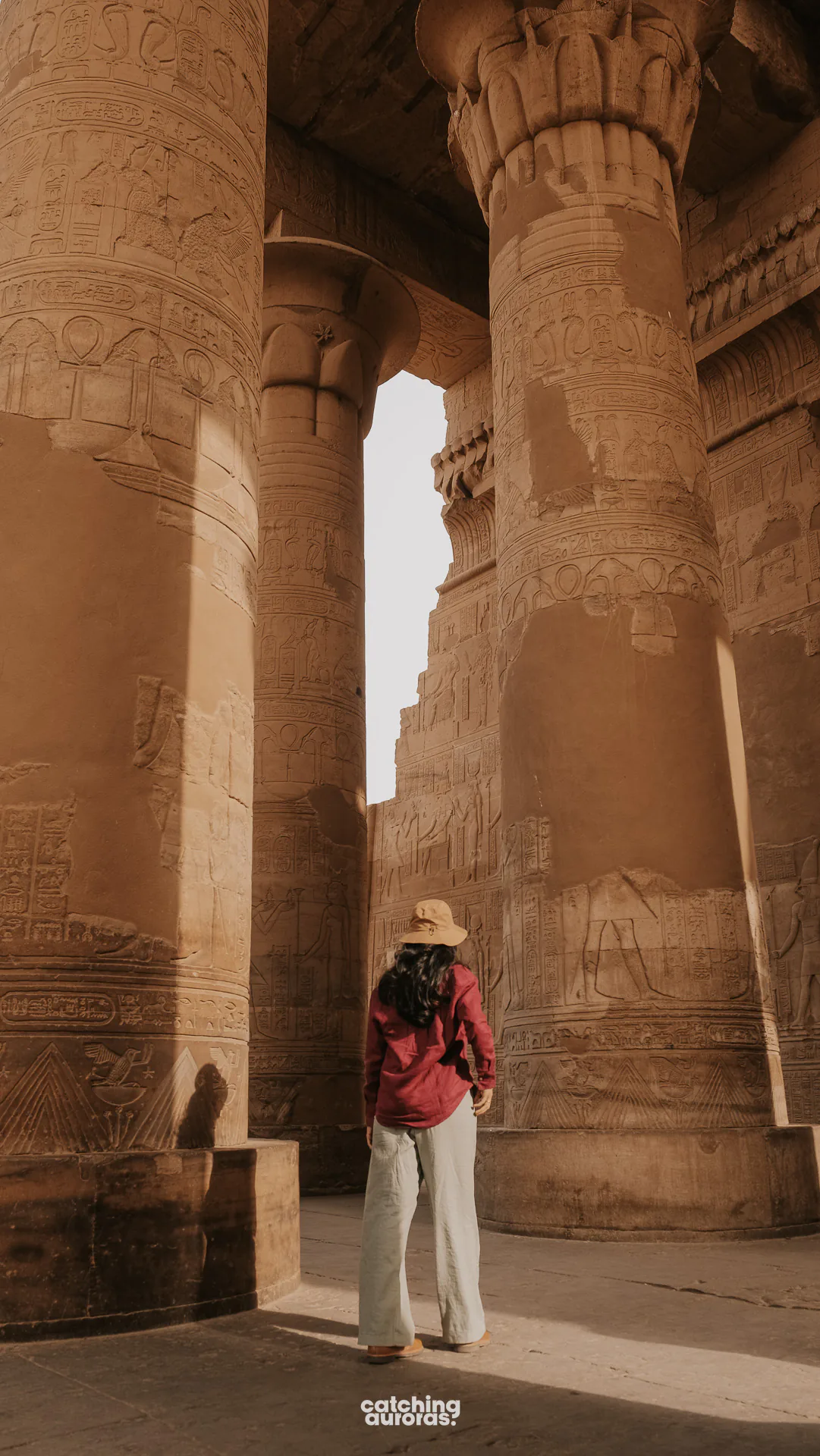
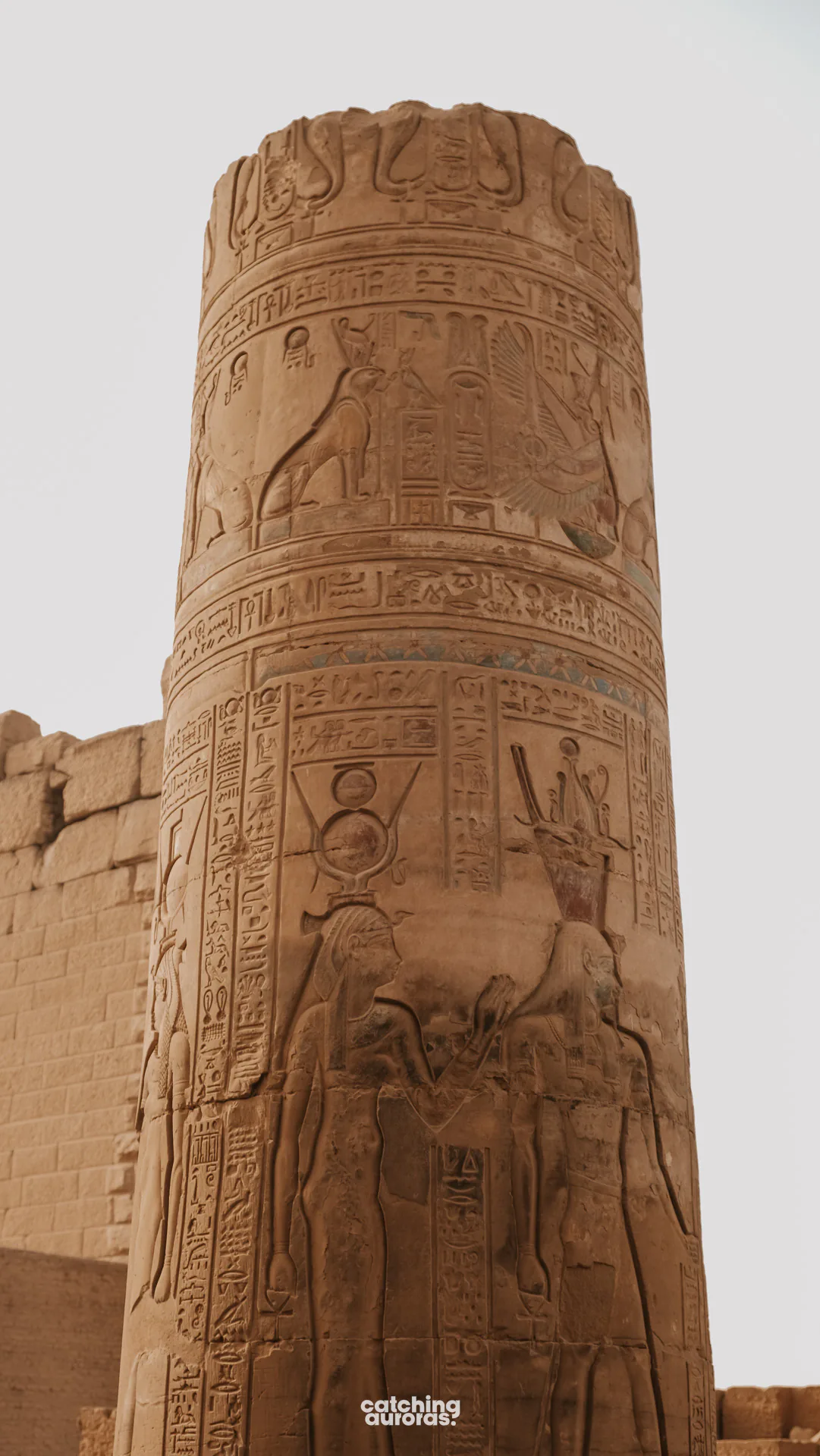
The present temple is mainly from the Greco-Roman period, though the site had an older temple in the New Kingdom. The earliest ruler named in the surviving structure is Ptolemy VI, who ruled in the second century BC; much of its decoration was completed under Ptolemy XII in the first century BC. It is easy to assume that these temples are as old as the pyramids. But they were built more than two millennia later, by Greek kings who had themselves carved as pharaohs.
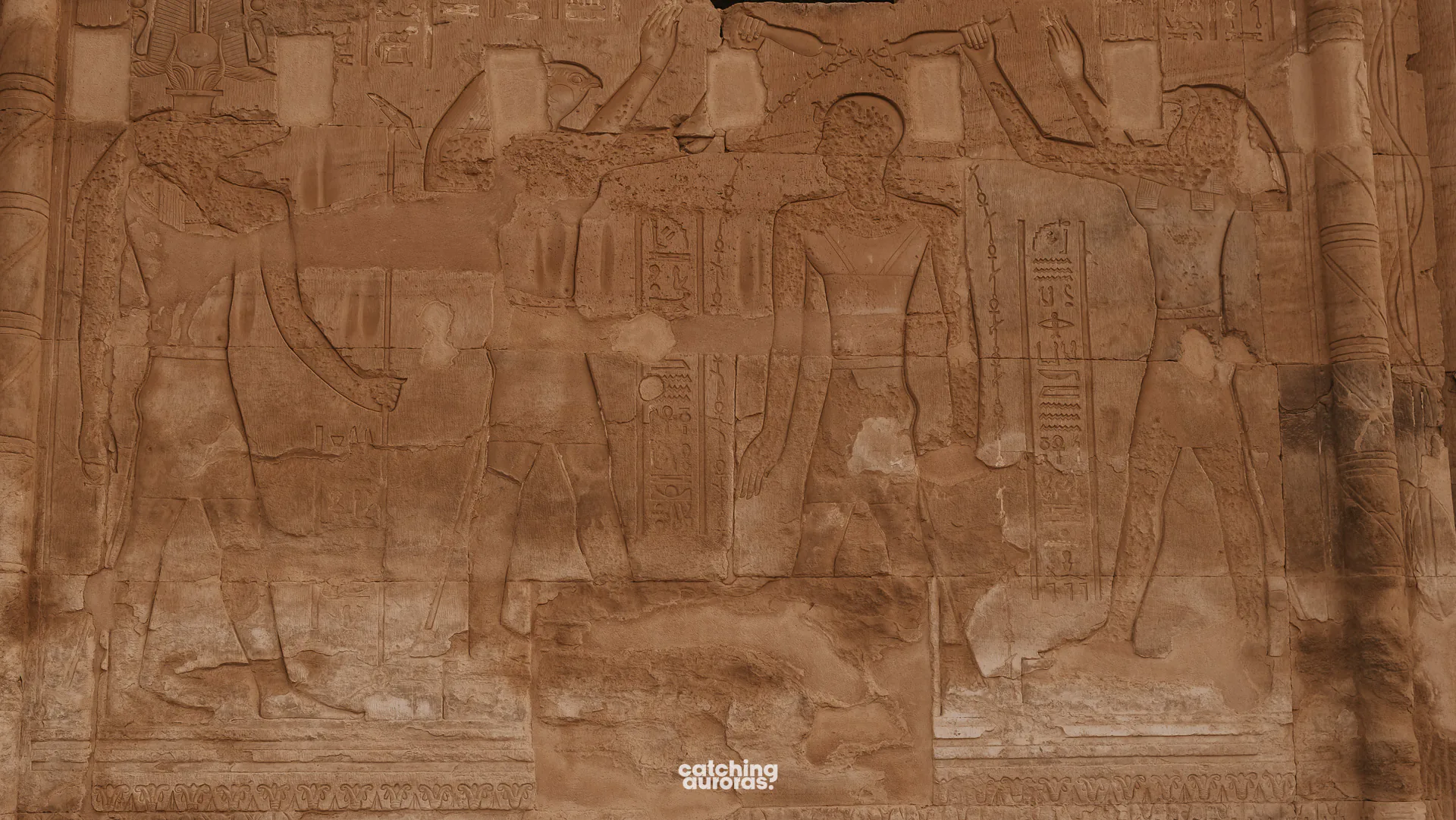
The riverside setting is part of Kom Ombo’s appeal. Nile cruises stop near the temple and the cruise passengers just walk up from the jetty. Inside, look at the paired halls and sanctuaries, the column capitals and the carved ritual calendars. A much-discussed wall scene from the Roman period shows objects believed to be surgical instruments. Don’t miss the Nilometer and the small pond where baby crocodiles were kept.
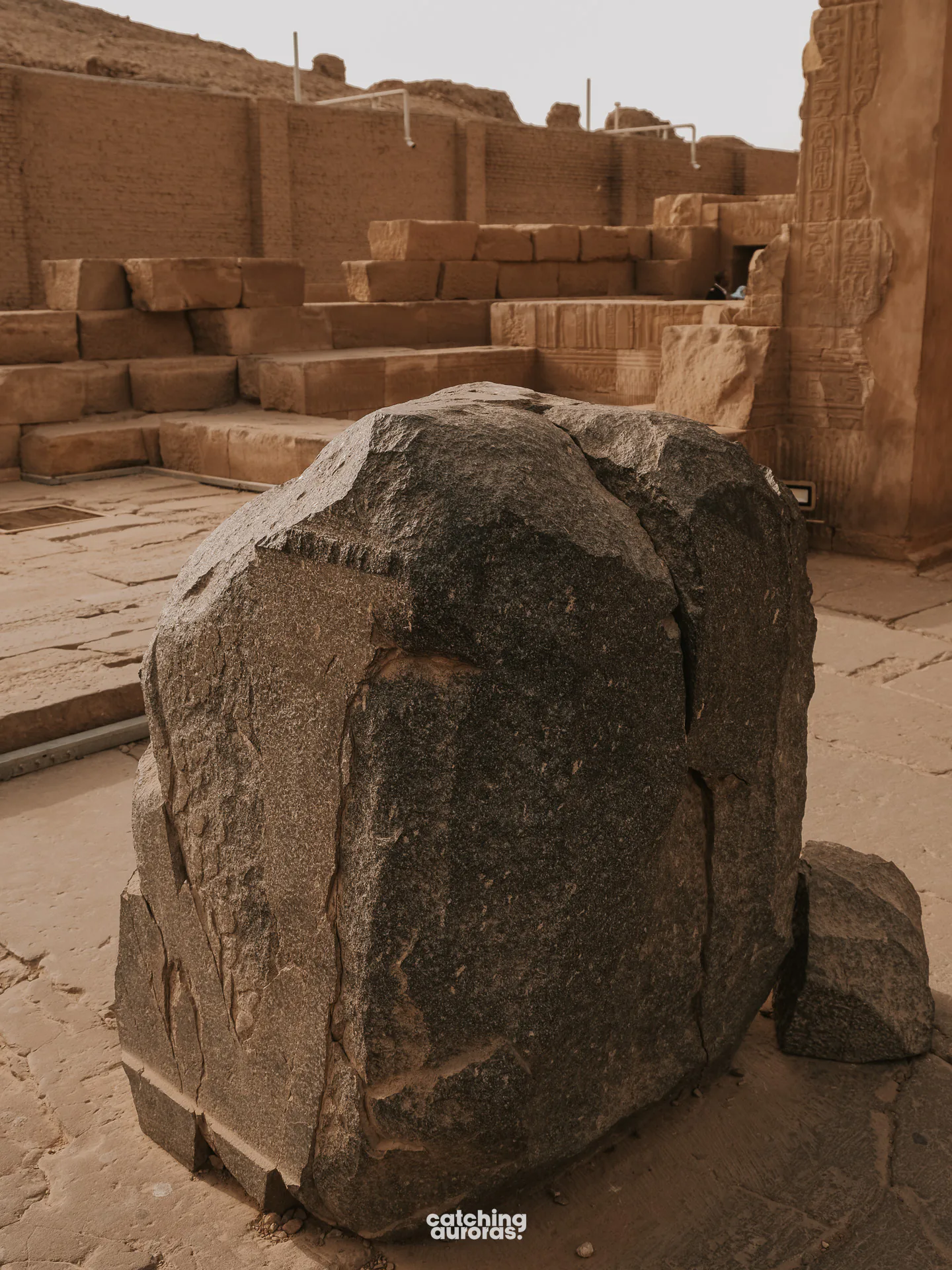
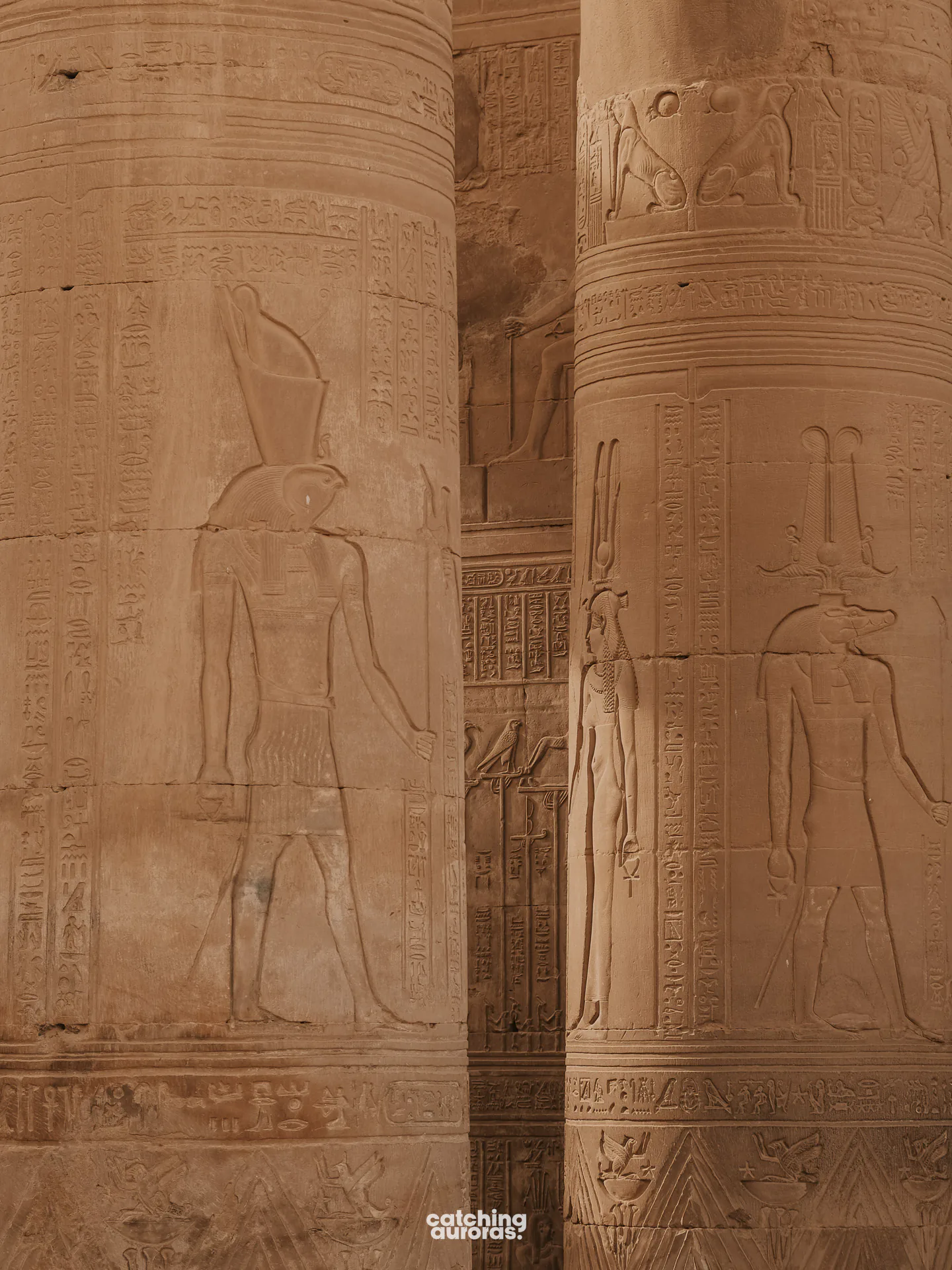
Next to the temple is the Crocodile Museum, with mummified crocodiles and objects connected with Sobek’s cult. We decided to skip the museum since we had already spent more than an hour at the temple.
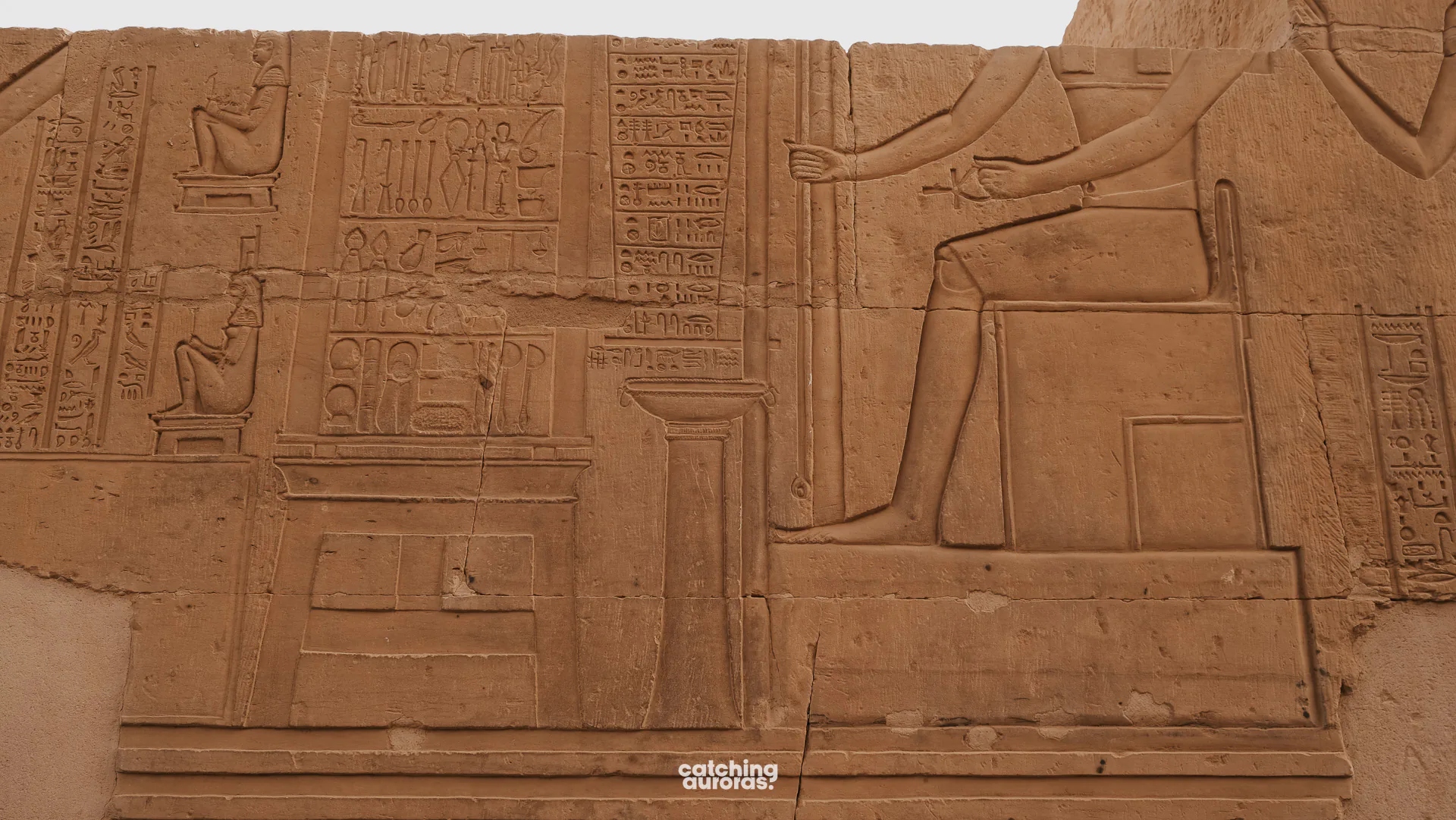
We reached Kom Ombo around 8 AM, an hour after departing from Aswan. It was the most peaceful temple exploration of the day – it was not yet hot, people were just trickling in and the breeze from the Nile really sold the idyllic setting.
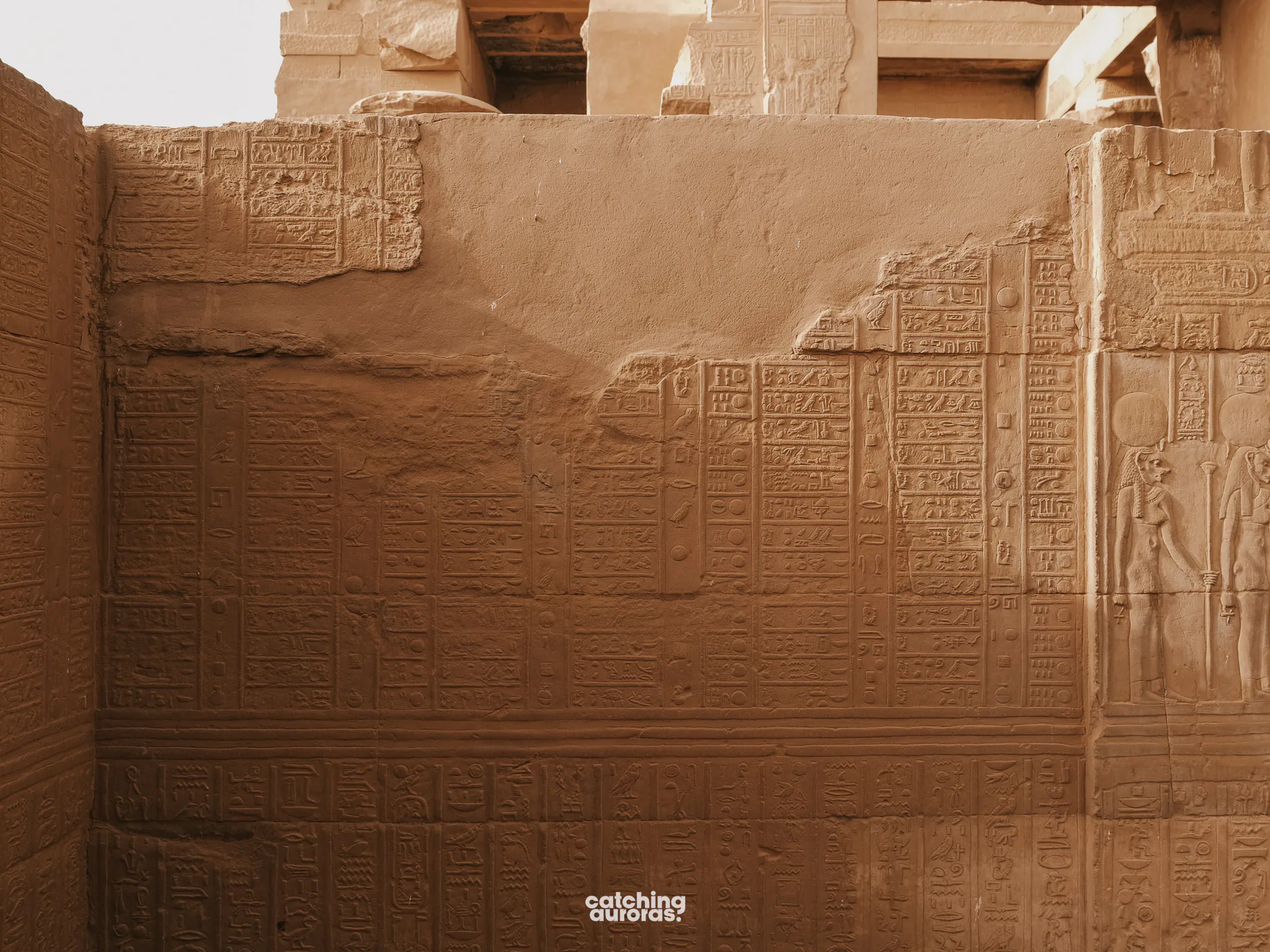
How long to allow: Around an hour for the temple, longer if you enjoy reading the reliefs and visiting the museum.
Hours: 7 AM to 8 PM (last entry)
Ticket prices (as of 2026): EGP 450 (adult); EGP 225 (student)
Official information: Kom Ombo Temple and the Ministry’s Crocodile Museum guide.
Edfu Temple of Horus: impressive, but the worst crowds
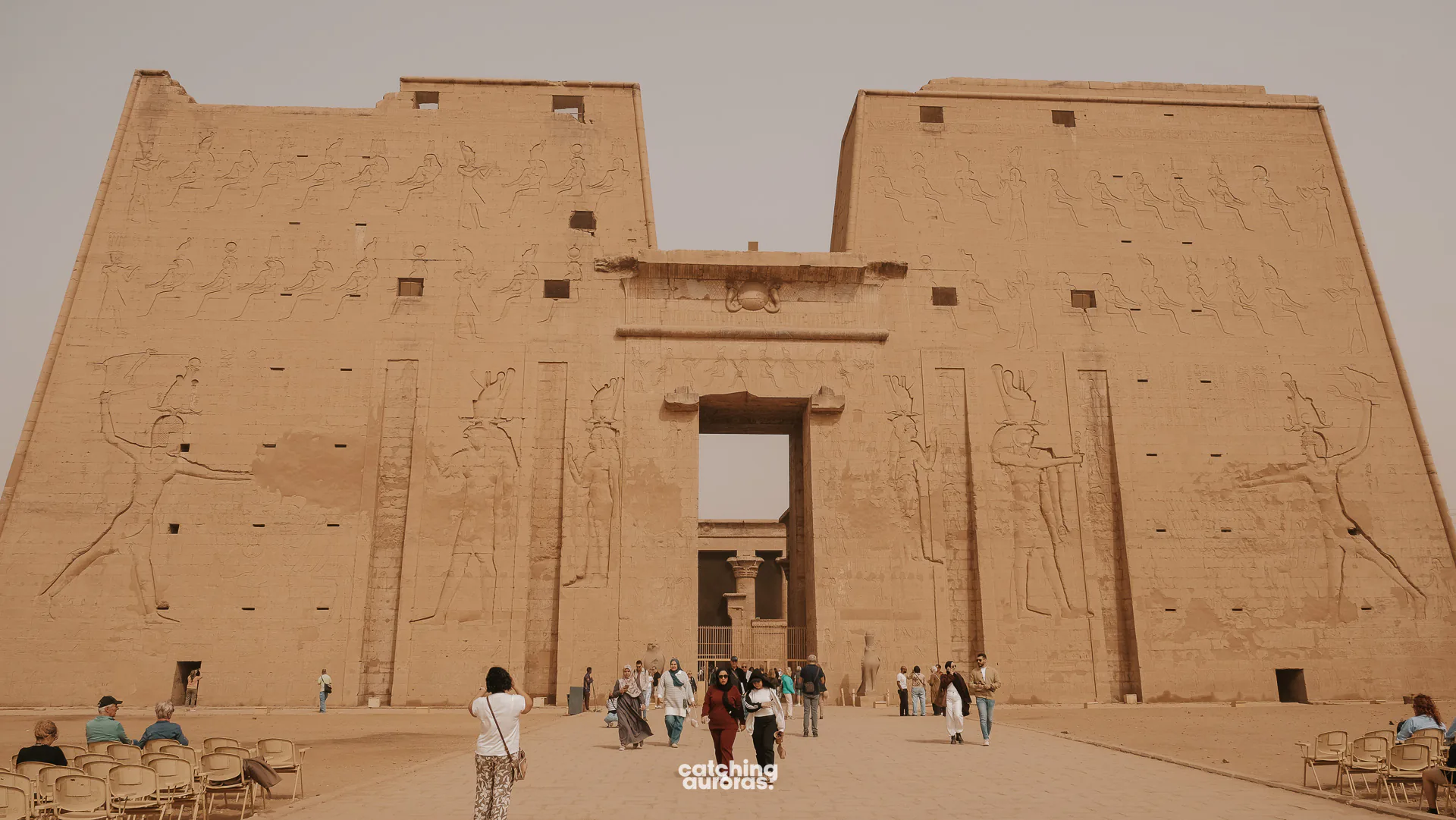
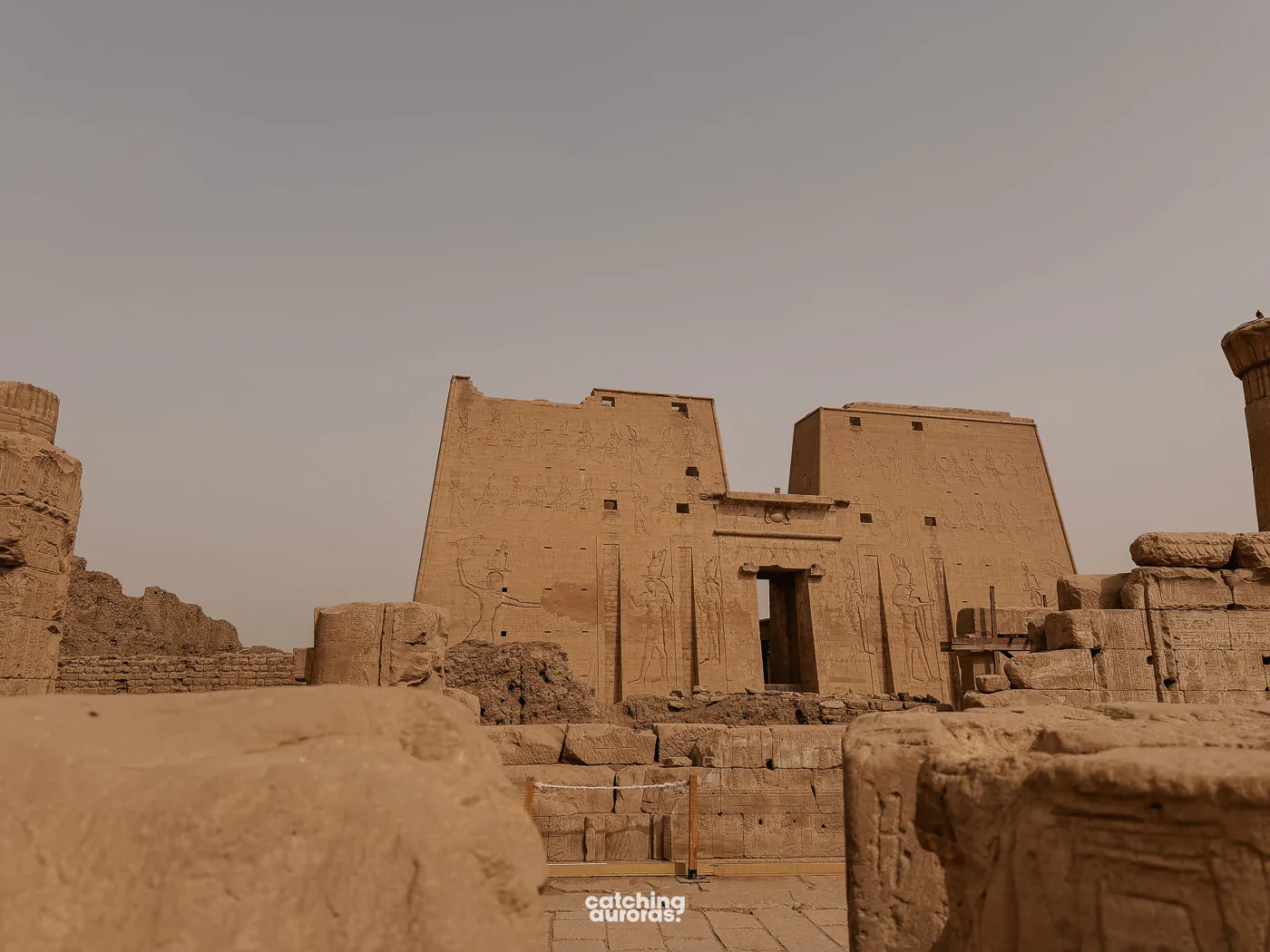
Edfu’s Temple of Horus is one of Egypt’s most complete surviving temples. Construction began in 237 BC, under Ptolemy III, and was completed in 57 BC, under Ptolemy XII. That is roughly 180 years of building!
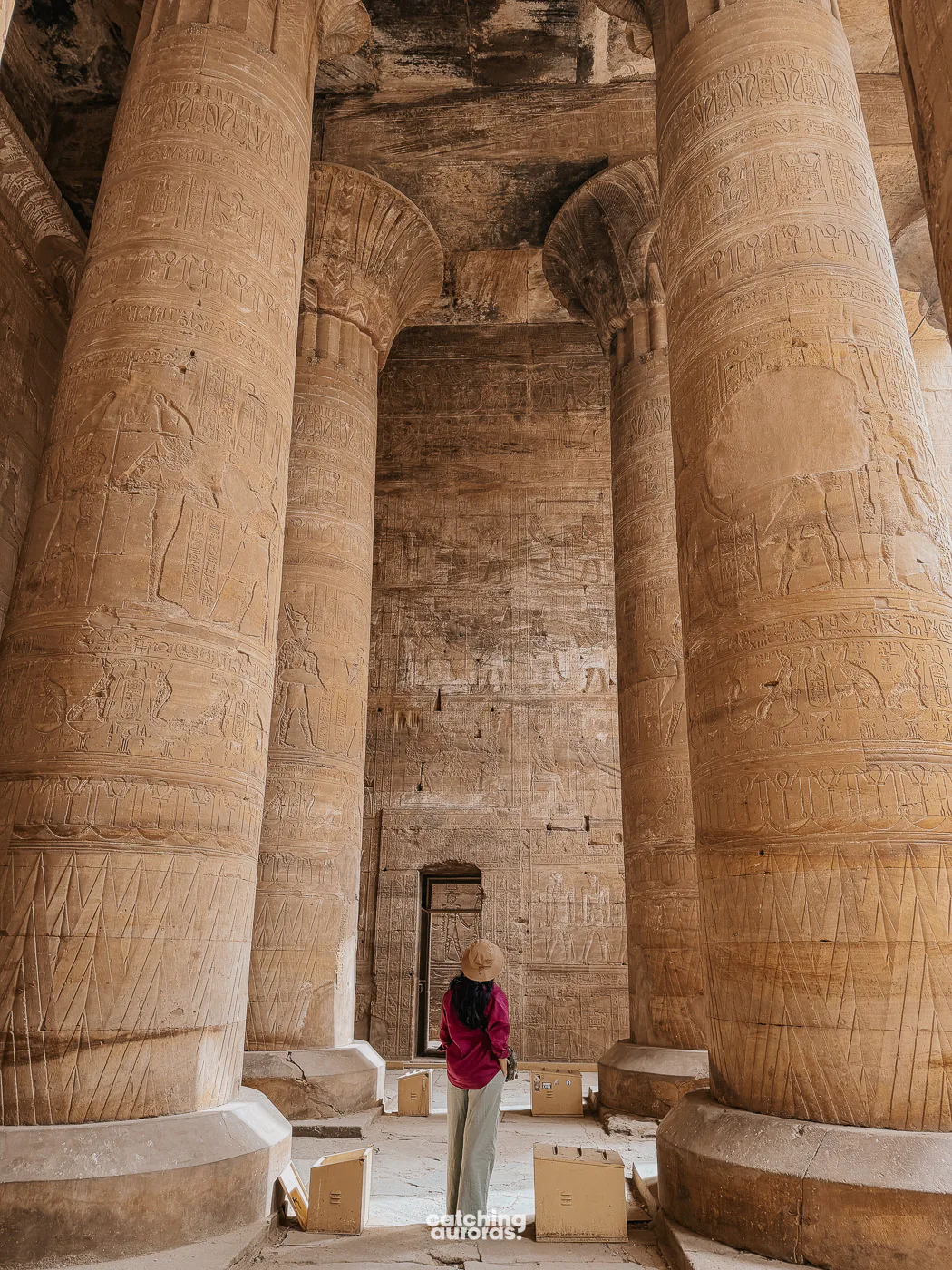
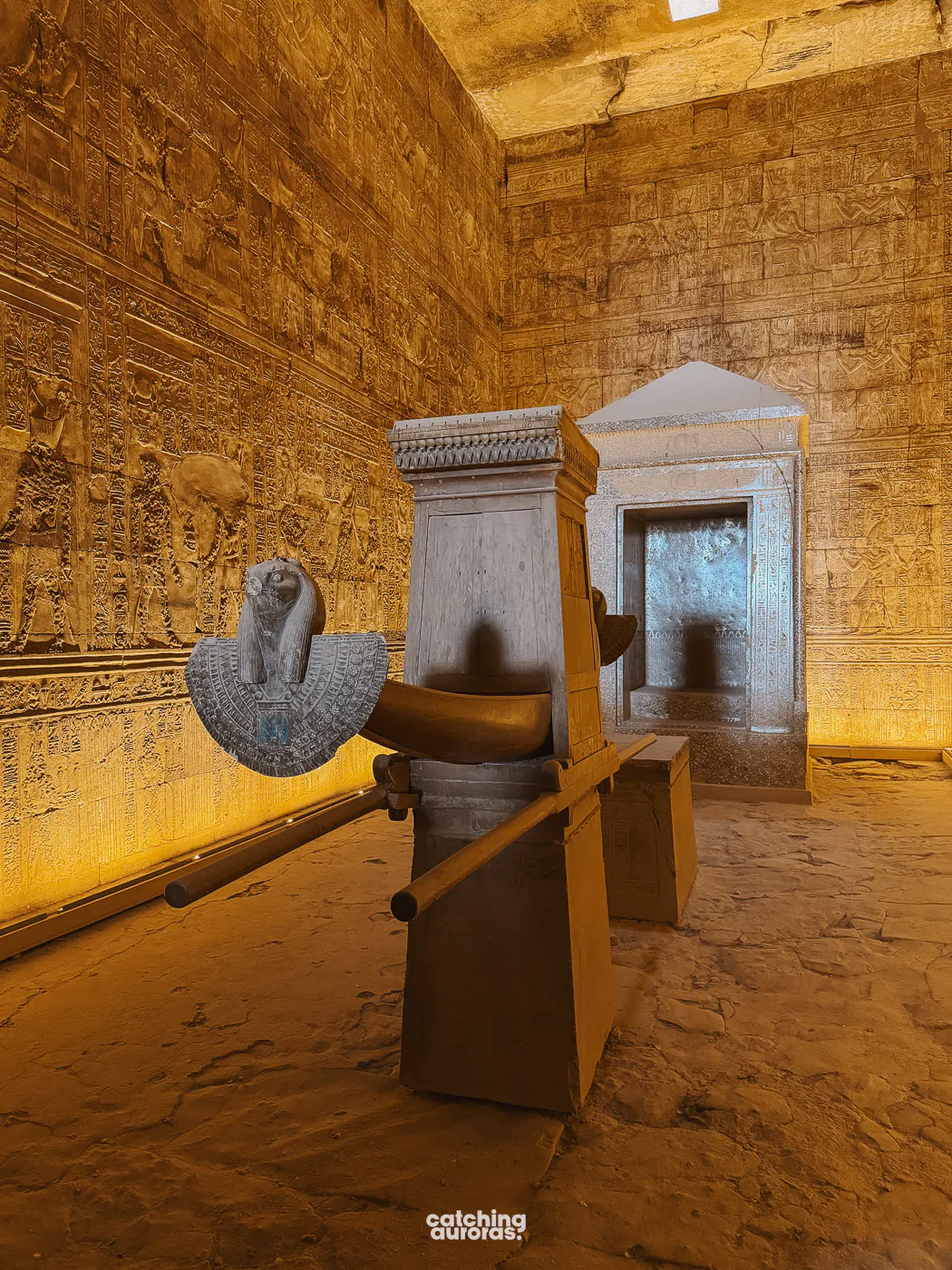
Part of the reason so much survived is that the temple was buried under sand for centuries. The French archaeologist Auguste Mariette began clearing it in the nineteenth century.
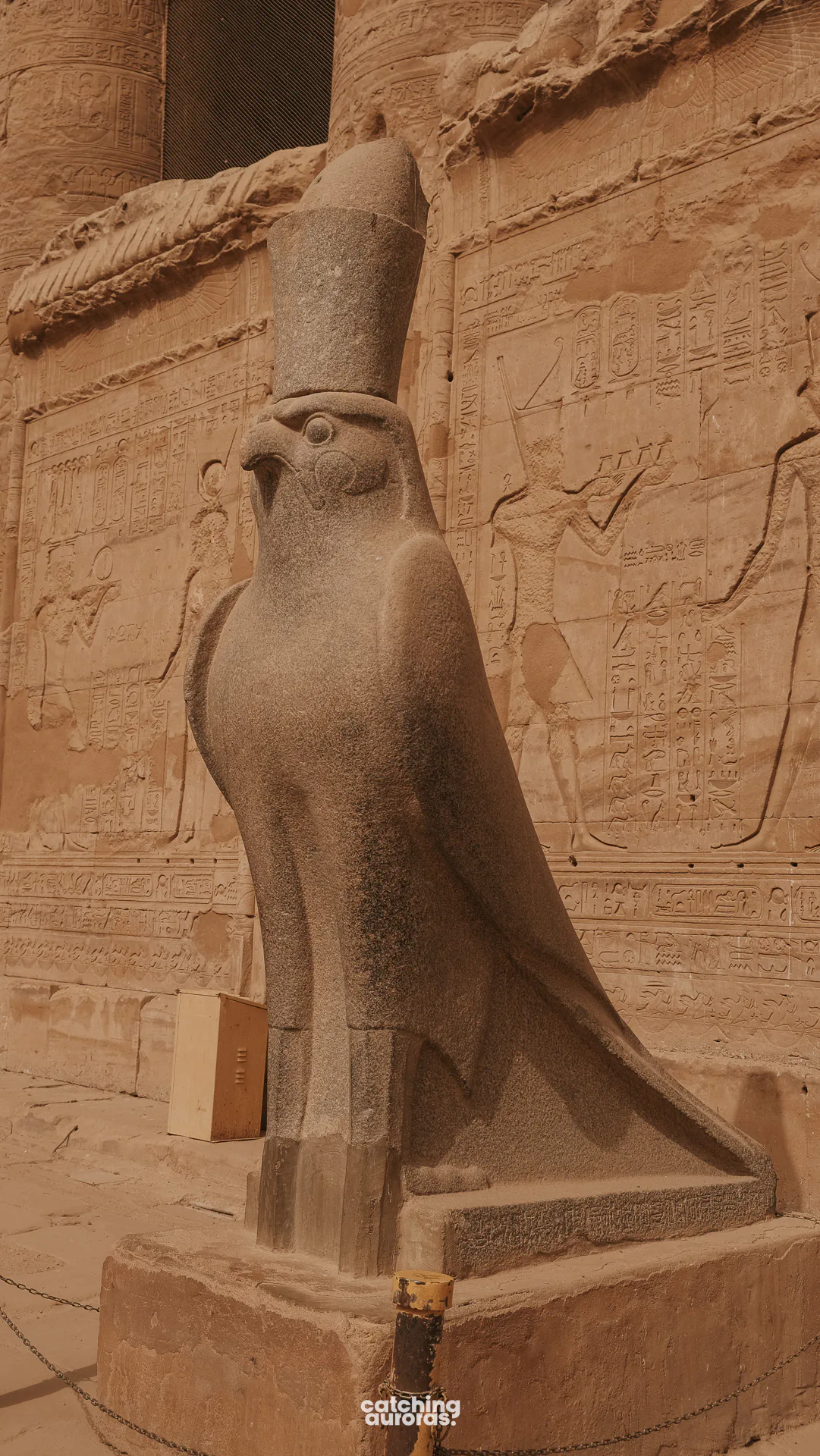
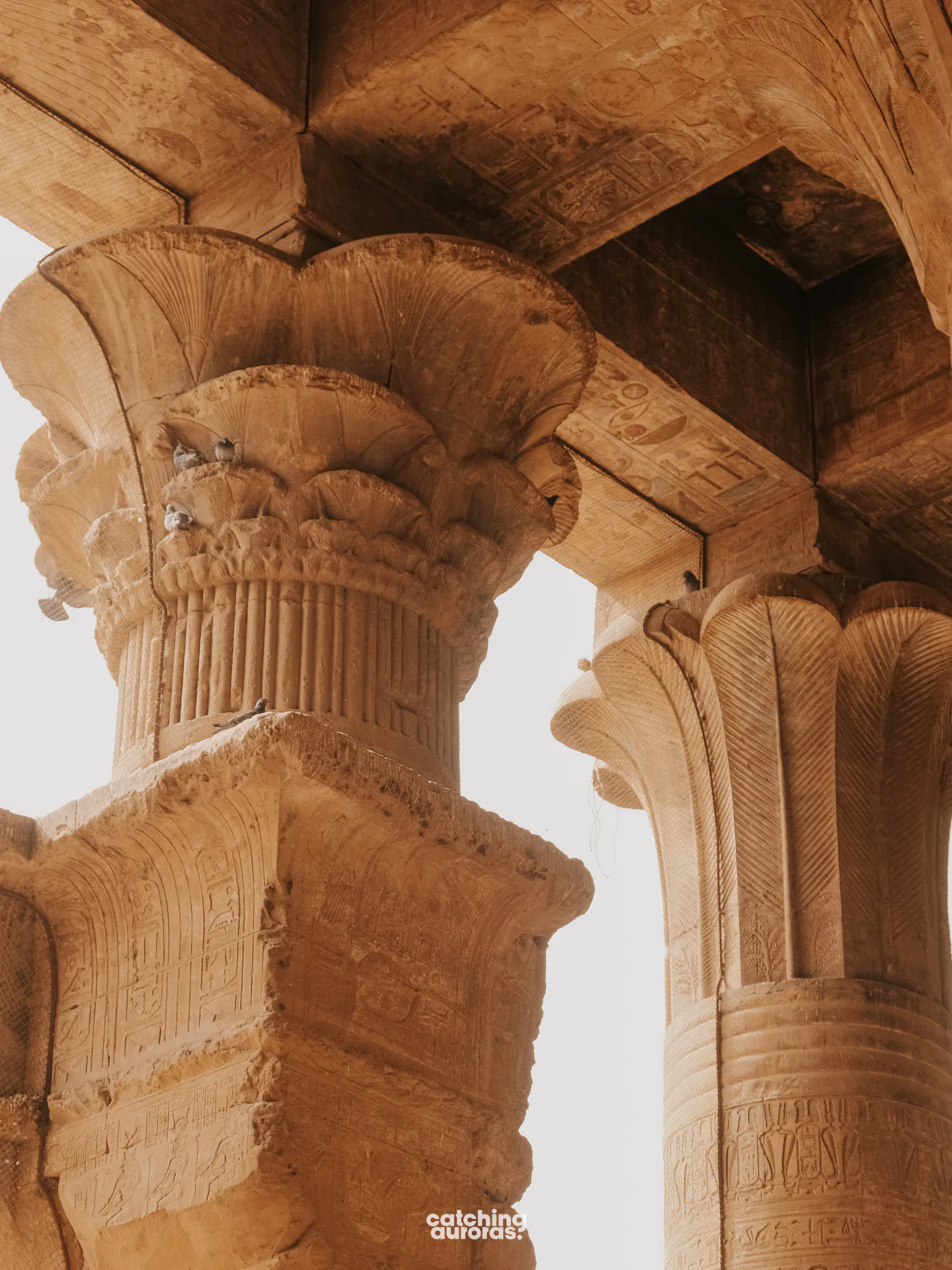
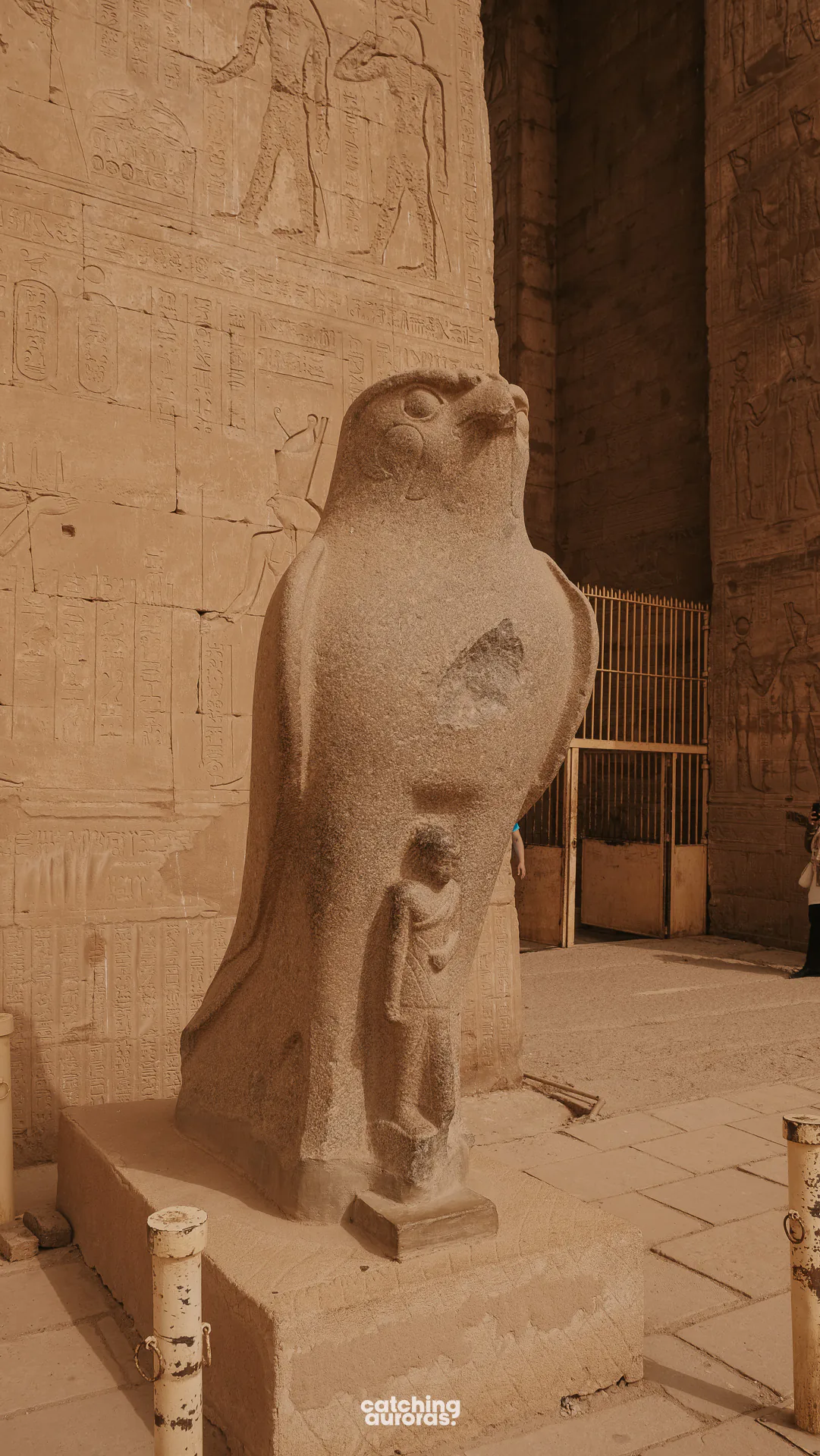
At the front, look for the two granite falcons representing Horus. The pylon reliefs show Ptolemy XII defeating enemies and making offerings to the gods. Beyond the gate, the large court gives way to two columned halls, then smaller rooms leading towards the sanctuary.
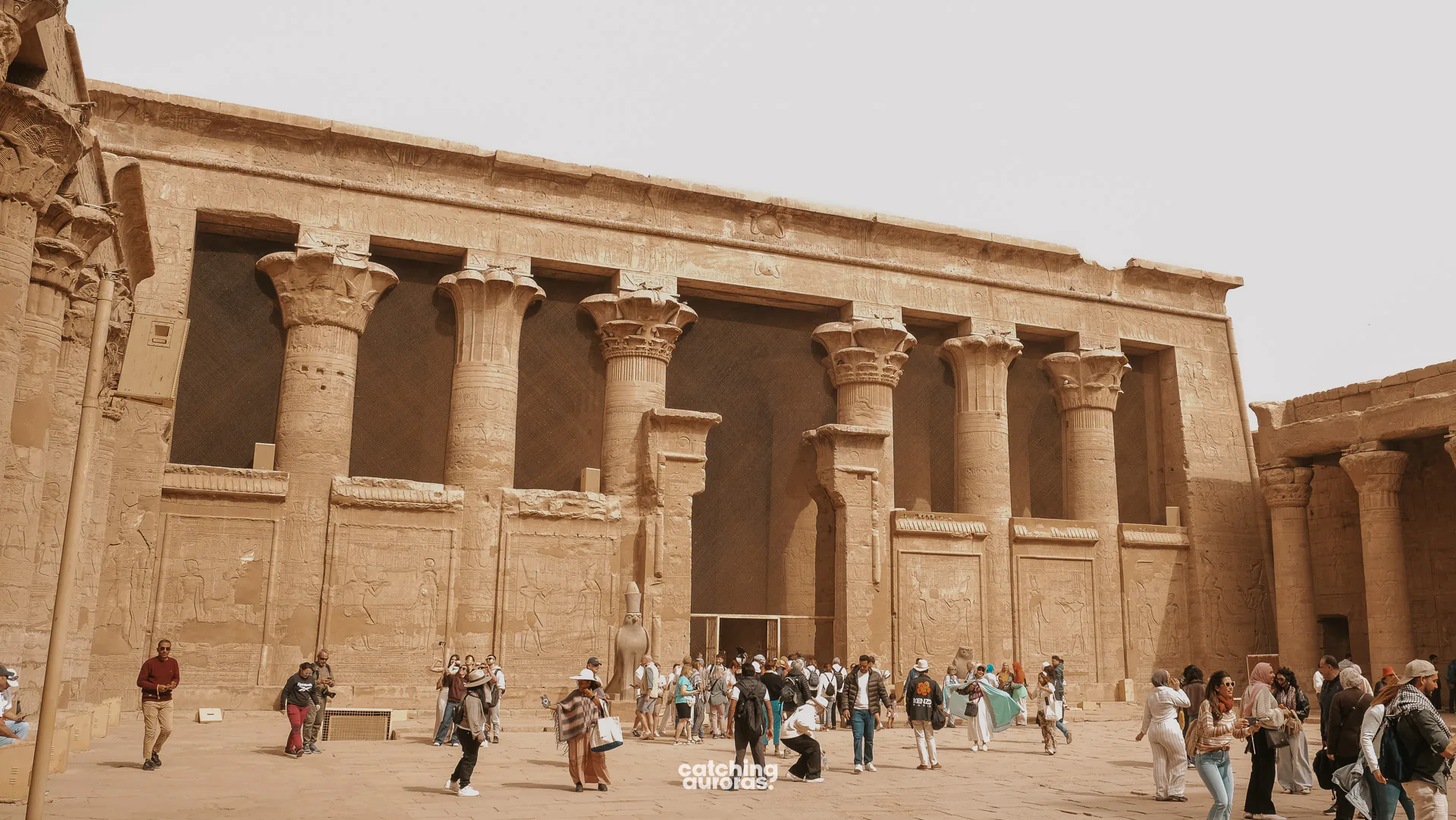
Look at the reliefs on the walls and the columns. Some depict the Feast of the Beautiful Meeting – when once a year, Hathor’s cult statue travelled from Dendera to Edfu to meet Horus. There are also reliefs depicting the classic Egyptian drama – the fight between Horus and Seth.
Other things to look for – the hypostyle halls, the temple library, the sanctuary of Horus, and the mammisi.
We actually didn’t spend a lot of time at Edfu. We found it really dusty, dirty, and crowded with too many people harassing us outside, offering a ride. It was a stark contrast to the peaceful morning we had had exploring Kom Ombo temple. The Nile cruises dock on Edfu’s west bank and it’s a 2 km ride on a horse carriage (calèche) to the temple. Cars, thankfully, can drop you right outside the temple and you just need to walk across the lot with horse shit, puddles and calèche drivers fighting over the chance to take you for a ride (literally). The crowd, the midday heat and these horse carriages kicking up dust were not a good combination and we left within an hour. Edfu was the low point of our day.
How long to allow: At least 60 minutes; two hours if you want to read the reliefs properly.
Hours: 7 AM to 4 PM (last entry)
Ticket prices (as of 2026): EGP 550 (adult); EGP 275 (student)
Official information: Edfu Temple.
Esna Temple of Khnum: is it worth the stop?
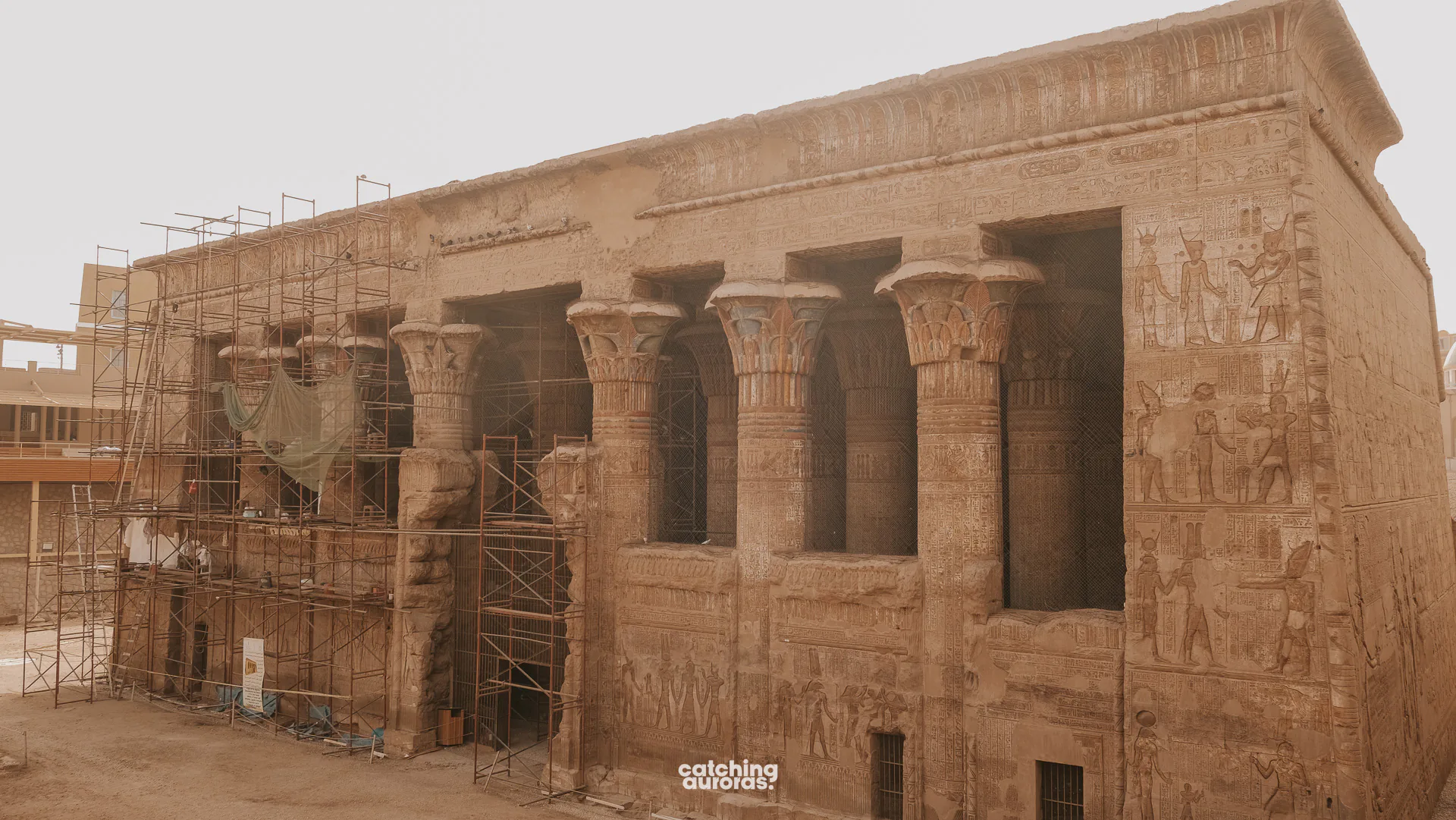
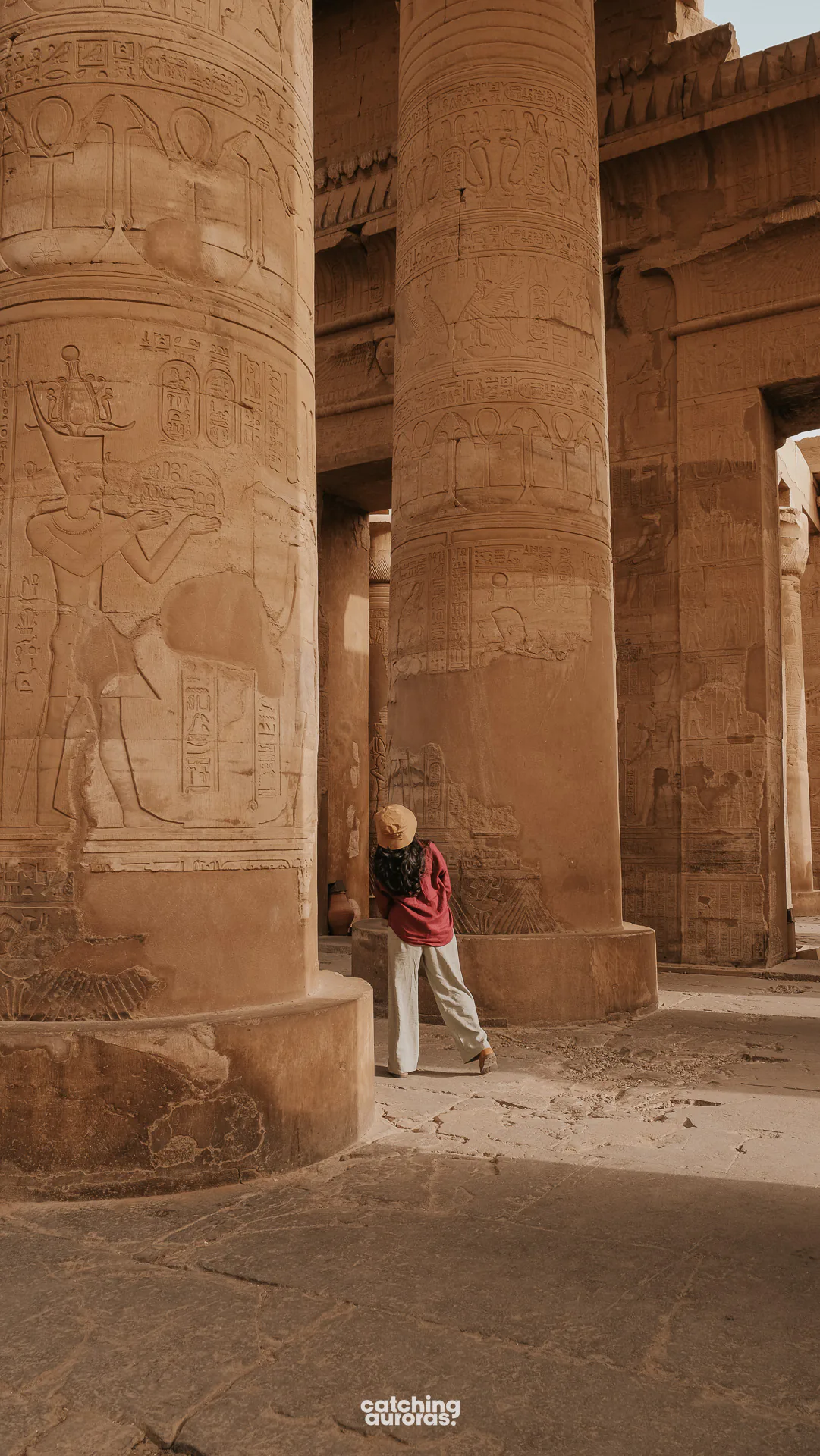
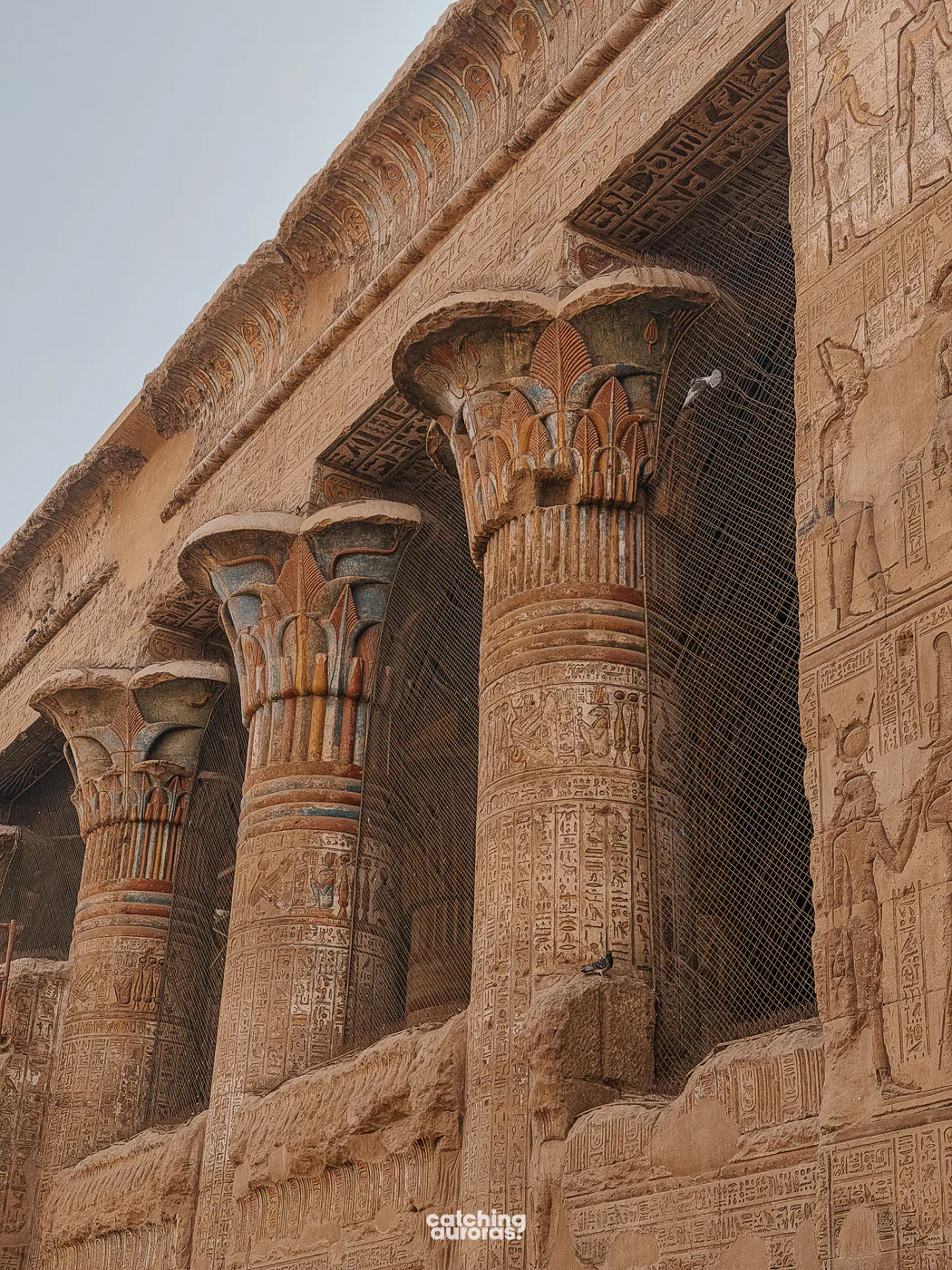
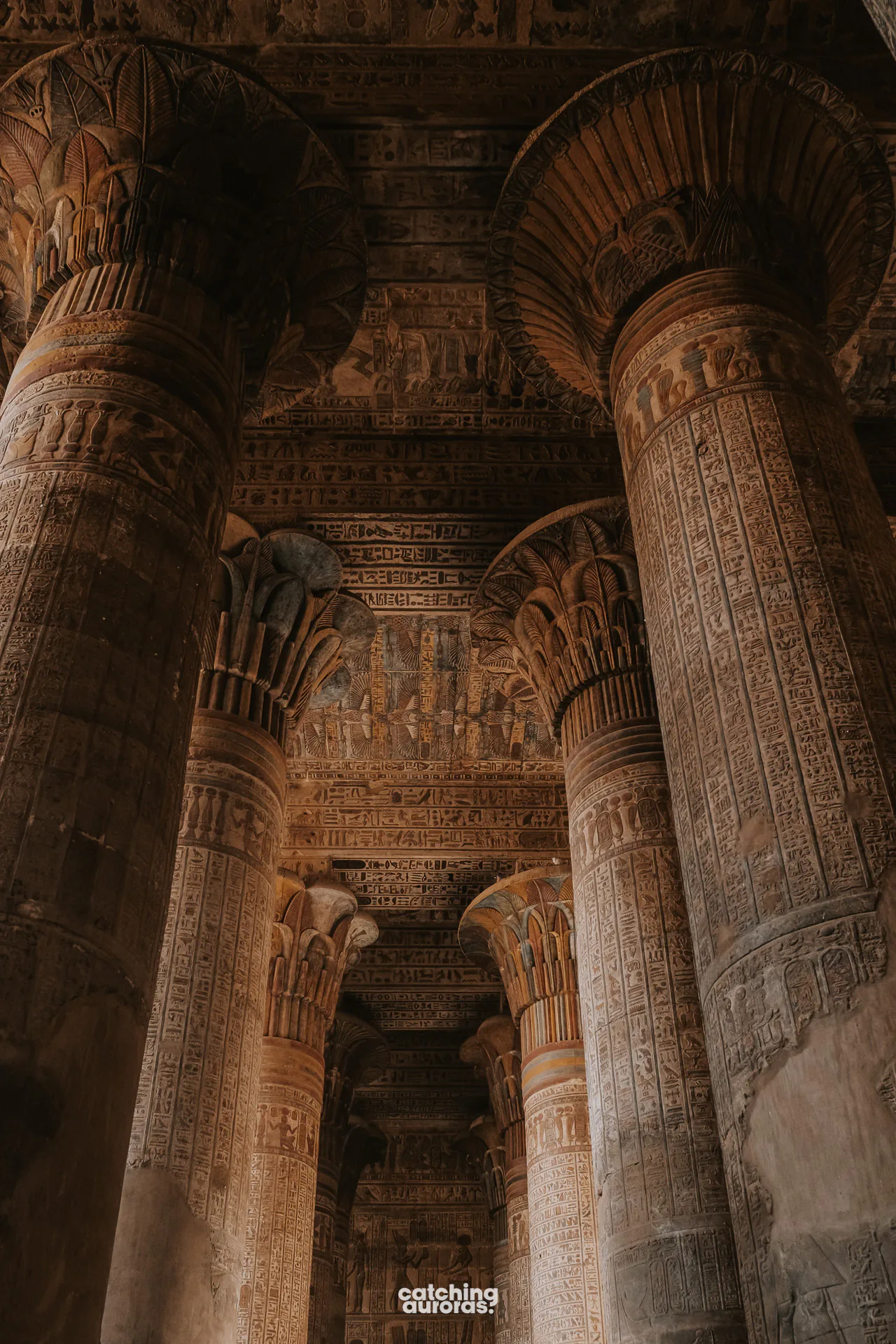
Esna is the most visually appealing temple of the three and also the least crowded. Standard tours and Nile cruises stop at the first two and completely skip Esna temple, which is a shame, as this temple was my favourite. From the street, you’d walk past it. The temple sits 9 m below the town, and only the front hall, the pronaos, is open.
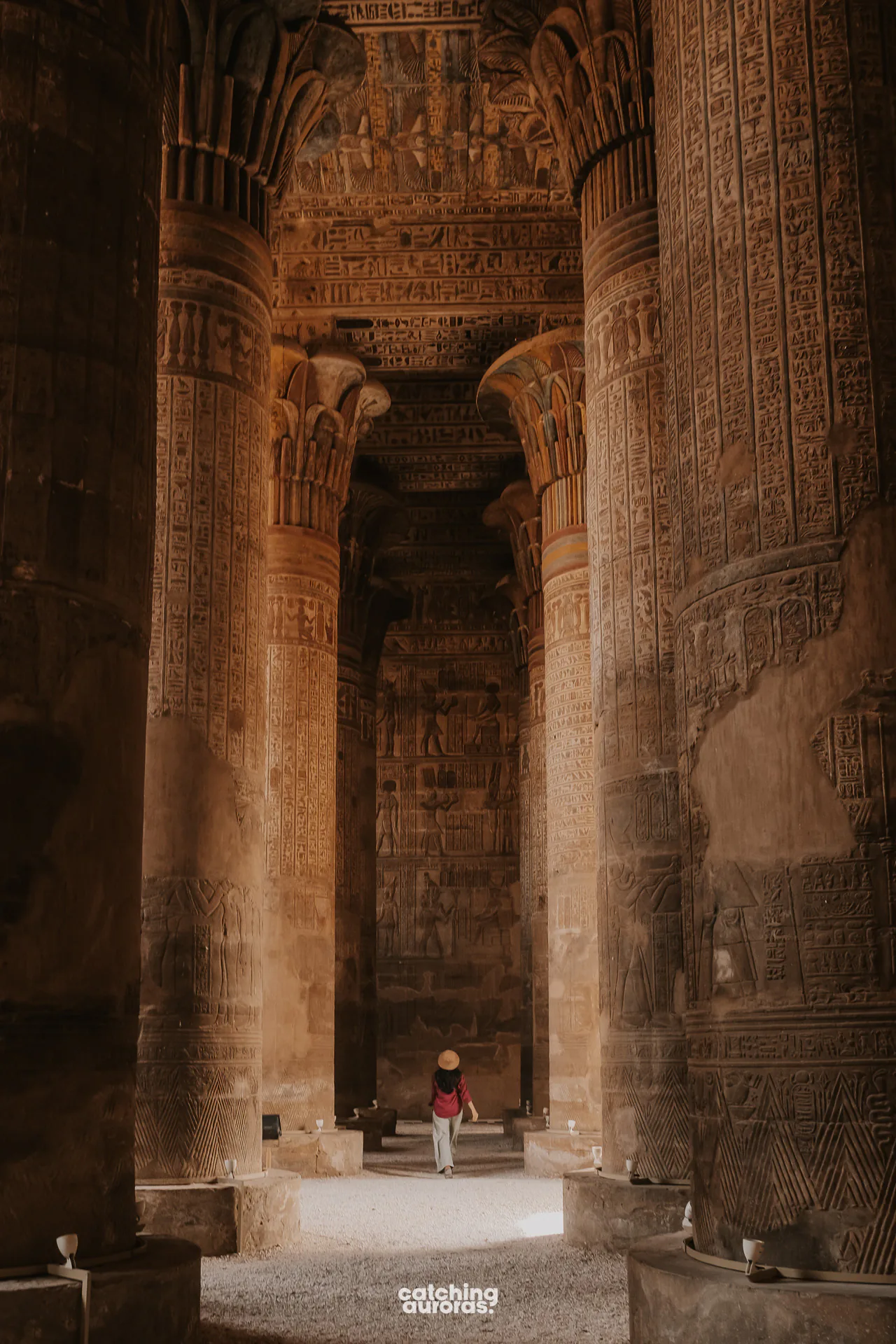
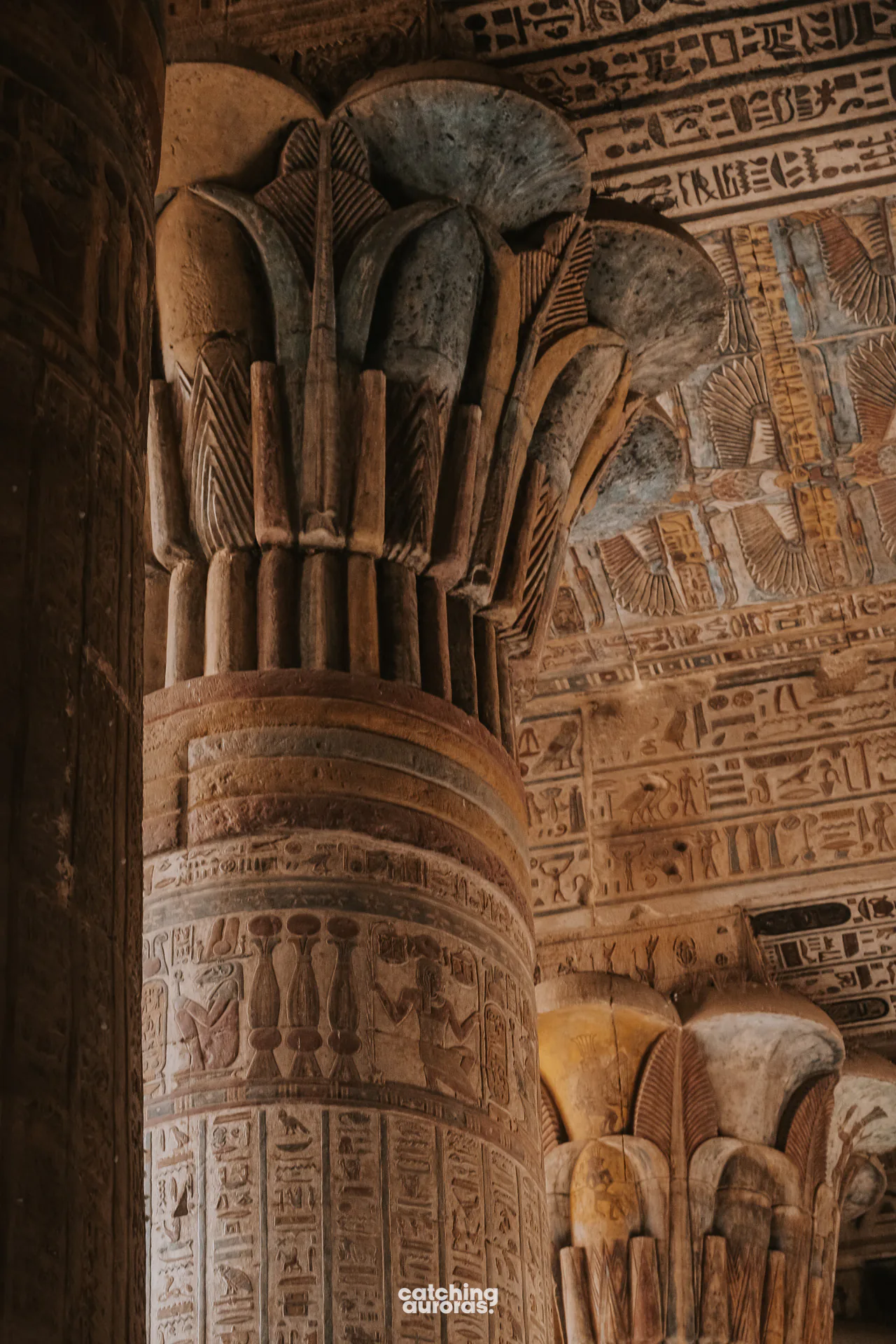
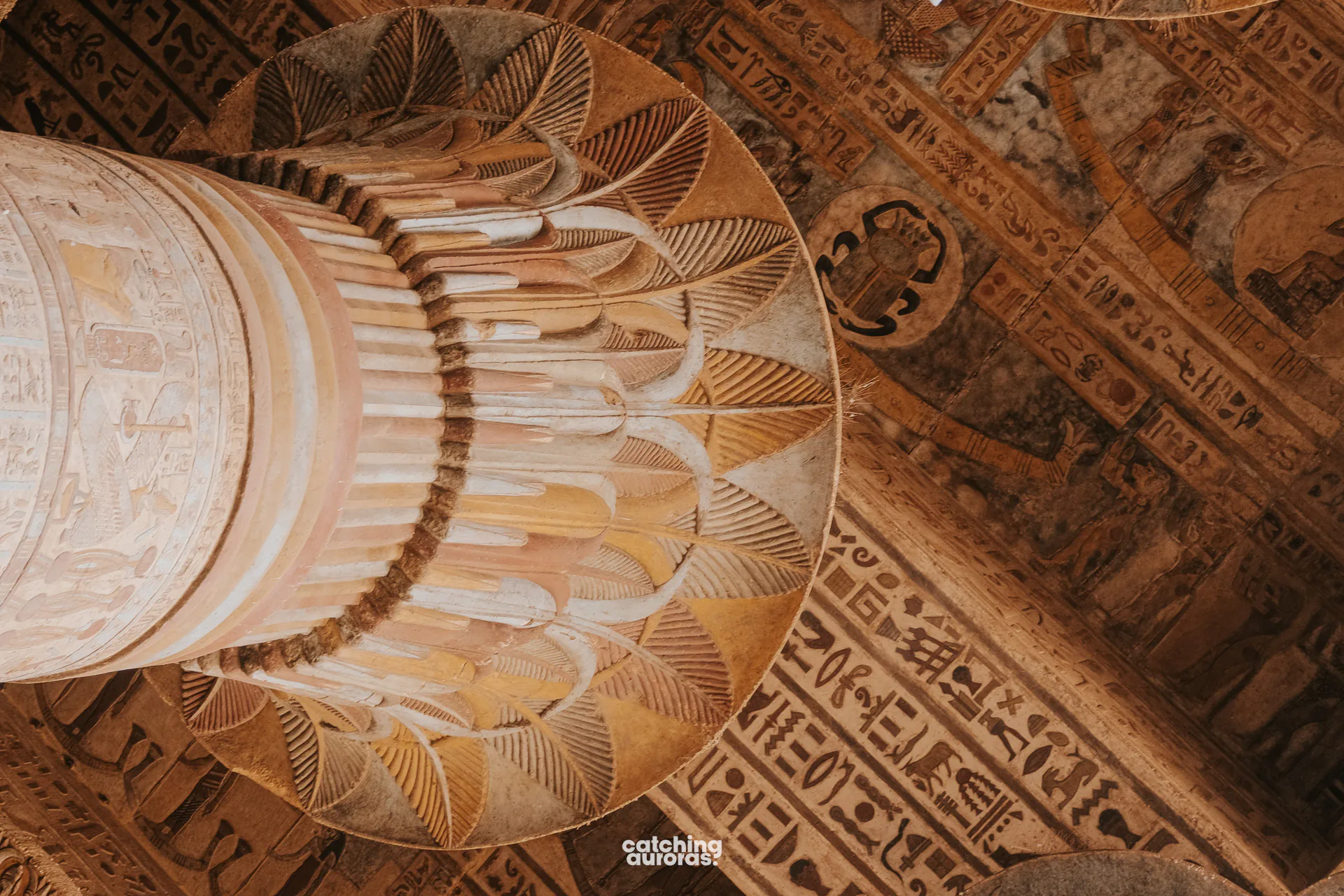
When you walk down into the hall, the colour hits you first. There are 24 columns, and the walls and ceiling are packed with inscriptions, ritual scenes and images of the heavens. If you look up, the astronomical ceiling offers so much detail – the sun, moon, constellations and signs of the zodiac. You will see the ram-headed god, Khnum, to whom this temple is dedicated, everywhere.
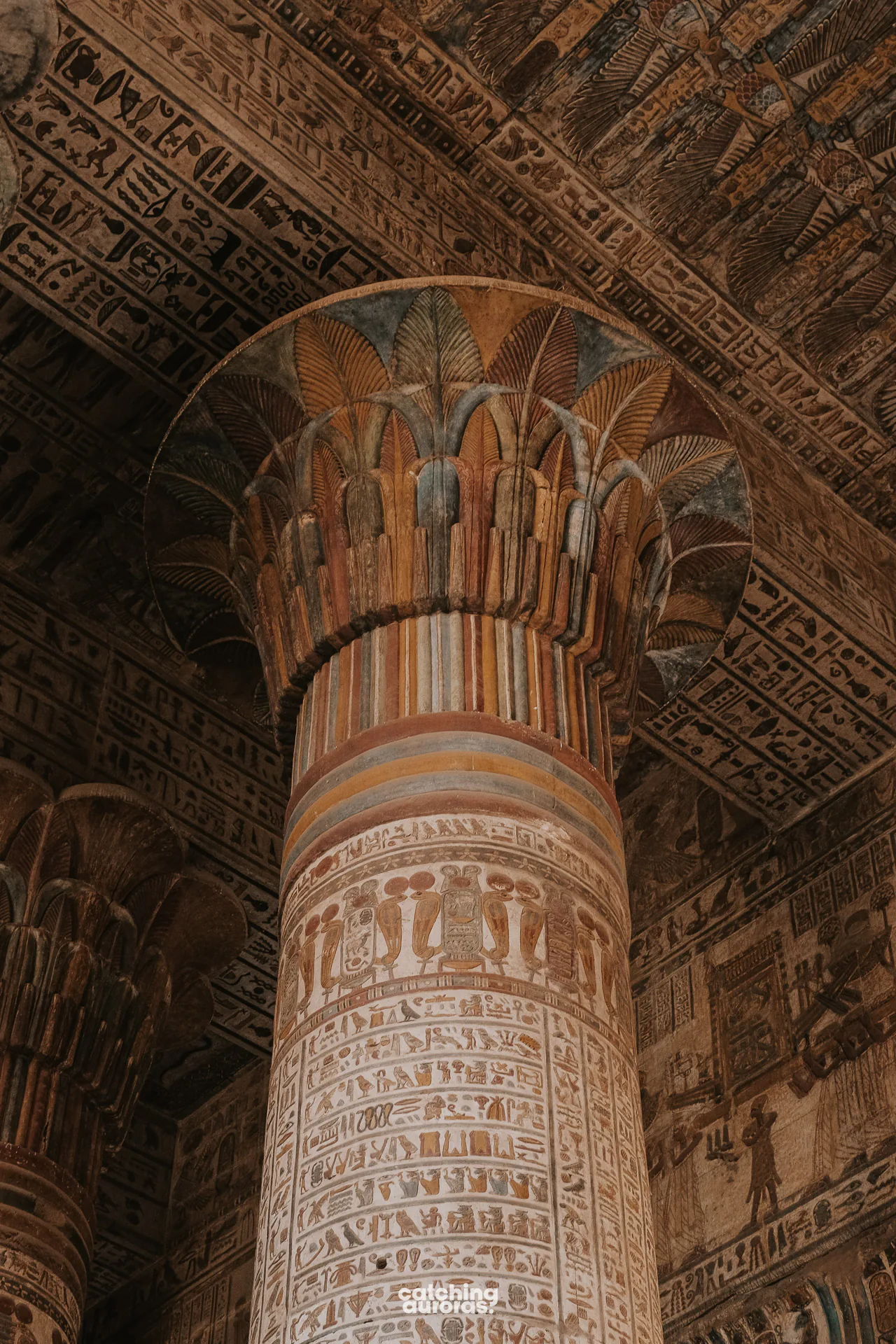
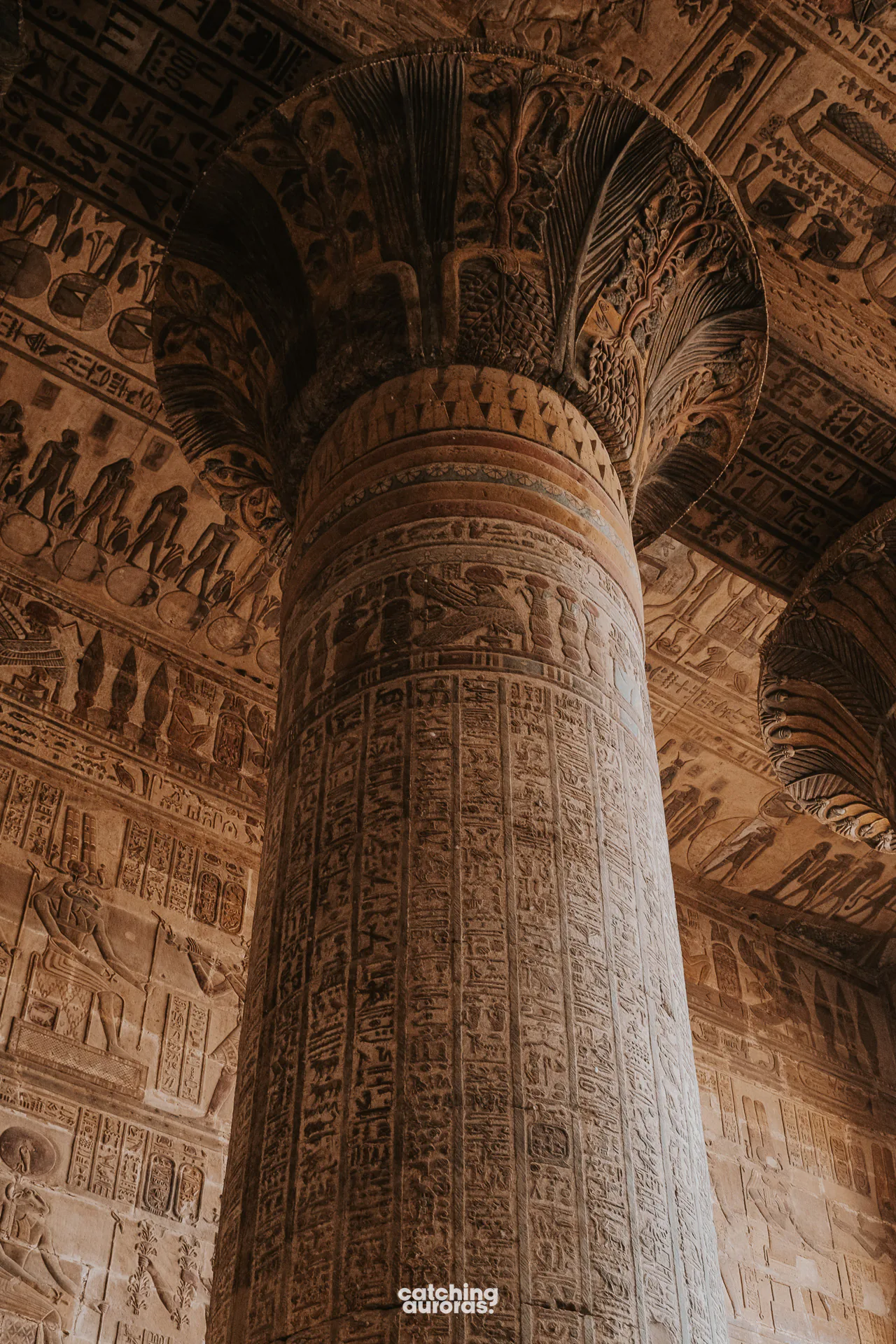
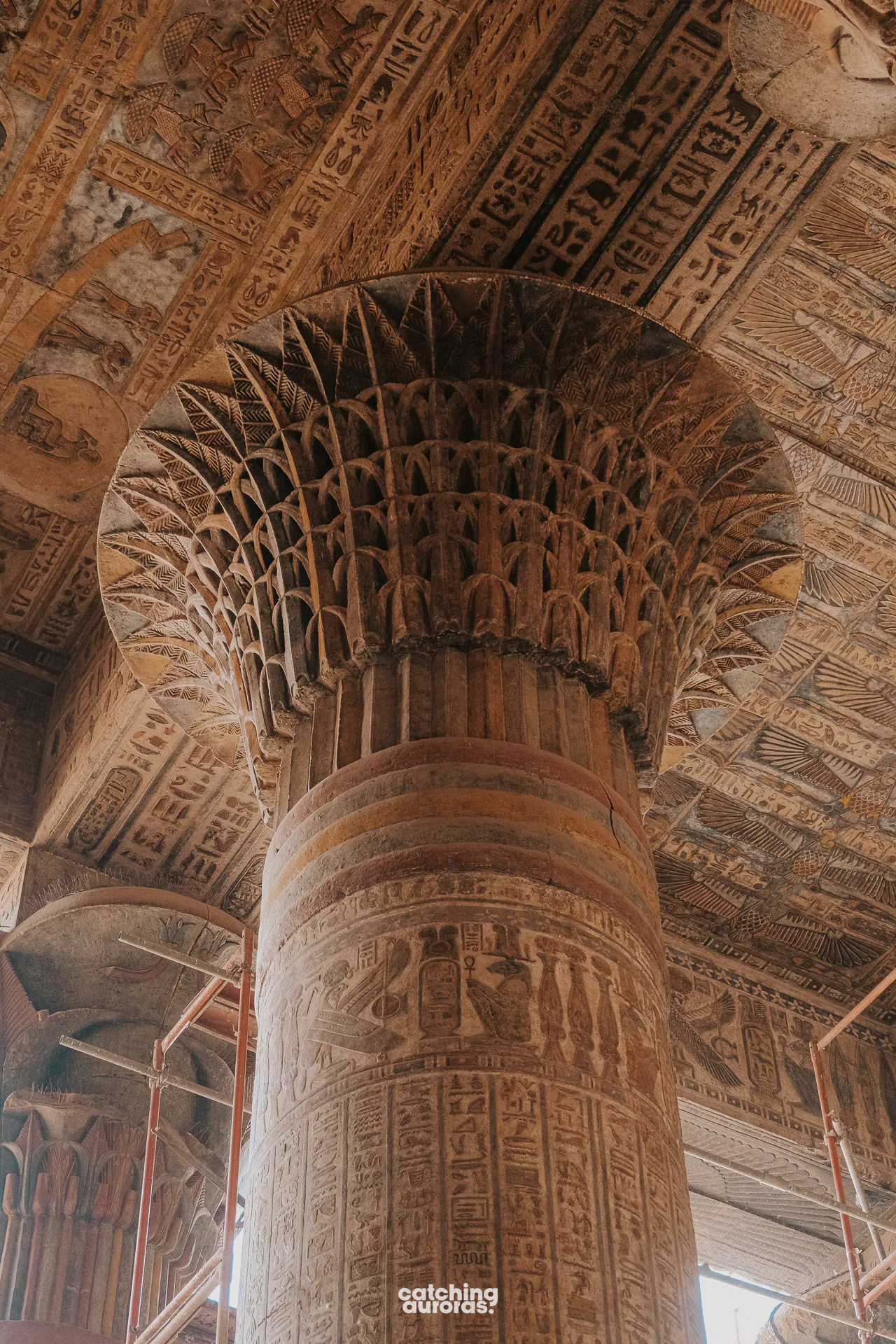
For centuries, soot and dirt had obscured much of the colour. Since 2018, Egyptian conservators and researchers from the University of Tübingen have been cleaning and studying the hall, revealing painted details and inscriptions.
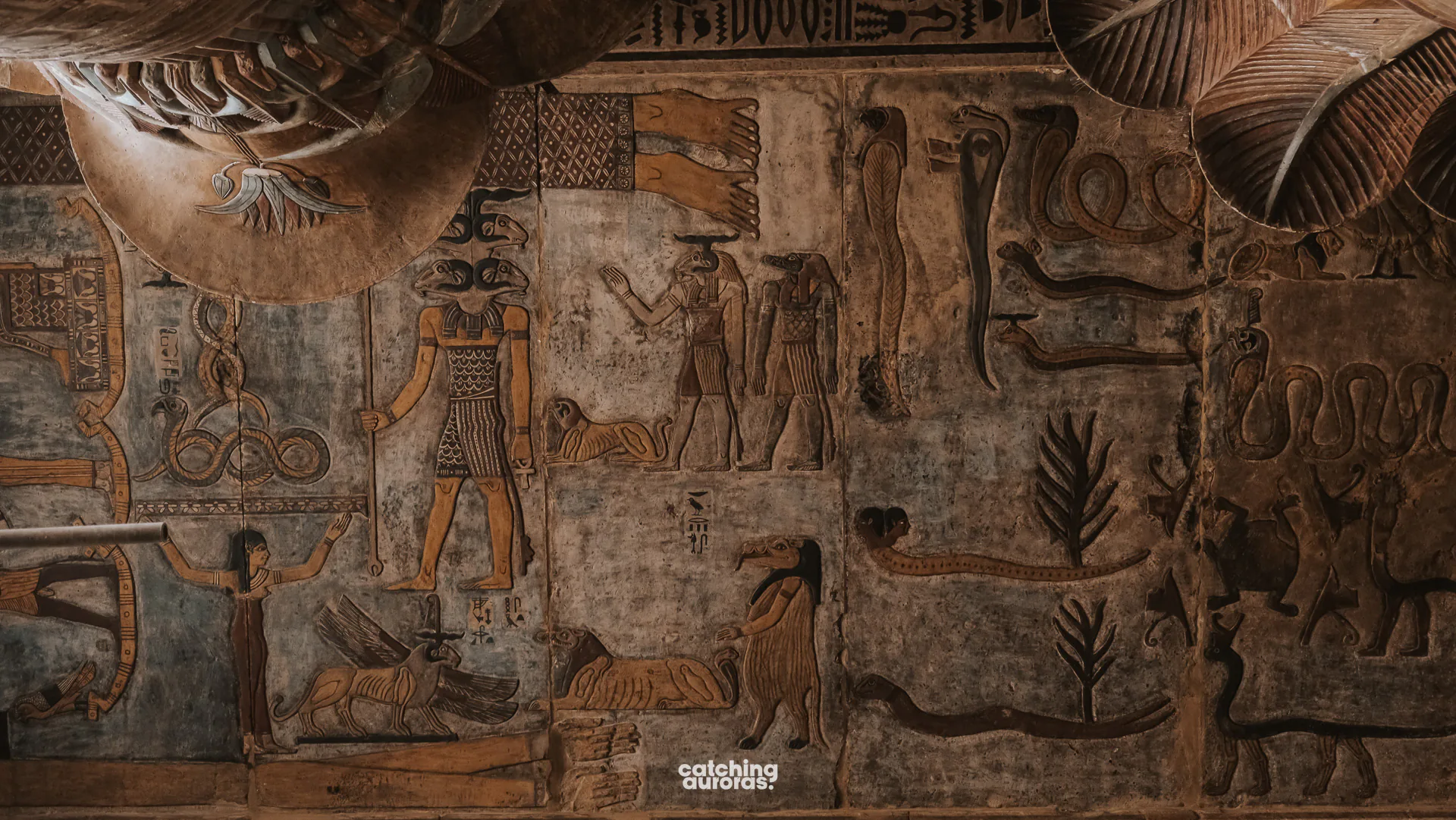
Esna is also a town, and there’s a market leading up to the temple. I found a few places where you could break for lunch here, including Okra, a restaurant run by women. But we were running late, so we left the town early and munched on a pastry the driver picked up for us.
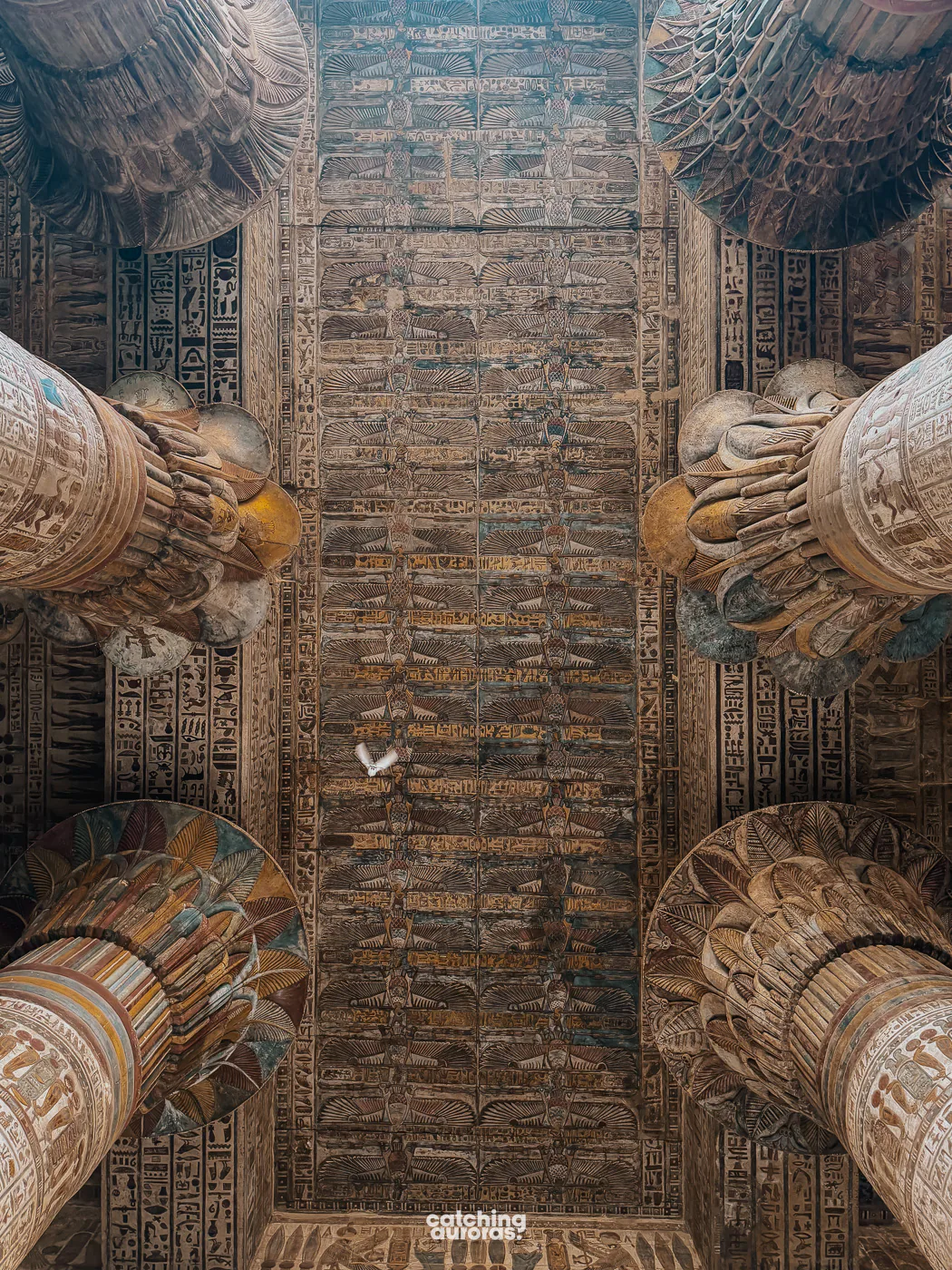
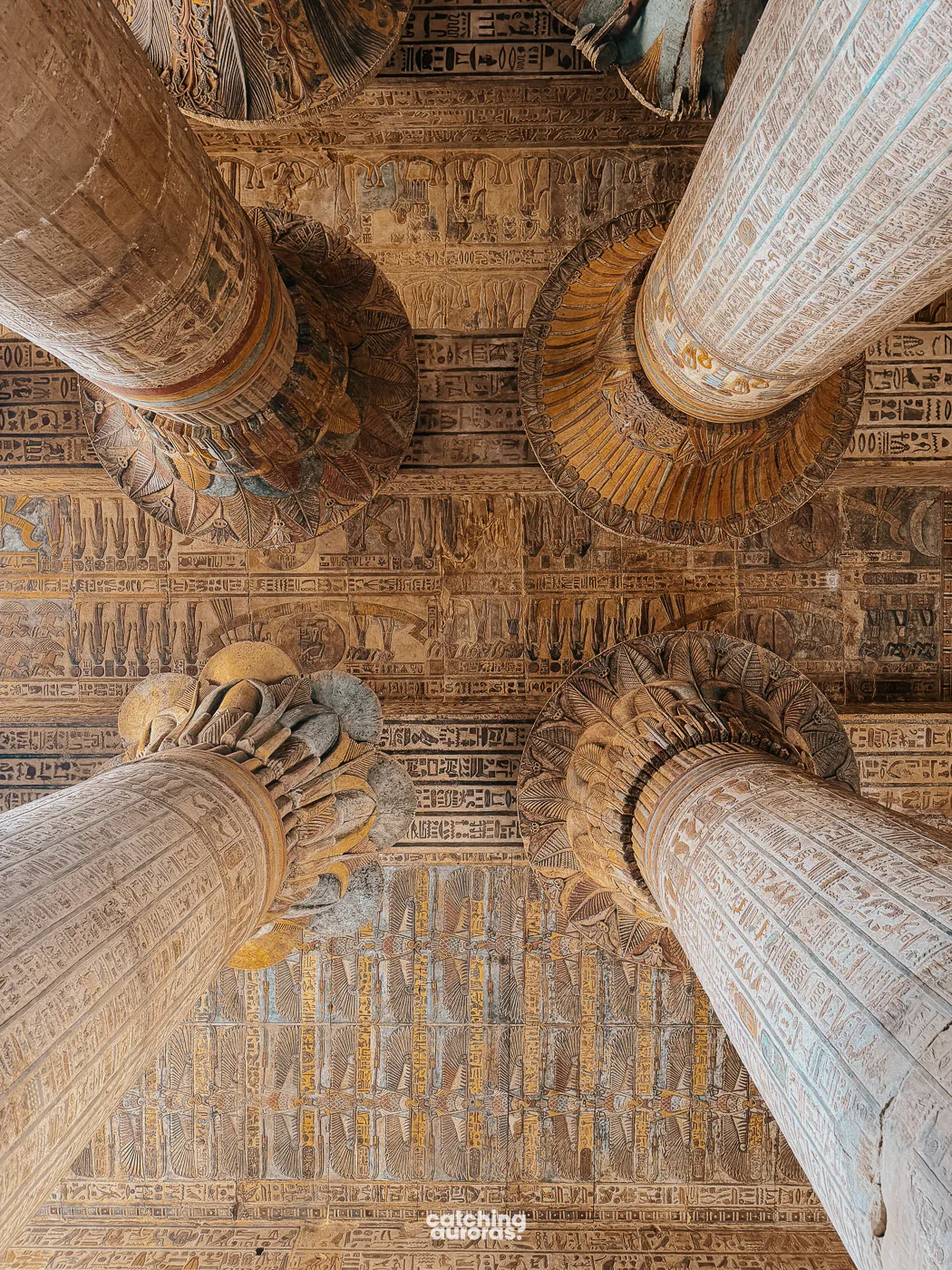
So, is Esna temple worth it? I would 100% say yes. I visited a lot of temples in Egypt and Esna was one of the few that stood out.
How long to allow: About an hour for the temple, more if you also explore nearby streets and stop for lunch.
Hours: 7 AM to 4 PM (last entry)
Ticket prices (as of 2026): EGP 200 (adult); EGP 100 (student)
Background: the University of Tübingen’s Esna project and the Ministry’s restoration update.
The drive into Luxor
After Esna temple, we continued north to Luxor. It took us another hour to reach the city and the driver dropped us off at our hotel. We had left our Aswan hotel at 7 in the morning and finally reached Luxor at 3:30 PM. It’s a long day, so I wouldn’t schedule anything else after this. We just had a late lunch at our hotel, rested, then walked along the Corniche in the evening. This is how our travel day went:
- 7 AM – Left Aswan
- 8 AM – Reached Kom Ombo (50 km). Spent 75 minutes here. Left at 9:15 AM.
- 11 AM – Reached Edfu (60 km). Spent 50 minutes here. Left at 11:50 AM.
- 1:15 PM – Reached Esna (55 km). Spent 60 minutes here. Left at 2:15 PM.
- 3:30 PM – Reached Luxor (55 km)
What the Aswan–Luxor temple drive cost us
If you are thinking of a budget for travelling between Aswan and Luxor with stops at Kom Ombo, Edfu and Esna, this is what it cost us in January 2026. Prices may have changed, so check the latest ticket prices on the official ministry site.
| Expense | What we paid | Notes |
|---|---|---|
| Car / transfer for 2 people | USD 100 | Booked directly; 3 stops included |
| Kom Ombo ticket | EGP 450 per person | Book online on egymonuments.com |
| Edfu ticket | EGP 550 per person | Book online on egymonuments.com |
| Esna ticket | EGP 200 per person | Book online on egymonuments.com |
| Food, water and rest stops | – | We didn’t stop anywhere and had a late lunch at our Luxor hotel |
| Tips | EGP 300 total | Tips for the driver |
| Total | ~ USD 155 total | For 2 people in January 2026 |
Practical tips for visiting all three in one day
- Leave Aswan early enough for daylight at Esna. The last entry in Esna is 4 PM, so you want to be there at least an hour before that. The last entry in Kom Ombo is 8 PM so if you are doing this in reverse, you can explore it at night.
- Put the stops in the quote. Specify Kom Ombo, Edfu and Esna, waiting time and Luxor drop-off when booking your ride.
- Carry water, sun protection and small cash. Even in January, Edfu at midday was hot. So, sun protection in the form of sunscreen and a hat is a must. Carry cash for baksheesh; you will need it for tipping the driver and if you are unlucky, the guards at the temple.
- Check latest ticket prices and opening hours. The prices, working hours and rules change quite frequently. Check the official site for the latest info. The working hours are also different during summer and winter months and on certain holidays.
- Plan a food break. Or carry snacks of your own before leaving.
- Plan your luggage. Since we just had one suitcase between us, we were able to fit it into the car boot easily. But if you are 3-4 people travelling in the car and have more than 2 suitcases, you will want to plan ahead and get a bigger car.
- Decide if you want guides. A guide can help you understand the various reliefs but reading up beforehand also helps if you prefer to walk at your own pace. We wanted to take our time and didn’t want to be hurried by anyone, so we read up beforehand instead.
Is it worth stopping at all three?
If you want to make the most of your Aswan–Luxor sightseeing day, yes. Even after experiencing the majestic temples of Abu Simbel, these three temples were worth every stop: Kom Ombo’s two-gods-in-one layout and the serene riverside setting, Edfu’s size, and Esna’s colour. If you are tired, especially of scams and crowds, I would skip Edfu and just do the two calmer stops instead.
It was a long 8.5-hour journey from Aswan to Luxor with three stops and we were really tired once we got to Luxor. But I don’t think I would have chosen to do this journey any other way. The first look at Kom Ombo in the morning and the colourful columns of Esna are enough of a reason to recommend this journey again.