The problem with researching the Giza Pyramids right now is that almost every guide describes a version of the site that no longer exists. They’ll tell you to drive up to the gate near the Mena House, haggle with a camel handler to get across the sand, and pay cash at the window. You’ll do none of those things in 2026.
The plateau has been through the biggest overhaul in its modern history. There is a new main entrance on the other side of the site, private cars are banned, a fleet of electric shuttles moves between the pyramids, the ticket booths stopped taking cash, and the Grand Egyptian Museum has opened two kilometres away with a timed-entry system. Most of this is good and is helping people experience the pyramids better.
We visited Egypt early in 2026, travelled everywhere on our own without a guide or a tour and got out with minimal scrapes. This is the current Giza Pyramids guide: how to get in, what Giza Pyramids tickets cost, whether going inside the Great Pyramid is worth the extra 1,500 EGP, how the scams work now that the old ones are gone, and how to fit the pyramids and the new museum into a single day.
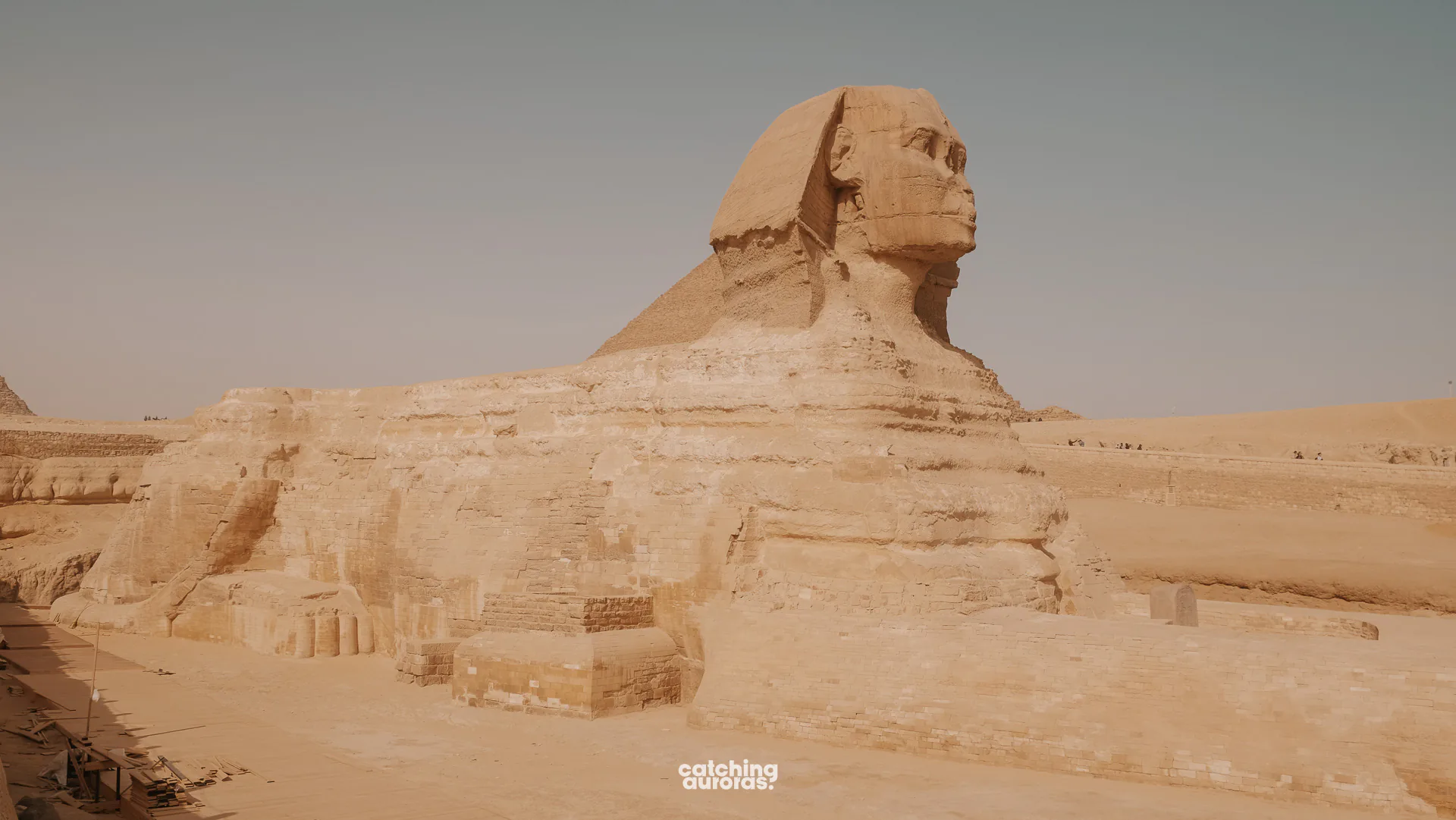
The Giza Pyramids at a glance
| Detail | |
|---|---|
| Where | Giza, on Cairo’s western edge, roughly 13 to 15 km from downtown |
| Main entrance | The visitor centre on the Fayoum Highway, south side of the plateau |
| Giza Pyramids opening hours | From 7 AM, closing 4 PM in winter and 5 PM in summer |
| Plateau ticket | 700 EGP adult, 350 EGP student, card only |
| Great Pyramid interior | 1,500 EGP extra, capped at roughly 150 visitors per session |
| Getting around inside | Free electric shuttle buses, no private cars |
| How long to spend at the Giza Pyramids | Three to four hours for the plateau, a full day if you add the museum |
| Grand Egyptian Museum | 2 km away, online timed entry only, book before you fly |
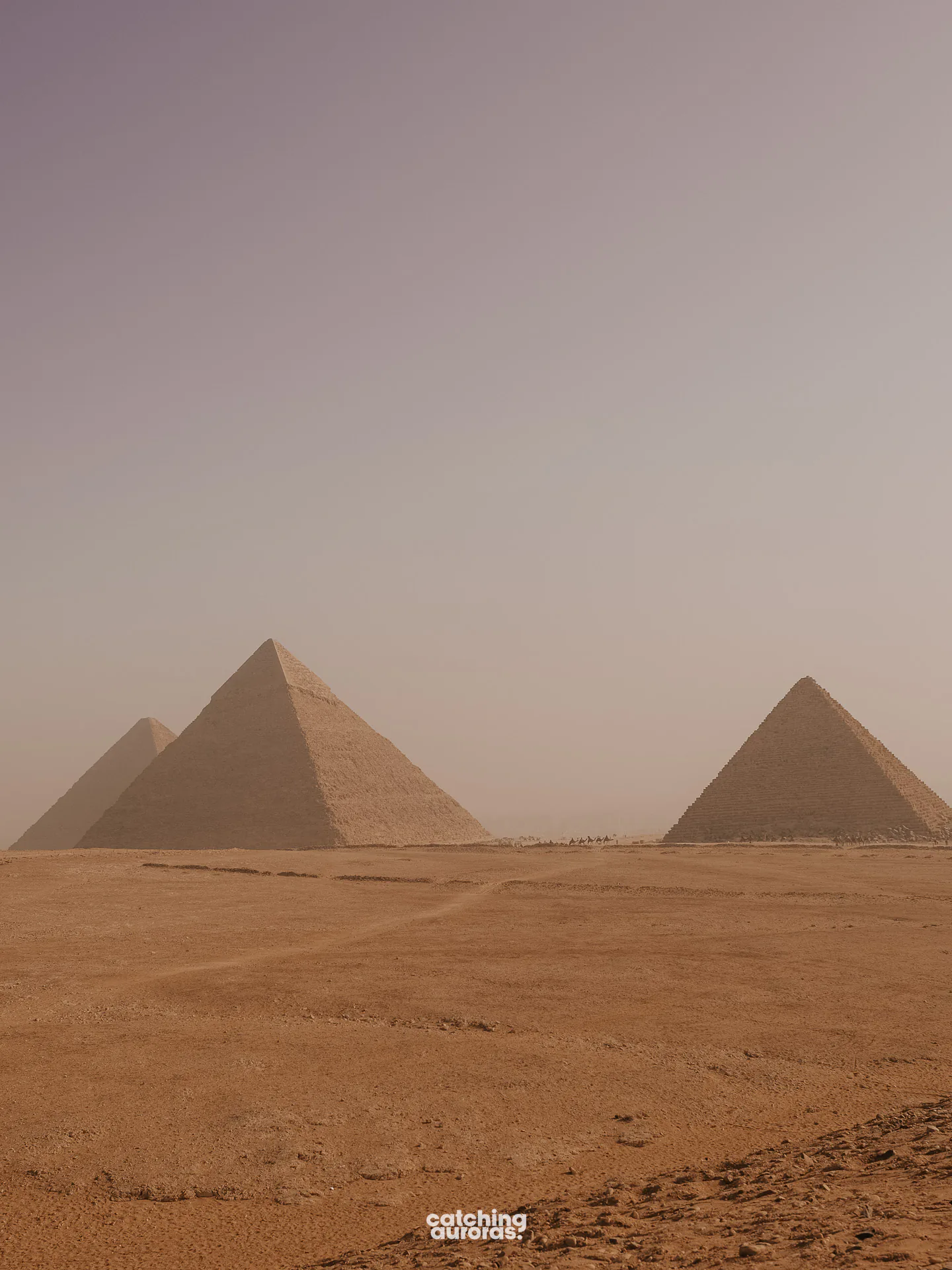
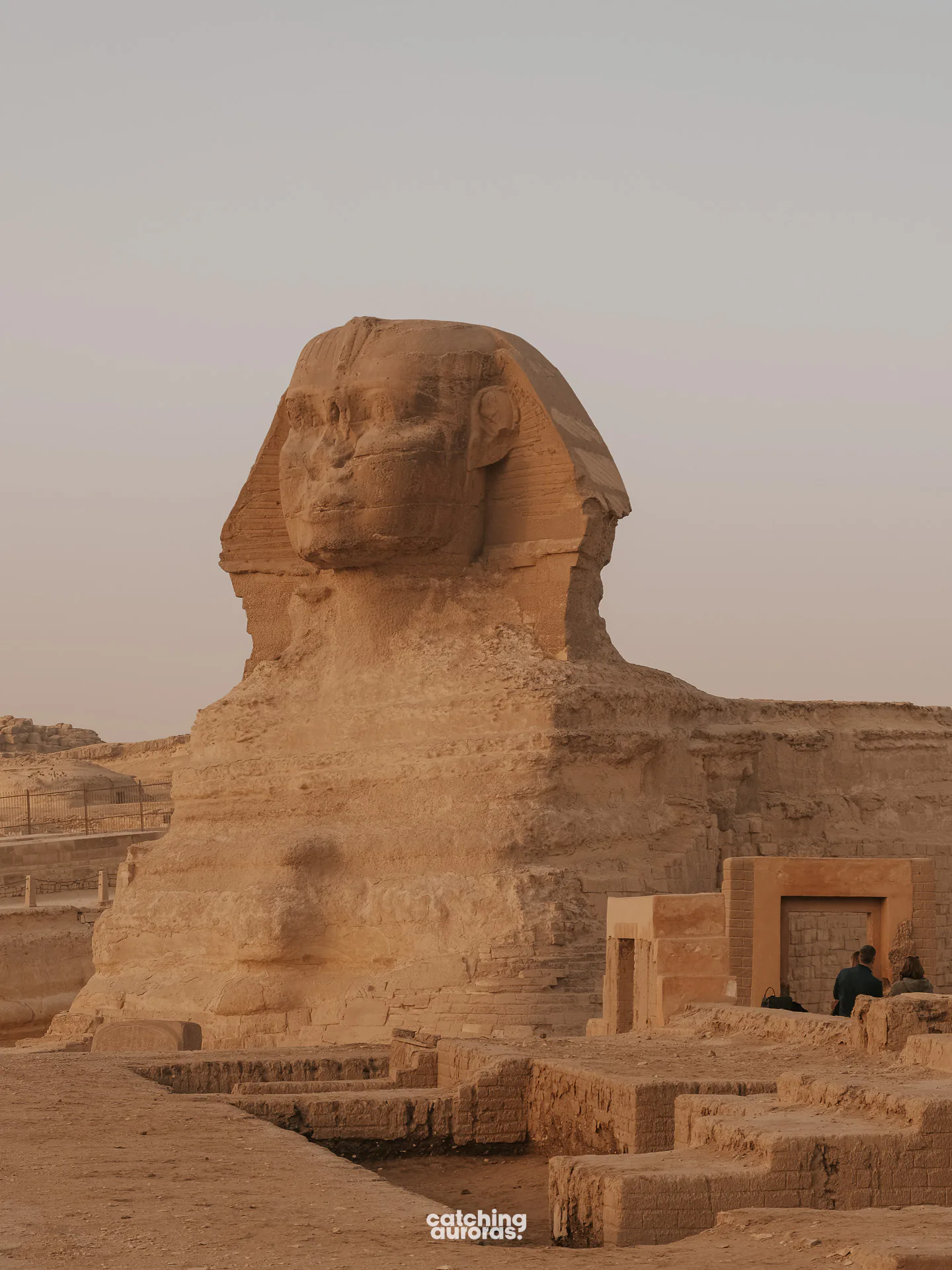
What changed at the Giza Pyramids in 2026
I was pleasantly surprised by how much the Giza Pyramids have changed. The plateau is now run as a managed visitor site rather than an open archaeological area you wander into.
The main entrance has moved. The historic gate beside the Marriott Mena House is no longer where you buy your ticket. The new visitor centre sits on the Fayoum Highway, on the southern side of the plateau, and it has parking, a short orientation film and proper facilities. The Sphinx Gate on the eastern side still works as an entrance. There is also a small ticket office there, but it is less developed than the main visitor centre.
Private cars and tour buses are banned from the plateau itself. Private cars are no longer allowed on the plateau, which means you park outside, enter via the gate and then continue on foot or by shuttle. Free electric shuttle buses have been introduced, which run as a loop at short intervals and stop at the panorama viewpoint, Menkaure, Khafre and the Sphinx points. The ride is included in your ticket and the buses are air-conditioned. I liked this, especially because we visited without a tour or guide. You walk to the nearest station, get on the bus, and get off where you need to be.
Everything is cashless. Ticket booths no longer take cash and will only accept credit and debit cards (Visa and Mastercard). Amex is unreliable.
Your ticket is single entry. If you leave the plateau, you need to buy a ticket again to come back. This matters because it is very easy to duck out for lunch or accidentally exit through a gate while finding the panorama station (almost happened to us) and lo and behold, your ticket won’t work.
There is also a complaints hotline, 19349, operated by Orascom Pyramids during visitor-service hours. Just the existence of a hotline is a decent signal of how seriously the site is being managed these days.
Most of these changes are good. You are no longer dependent on touts to get to the panorama point on camels or horses and these people have been moved to a designated area. This also seems to have reduced the number of touts around the pyramids (from what I had seen previously in videos). Personally, I found the shuttle buses made the experience hassle-free with many workers speaking English and helping out when you approach them near the shuttle points.
How to get to the Giza Pyramids from Cairo
From central Cairo it is a 30 to 45 minute drive depending on how the traffic behaves, and traffic in Cairo does not behave.
Uber or Careem is the simplest option and the one I would default to. Set the destination to the Fayoum Highway visitor centre rather than “Pyramids of Giza”, to make sure you are dropped at the right gate. Fares are low by any international standard, the price is agreed in the app, and you avoid the entire negotiation. I used Uber to get around Cairo and found it to be the best option.
A driver for the day makes sense if you are combining the plateau with the museum, or heading to Saqqara afterwards. You can book them online or via your hotel for peace of mind but definitely expect them to be more expensive than Uber. I was travelling alone when I arrived in Cairo and had booked a cab from the hotel just to be safe and to avoid being approached by scammers at the airport. But I did have to pay more than twice the Uber fare.
Public transport is possible, but only if you are patient and comfortable dealing with local transport. The metro doesn’t reach the plateau yet. The planned extension is scheduled to open in 2028, so for now you need to take Line 2 to Giza station and continue by taxi or local bus.
I booked a hotel 100 m from the Sphinx Gate just so I could walk to the gate early in the morning without having to deal with any of this.
Giza Pyramids tickets and prices in 2026
| Ticket | Price | What it covers |
|---|---|---|
| Plateau entry, adult | 700 EGP | Exteriors of all three pyramids, the Sphinx, the shuttle loop |
| Plateau entry, student | 350 EGP | Same, with a valid international student card |
| Great Pyramid of Khufu, interior | 1,500 EGP | Inside Khufu, limited daily numbers |
| Pyramid of Khafre, interior | Around 280 EGP | Inside the second pyramid |
| Pyramid of Menkaure, interior | Around 200 EGP | Inside the third, sometimes closed for restoration |
| Tomb of Queen Meresankh III | Around 200 EGP | A decorated mastaba tomb on the plateau |
| Sound and Light Show | Around 1,000 EGP | Separate evening ticket |
| Grand Egyptian Museum | Around 1,590 EGP | Separate site, separate booking, see below |
You can buy online through the official EgyMonuments portal before you travel, or at the machines and booths at the new gate on the day. There is also a ticket counter beside the Sphinx Gate. Buying ahead is sensible during peak season, especially if you want to go inside the Great Pyramid. I bought mine at the Sphinx Gate because I wanted the ticket as a piece of travel ephemera for my journal.
There is, unfortunately, no combo ticket. The plateau ticket is one purchase, each pyramid interior is another, and the Grand Egyptian Museum is an entirely separate booking on a different system. Any site selling you a single ticket that covers all of it is either bundling a tour or is not what it claims to be.
Is going inside the Great Pyramid worth it?
Honestly, I was on two minds about it too.
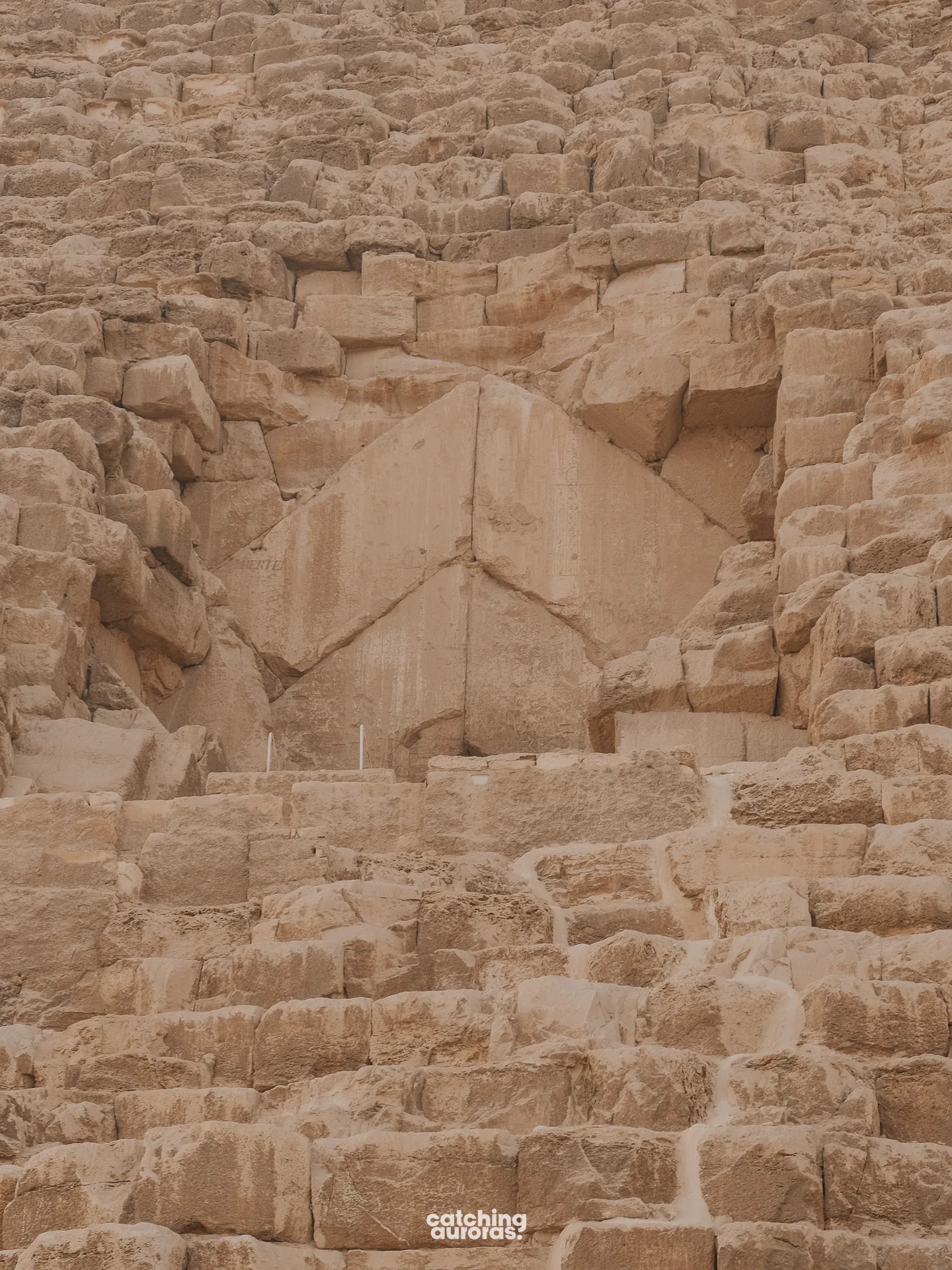
I knew before going that there’s nothing inside Khufu’s pyramid – no carvings, no paintings and no treasure. I wasn’t sure I wanted to go inside, so I did not buy a ticket at the gate. But I climbed the pyramid, saw the entrance and realised I had seen that tunnel so many times on so many documentaries and I really wanted to see it for myself. So I stood outside, quickly booked the tickets online (a whopping 1,500 EGP per person) and entered.
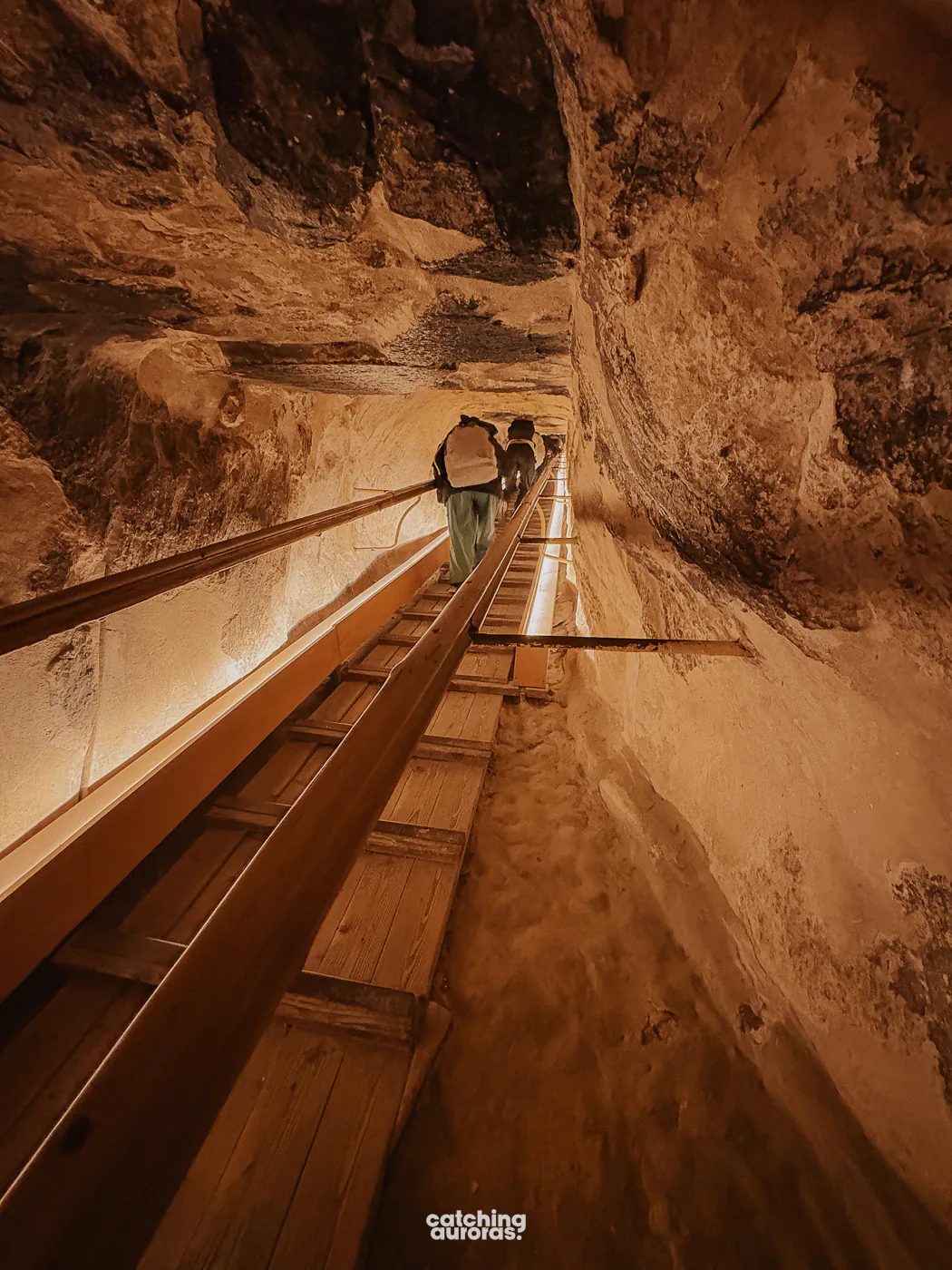
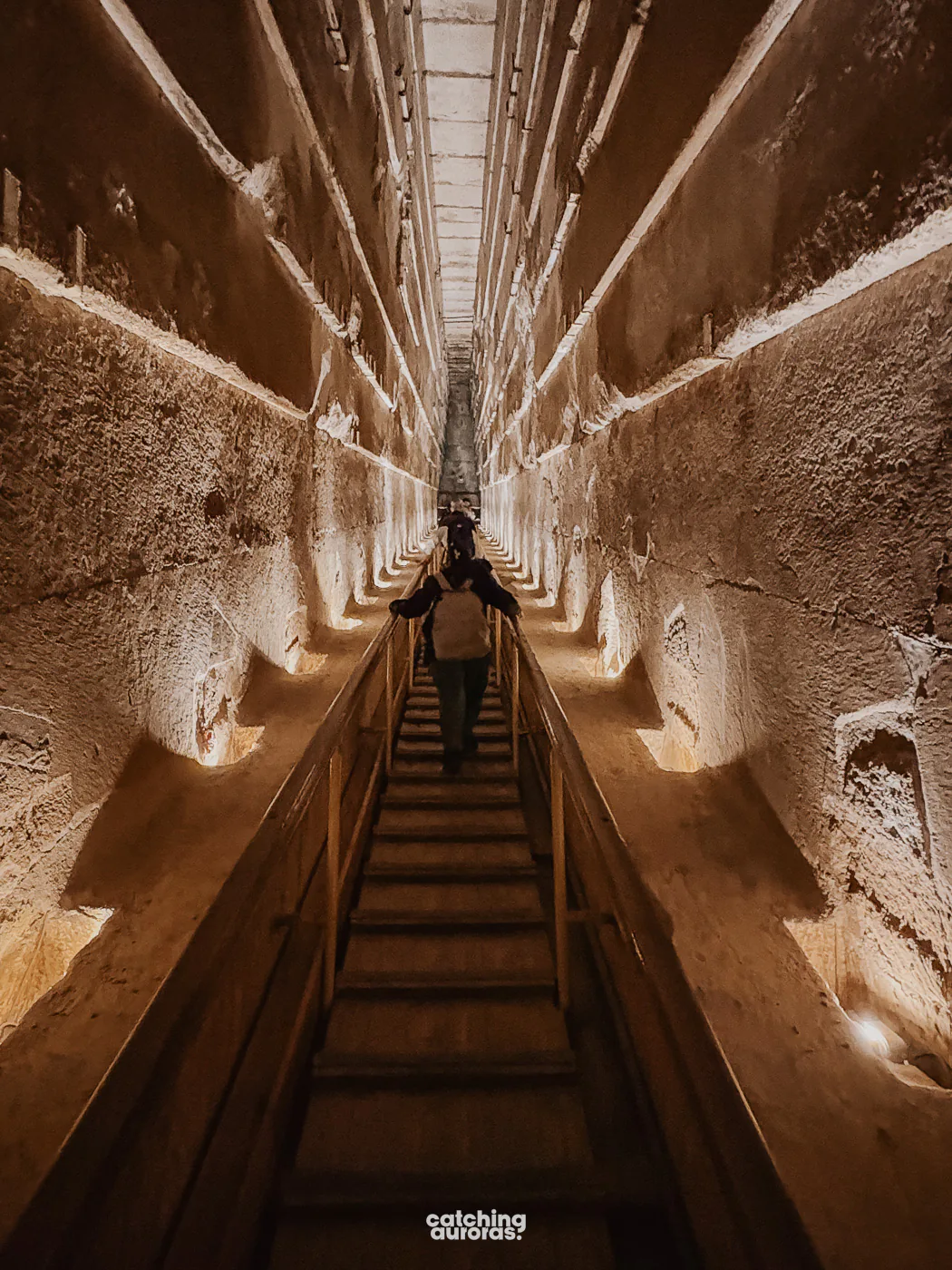
You enter through the passage that Caliph al-Ma’mun’s men cut in the ninth century, then climb a long, steep, low corridor where you have to bend almost double, up through the Grand Gallery, into the King’s Chamber. The chamber is a bare room with an empty, lidless sarcophagus in it. It is hot, humid, and suffocating, and there is nothing to photograph. You are not allowed to take any videos inside either. There are air conditioners running here to pump in some fresh air and the guard will ask you to leave after a few minutes.
I am not claustrophobic, and I entered before 8:30 AM when there were fewer people. Even then, the heat and lack of air got to me. I couldn’t wait to get outside. I ended up running out yelling, “FREEDOM!”. I blame it on my brain not getting enough oxygen.
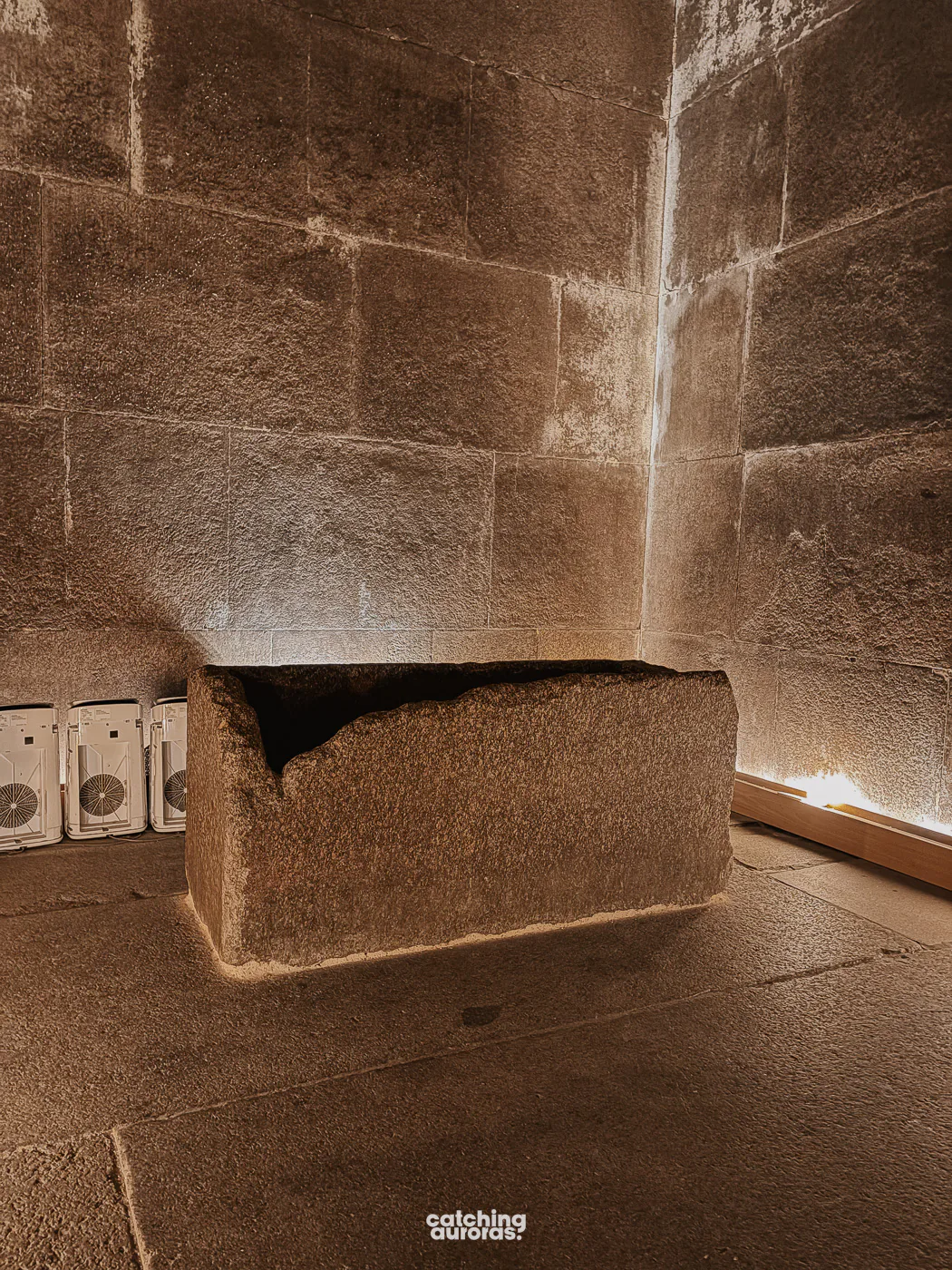
So would I recommend it? Yes, if only to say that you have been inside the Great Pyramid. It’s one of those weird bucket list items for any history buff.
Skip it if you are claustrophobic, if you have back or knee issues, if you are travelling with small children, if you are visiting during peak hours or if the budget is tight and you would rather put that money towards Luxor. Khafre’s or Menkaure’s interior (whichever is open) is a fraction of the price (around 200 to 280 EGP) and gives you a similar experience with fewer people in the corridor, which is a reasonable compromise. Choose the Great Pyramid for the bragging rights or to fulfil a childhood dream.
Note that only a few hundred tickets are sold (around 150 per session, morning and afternoon) every day and they usually sell out early in the morning.
Giza Pyramids shuttle buses & routes
This section is for anyone who is on the plateau wondering where to walk and which shuttle bus to take.
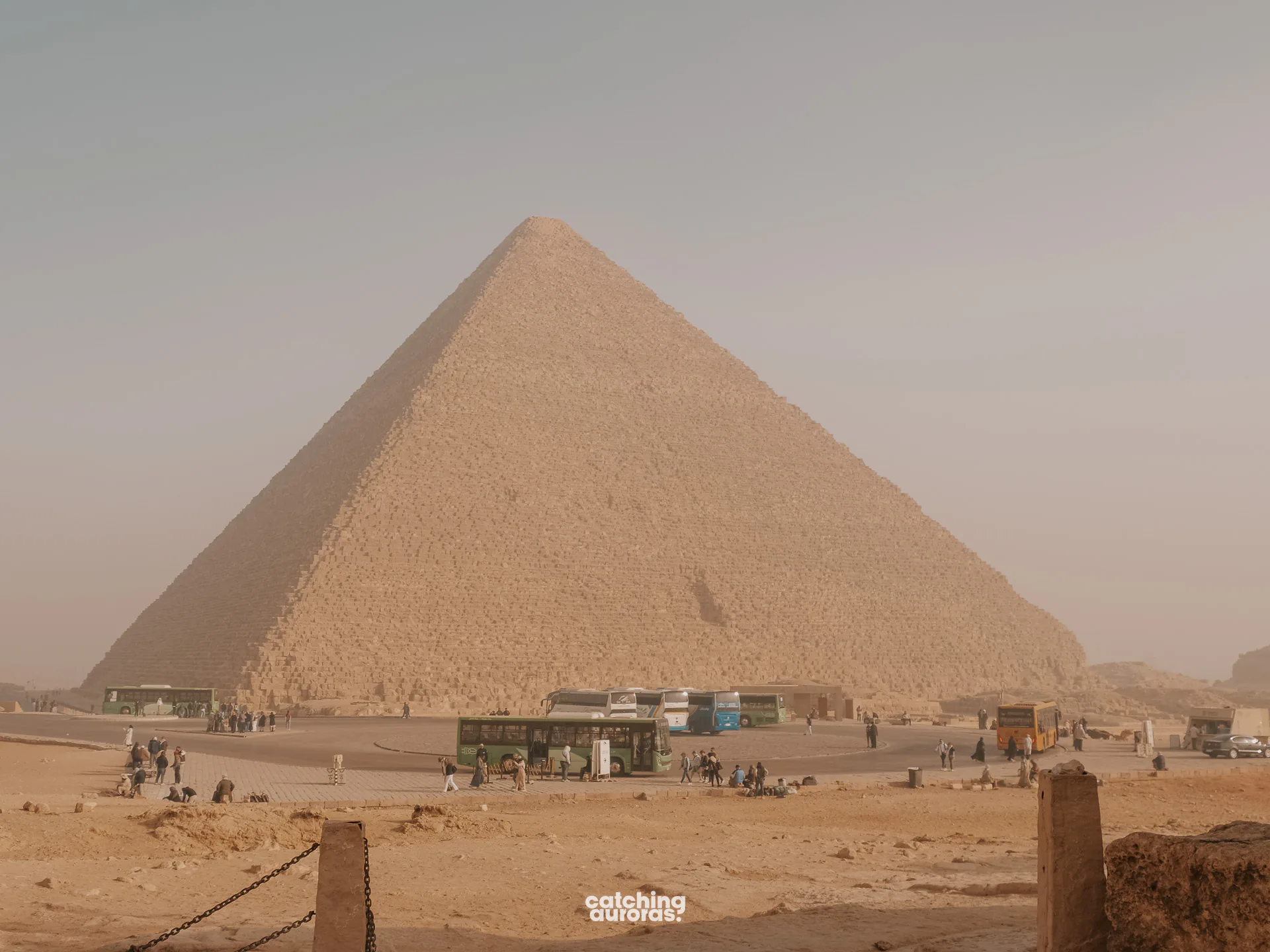
You have nine stations on the plateau.
- Visitor’s Centre Station: the main entrance, where you can buy tickets, use the lockers, and find toilets and an ATM.
- Panorama Station: with toilets, a nursing room, an ATM, cafés and souvenir shops.
- King Menkaure Station
- King Khafre Station
- Sphinx Station: The station near the Sphinx Gate, which is also the closest to the Great Sphinx. You can find toilets, cafés, souvenir shops and an ATM here as well.
- King Khufu Station
- Equestrian District Station
- King Khufu’s Centre Station
- Pyramid’s Lounge Station: serving the famous 9 Pyramids Lounge and Khufu restaurant.
The different routes you can take:
- Red: Panorama Station, King Menkaure Station, King Khafre Station, Sphinx Station
- Blue: King Khufu’s Centre Station
- Light Green: King Khufu Station
- Yellow: Equestrian District Station
- Dark Green: 9 Pyramids Lounge Station
How to avoid the scams at Giza
You might have seen the videos on YouTube. The hustles, the scams, the touts. Giza was, for years, one of the most aggressively hustled tourist sites anywhere, and a lot of people came away remembering the hassle more clearly than the pyramids. The new management has, to an extent, reduced it. Vendors are regulated, camel and horse operators have been moved to designated areas and brought under a licensing protocol, and there is even a hotline!
Some scams and hustles still happen, so watch for these:
“The pyramids are closed today.” Someone may say this near the entrance, usually followed by an offer to take you somewhere better, which is a shop or a stable. The pyramids are not closed. Keep walking.
The unofficial guide. Someone attaches themselves to you inside the site, points at things for ten minutes, then presents a bill. If you want a guide, book a licensed Egyptologist in advance. If you do not, one firm no is usually enough.
The free gift. A headscarf gets wrapped around your head, a small carved scarab is pressed into your hand, and then payment is requested for the gift. Do not accept anything placed in your hands.
The photographer. Someone offers to take your photo in a spot you would not have found on your own, then charges for the photo, and sometimes for the spot.
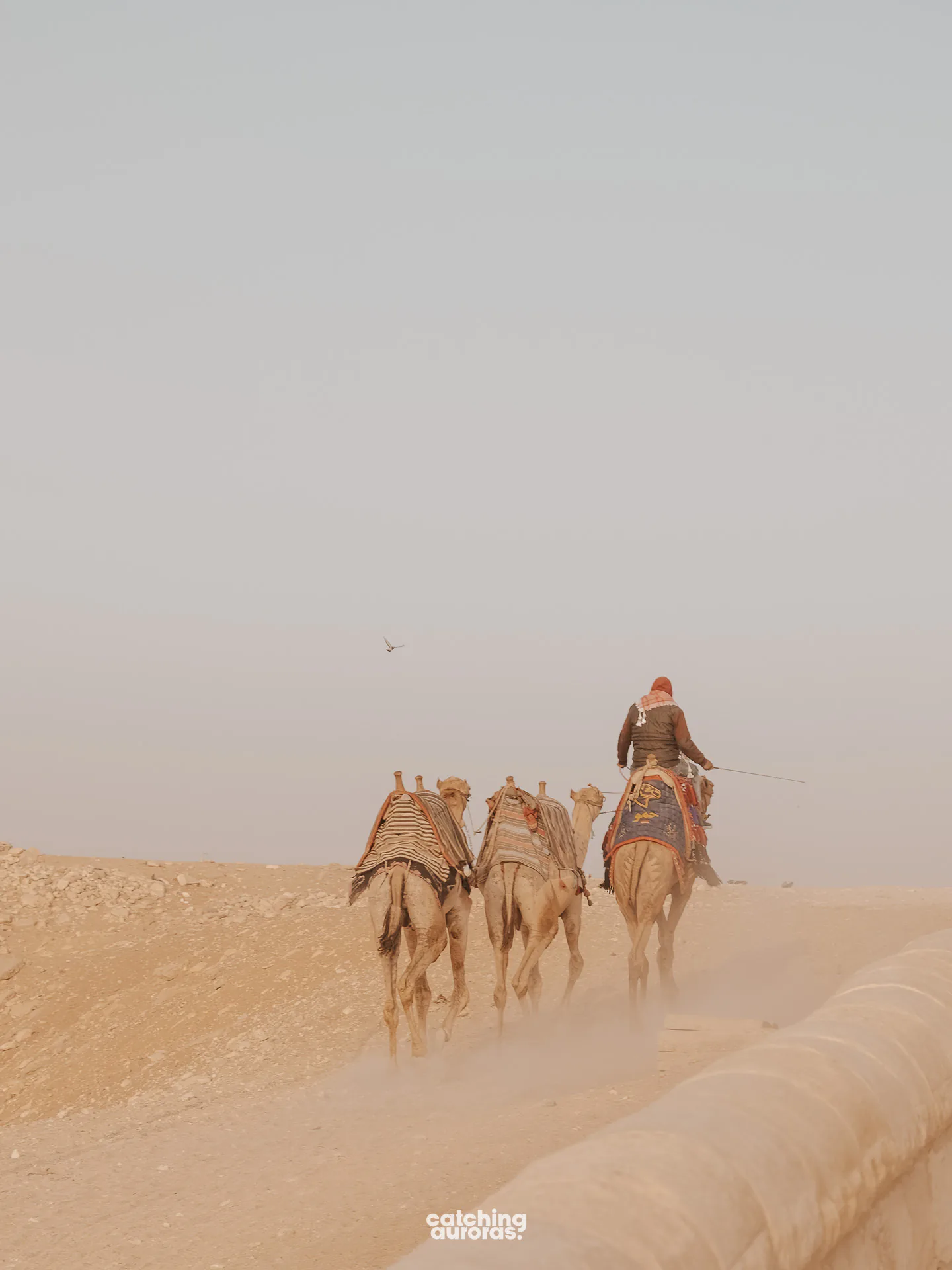
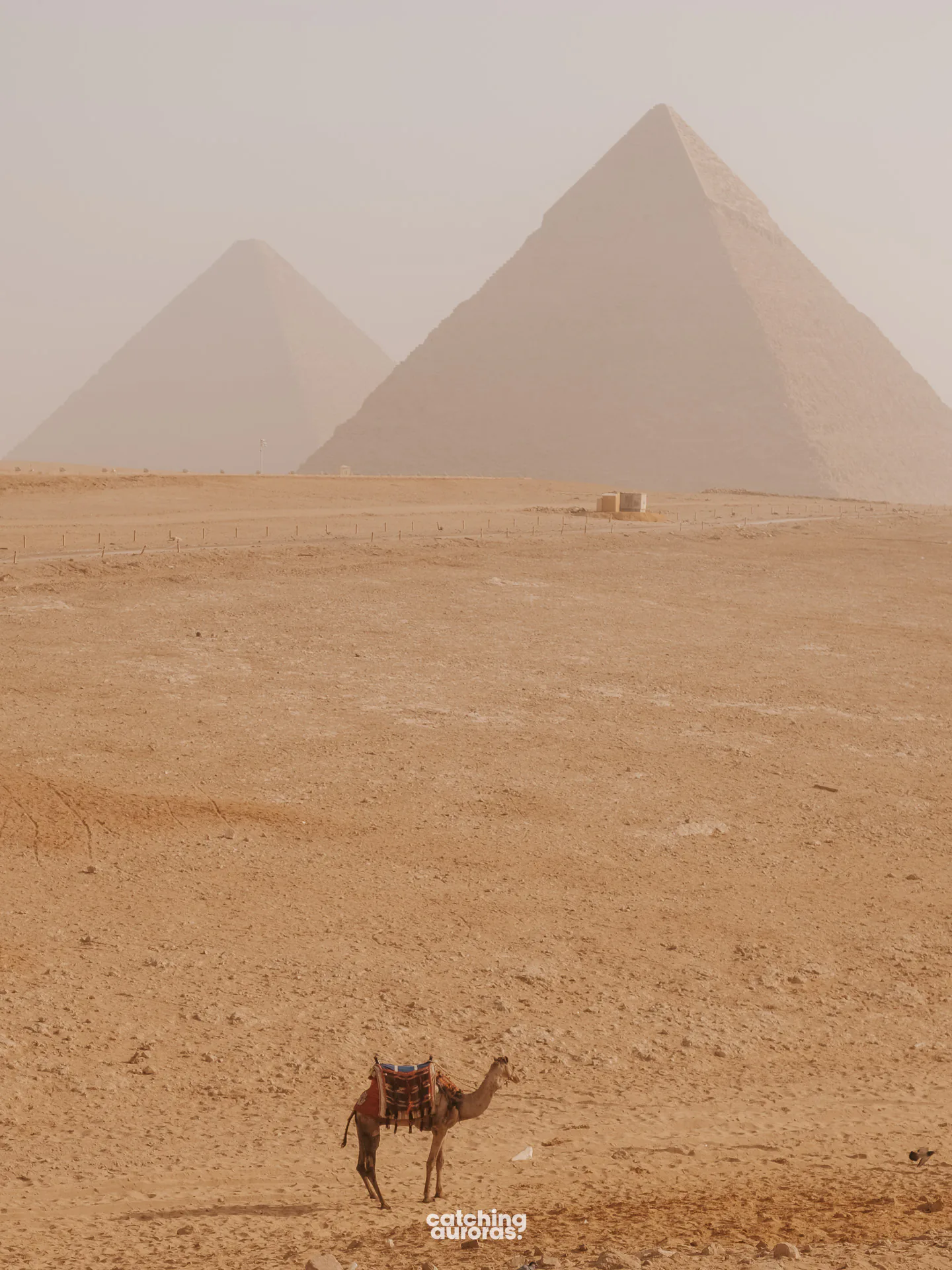
The camel and horse ride. This one is more complicated than a scam. The price is often quoted per person and for one direction, so the return trip costs extra. Agree everything in writing on your phone before you get on, including the return. There is also an animal welfare question at Giza that has been documented for years by PETA and others, and while the new protocol brings in health checks and standards, plenty of visitors now decide the shuttle bus does the same job. I, for one, can never condone it. The buses are less smelly, free, air-conditioned, and much easier in the heat. Most importantly, you are not putting an animal through the ride.
Tips. Baksheesh is a normal part of life in Egypt, and small notes for genuine help are expected. Carry a supply of small denominations, because the person who has just helped you will never have change.
Miraculously, I was able to experience the Pyramids without falling prey to any scams. Not that they didn’t try. While approaching the ticket office at the Sphinx Gate, a man approached us and told us that the ticket office was in the other direction. Probably he was trying to take us to his shop. All you need to do is ignore them and pretend not to hear. I found it easier not to engage at all. No “no, thanks”, no “sorry, I don’t want it”. They will eventually give up and leave you alone.
The best photo spots at Giza
My favourite topic to talk about, so here are the best photo spots at the plateau:
The panorama point
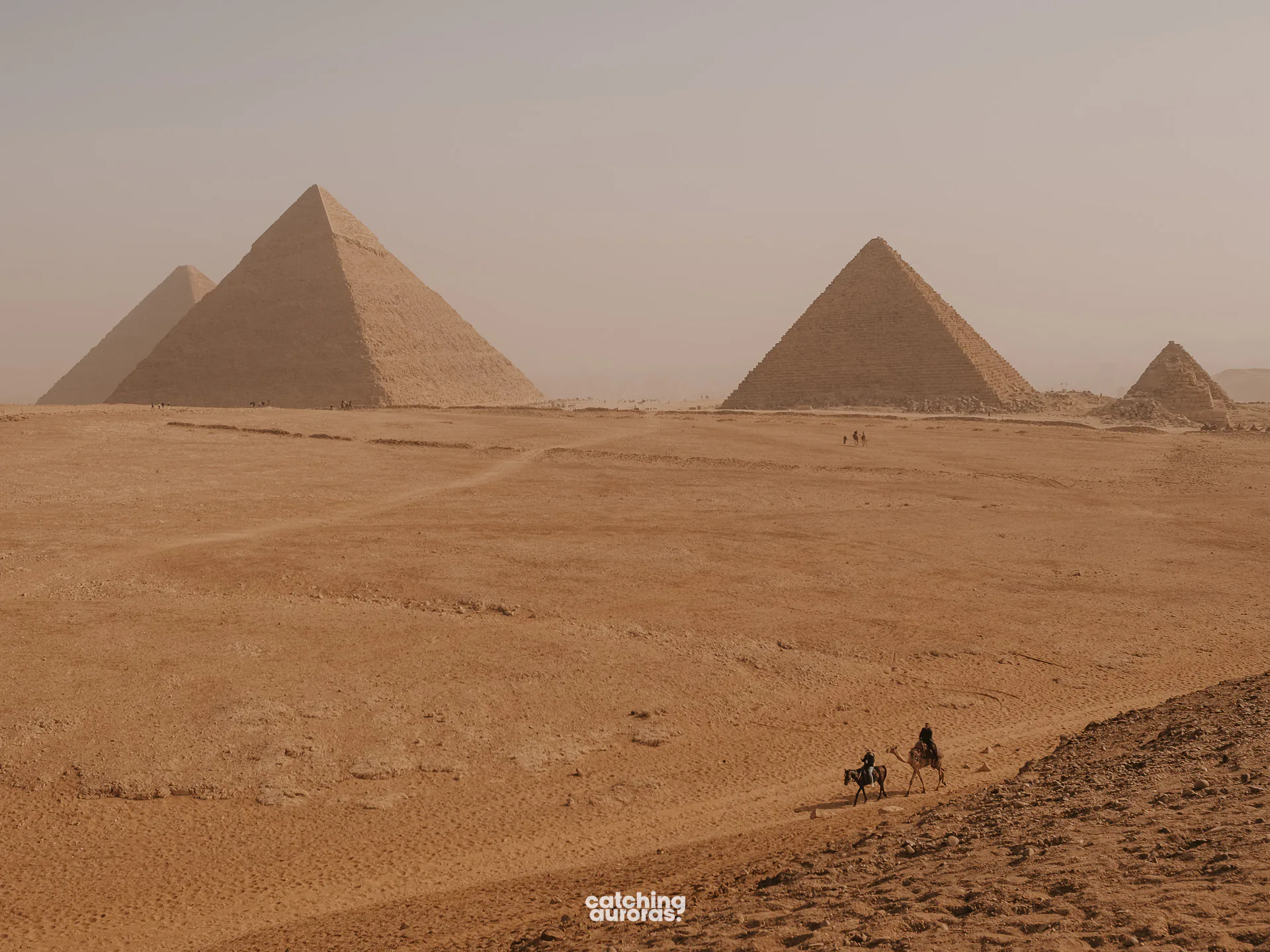
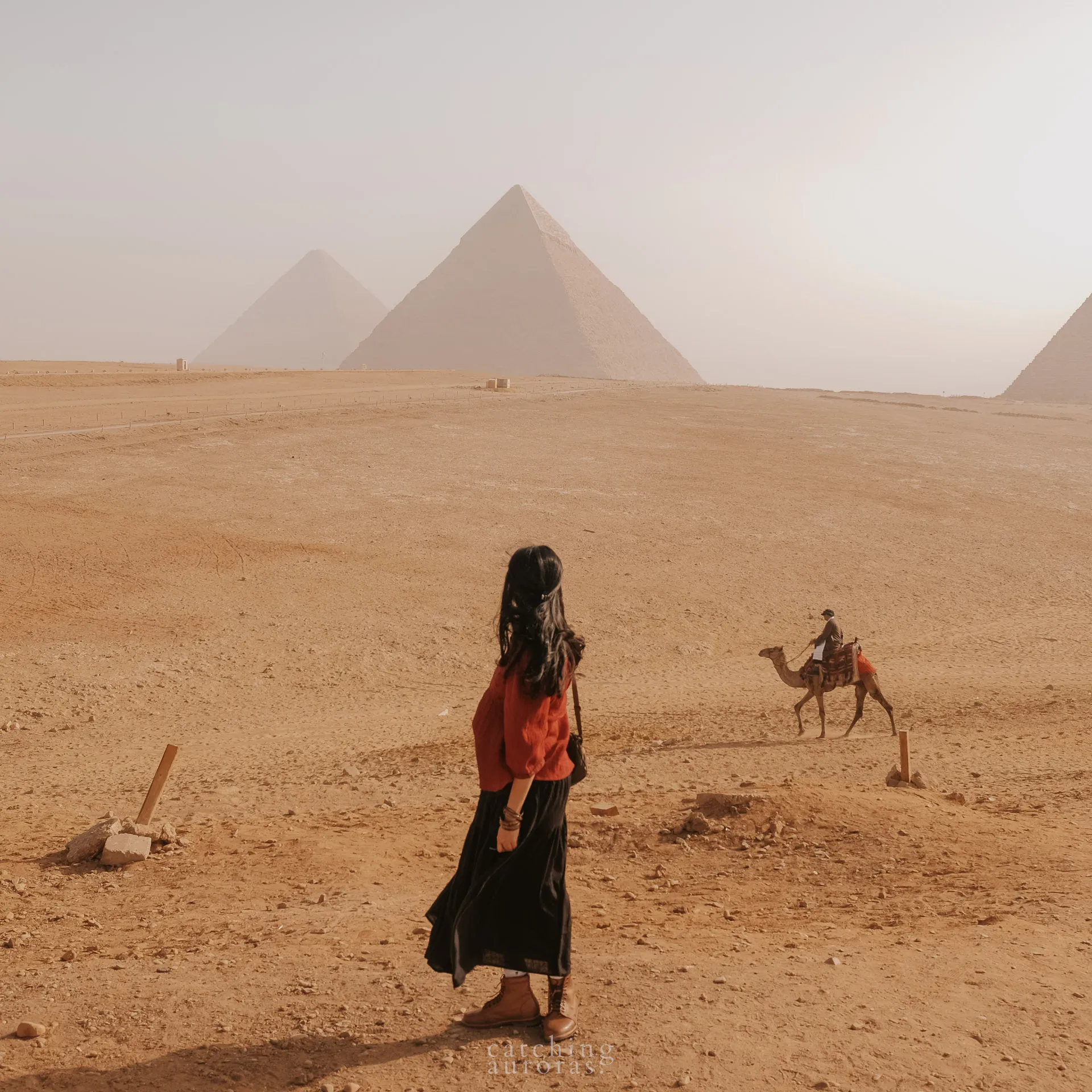
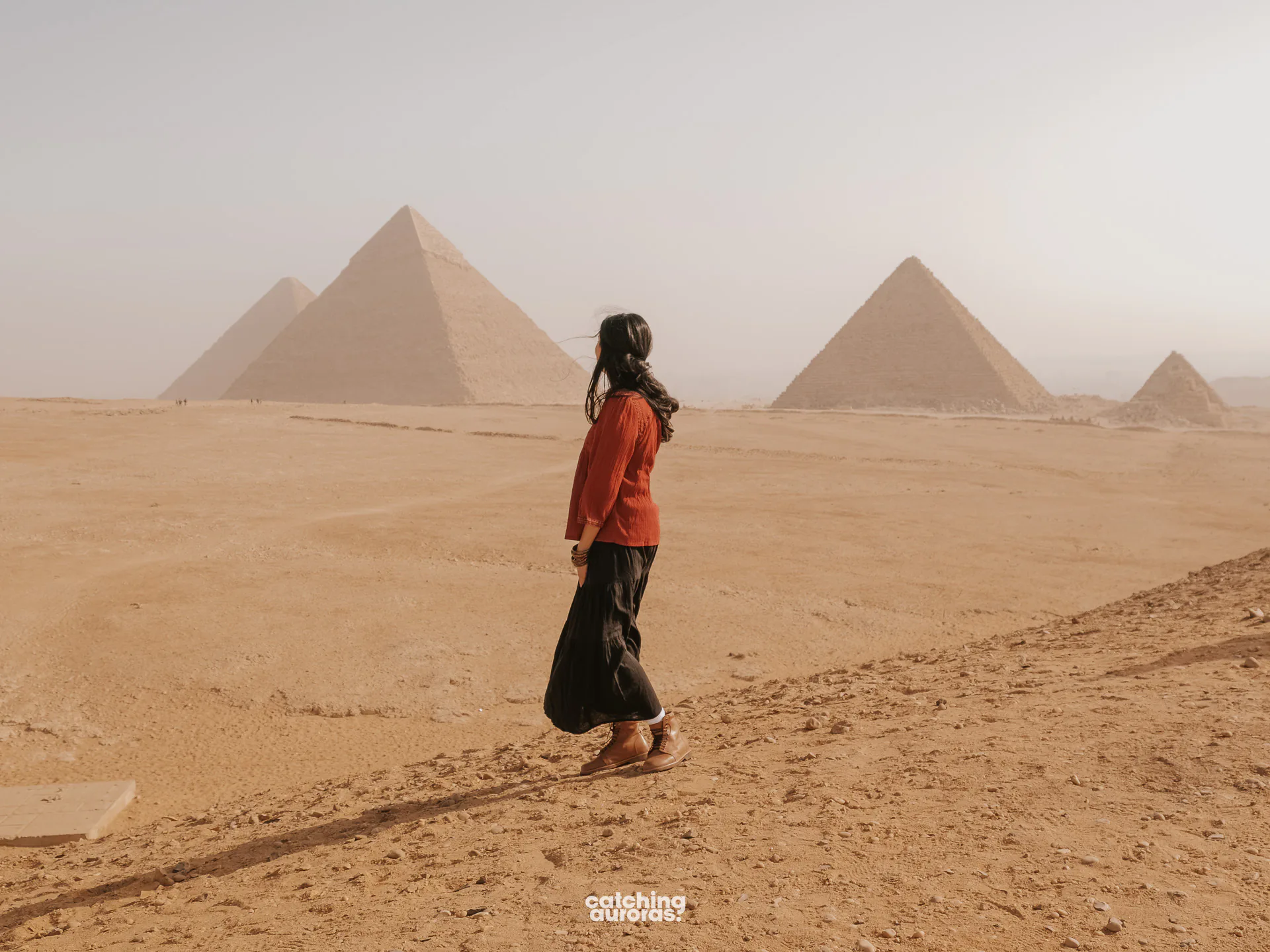
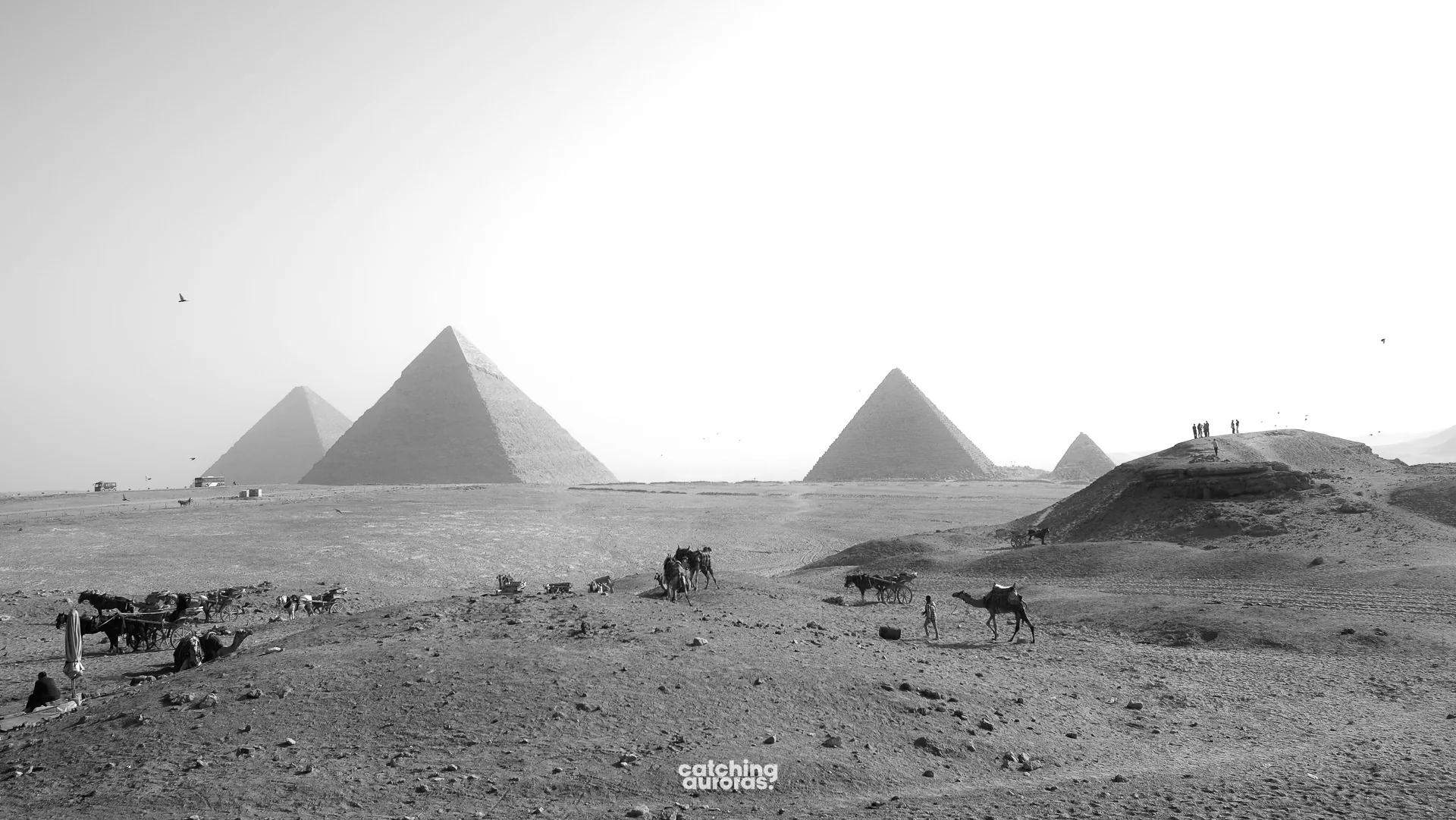
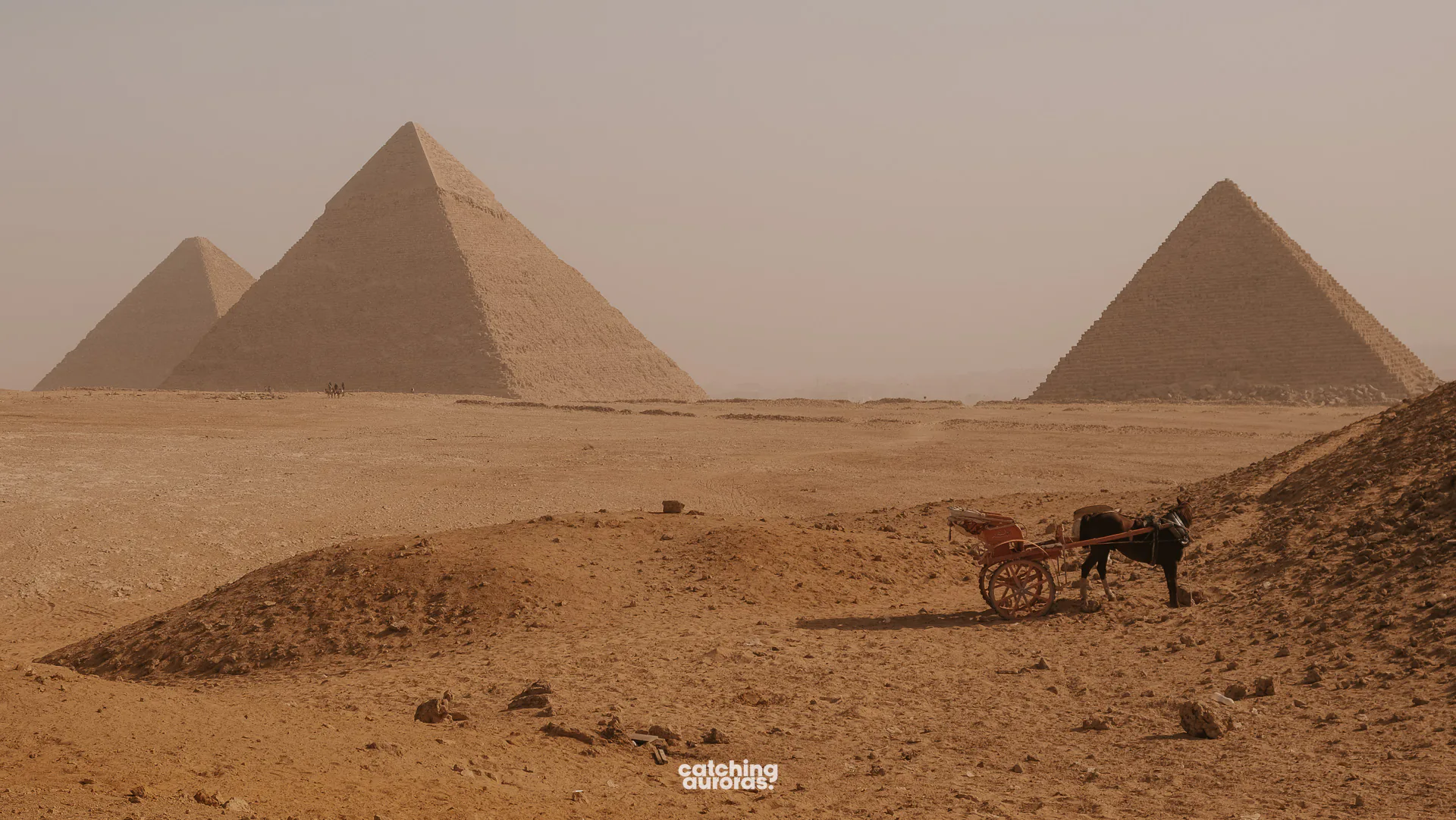
A classic and my personal favourite. It sits southwest of the complex on the desert side and lines all the pyramids in a row. It’s a long way from the pyramids but, luckily, a shuttle stop, so just hop on the bus and get off when you see the crowd.
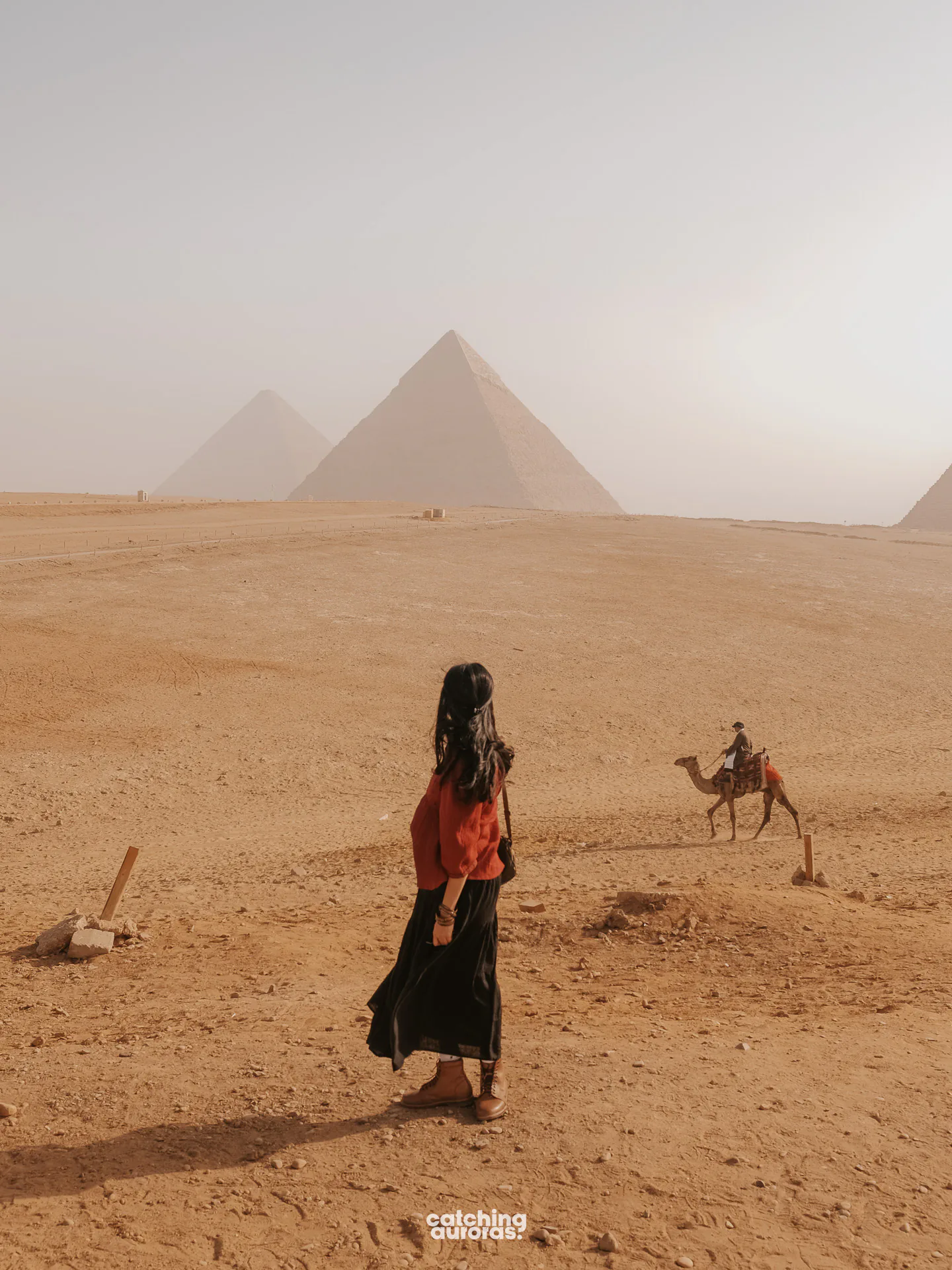
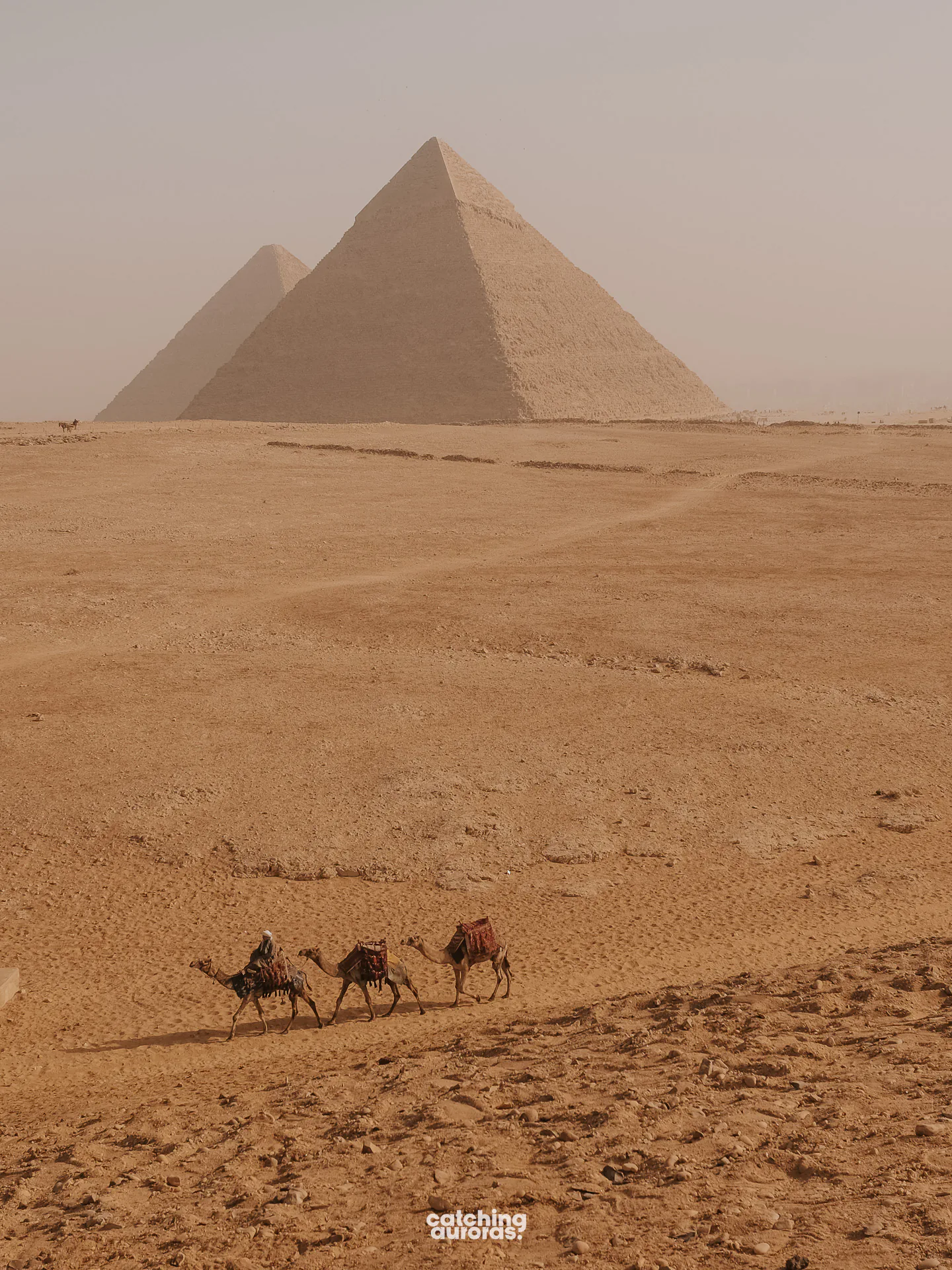
If you think the panorama spot is crowded, just walk a little into the desert. People seem to gather near one spot and don’t venture out. My favourite spot? Look to your right, you will see a small plateau a short distance away. I found this to be the best spot of them all. Hardly anyone on it and you get uninterrupted views of the pyramids.
The Sphinx terrace
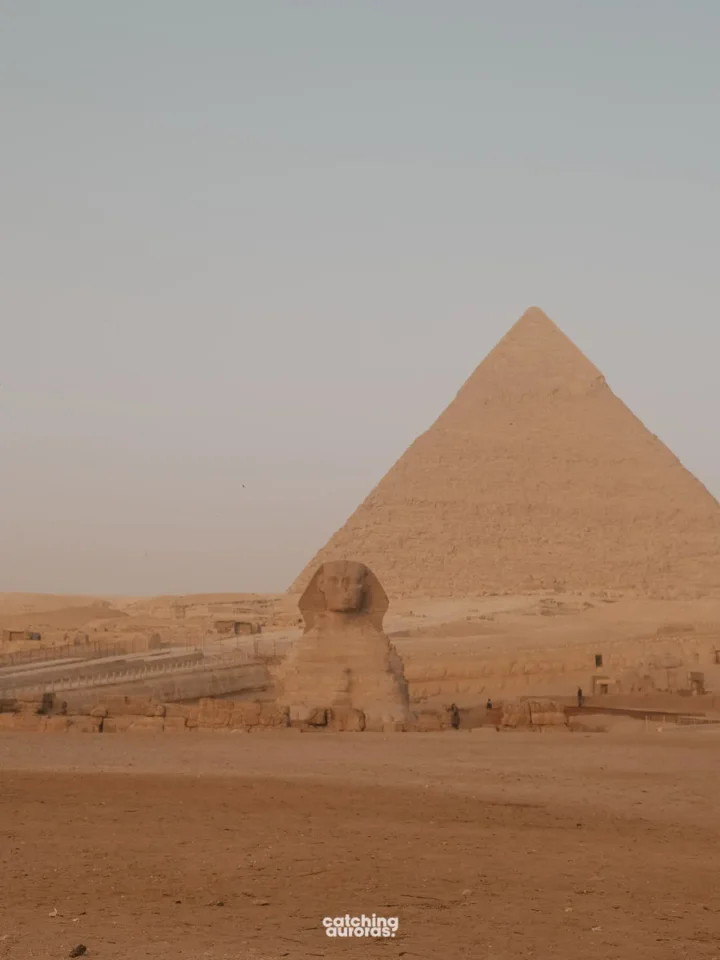
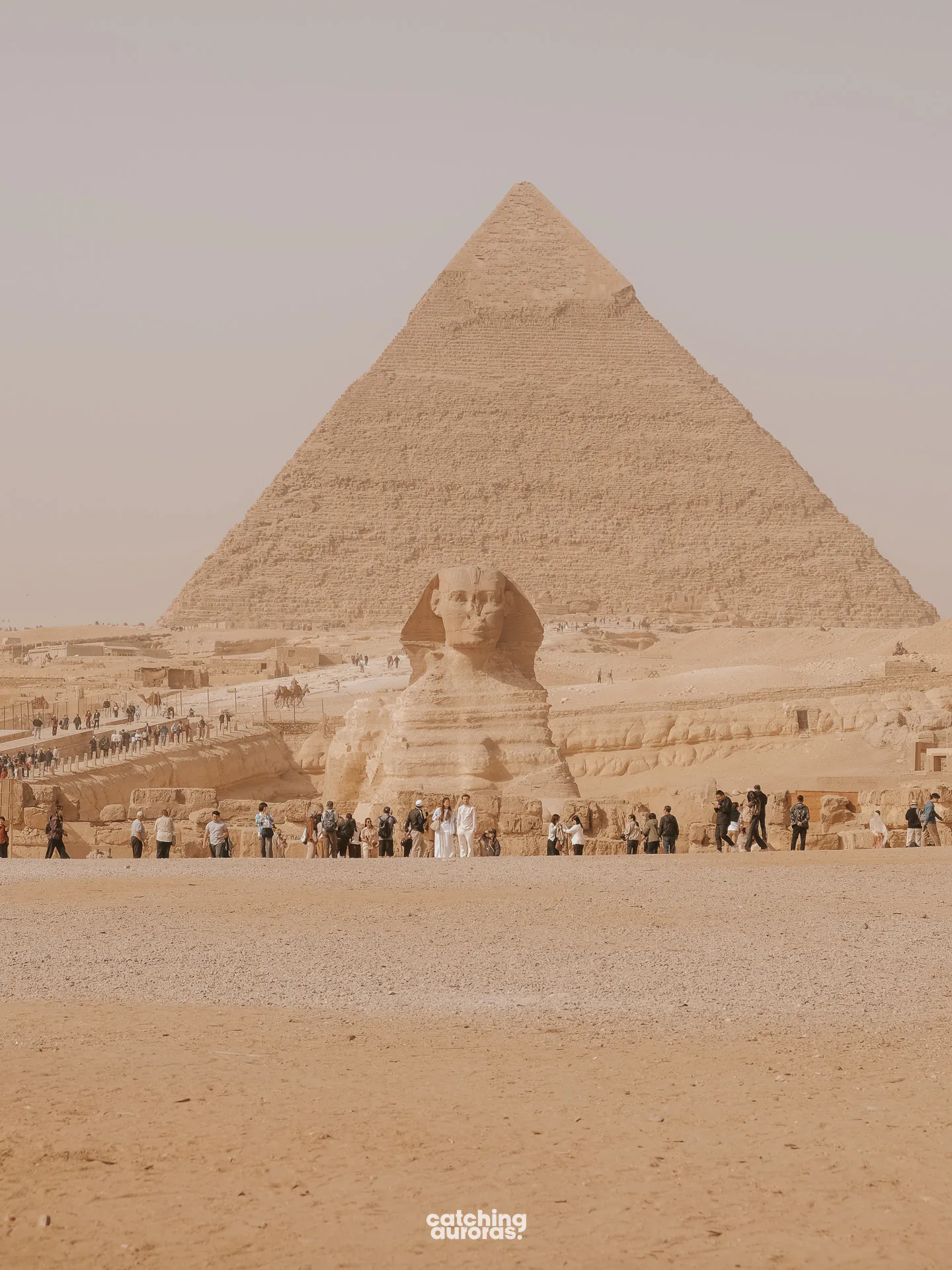
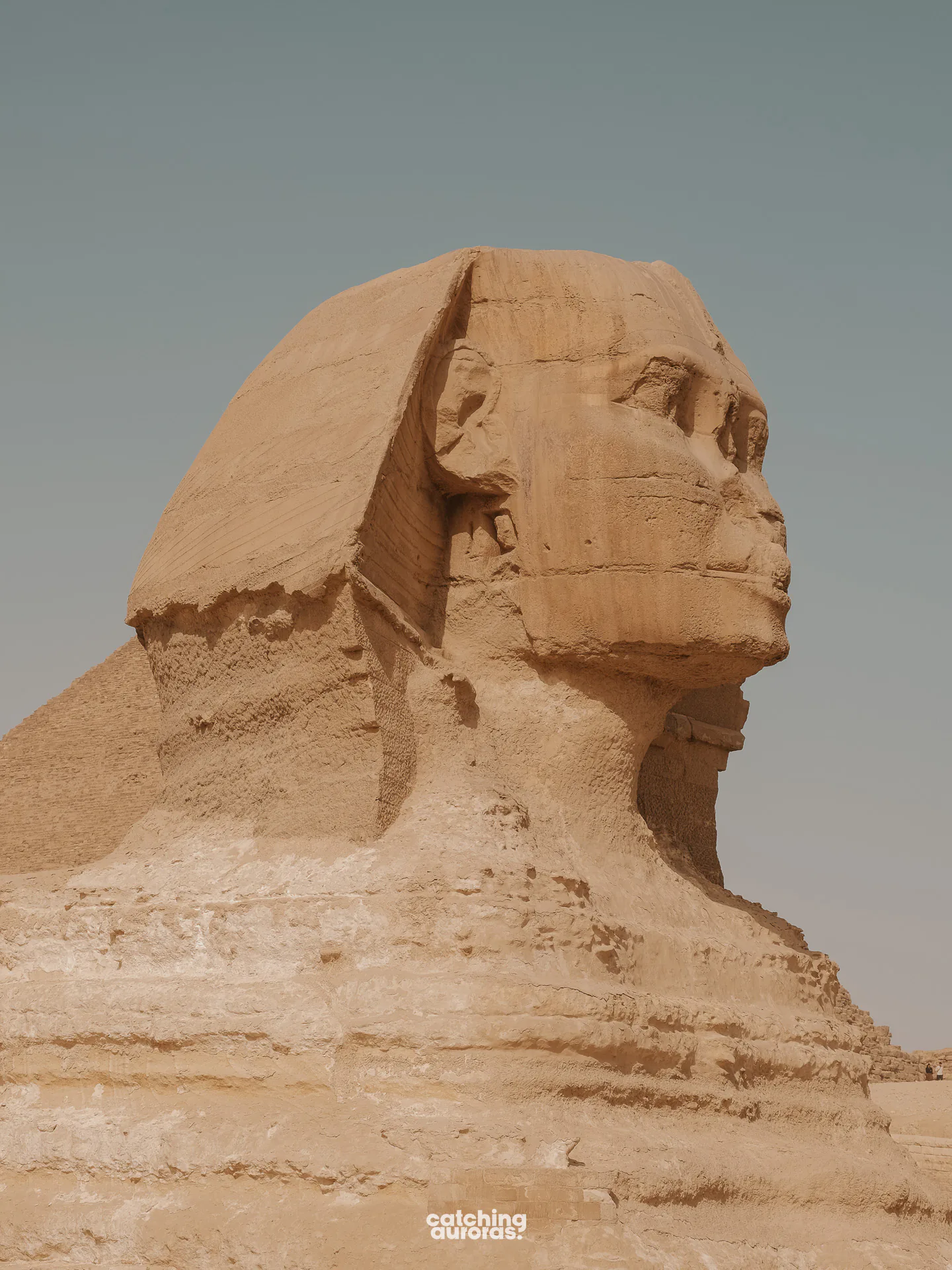
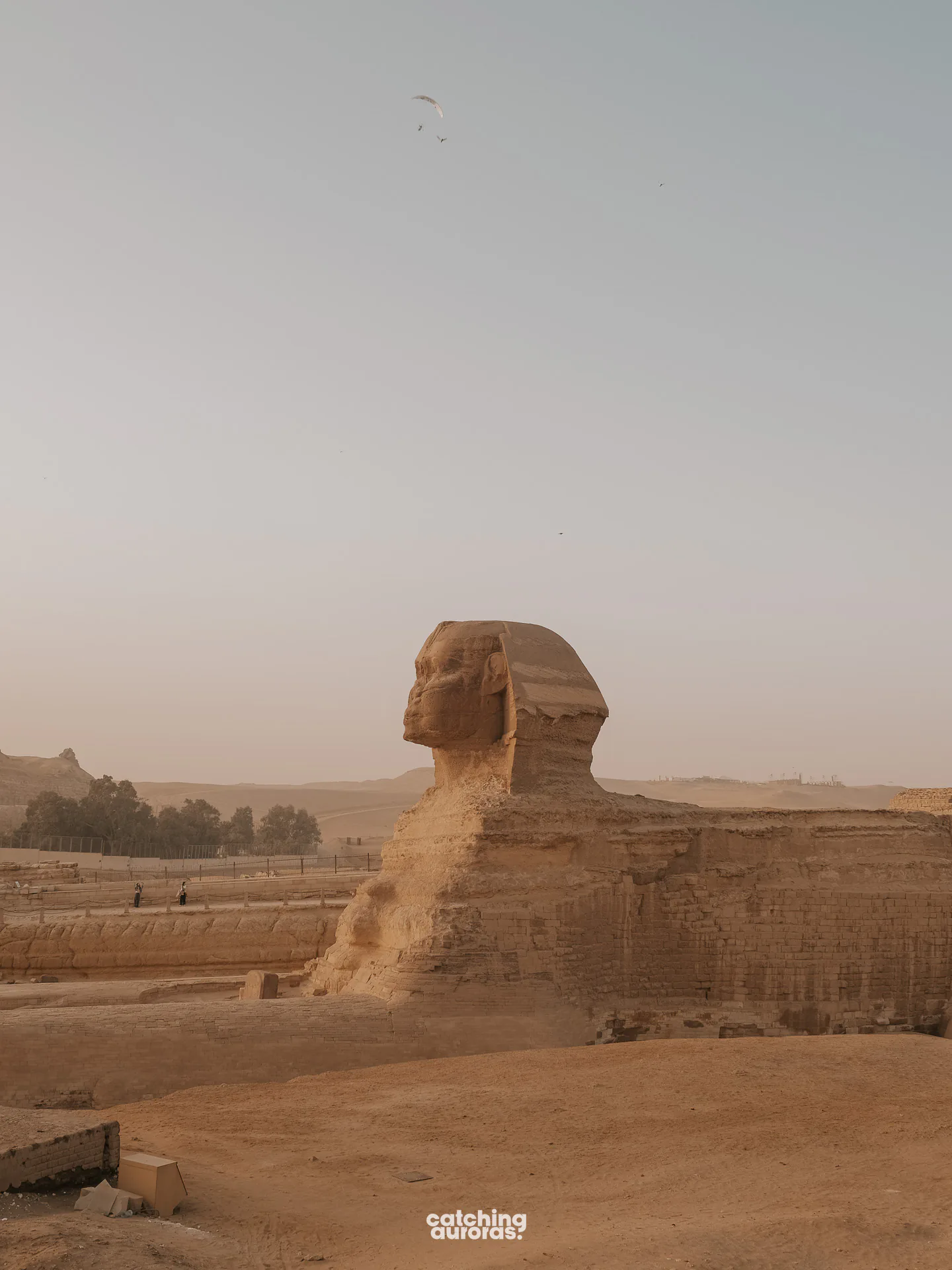
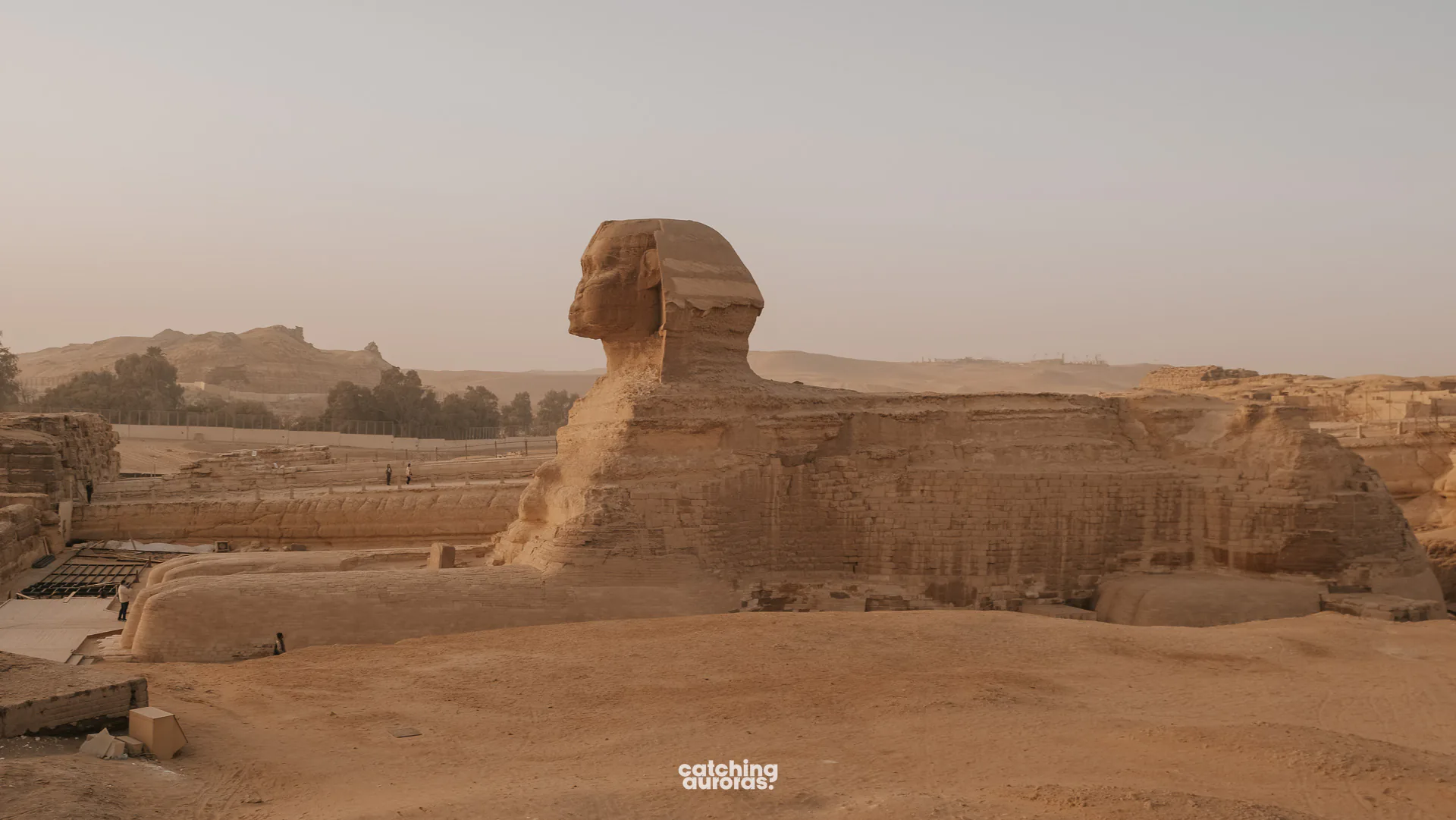
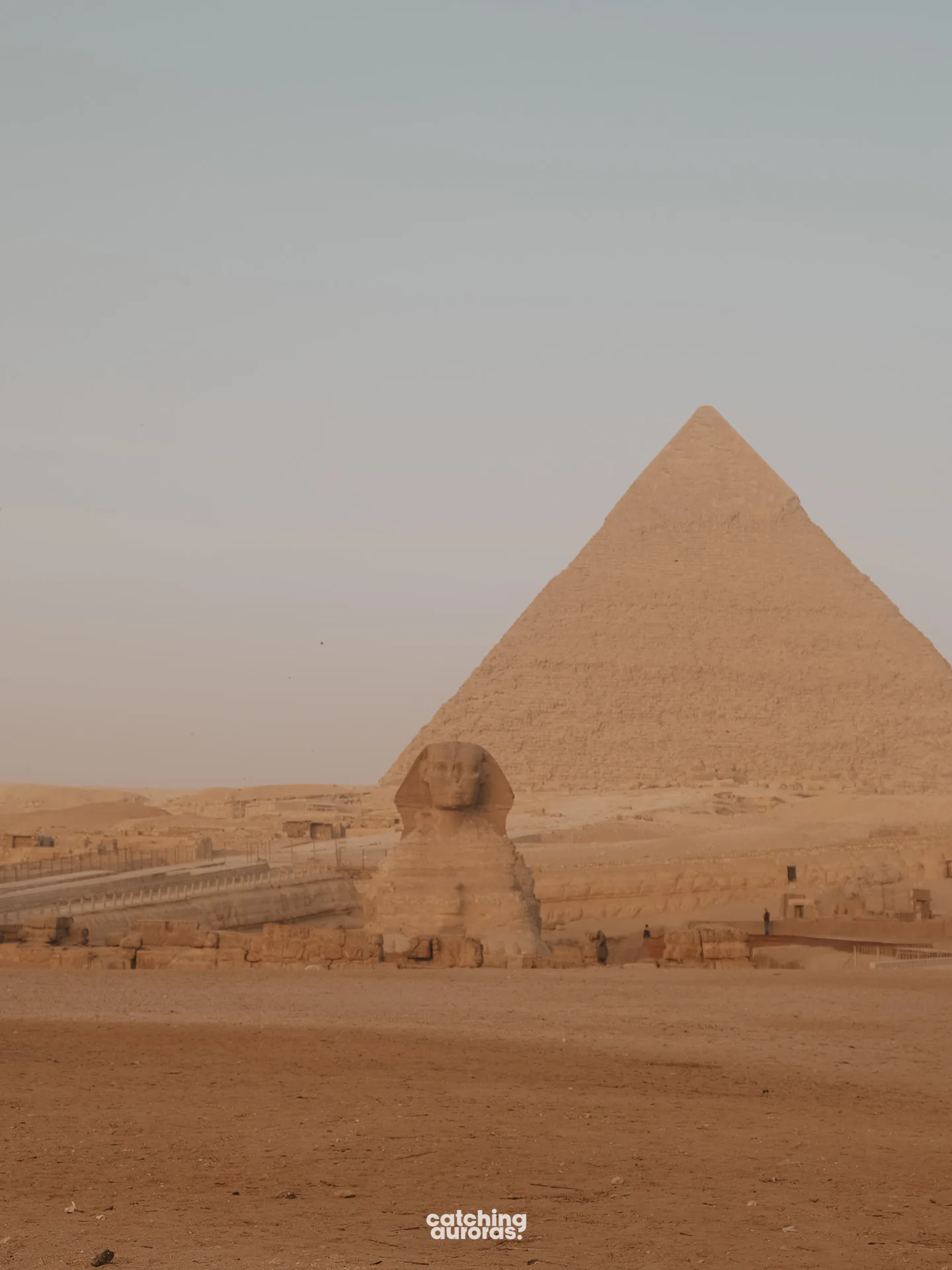
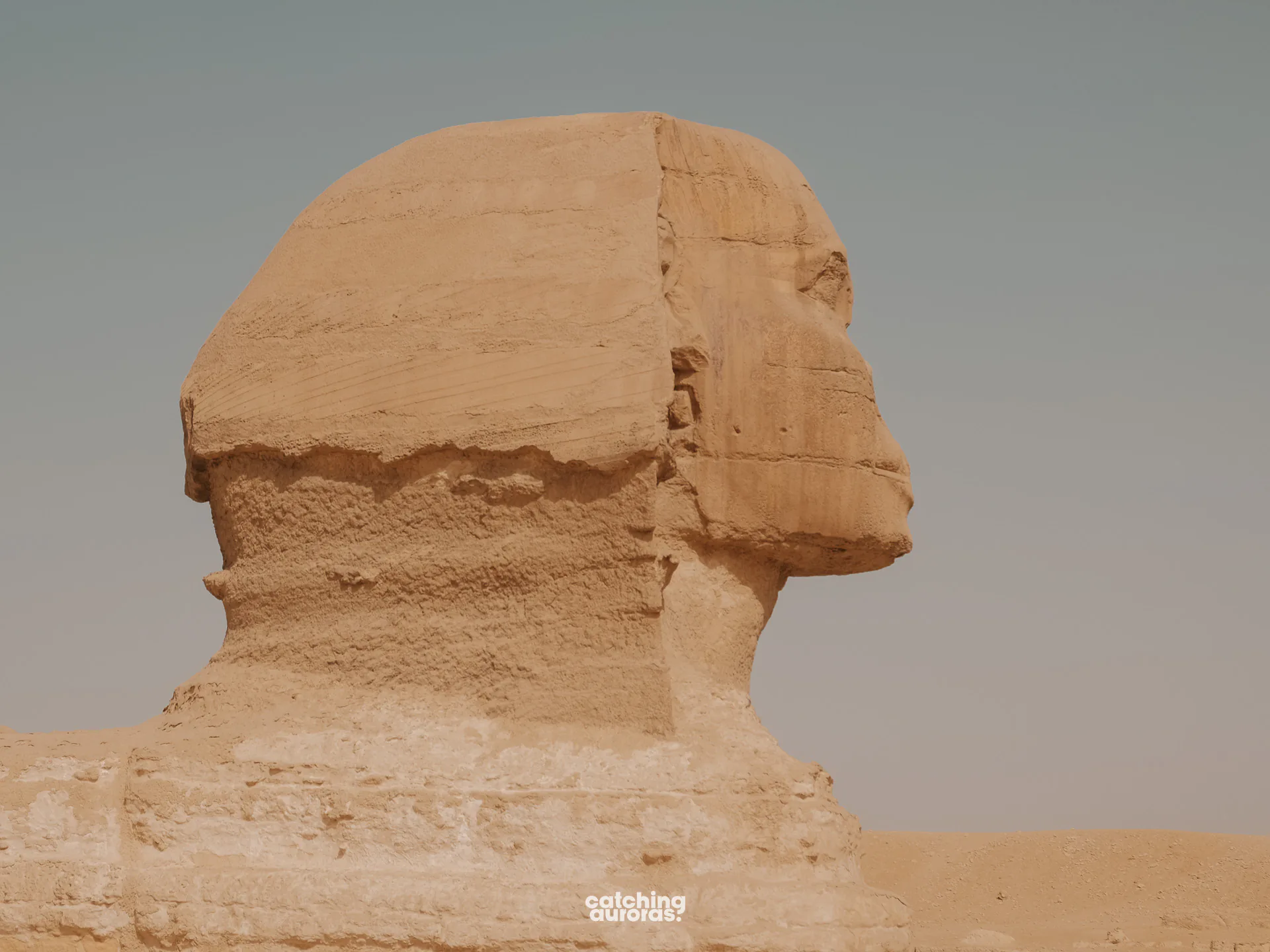
This is the spot if you want a shot of the Sphinx in the foreground with Khafre’s pyramid behind it. Morning light is better because the Sphinx faces east. It’s hard to miss if you are entering from the Sphinx gate but make sure you walk a little if you are approaching from the other side.
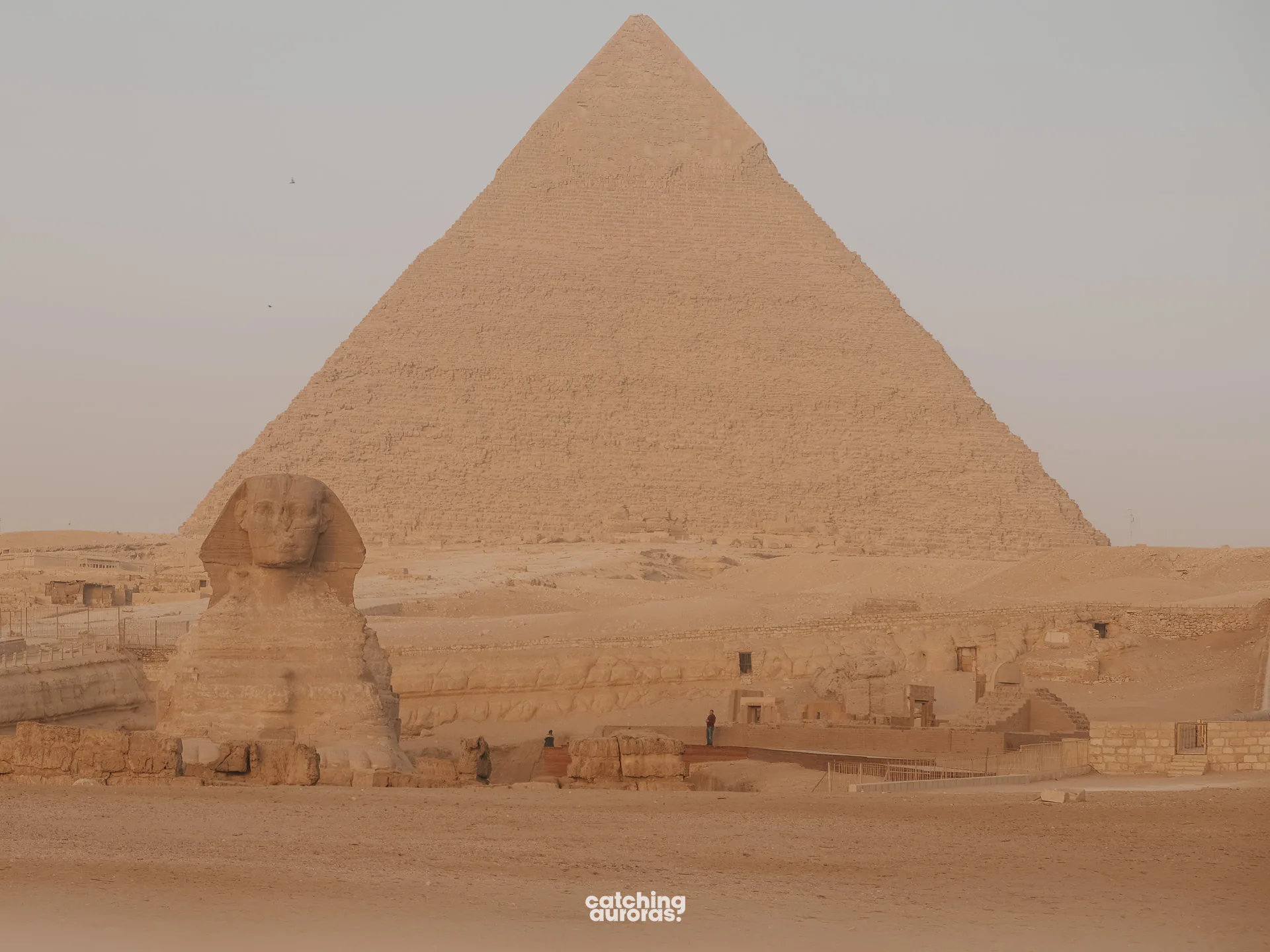
Walk around the Sphinx to photograph it from different angles. Some of my favourite pictures from the trip are from here.
The base of a pyramid
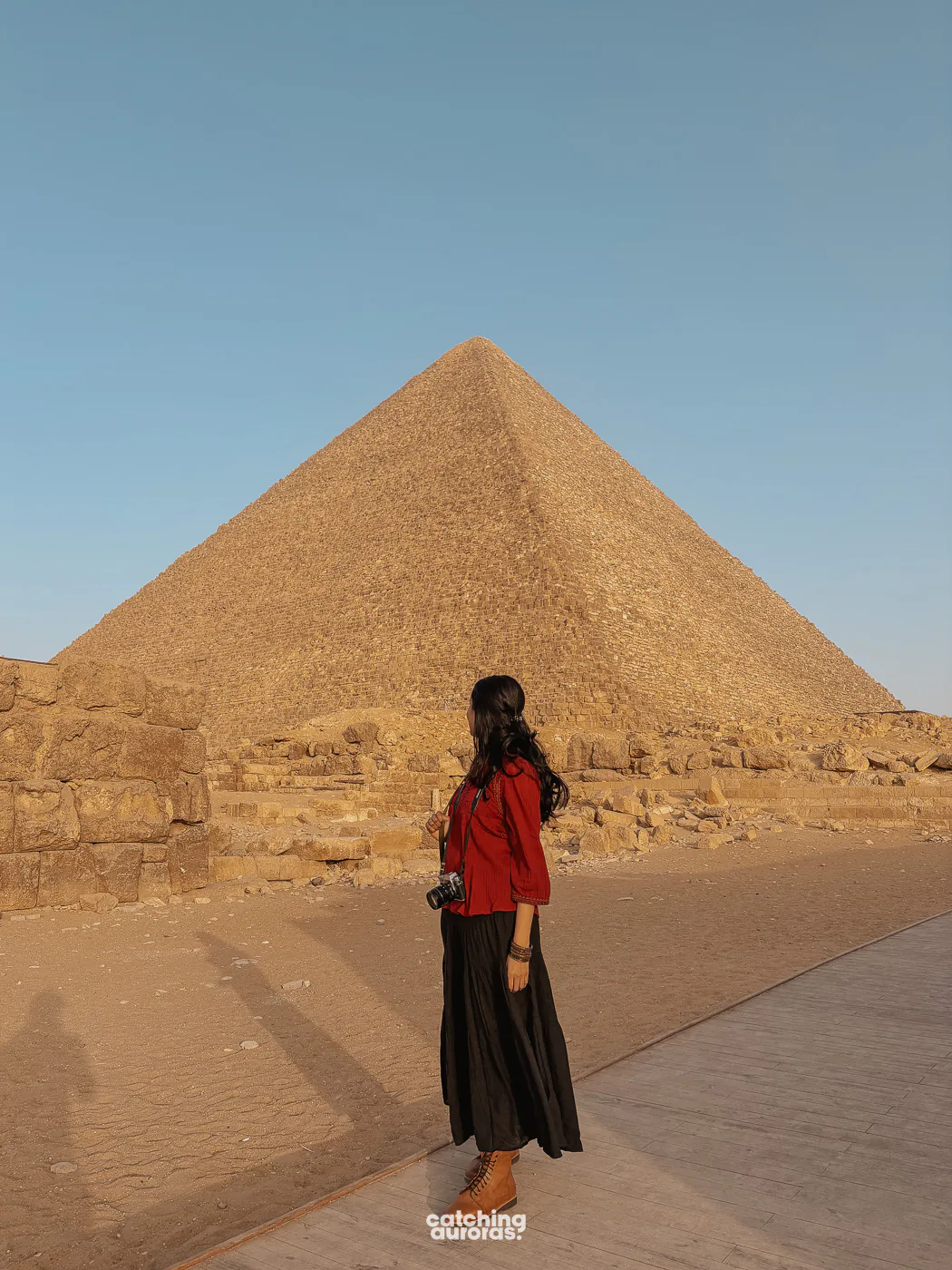
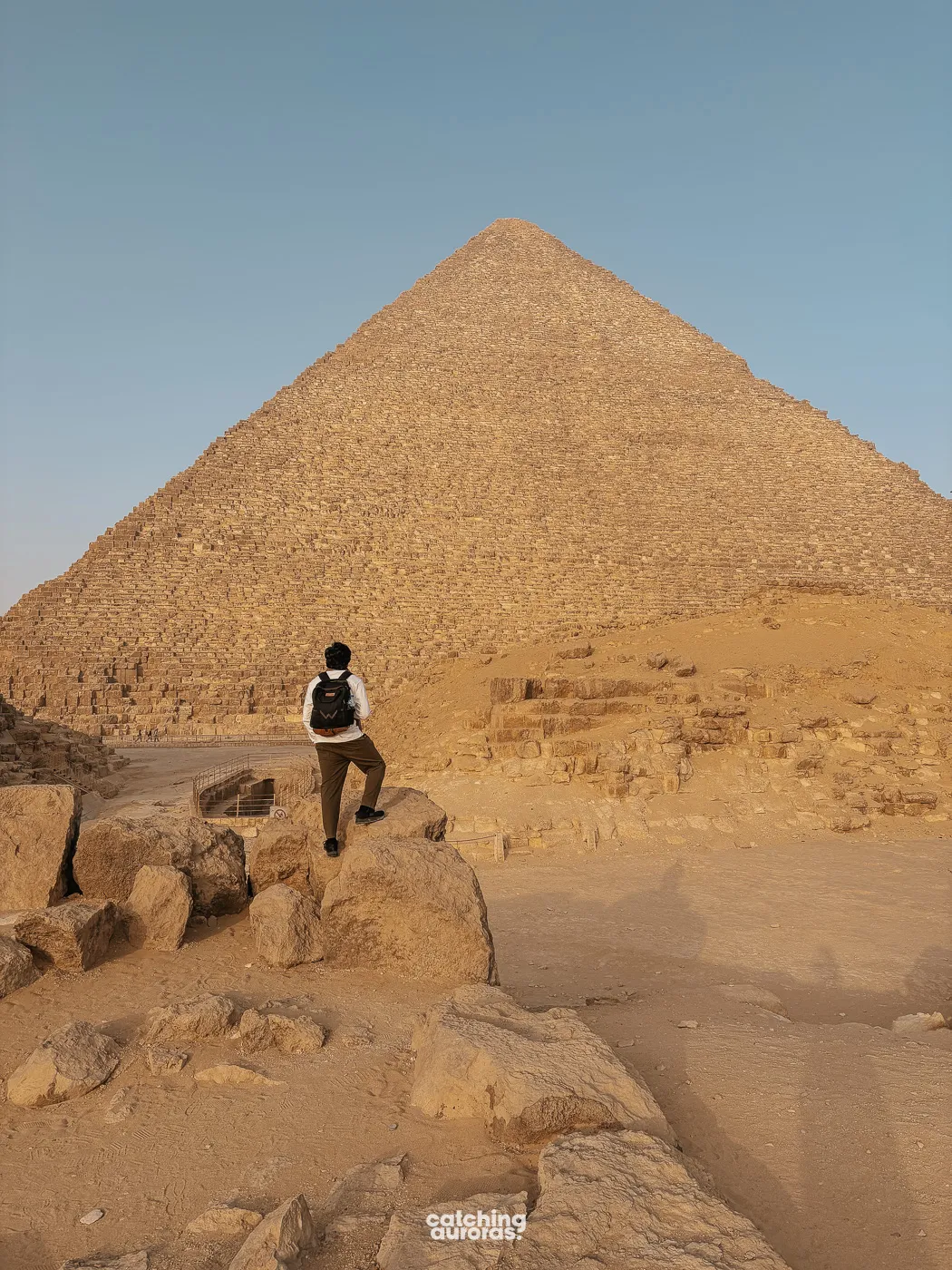
Go here if you want to capture the scale rather than the shape. Photographs of the whole pyramid never convey how big the individual blocks are until you put a person next to one.
Outside the plateau
The rooftop restaurants and hotel terraces in Nazlet El-Samman give you views of the pyramids above a working neighbourhood. If you are staying at these hotels, it’s free. Otherwise, it will cost you no more than a cold drink or coffee.
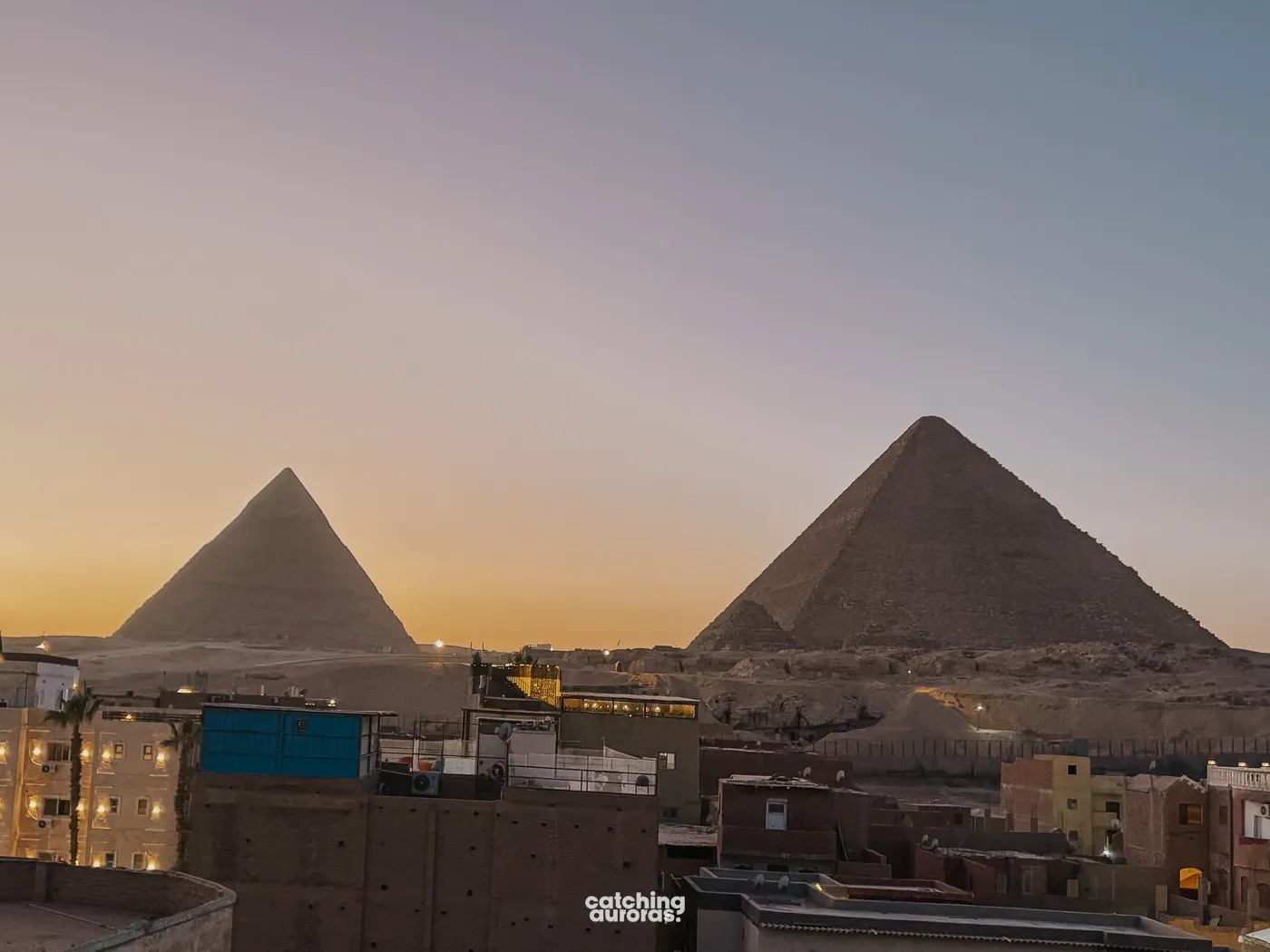
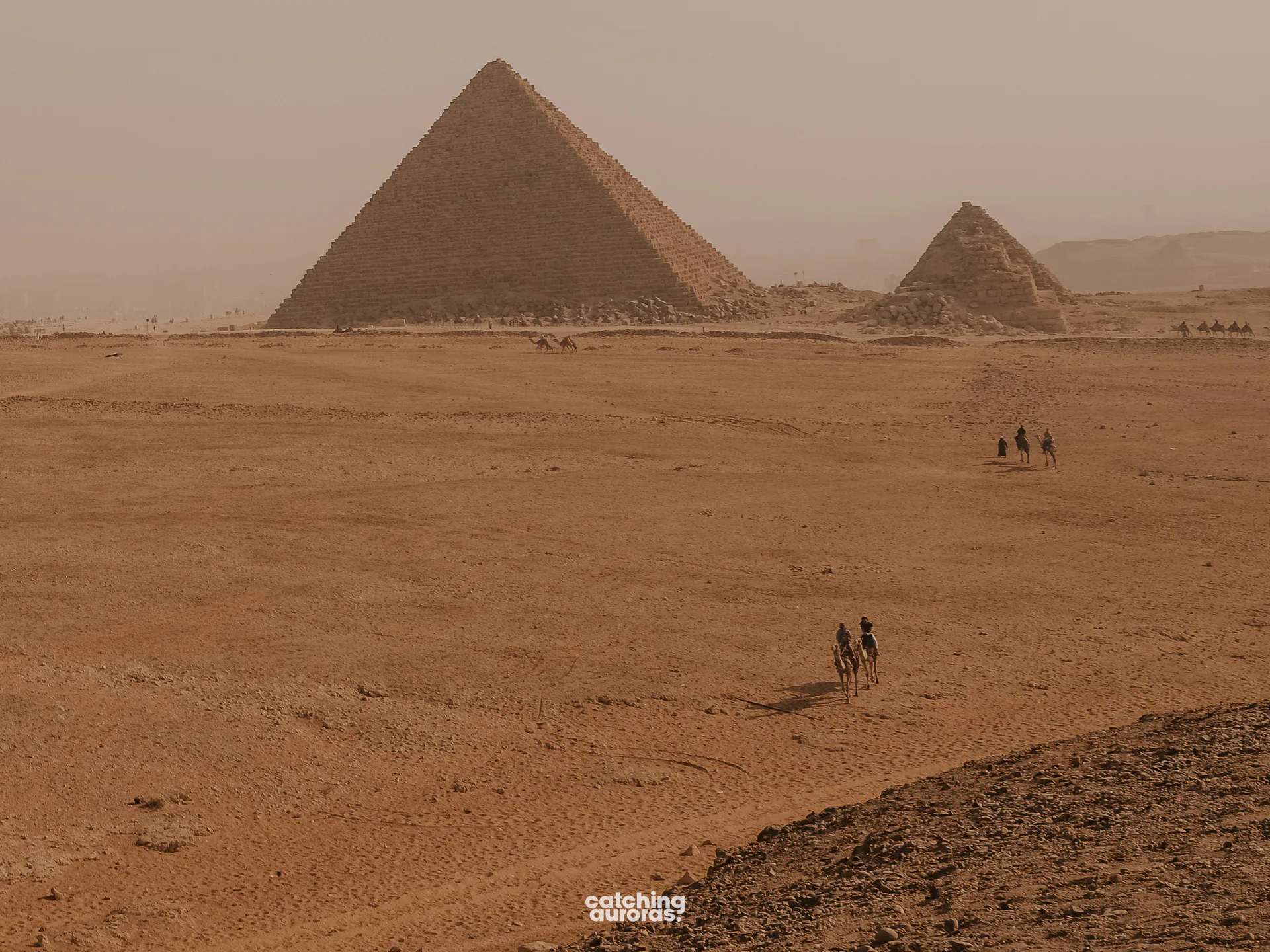
Camels in the desert also make for a good photograph.
For the best light, get there for the 7 AM opening. The first hour is the coolest and emptiest part of the day, and the low sun is pretty good for photographs. As the sun rises higher, it flattens everything out, and by midday, being out in the desert gets brutal.
The Sphinx and what happened to the Solar Boat
The Sphinx sits at the eastern edge of the plateau, below the pyramids, and you view it from a walled terrace. It’s the first thing you see if you enter by the Sphinx gate. If you enter through the main gate, it is usually the last thing you see. It is also smaller and stranger than most people expect, and draws your eye more than the pyramid behind it.
I saw a few people standing near its legs (paws?) early in the morning, although I have no idea how they got there.
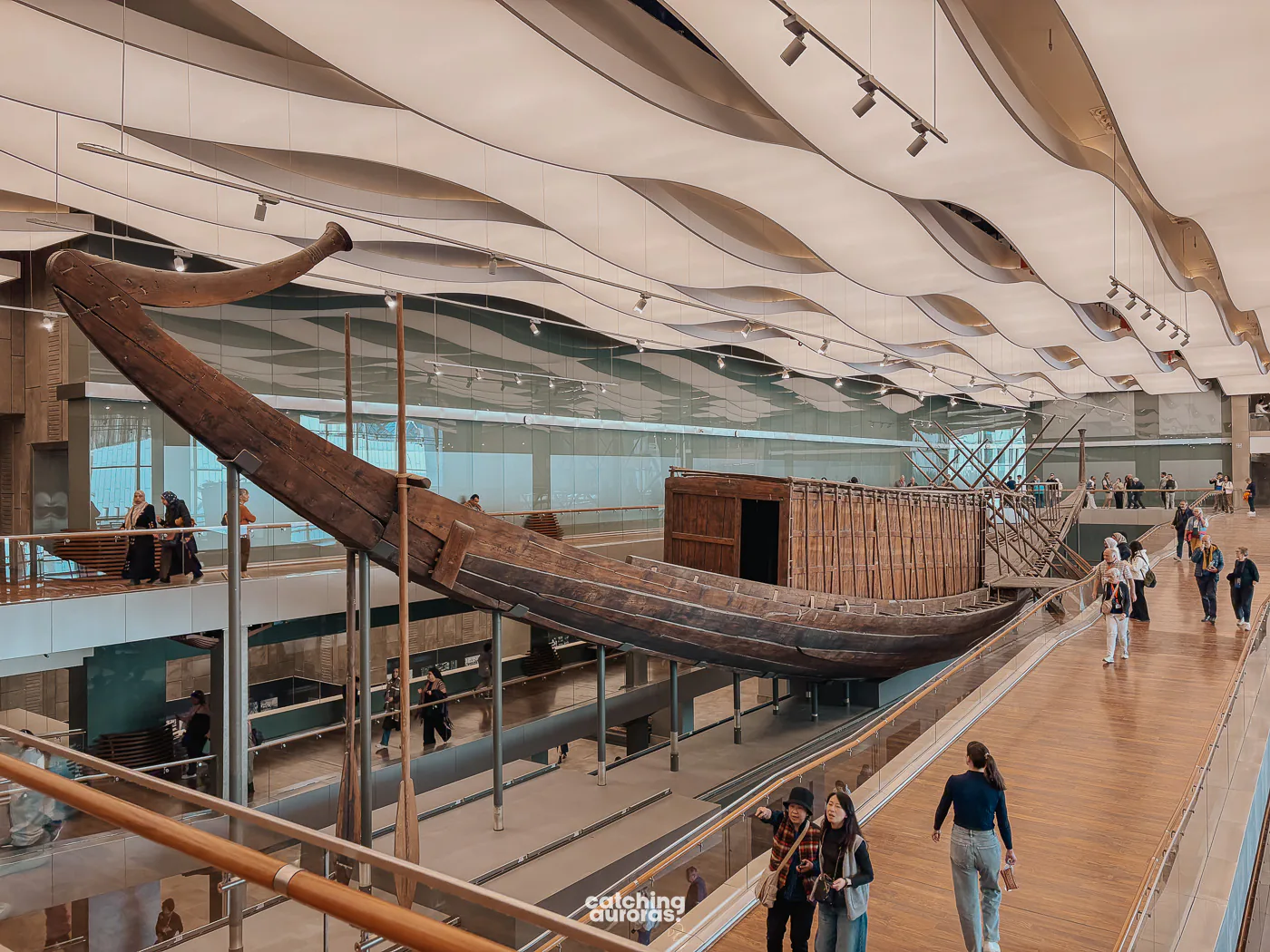
One thing to know since older guides get it wrong: Khufu’s Solar Boat is no longer at the plateau. The boat used to be housed at the Giza Solar Boat Museum beside the Great Pyramid near the place it was discovered. The boat museum has since been closed and the vessel was moved to the Grand Egyptian Museum. The GEM also houses the second solar boat, which is still being reconstructed.
The Grand Egyptian Museum: what you need to know before you book
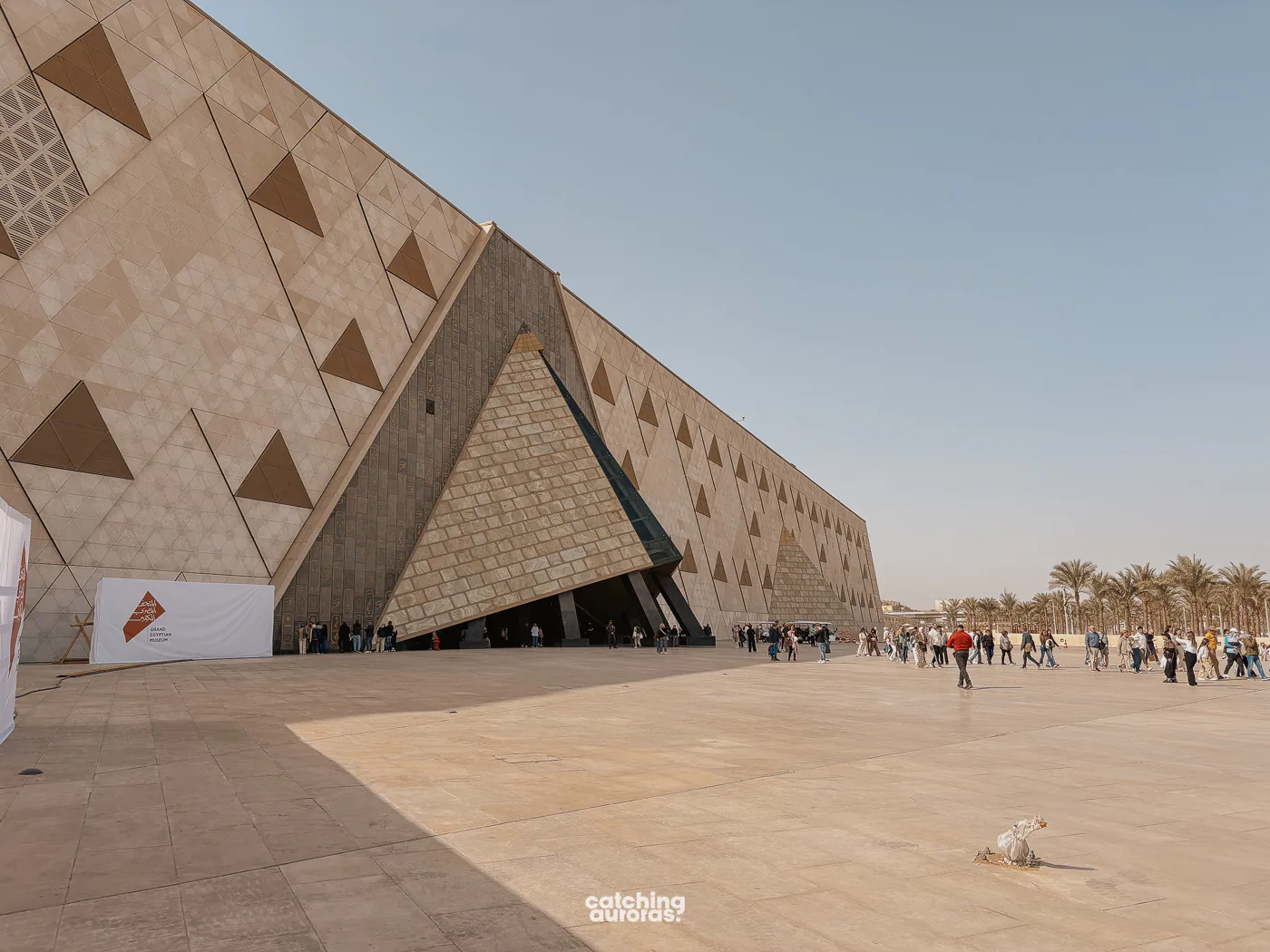
The GEM opened to the public on 4 November 2025 and it has changed what a Cairo trip looks like. It is the largest museum in the world dedicated to a single civilisation. It holds more than 100,000 objects, and the entire Tutankhamun collection of over 5,000 pieces is displayed together for the first time since Howard Carter discovered the tomb. More than three million people came through in the first seven months. If there’s one museum you are going to visit on your trip to Egypt, make it this.
Things to know before you visit GEM
Book online, in advance, or you will not get in. On-site ticket sales have been discontinued. Entry is by timed slot through the official portal, daily numbers are capped at 15,000, and people who turn up at the door assuming they can buy a ticket are turned away. This happens to a lot of visitors. Book at least a few days ahead, and even earlier during peak season or around public holidays.
Beware the fake ticket sites. The museum has publicly acknowledged a problem with fraudulent ticketing websites and is working with mobile operators to have them taken down. Book your Grand Egyptian Museum tickets through the official site and verify the opening hours before booking. If the official checkout fails with your international card, which has happened to plenty of people, use a recognised operator.
Give it more time than you think. The museum is huge. So much so that you need to stop in the middle to eat and replenish your energy before continuing. Three hours covers the Grand Staircase, the Tutankhamun galleries and the solar boat at a decent pace. Allow four to five if you want to cover all the galleries. Six is not excessive if you are the kind of person who reads every panel. We spent over five hours here (including a lunch break in the middle) and we still rushed through some of the exhibits.
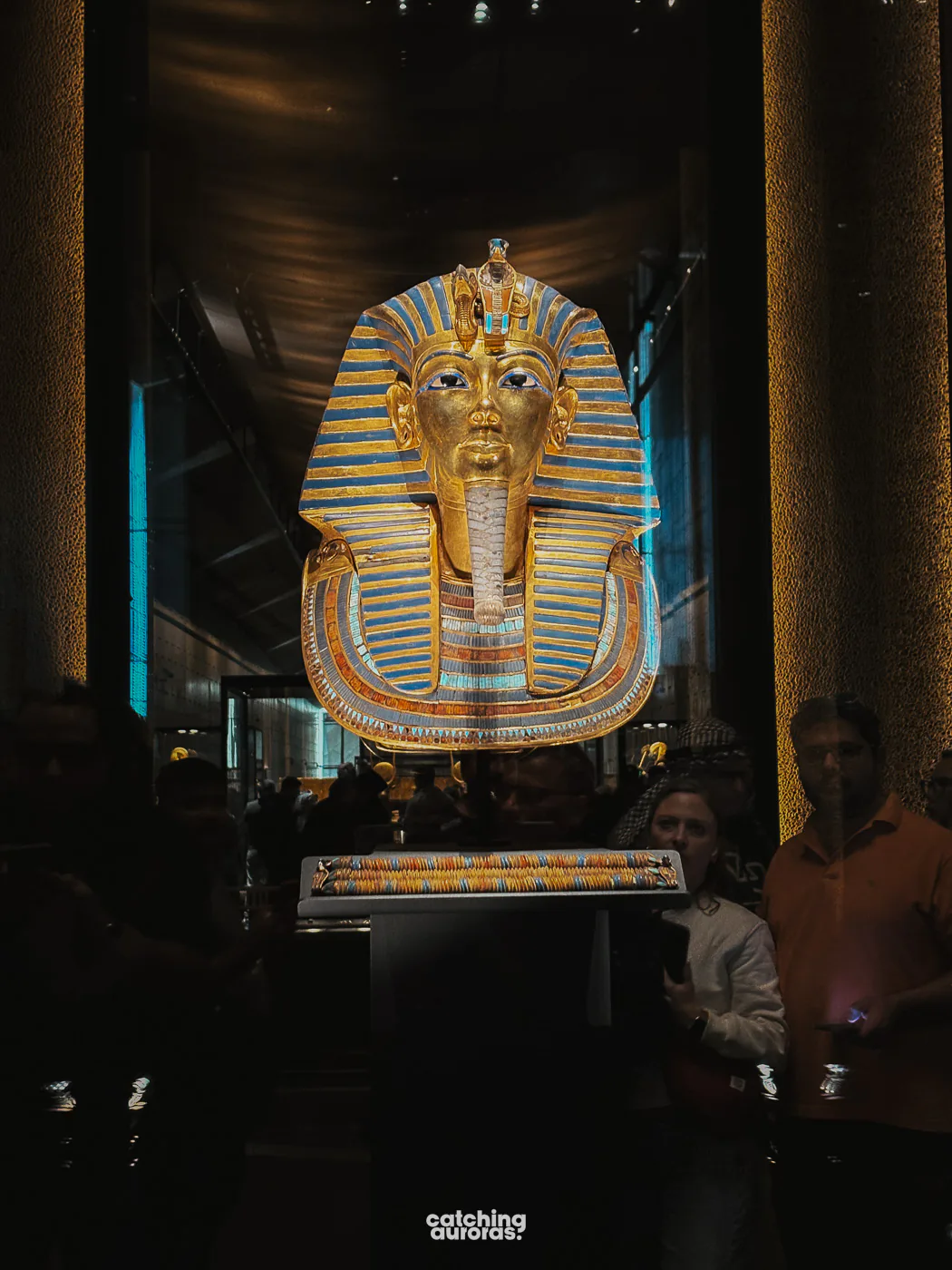
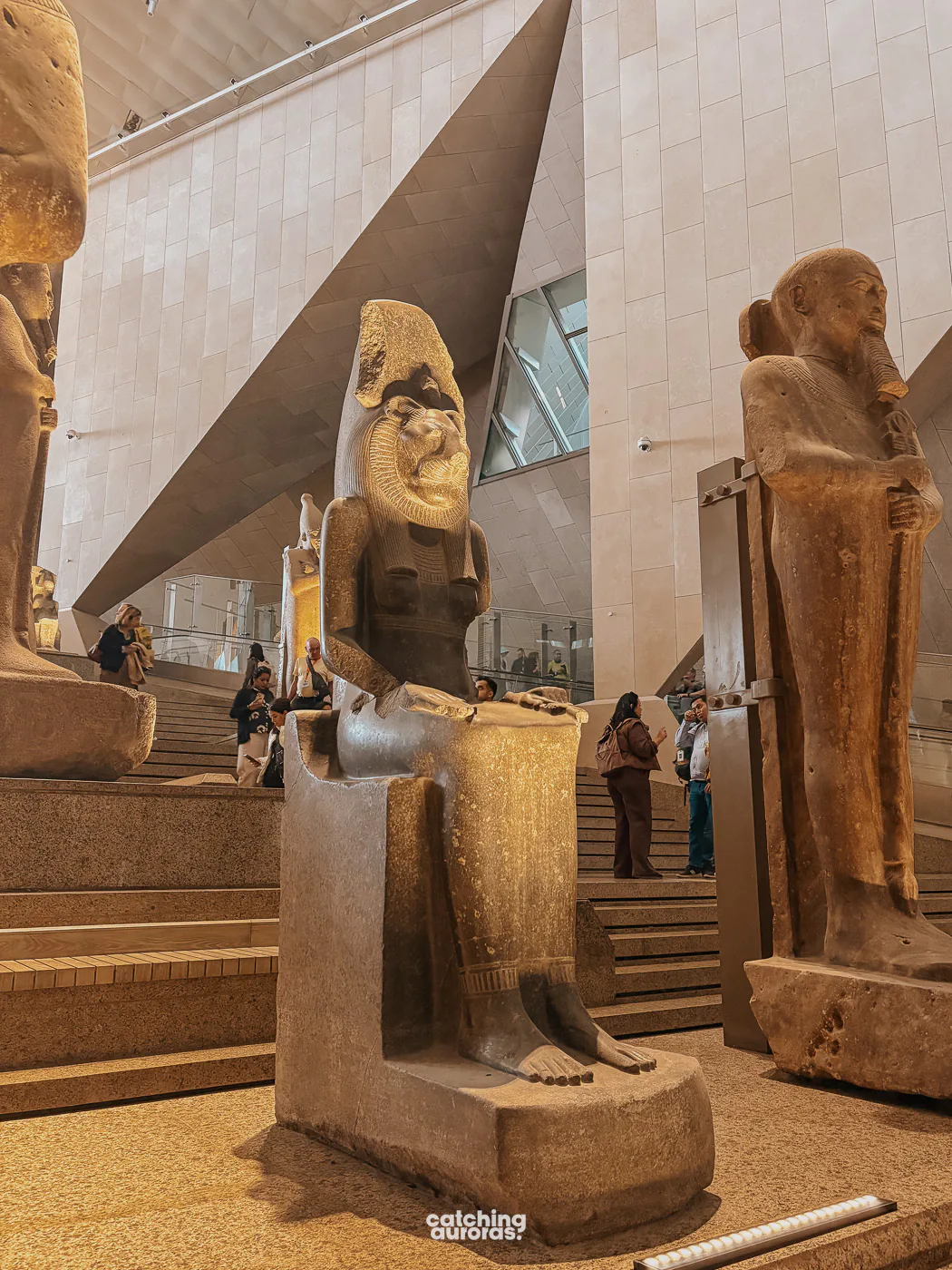
Pick your slot carefully. The GEM Complex is open daily from 8:30 AM to 7 PM with extended hours until 10 PM on Wednesdays and Saturdays. This is one of the most useful scheduling details about the place. Evening entry means thin crowds and you can take your own time. Otherwise take the 9 AM slot on a weekday. Late morning to early afternoon at a weekend is the worst window in the building. Trust me, I know.
The ticket prices are also going up from November 1, 2026, so check the official site before booking.
We had booked the 11 AM to 1 PM entry slot and entered a super crowded museum at 12. There is so much to see: the Hanging Obelisk at the entrance, Grand Hall with the colossal statue of Ramesses II, the Grand Staircase, which is lined with impressive statues, followed by the galleries – Tutankhamun Galleries, Main Galleries (which contains 12 exhibition halls) and King Khufu’s Boats Museum. Just the Tutankhamun Galleries make your visit to the GEM worth it. The gold sarcophagus, the mask, the iconic chair, I just couldn’t comprehend the amount of treasure Carter had unearthed. We took a break in the middle to have lunch at the restaurant inside the museum, shopped a little in the retail area (expensive but really good quality souvenirs; I regret not buying more here), and then headed back to our hotel by 5:15 PM.
Doing the pyramids and the GEM in one day
The Giza pyramids and GEM are two kilometres apart and there is a pedestrian promenade connecting them, so it is possible to do both on the same day. You can walk, but in that heat? I would rather take a cab.
Start at the plateau at 7 AM when it opens. Do the pyramids while the air is still cool and the light is good, which realistically takes three to four hours. Take a coffee break in one of the cafés inside the plateau. Book an afternoon slot at the museum, where you can spend the hottest part of the day inside an air-conditioned building. Grab lunch inside the GEM. Options include Zooba, which serves traditional Egyptian cuisine, Nahr, Starbucks, and several cafés and patisseries. Walk around till you physically can’t and then head back to your room.
Two things to keep in mind: your plateau ticket is single entry, so make sure you don’t head out for coffee and try to come back. And your museum slot is timed, so book it late enough that a slow morning at the pyramids does not cost you the entry. An 11 AM to 1 PM or 1 PM to 3 PM slot gives you plenty of room.
If you have the days to spare, you can split them across two days. Visiting the pyramids one morning and the museum the next gives you a slower, more comfortable pace. We had only one day in Cairo, so we started for the Great Pyramids at 7 AM. We left the pyramids at 11 AM, walked to the hotel, rested for a while, and left for the museum at noon. We had lunch at Zooba after a few hours of walking around and gaping at the treasures in the Tutankhamun gallery. It had some great vegan/vegetarian options. We finished the rest of the exhibits and headed back to our hotel at 5:15 PM. I was dead on my feet and only the food and the sheer amount of gold on display kept me going.
Would I recommend this? If I could plan this again, I would make sure I was here on a weekday, preferably a Wednesday. Then I would visit the pyramids in the morning. Have a leisurely lunch and relax till 3 PM and then head to the museum in the last entry slot (3 PM to 5 PM) and stay till they close at 10 PM. The lack of crowds and slower pace would make the day much less tiring. Visiting a museum at night would also feel very Night at the Museum-esque.
Other things to do in Cairo
Cairo can keep you occupied for days if you want it to. Apart from the Giza Plateau and GEM, you have:
The Egyptian Museum on Tahrir Square is the pink 1902 building downtown. It is still open and worth a morning even though the headline pieces have left. The Narmer Palette is here, along with Old Kingdom sculpture. It has this slightly dusty, over-stuffed character that the new museum doesn’t have. Go for the atmosphere and if you want to feel like Rachel Weisz in The Mummy.
The National Museum of Egyptian Civilization in Fustat is where the royal mummies are. Twenty-two of them, including Hatshepsut and Thutmose III, moved here in the Pharaohs’ Golden Parade in 2021, and the Royal Mummies Hall is a quiet, dimly lit room that hits differently to any other museum in Egypt.
Islamic Cairo is the medieval city, and the one you visit if you want a taste of Cairo. Al-Muizz Street, the Citadel of Saladin and Sultan Hassan and Al-Rifa’i are all part of this itinerary. Then there is Khan el-Khalili market. The stalls right at the bazaar entrance sell mostly mass-produced souvenirs. But if you walk deeper into the lanes, you will find the workshops where people still make brass, glass and textiles by hand. Expect to be hassled.
Coptic Cairo sits inside the walls of a Roman fortress and holds the Hanging Church, the church of St Sergius, the Ben Ezra Synagogue and the Coptic Museum, all within a walkable few hundred metres.
Saqqara and Dahshur are a must if you have a spare day. The Step Pyramid of Djoser at Saqqara is older than the Pyramids at Giza and Dahshur has the Bent Pyramid and the Red Pyramid, both of which you can usually walk into with a fraction of the crowd.
How many days do you need in Cairo?
If you have one day, stick to the Giza Plateau and the Grand Egyptian Museum. Two days lets you add an additional afternoon in Islamic/Coptic Cairo. If you have more time, you have the older museums and Saqqara and Dahshur at your disposal. In my 10-day Egypt itinerary, Cairo gets two days.
I deliberately planned for a very short, one-day stay in Cairo as I really wanted to travel down south to Luxor and Aswan instead.
Where to stay in Cairo
Giza, near the plateau, is where the pyramid-view hotels are, and trust me, there are so many of them! I can’t speak to whether waking up to that view is worth it, since I didn’t book one with the view but there are so many at every price point, from budget rooms with plastic chairs on the roof to the Mena House at the other end. The trade-off is that the area is dingy and you are a long drive from the rest of the city.
Downtown and Garden City put you near the Tahrir museum, the Nile corniche and the older cafés, with far better food and easier onward transport. Choose this area if Cairo is more than just a pyramid stop for you.
Zamalek, on the island, is the quieter, upscale option, with good restaurants and a slower pace – perfect for a longer trip.
Since we were in Cairo for just one night and mainly visiting the pyramids, we stayed at a hotel near the Sphinx Gate, barely 100 m away.
Best time to visit the Giza Pyramids and what to bring
October to April is the best time to visit Cairo, or Egypt in general, and within that, November to February has the most comfortable weather you will get. It is also the busiest, so expect larger crowds wherever you go.
May to September is hot and summer is really not the time to visit something that sits on an exposed desert plateau. There is no shade anywhere except when you are indoors and I can imagine myself melting if I ever entered the Khufu pyramid in that weather. But if this is when you are visiting, make sure to be at the gate at 7 AM, be done by 11, and spend the afternoon inside the museum.
We visited at the end of January and it was cooler on the plateau early in the morning.
What to take, whatever the month:
- Two payment cards, since the plateau is now cashless and one of them may decide not to work
- Small notes for tips
- Plenty of water
- A hat, sunglasses and sunscreen, because there is no shade at all
- Closed, comfortable shoes, since the plateau is sand and grit and the Khufu passage is steep
- Modest clothing if you are pairing the day with mosques in Islamic Cairo, plus a scarf for women to cover their head. In general, wear light and airy clothing
- If you are planning to enter the pyramids, avoid wearing a dress or skirt. I wore a long dress and could hitch it up while climbing, but it became a tripping hazard several times. I couldn’t imagine doing that later in the day when the crowds would have been packed shoulder to shoulder
- Your GEM booking QR code saved offline
Get an eSIM before you fly instead of queuing at a kiosk in Cairo airport. You will need it for maps, Uber, and Google Translate. Having mobile data also reduces the chance of being scammed.
After watching and reading so many reviews, I was so apprehensive about scams and the general travel experience in Egypt. I deliberately kept my time in Cairo short (my logic: the less time I spend here = the less time people have to scam me) and I don’t regret it. I got to see what I came here for without getting hassled and had a wonderful time before moving on to Abu Simbel.