Abu Simbel was one of three sites I most wanted to see in Egypt along with the Pyramids of Giza and the Valley of the Kings. But almost every Abu Simbel guide assumes you will do it as a day trip: a 3 AM alarm, a 4 AM bus, two rushed hours at the temples, then back to Aswan by lunch. I wanted to do Abu Simbel overnight instead, but found surprisingly little practical advice on how to do it without paying for a private driver for two days.
We left Aswan late morning, stayed one night in Abu Simbel, watched the Sound and Light Show, then returned to the temples when they opened at 6 AM. It cost more than a shared day tour, but it gave us a slower visit, the temples after dark, and no 3 AM pickup. Here’s the route, what it cost and the timings, so you can do the same.
Abu Simbel overnight at a glance
| Detail | |
|---|---|
| Where | Lake Nasser, near the Sudanese border. About 280 km south of Aswan |
| Road time | 3 to 3.5 hours each way. Desert highway, checkpoints, not a pretty drive |
| Why stay | Sound and Light Show at night. Facade at 6 AM. No 3 AM pickup |
| Opening hours | 6 AM to 5 PM on the Ministry page. Last entry 4 PM on the booking portal |
| Foreigner ticket | Ministry: 750 EGP adult / EGP 375 student (EGP 822 adult / EGP 445.5 student on the portal). Sound and Light Show is extra |
| Sun Festival | 22 February and 22 October. Book the room first |
| Convoy | Not mandatory. Cars leave when they like. Carry your passport |
| Best time to visit Abu Simbel | Winter months are best. Summers are over 40°C with no shade. |
Last checked: 23 September 2026. Prices, hours and the rules can change. Recheck the Ministry page and ask your hotel the night before.
Abu Simbel temples: a little history before you go
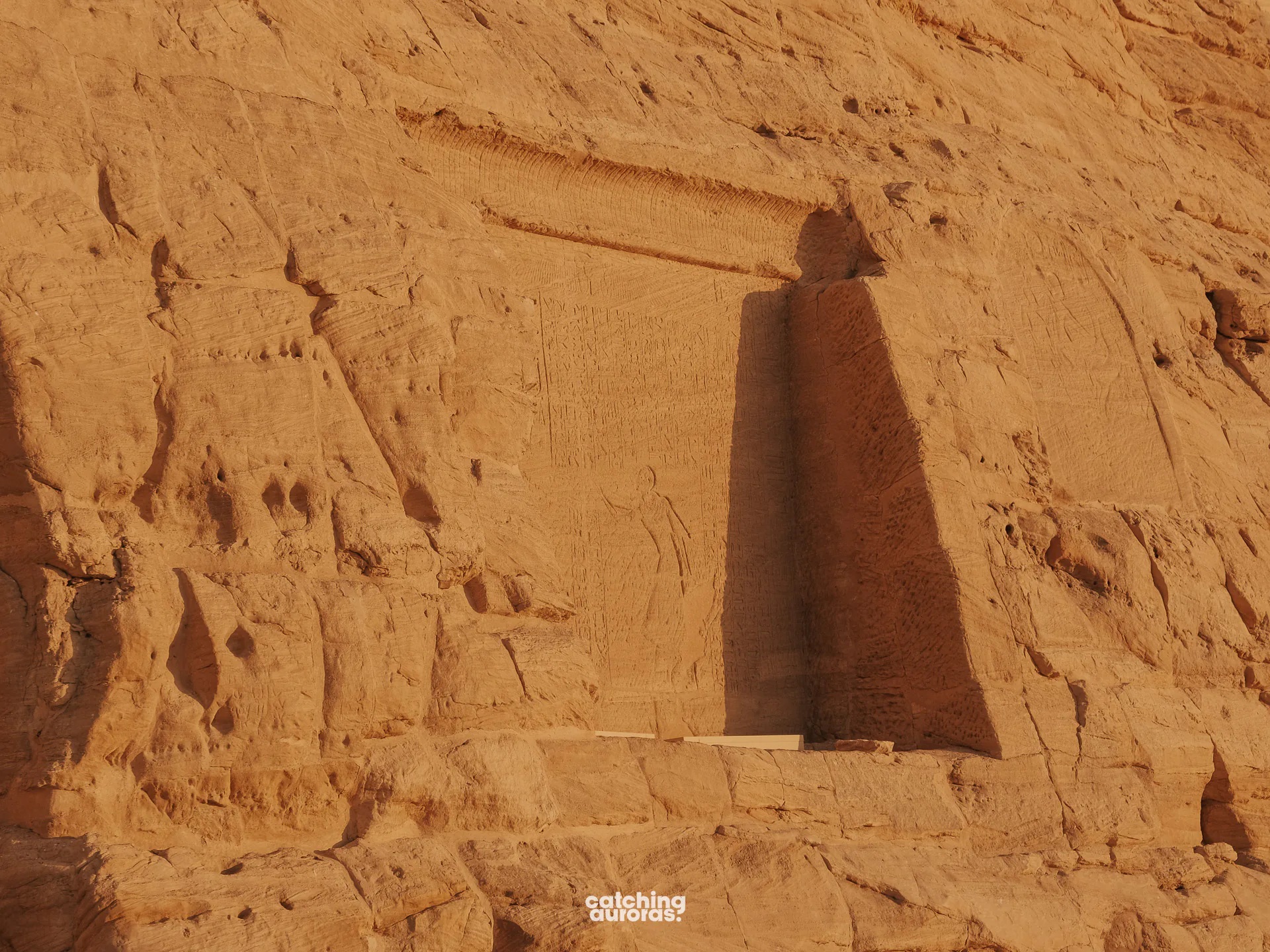
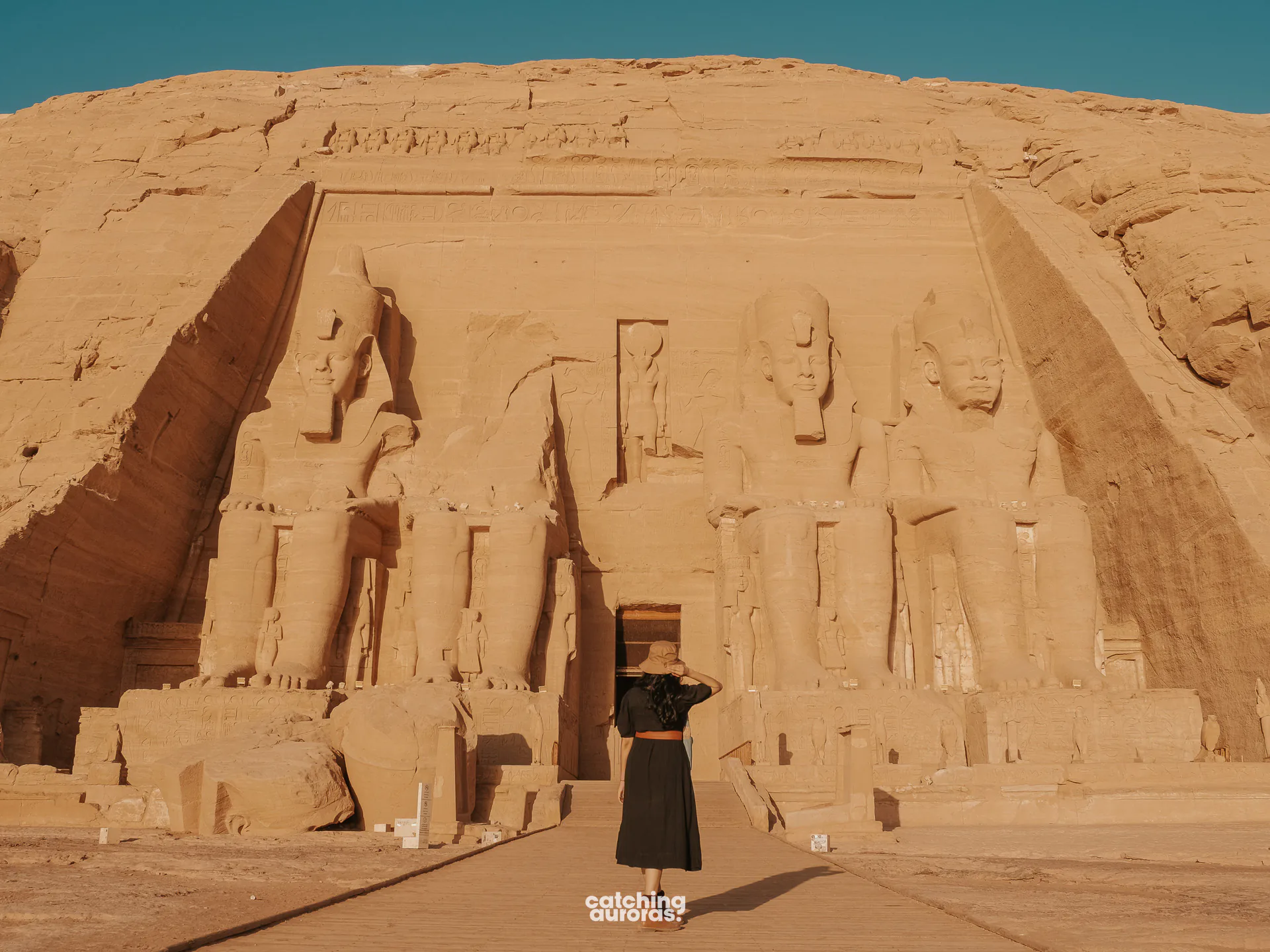
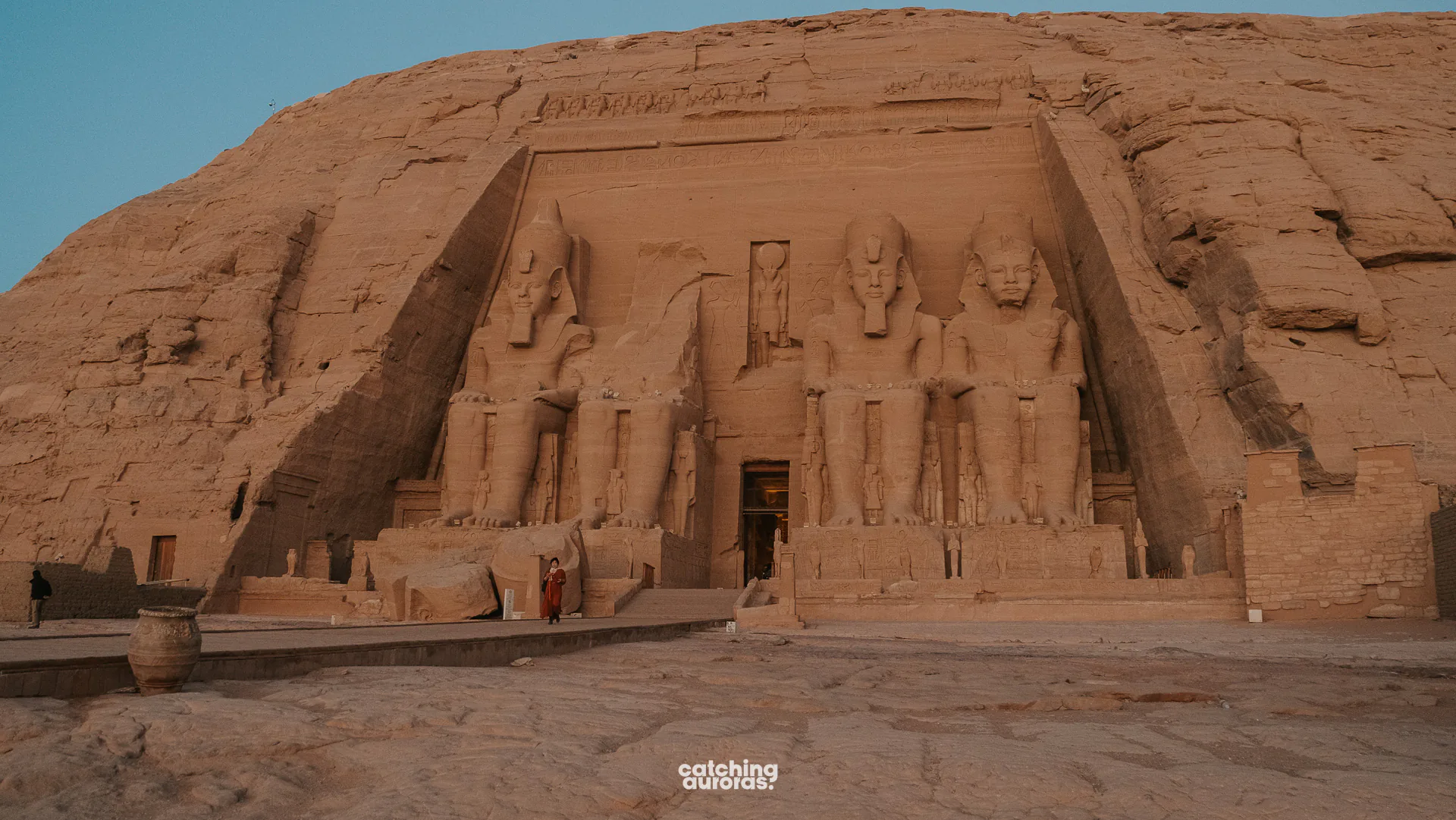
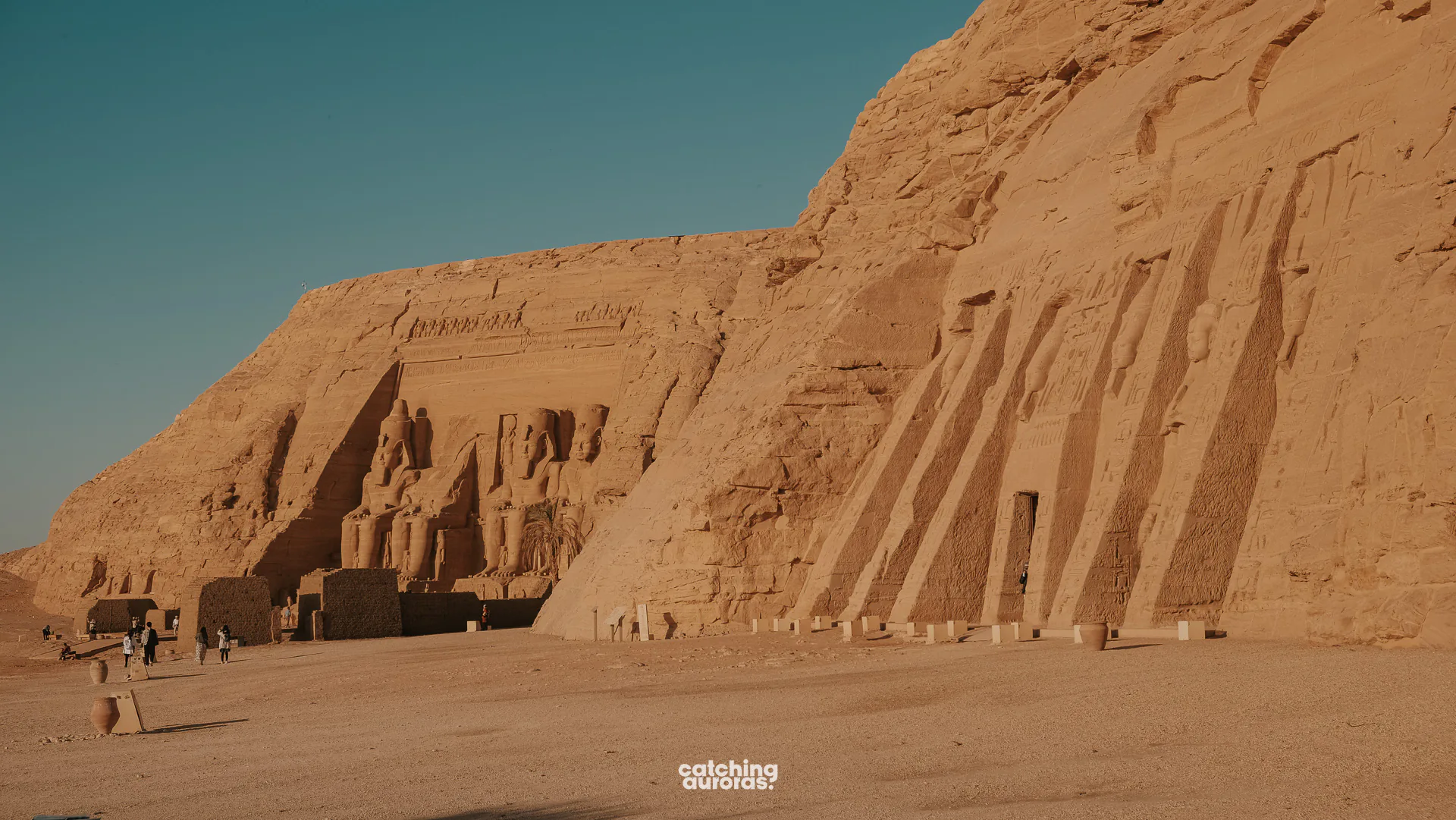
The Abu Simbel temples are two temples cut into the cliff around 1264 BC by Ramesses II. The one you see on the postcards is the Great Temple: four colossi on the facade, one of them in pieces from an ancient earthquake. Inside, a hall of standing statues of Ramesses leads to a sanctuary with Amun-Ra, Ra-Horakhty, Ptah, and Ramesses as a god (this guy really loved himself, didn’t he?). Twice a year, sunlight reaches the sanctuary statues during the Abu Simbel Sun Festival.
The Small Temple next door is dedicated to Hathor and Nefertari. It was much less crowded when we visited, but just as beautiful.
Then, during the construction of the Aswan High Dam in the 1960s, the temples were cut into blocks and rebuilt about 65m higher.
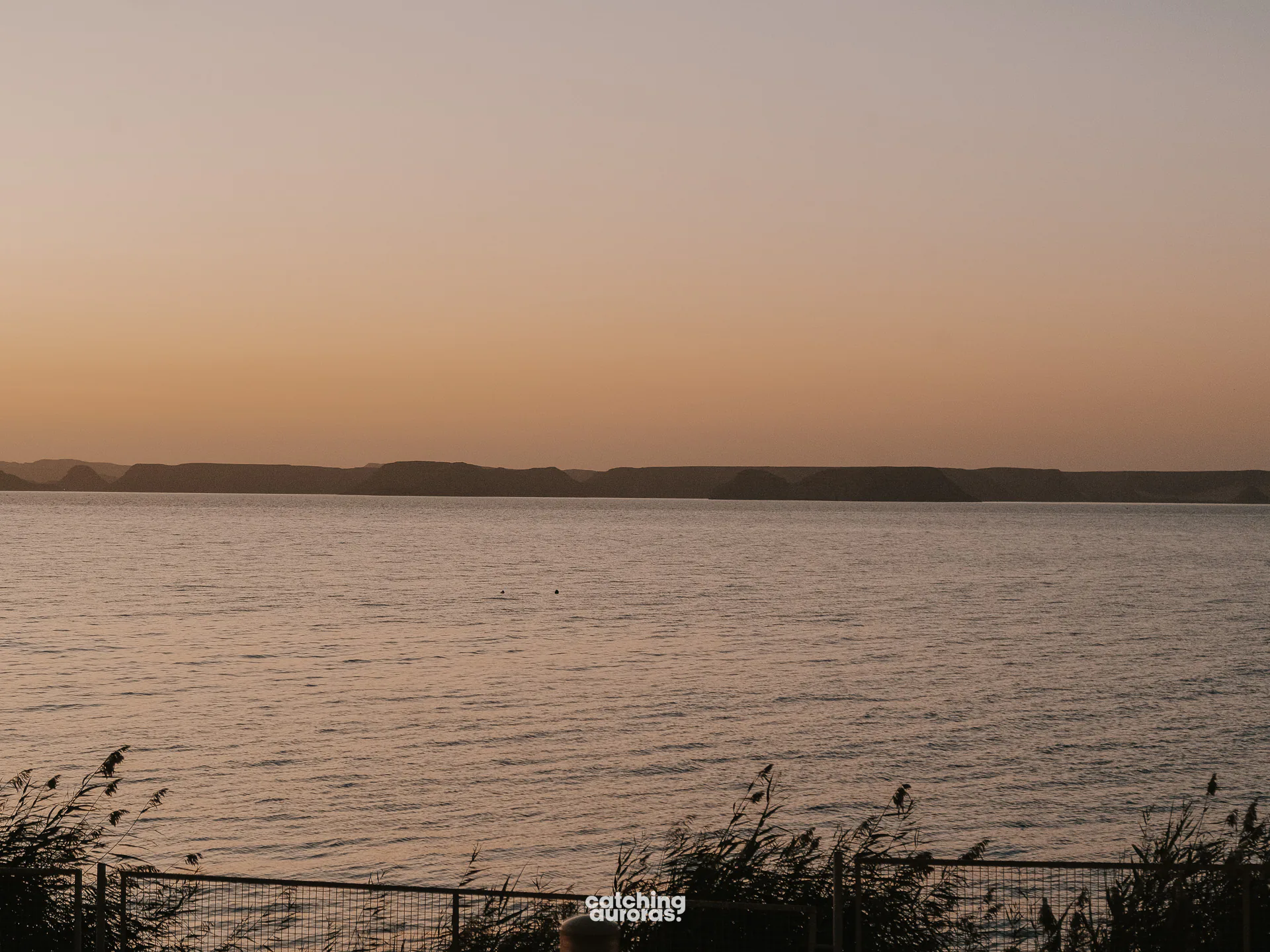
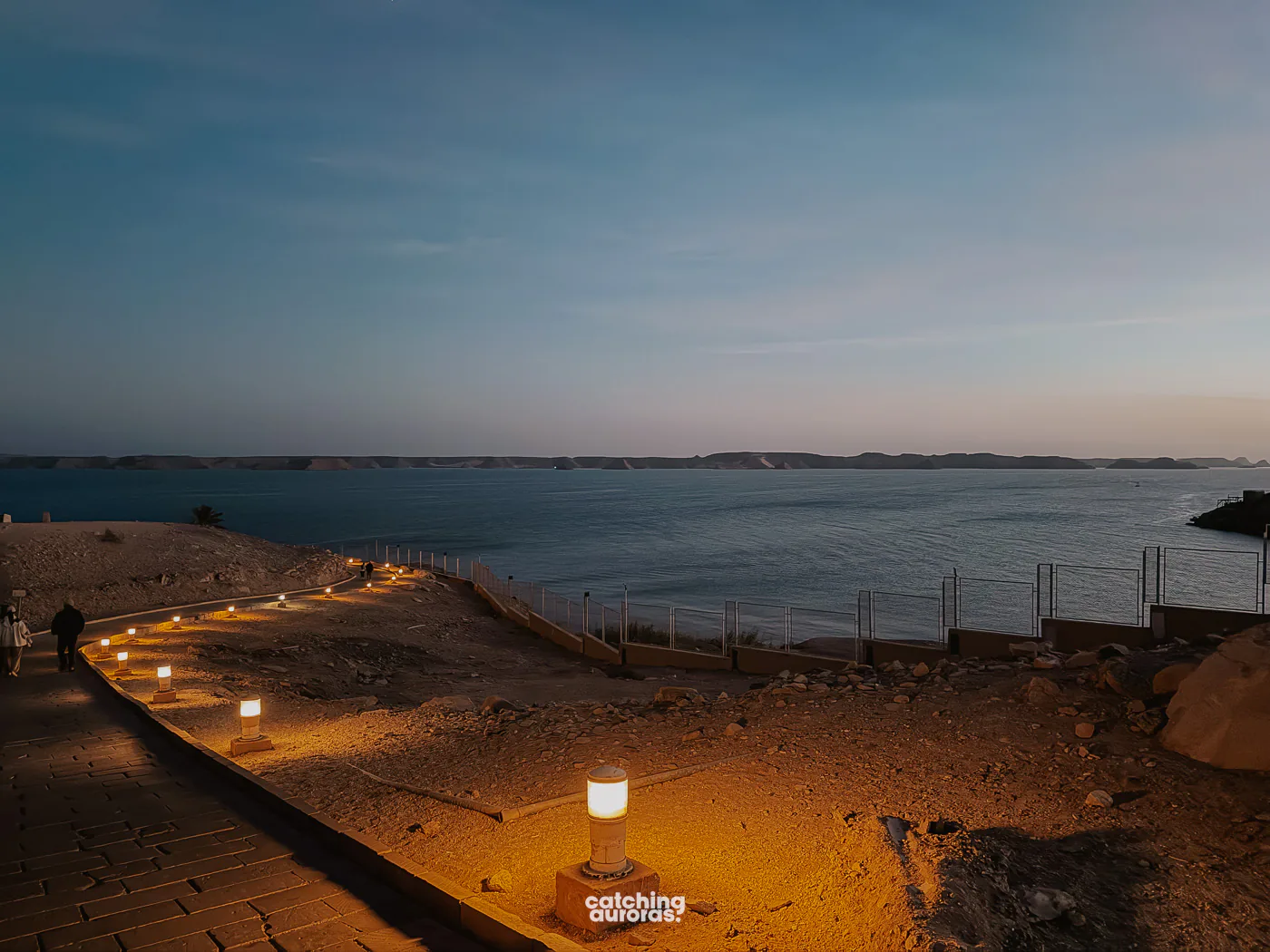
Fun fact: Abu Simbel is also the place of a memorable scene in Agatha Christie’s Death on the Nile, which I was reading during the trip. There is a boulder scene for the fans of the book which had me wondering whether you could climb on top of the temple (you can’t).
Where it is, and the drive from Aswan
Abu Simbel is on the western shore of Lake Nasser very close to Sudan, and it’s about 280 km from Aswan with nothing but desert in between. I found the desert drive long and tiring; there is very little to look at except for the sudden, surprising fields of greenery which are a result of the Toshka Project.
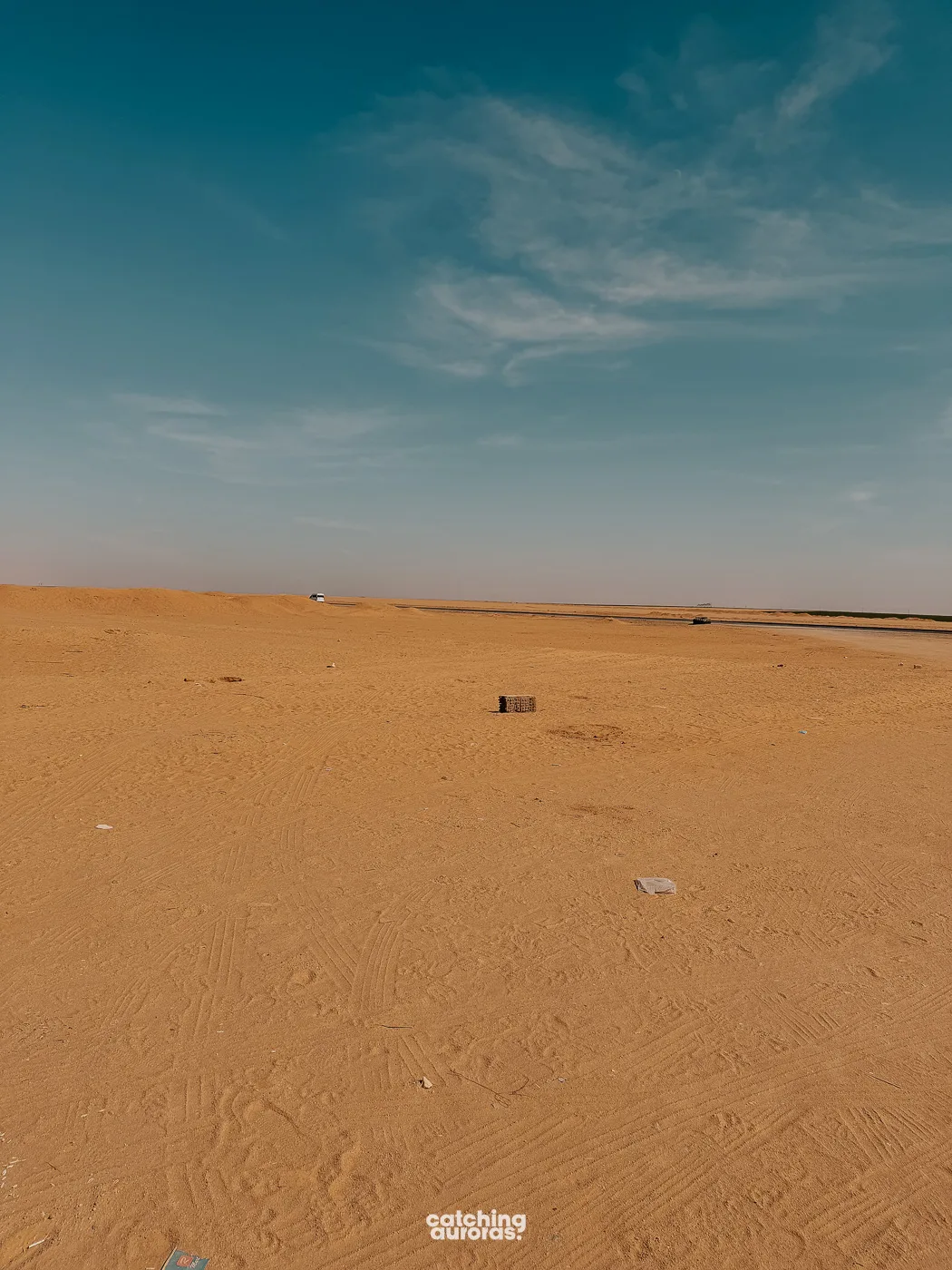
There is a rest stop in between with refreshments and a bathroom, where you are most likely to get overcharged. Plan on 3 to 3.5 hours each way, plus whatever the police checkpoints and a break will take.
Abu Simbel overnight – how it works
This was our rough itinerary for an overnight stay at Abu Simbel.
Day 1. Leave Aswan late in the morning. Three-ish hours of drive to Abu Simbel. Check in to the hotel. Attend the Sound and Light Show in the evening. Experience Abu Simbel at night.
Day 2. Early morning wakeup call to see the temples at 6. See the sun rise over the colossal statues. Get back to the hotel, have breakfast and leave for Aswan at 10 AM.
Here’s what our itinerary turned out to be: we left Aswan at 11 AM, arrived in Abu Simbel at 2:30 PM, went to the the Sound and Light Show in the evening. Overnight stay at Tuya Hotel. Visited the temples again at 6 AM, saw Abu Simbel at sunrise, and came back to the hotel. Left Abu Simbel at 10 AM and returned to Aswan for lunch.
Getting there and back on a budget was the main issue. Which brings me to…
How to get from Aswan to Abu Simbel (and back)
Private car
A private car is the simplest option if you want control over the timing.
For a day trip: The most comfortable option, and potentially better value per person if you are travelling as a group. Leave at whatever time you want, stay at Abu Simbel for longer without anyone hurrying you along and get back when you want. Agree the waiting time and pickup times before you set off.
For an overnight trip: This is where it gets expensive. You will either need to ask the driver to stay overnight in Abu Simbel (this was expensive and we didn’t want to do it) or book the cab for one-way, in which case you will end up paying for the driver for both ways anyway. We chose this option and paid around US$100 to get to Abu Simbel. This allowed us to leave Aswan at 11 AM after a much-needed rest and reach Abu Simbel by 2:30 PM.
Organised day tours
Day tours usually have a pickup in Aswan around 3:30 to 4:30 AM in a bus or minibus. You will reach around 6:30 to 8 AM. Most then allow around two hours at the temples. You will leave Abu Simbel around 9 AM to 10 AM and get back to Aswan by 12:30 PM to 1 PM.
They will take care of the tickets and there is no need to haggle anywhere with anyone. It can cost you between US$40 per person (in a shared mini bus) to US$140 per person (in a private car).
This option is best if you just want to visit Abu Simbel as a day trip and get back to Aswan on the same day. If you want to spend more time in Abu Simbel, or get the statues all to yourself, this is not the option to go for since you will be arriving with all the other day tours.
Flying from Aswan to Abu Simbel
The Abu Simbel Airport (ABS) is a small airport located 1 km from the town centre. EgyptAir and Air Cairo both fly from Aswan to Abu Simbel with a flying time of 45 minutes. On paper, this sounds good. In practice, the flight didn’t fit our plan and cost over US$100 each. Add the airport transfers at both ends and two hours you need to get through security, it wasn’t saving us any time.
Aswan to Abu Simbel by public bus
Cheapest option. There is a public bus scheduled to leave Aswan Bus Station at 8 AM every day and reach Abu Simbel around 11:30 AM to 12 PM. It costs you around EGP 100 to EGP 200 per person. This might be the most budget-friendly option if you are planning to do an overnight trip. But if you want to do a day trip, it’s much harder since the return bus is at 1 PM, giving you only an hour to reach the site, see everything and get back. This is only an option if you want to start questioning your life.
The bus departs once it’s full and you can’t prebook the seats. Which means you will need to arrive an hour early at the bus station to buy tickets and to get a seat. That’s why we skipped it. After a late night flight to Aswan the previous day, we were in no condition to get up early to go figure out the public bus. We weren’t even sure whether it would fit our suitcase.
Shared minibus
Abu Simbel has a minibus station (Search Google Maps for the Abu Simbel minibus station as the location has changed in recent times) where you will find the shared minibuses to head back to Aswan. Fares can vary for foreign visitors, so ask your hotel what a fair price should be to avoid getting scammed. We were also told that the security checkpoints close tourist traffic after 5 PM so confirm the current road rules and reach the station on time.
We took a minibus on our way back, but not from the station. Our host at the hotel managed to book us two seats in an air-conditioned minibus which cost us EGP 1,000 per person. This was actually a tour bus which had come from Aswan that morning and was leaving around 10 AM back to Aswan. We could have opted for a similar service from Aswan to Abu Simbel as well, but that would have left at 4 AM. It would have got us to Abu Simbel by 8 AM, with nothing to do until the evening show. So we took the 11 AM car instead.
Is there still a convoy to Abu Simbel?
No.
Foreign visitors used to leave Aswan only in a fixed early-morning police escort. Everyone left together and arrived together. That rule died years ago. Cars can go on their own now. You will still get stopped at checkpoints.
Operators still say “convoy” out of habit.
- Shared day tours still leave Aswan around 4 AM to reach the temples around 7:30 AM.
- Some groups still assemble, get a nod from security, then drive at their own speed.
- Private cars and hotel transfers leave when you agree. We were at the gate at 6 AM and still found many tour buses arriving at that time.
What to see inside the Abu Simbel temples
There are two temples at Abu Simbel, and both are included in the same ticket. Most people make a beeline for the Great Temple, which is understandable (I did that too), but do not rush past the Small Temple. It’s quieter, and it’s where you’ll get a photo without 40 people in it.
The Great Temple of Ramesses II
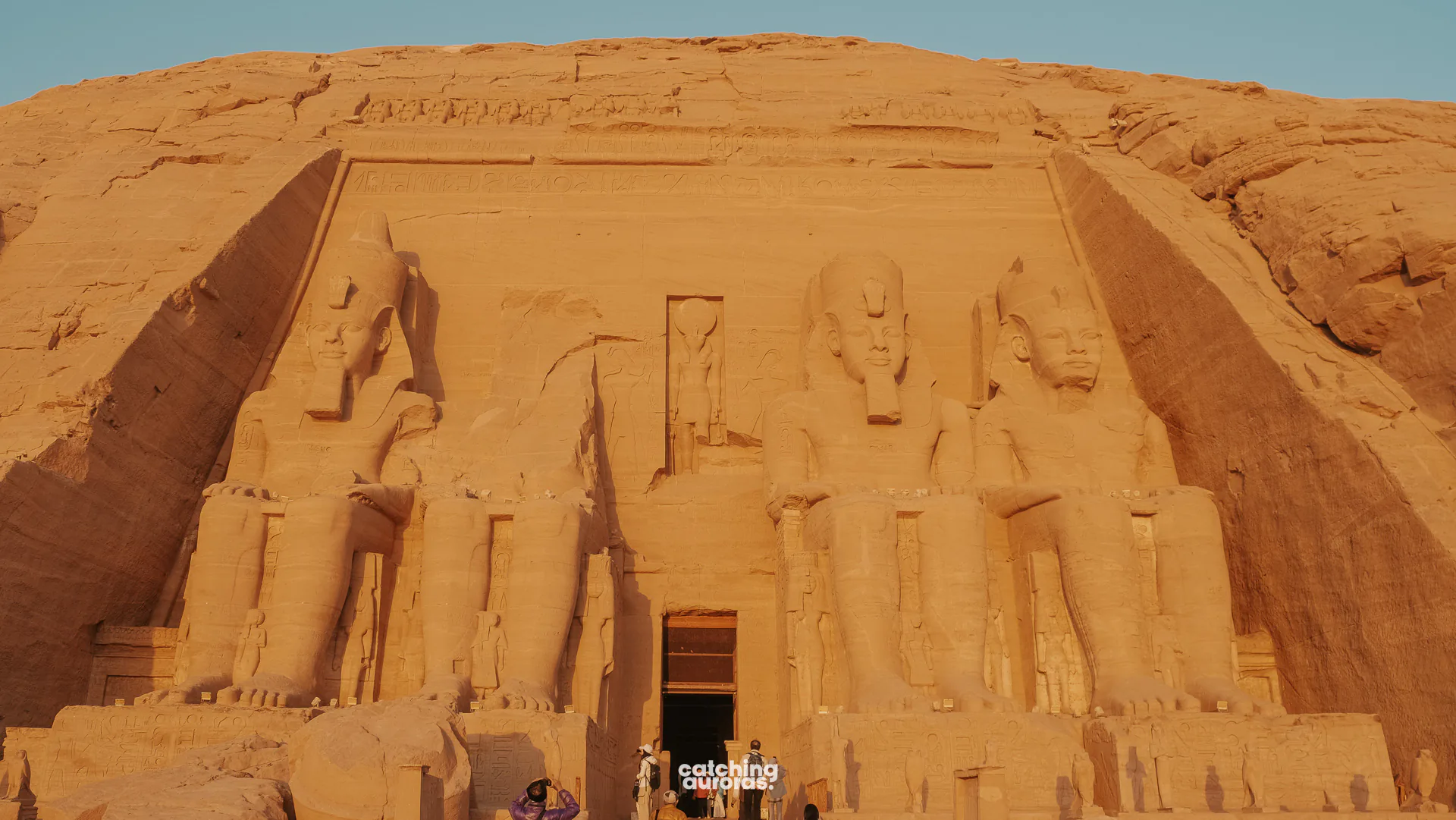
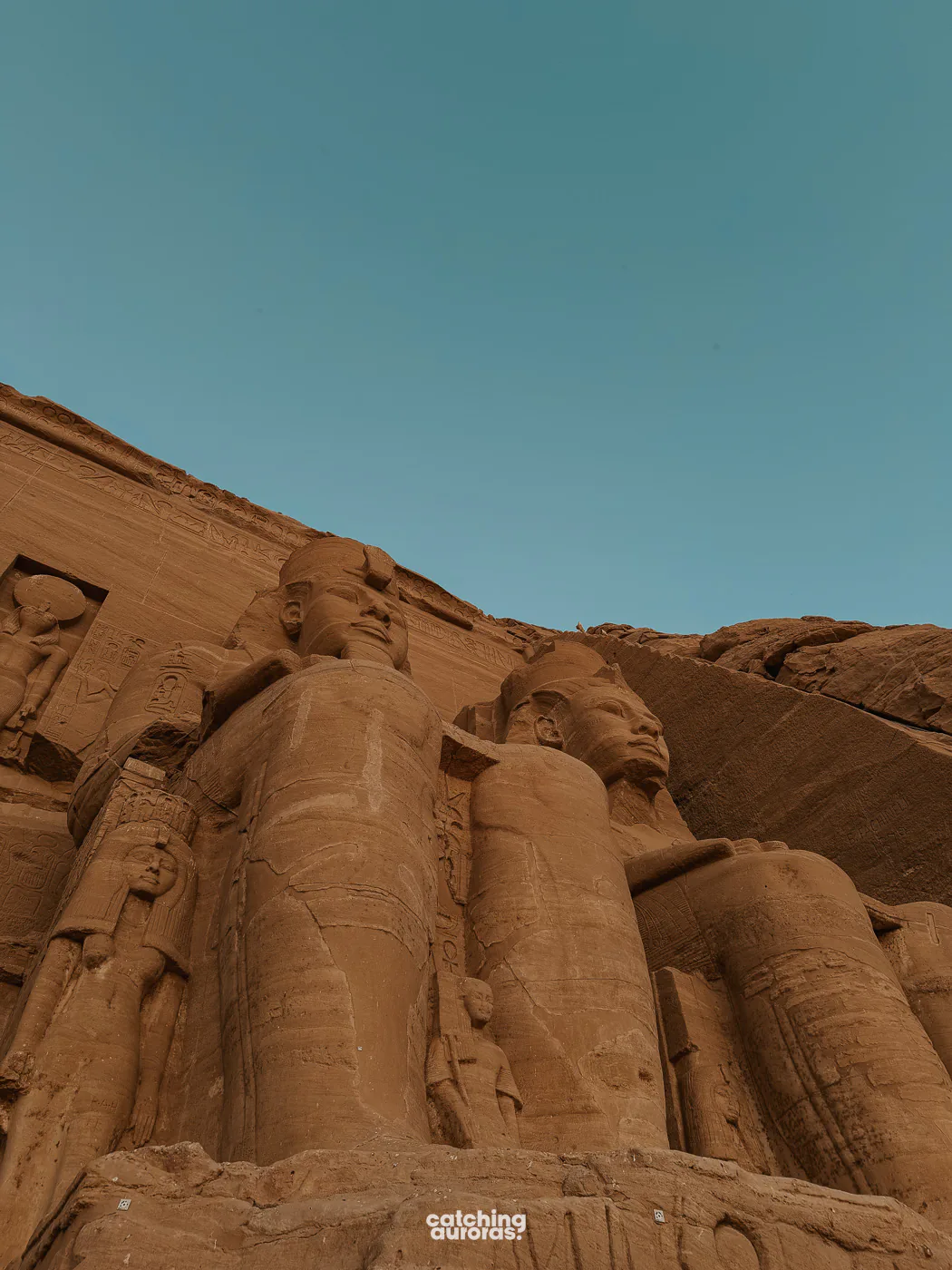
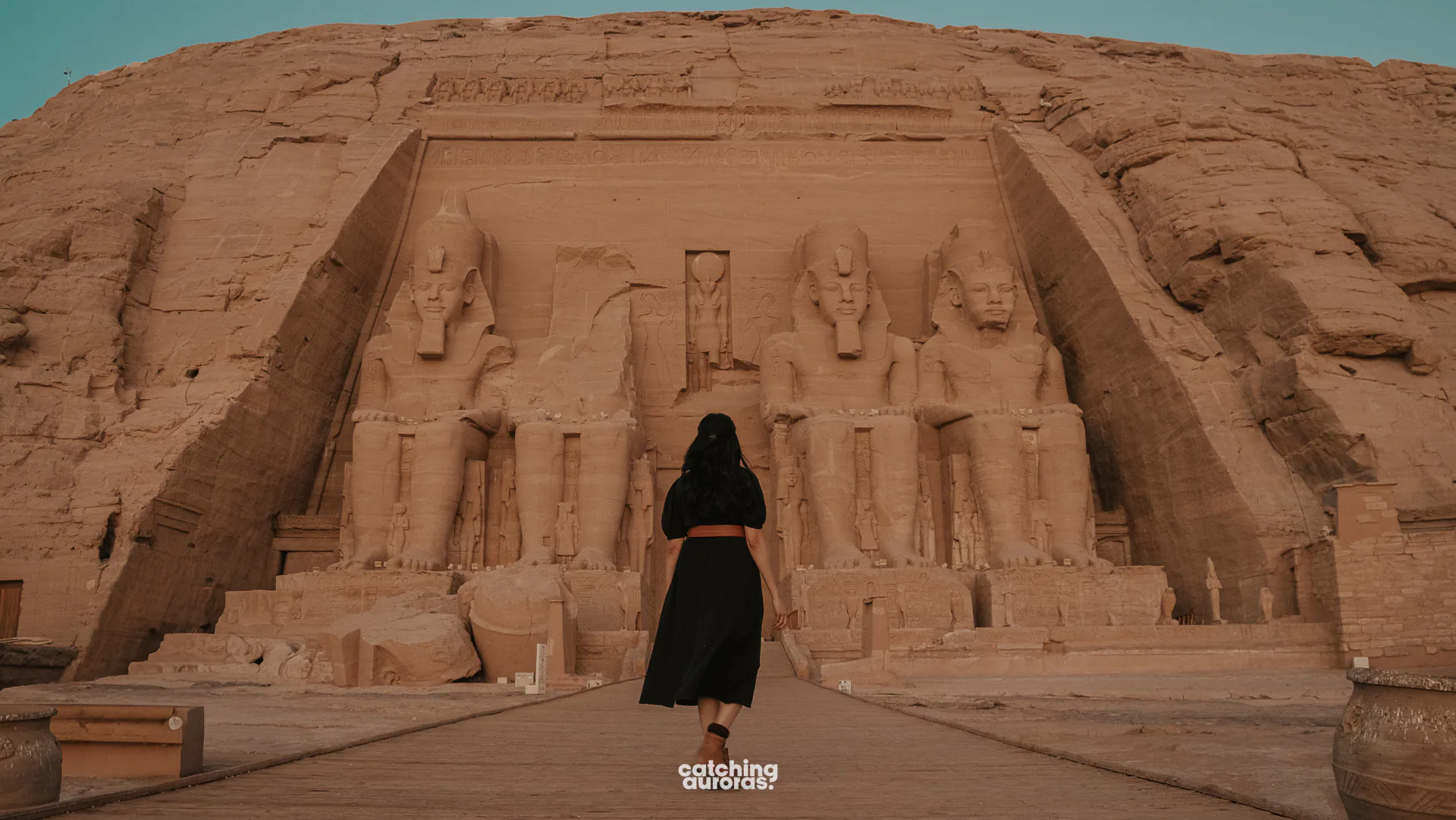
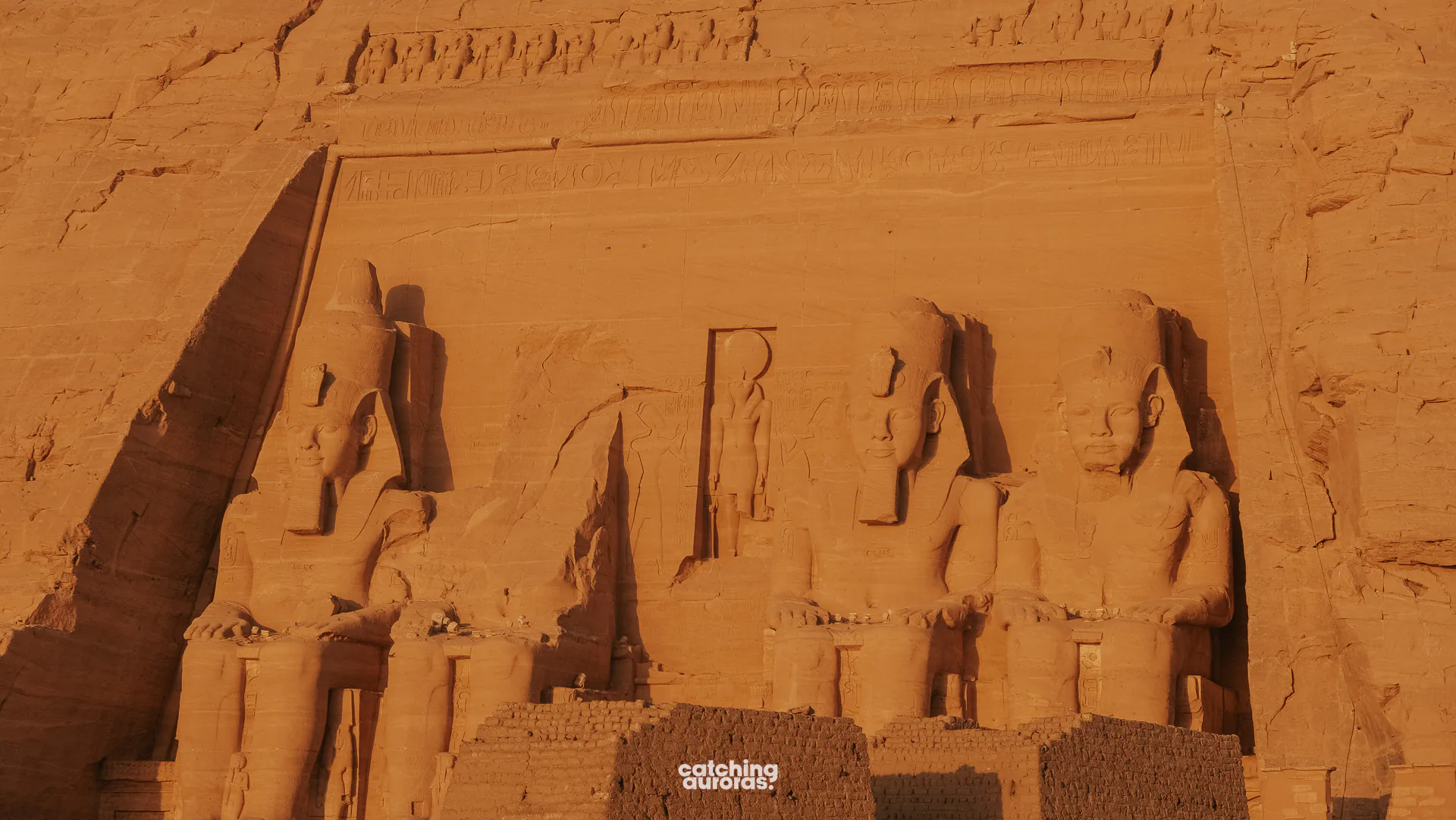
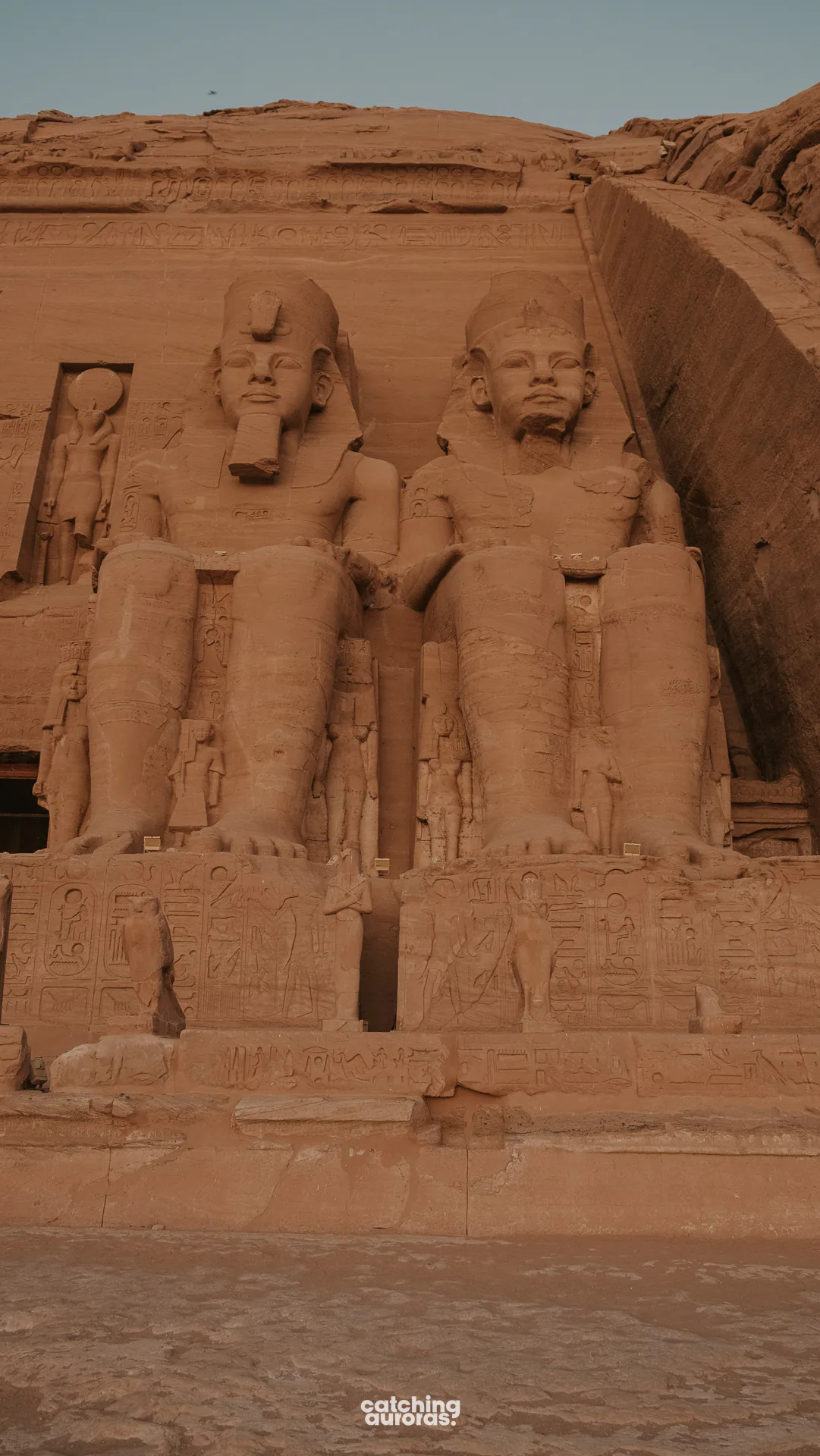
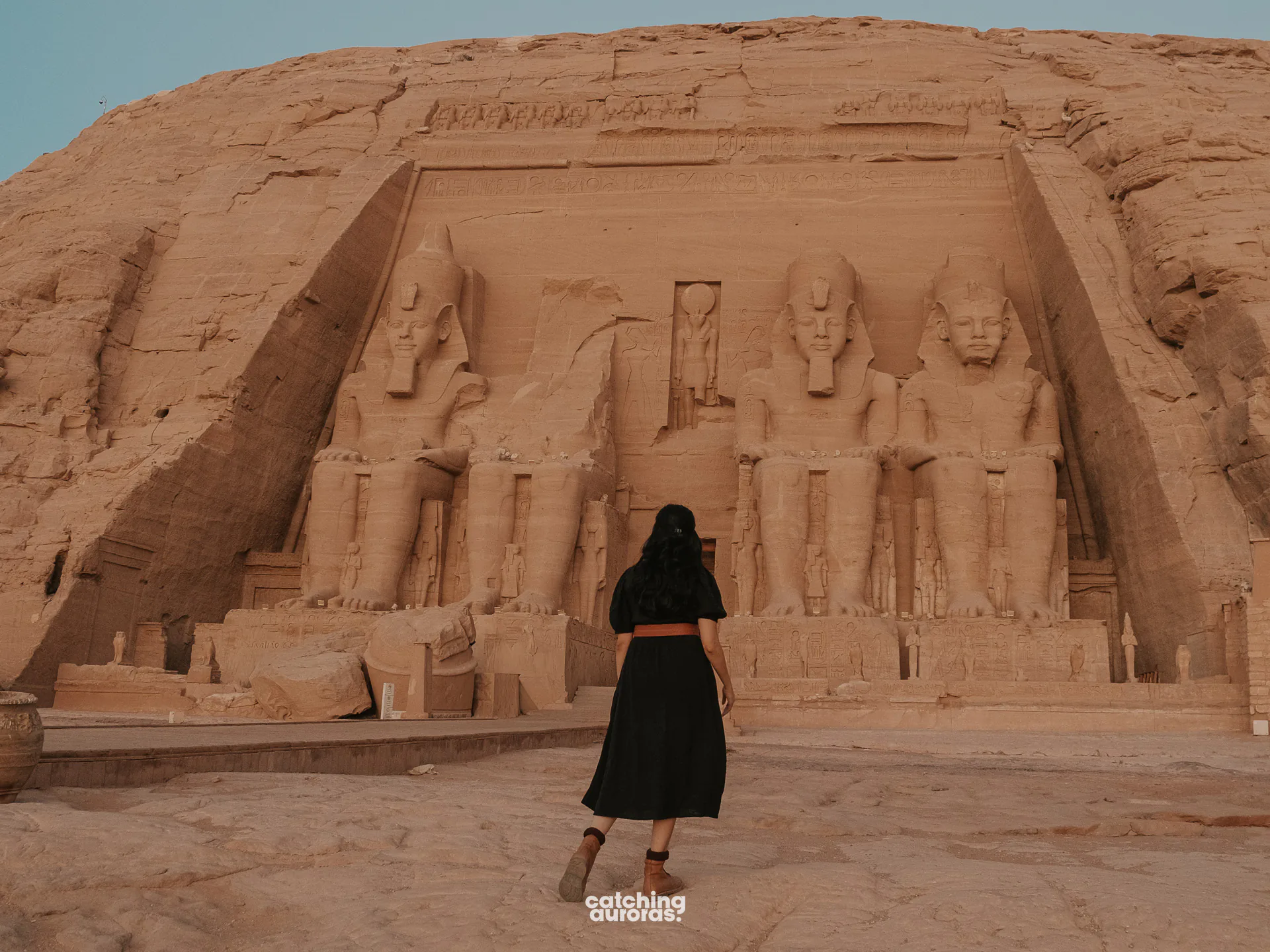
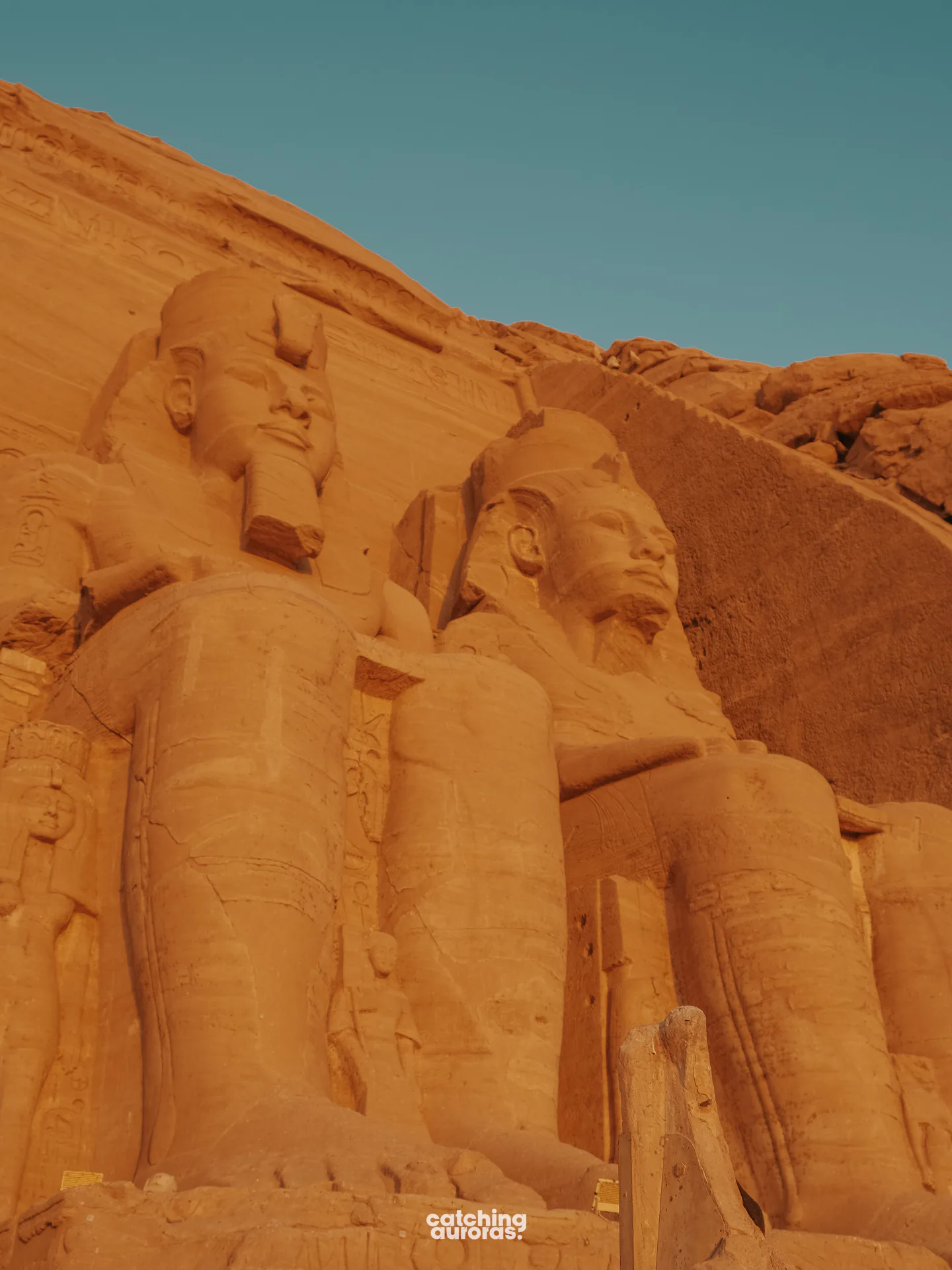
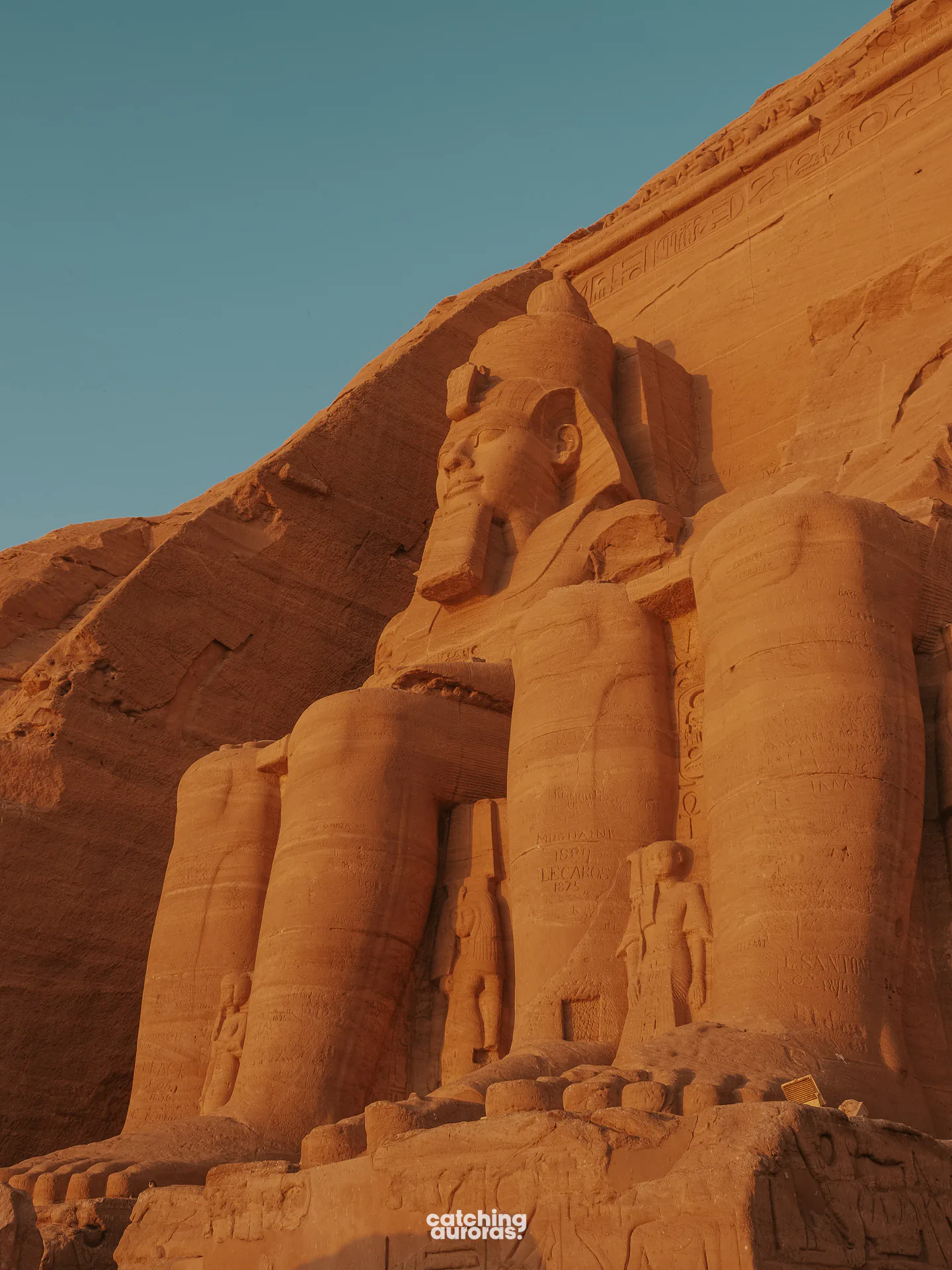
The Great Temple is the one you are most likely to associate with Abu Simbel: four enormous seated statues of Ramesses II cut into the cliff. One collapsed in an ancient earthquake, and its fragments still lie at the base of the facade.
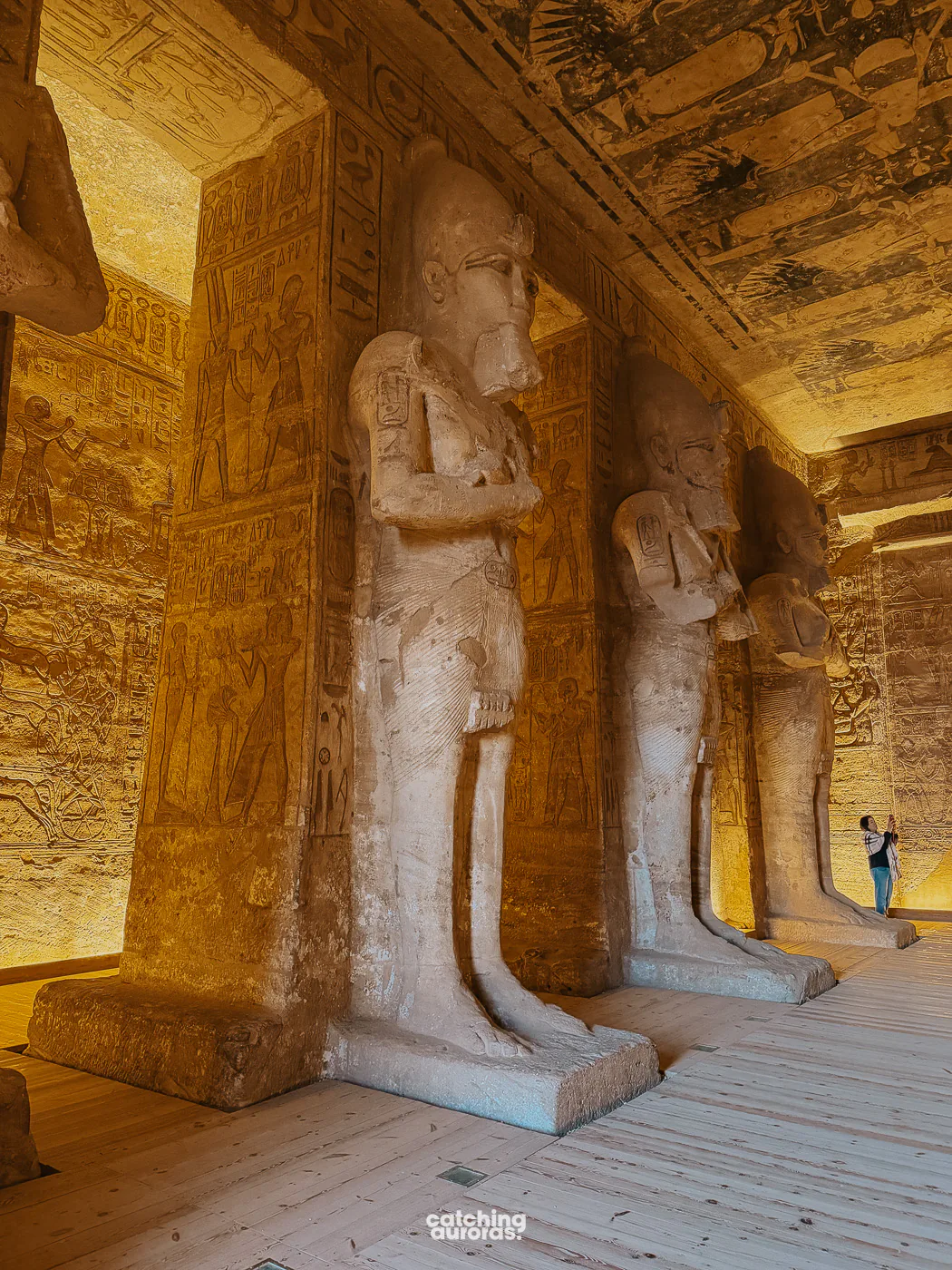
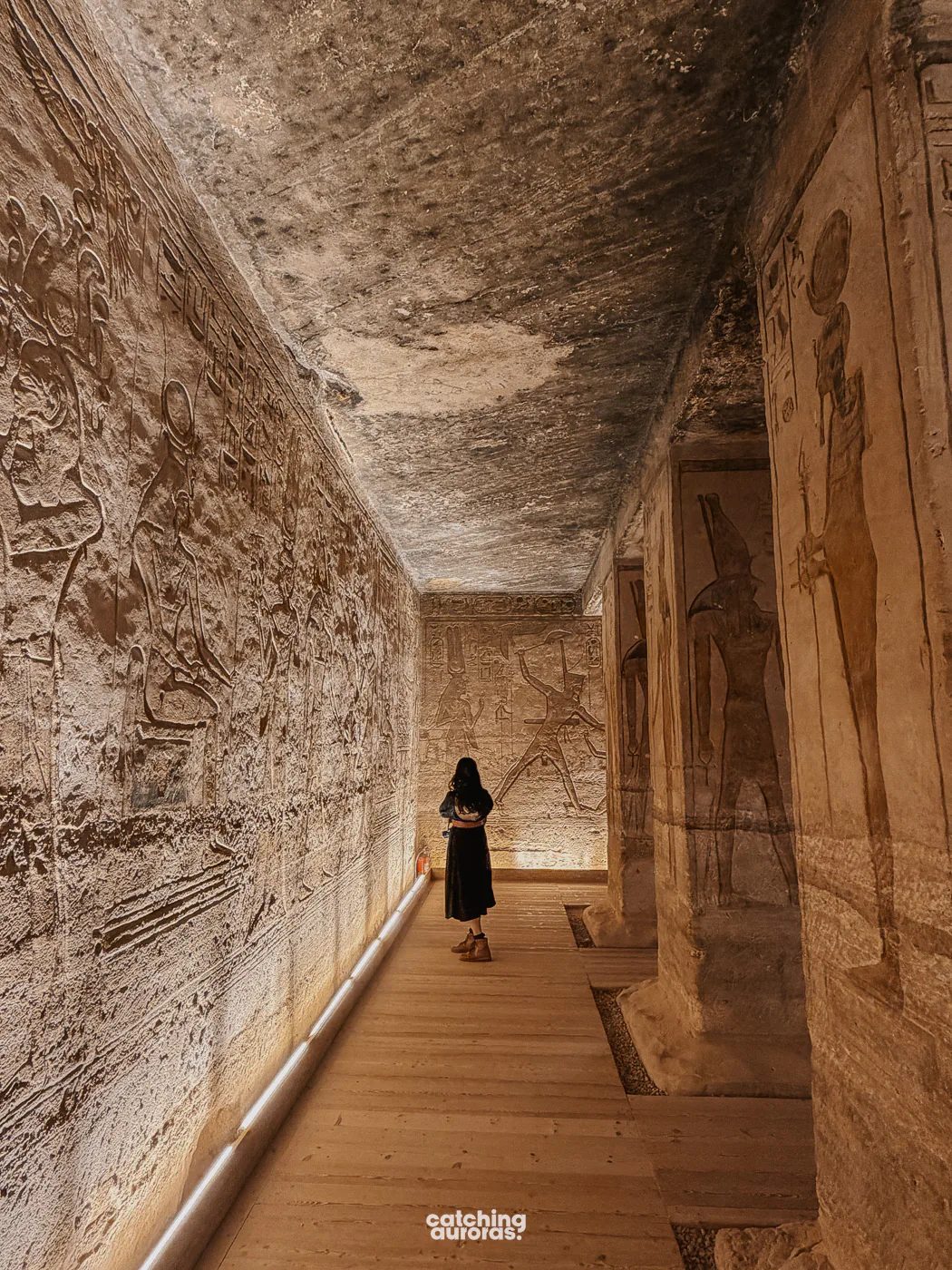
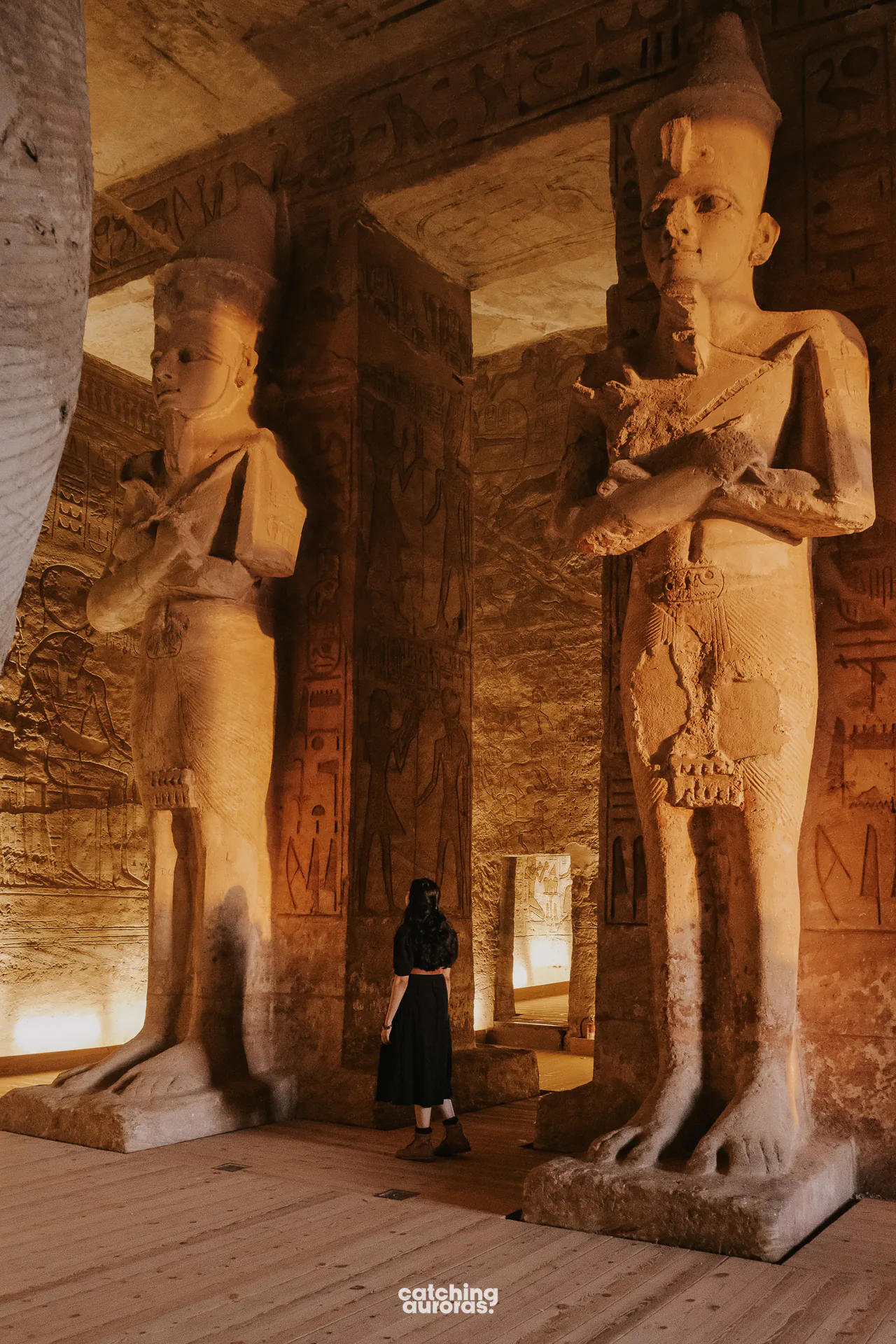
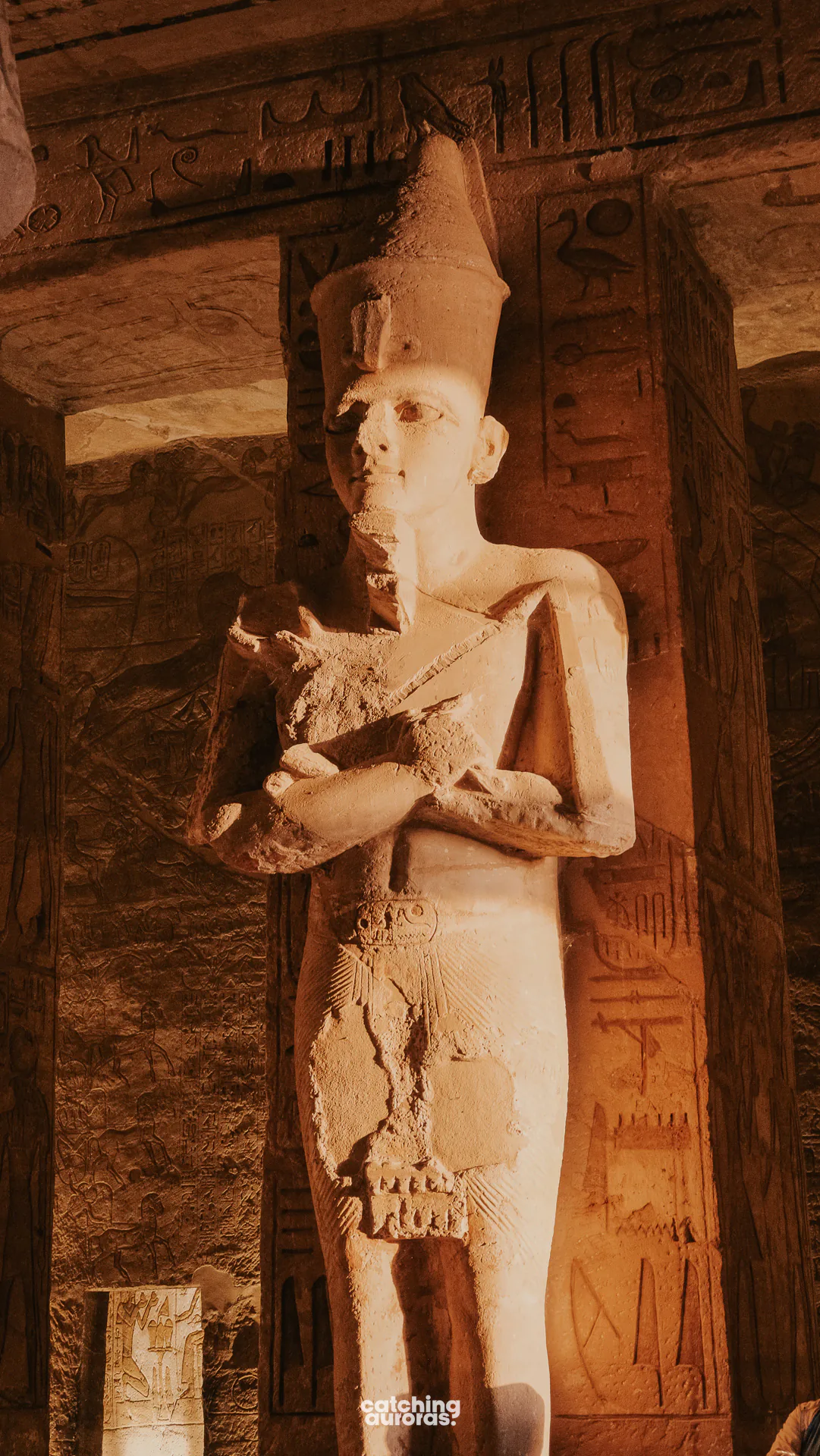
Go inside slowly. The first hall is lined with standing figures of Ramesses, and the walls are covered in reliefs celebrating his military victories, including scenes from the Battle of Kadesh.
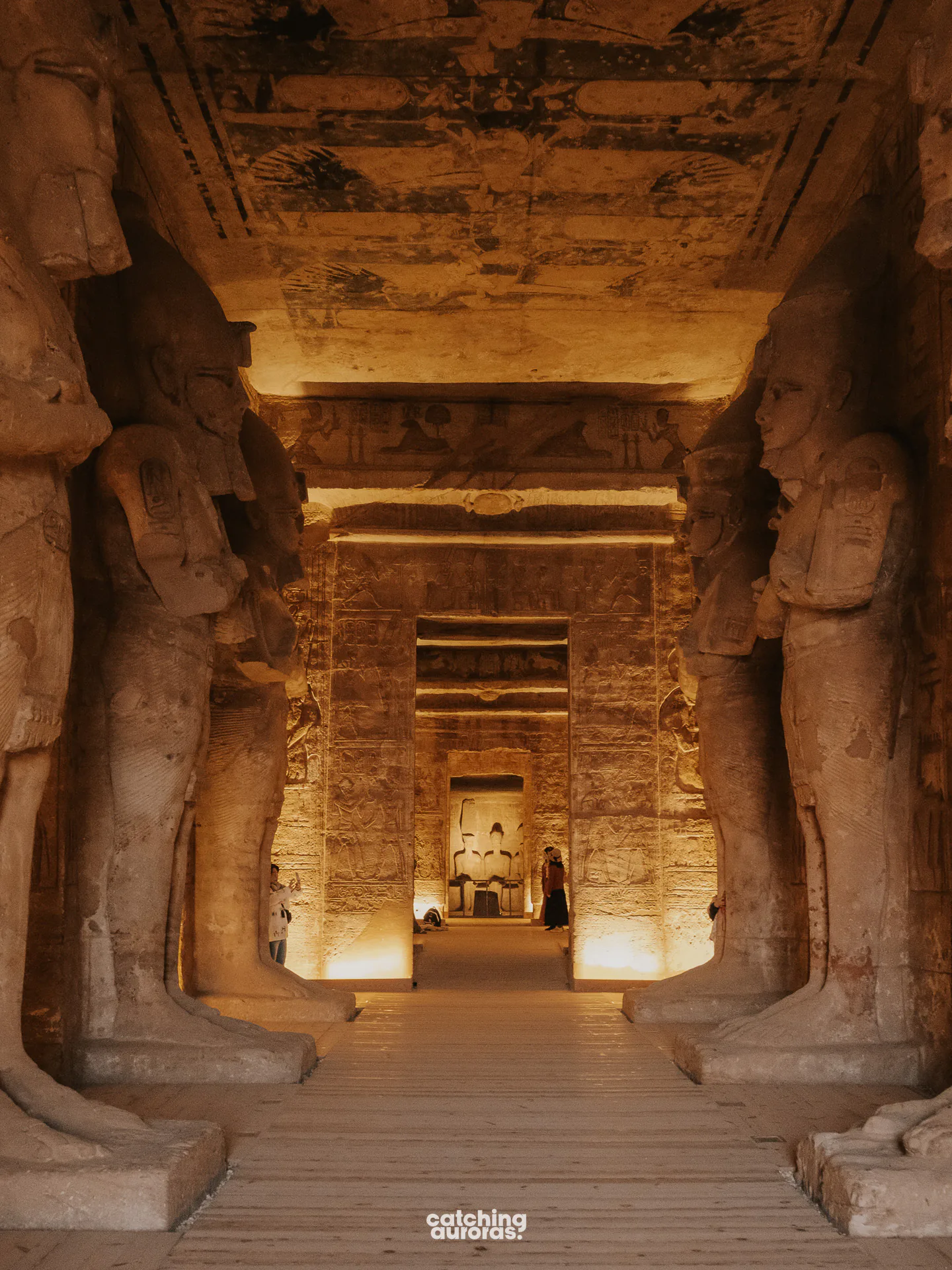
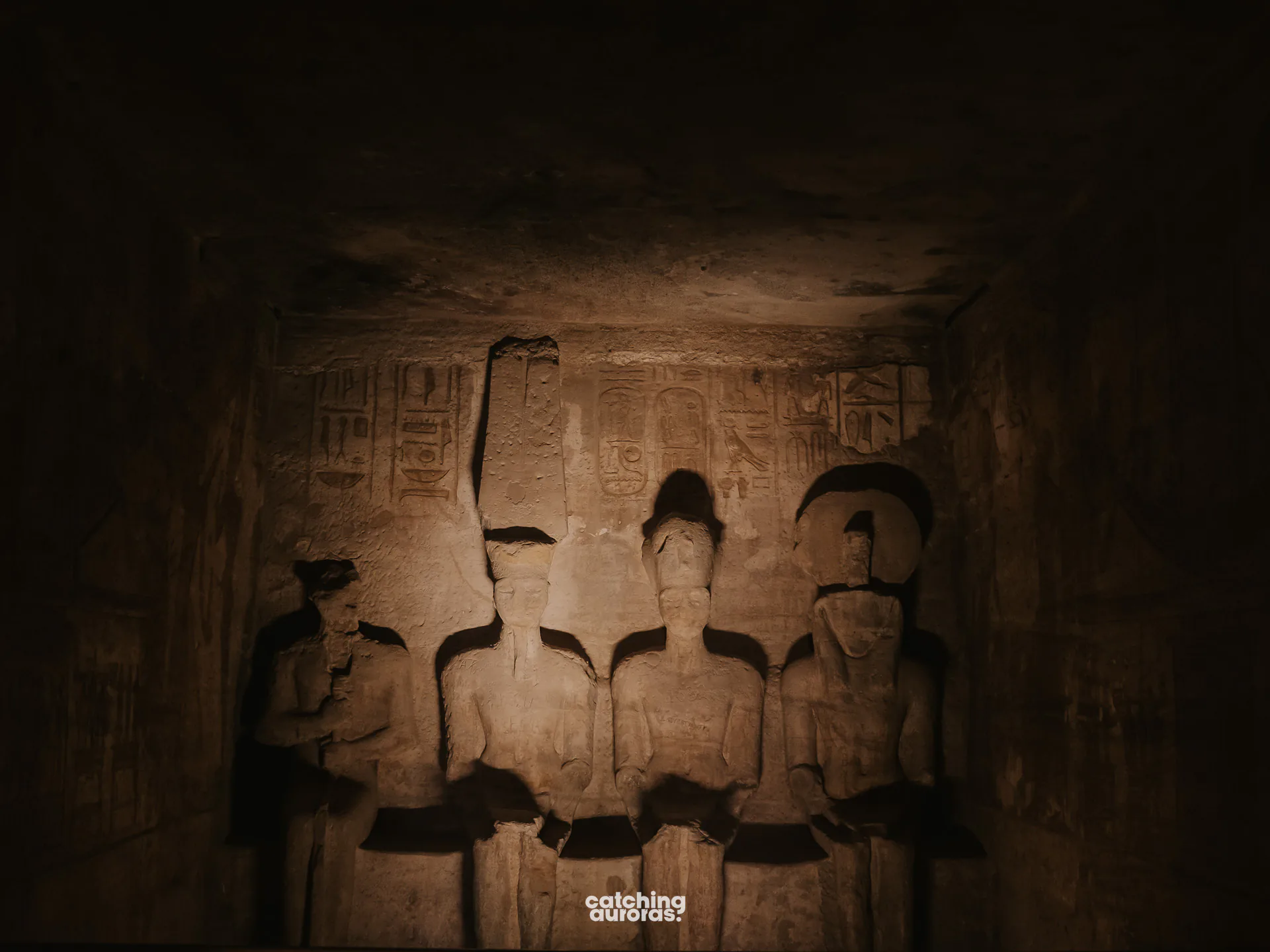
At the very back is the sanctuary, with four seated figures: Amun-Ra, Ra-Horakhty, Ptah and Ramesses II himself. This is the room reached by the sunlight during the Abu Simbel Sun Festival on 22 February and 22 October.
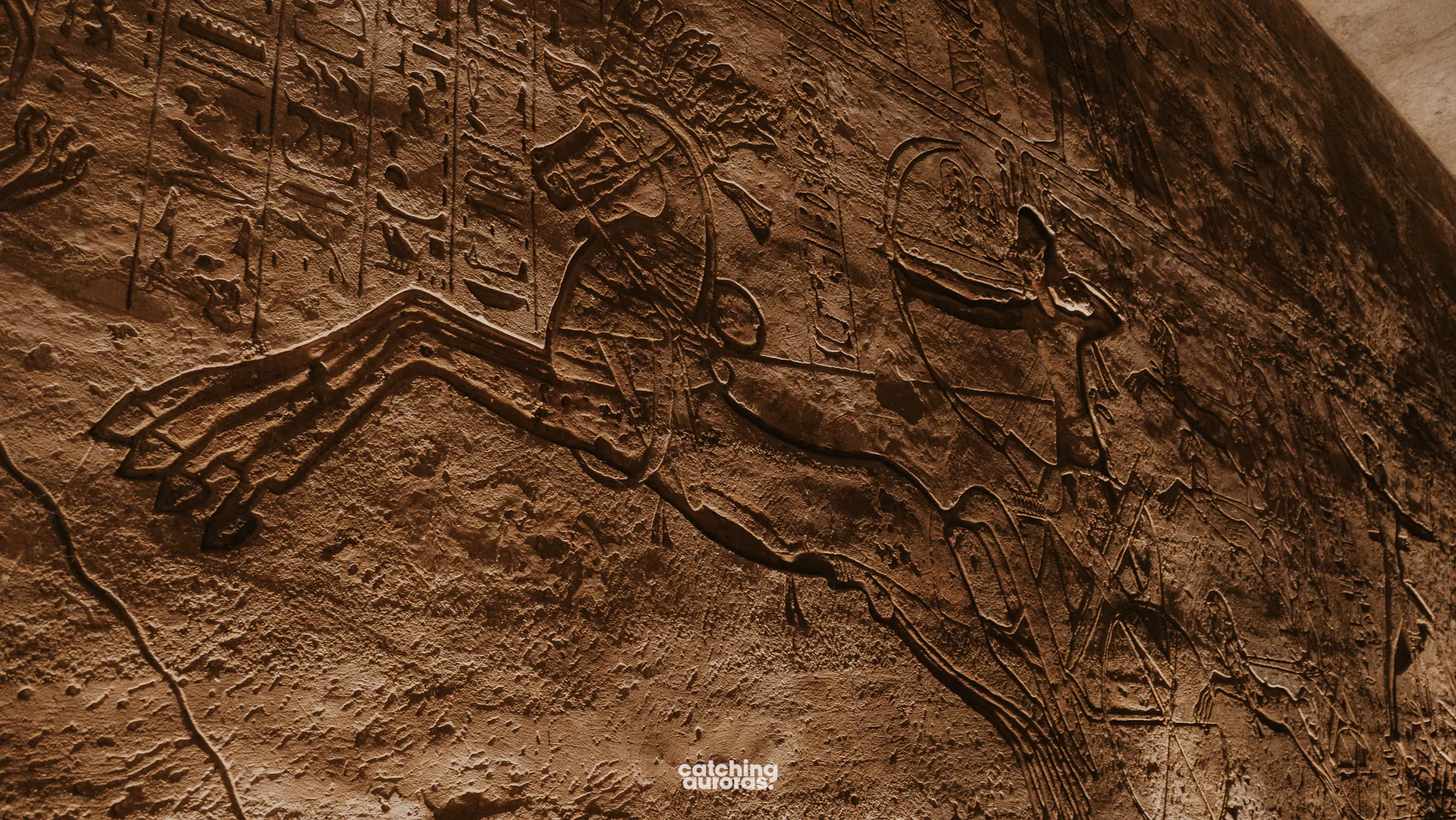
We spent around 30 minutes to an hour inside the Great Temple. Since it was early in the morning it was not too crowded. As the sun rose over Lake Nasser, the light moved down the standing statues one by one.
The Small Temple of Nefertari and Hathor
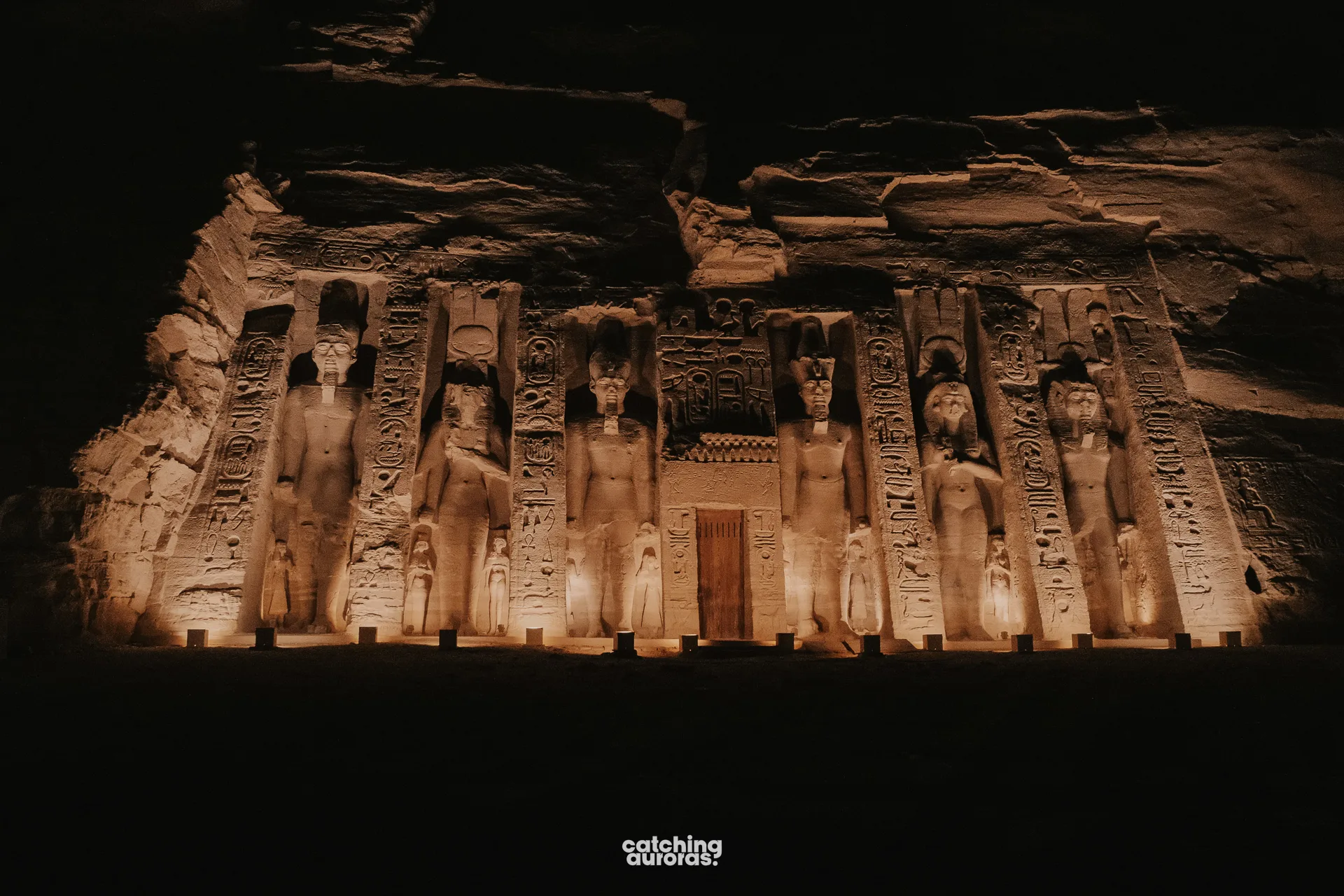
The Small Temple sits a short walk north of the Great Temple and is dedicated to Queen Nefertari and the goddess Hathor. Its facade has six statues: four of Ramesses II and two of Nefertari. What makes it unusual is that Nefertari is shown at almost the same size as her husband, which was rare to see in ancient Egypt.
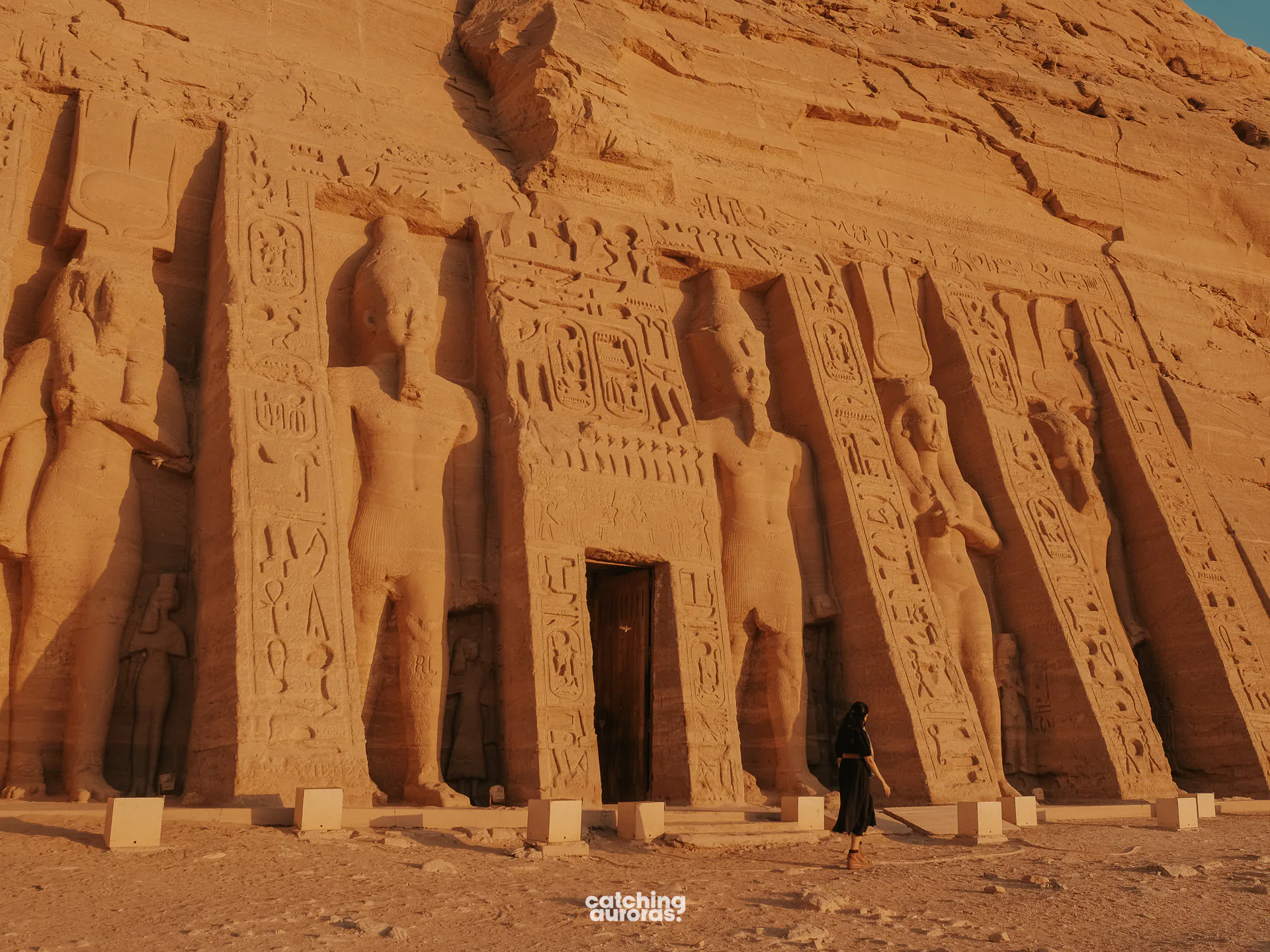
Inside, look for the Hathor-headed columns and reliefs of Nefertari making offerings to the gods.
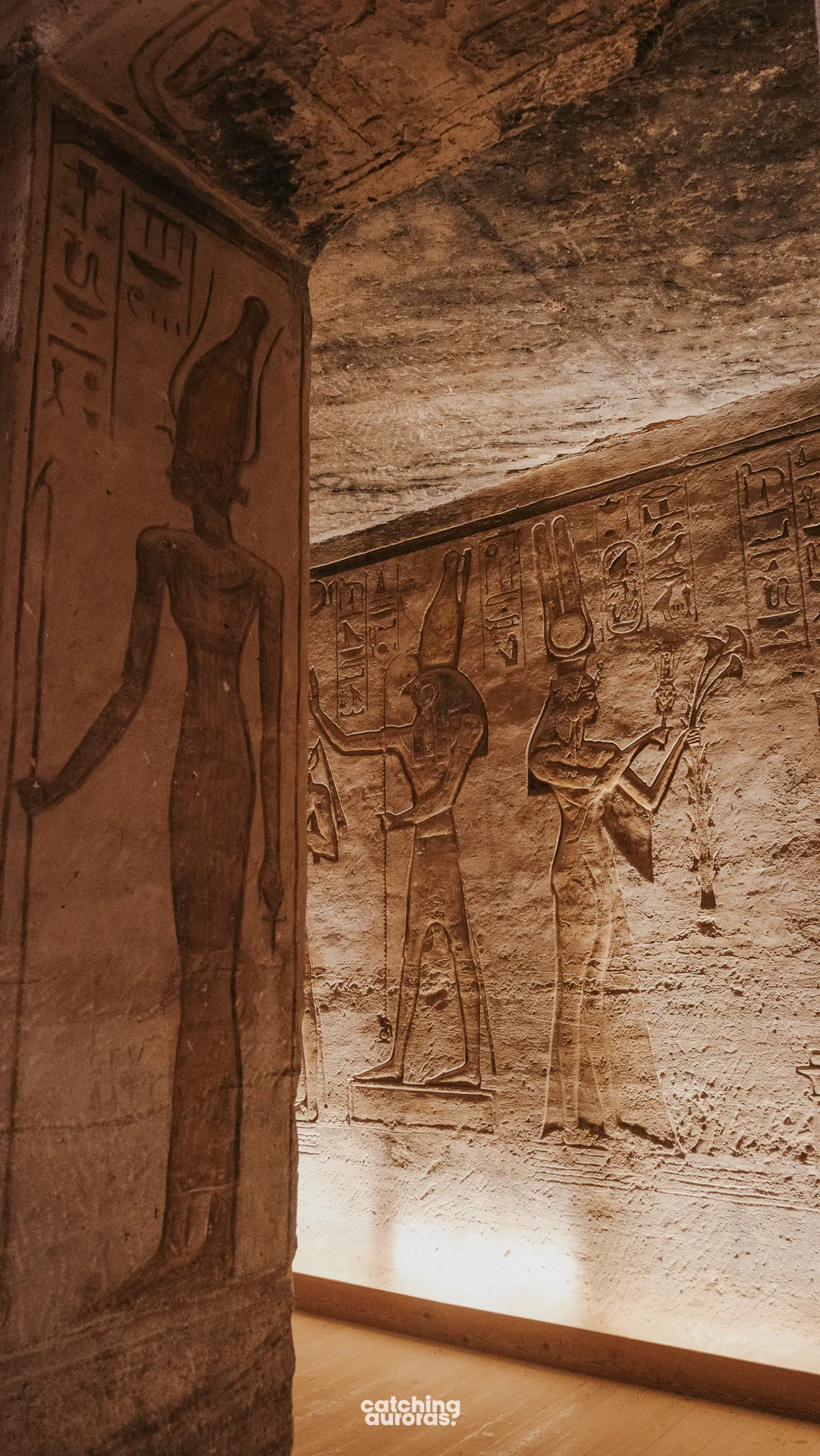
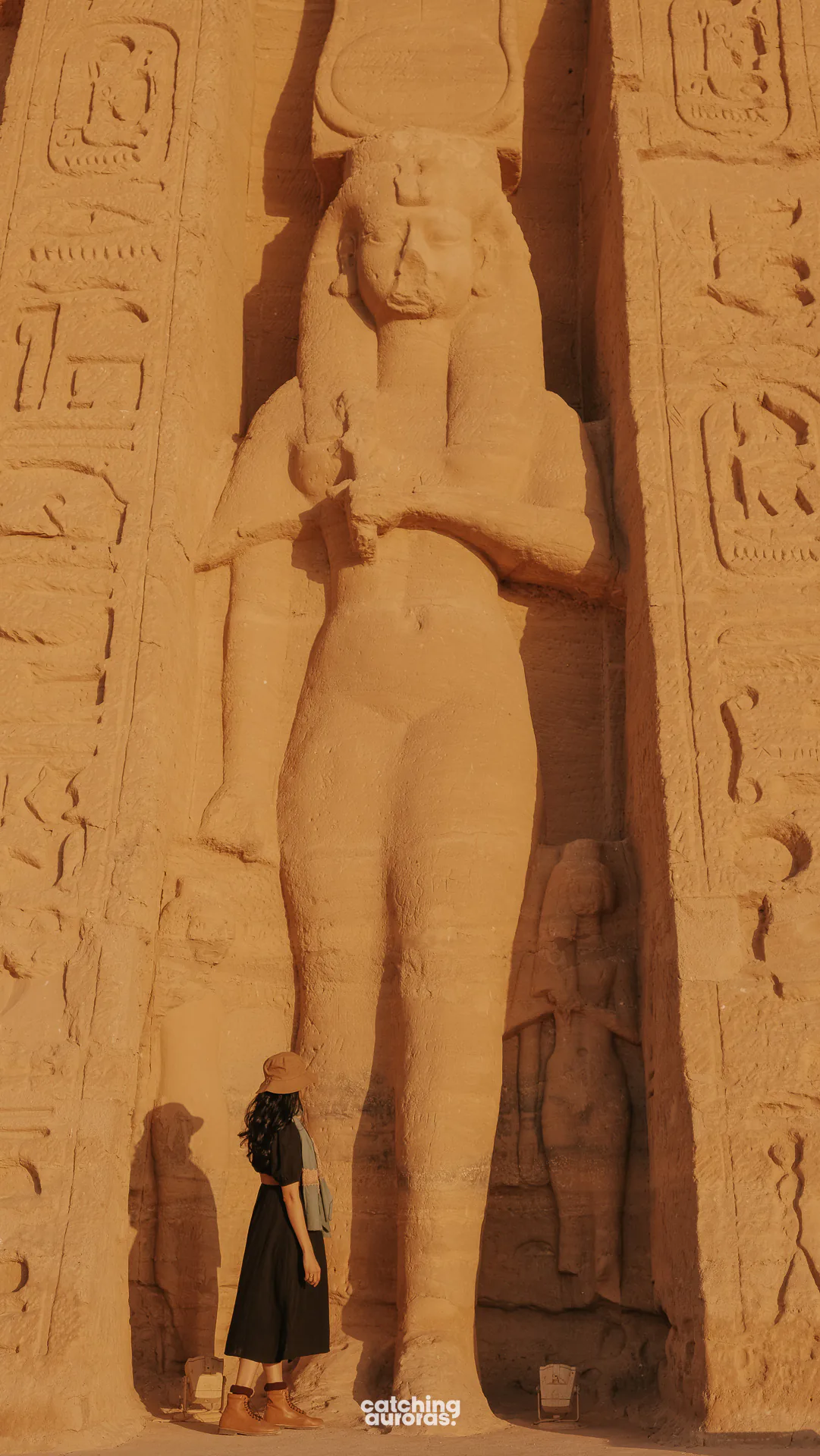
This was hardly crowded at all, compared to the Great Temple. We were alone in this temple when we went in even though it was past the tour bus arrival time.
Abu Simbel tickets and opening hours (2026)
Buy the tickets at the official ticket window in Abu Simbel or on the egymonuments.com portal. You will find plenty of people offering tickets outside at marked-up prices; ignore them.
Hours
- Ministry: 6 AM to 5 PM, daily.
- Portal: opens 6 AM, last entry 4 PM.
- Sound and Light Show starts at 6:30 PM and you can enter by 6 PM. The official page also lists an 8 PM and a 9 PM show. Check with your hotel for the latest info on the show timings for the day you visit.
Ticket prices for foreign visitors (last checked September 2026)
| Ticket | Price |
|---|---|
| Adult | EGP 750 (EGP 822 on portal) |
| Student (valid ID; portal says 24 and under) | EGP 375 (EGP 445.5 on portal) |
| Sun Festival adult (22 Feb & 22 Oct) | EGP 1,272 |
| Sun Festival student | EGP 670.5 |
| Sound and Light Show | EGP 1,000 |
The ticket prices keep fluctuating. Check the portal for the latest price. Parking is extra.
Abu Simbel Sound and Light Show
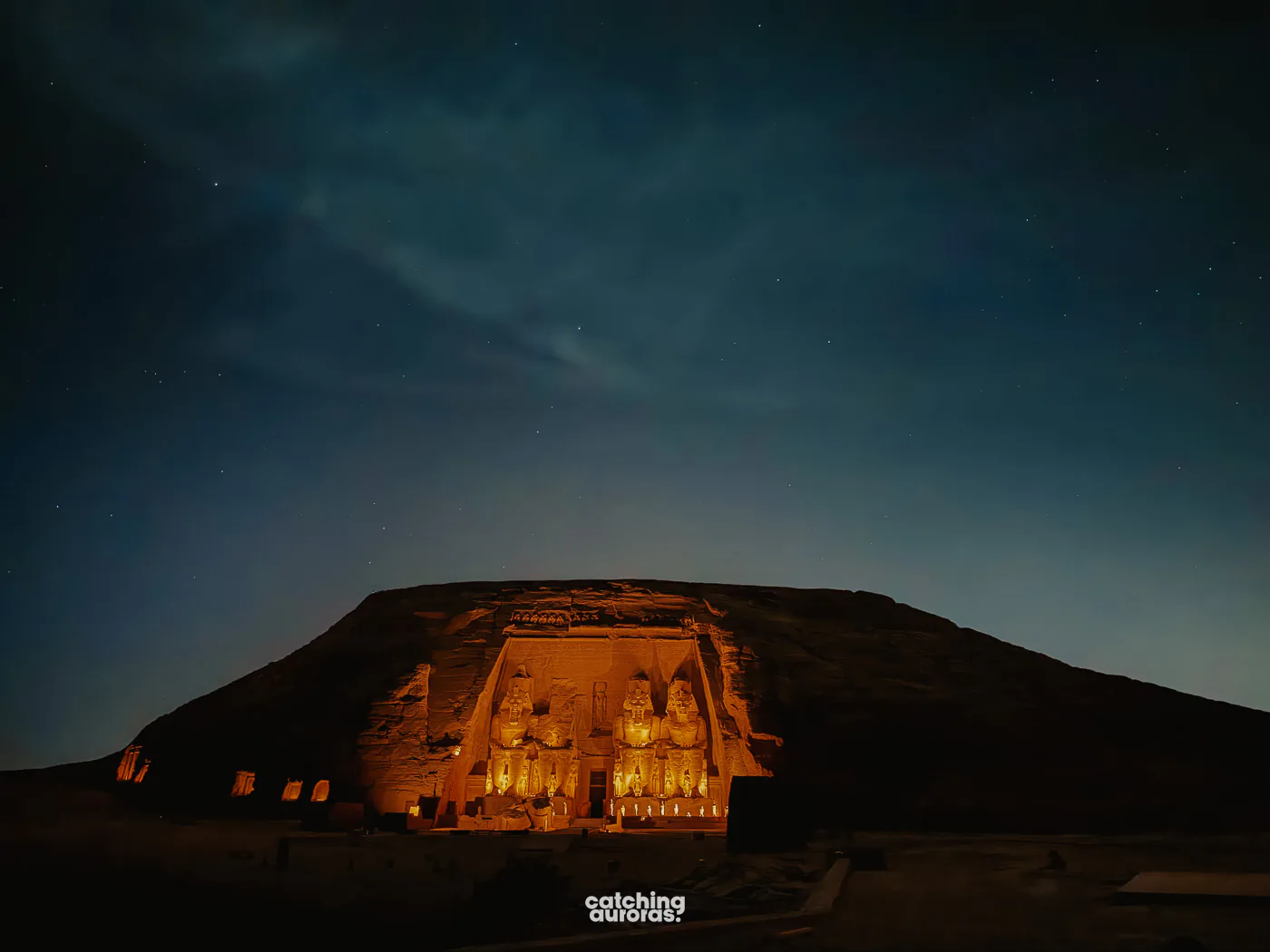
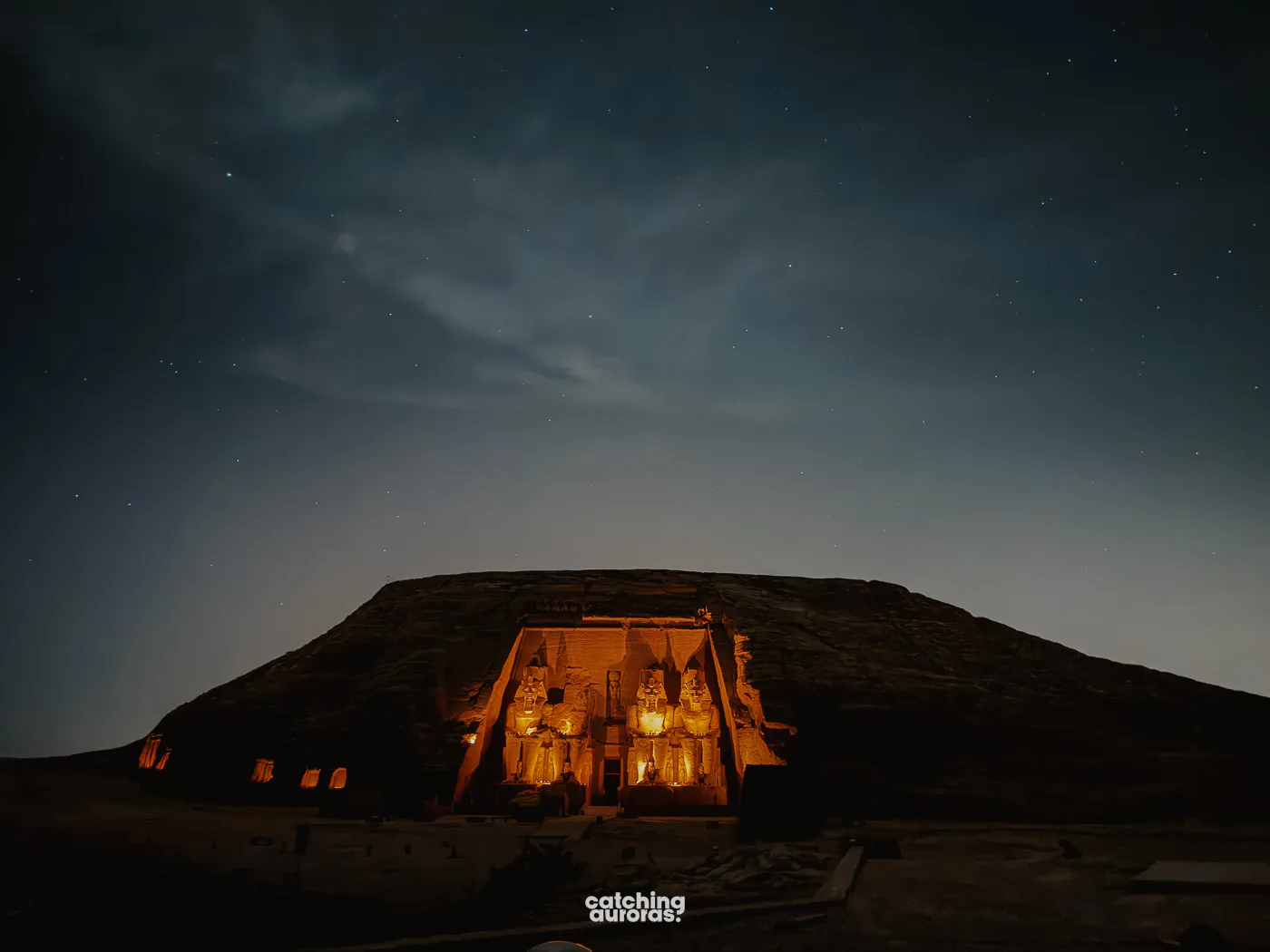
The Sound and Light Show is a good way to experience some of the temples in Egypt at night and it’s especially true in Abu Simbel. The show itself is nothing to write home about – the narration and projections are dated, and some of the English translation is clunky, but seeing the temples lit up at night under the starry sky is reason enough for staying overnight in Abu Simbel.
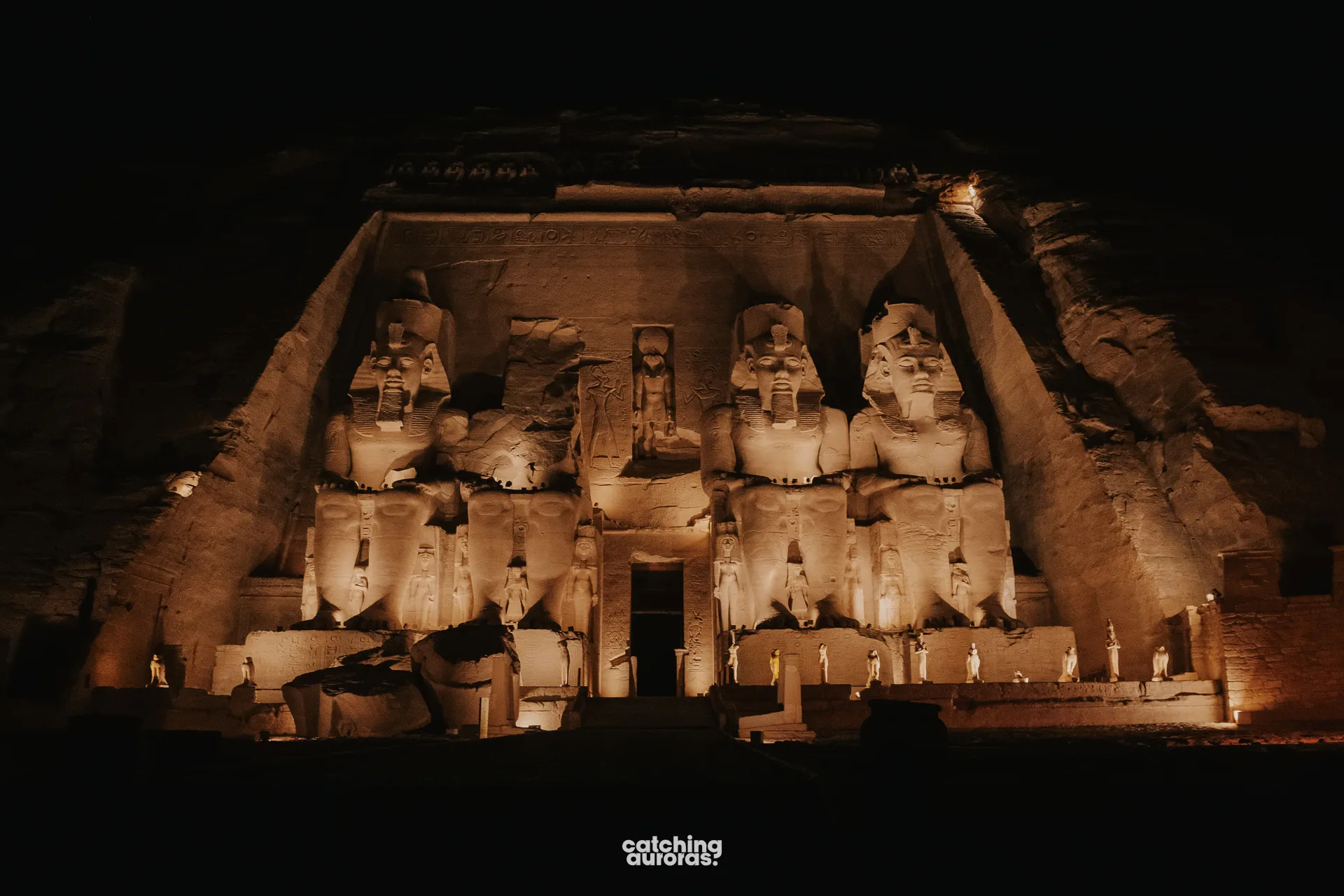
Standard day tours would have left Abu Simbel by this time and while our show started at 6:30 PM, we were allowed inside at around 6. We could see the colossi in the waning light, before heading to grab a seat to watch the show. The language for the narration depends on the majority audience. When we went, the show was in Japanese due to a large Japanese tour group, so we were handed audio guides that recited the show in English.
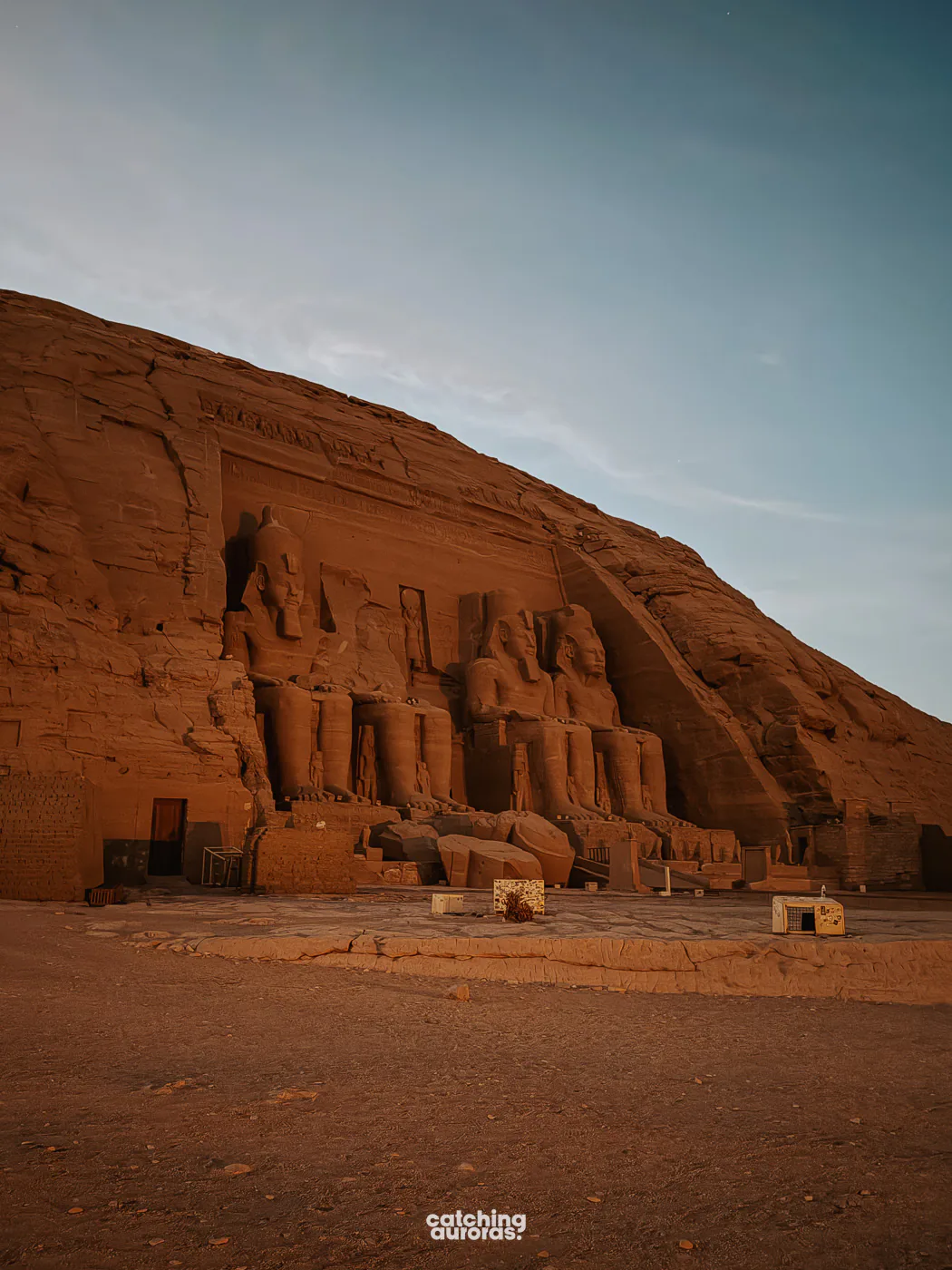
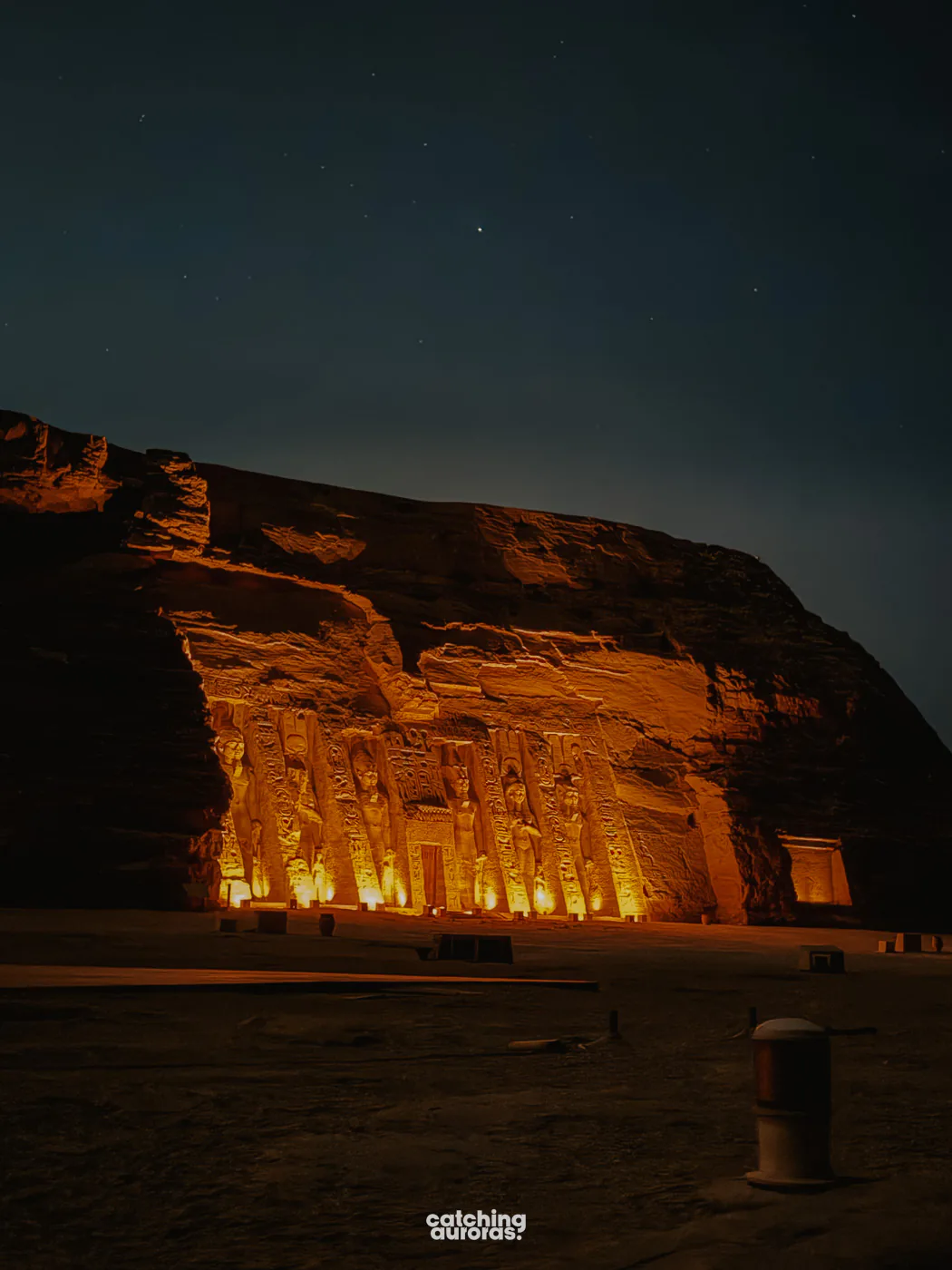
Our show ran from 6:30 PM for about an hour and we were done by 7:30 PM. After this, we dropped off our audio guides and roamed the grounds. We took a few photos of the monuments in the night and walked back to our hotel by 8 PM. There are other slots listed online so check with your hotel before you travel.
You can buy the tickets online via their official portal or via third-party operators. Tickets cost around US$20 for adults or US$11 for children. We got ours through our hotel at no extra cost. We paid EGP 1,000 each, about the same as the US$20 online price. Check ahead at your hotel to see if the show is happening that day. If too few people turn up, the show might get cancelled.
If you are debating whether to attend the show or not, do it to see Abu Simbel at night.
Sunrise at Abu Simbel
Sunrise is between about 6 and 6:45 AM through the year, so the 6 AM opening gets you in before it in most months. Check the forecast for the day you are visiting. When we visited in January 2026, the sunrise was around 6:45 AM. The sun rising over Lake Nasser and then slowly illuminating the faces is worth that early morning wakeup call. The statues inside the temple only get illuminated after an hour. If you are here to photograph, you will want to be there for the sunrise. In an hour or two, the light reflects off the facade too strongly.
How long you need at the Abu Simbel temples
Allow three to four hours at the Abu Simbel temples to cover the two temples fully. Day tours allow you around two hours at the temple, which is just about sufficient if you don’t sit down.
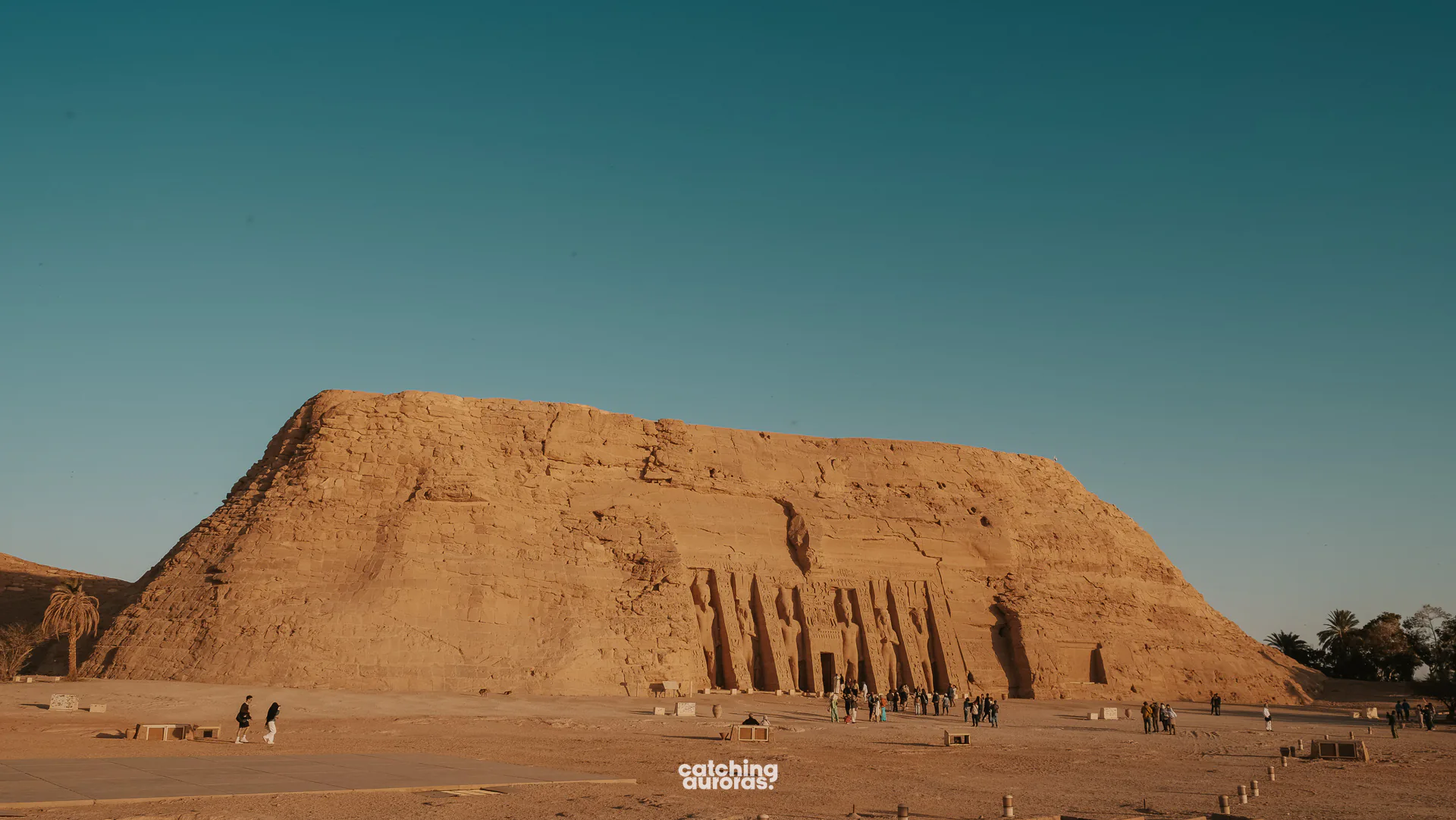
We were there from 6 AM to 9 AM in the morning and from 6 PM to 8 PM the previous night for the Sound and Light Show.
What our Abu Simbel overnight cost
An overnight stay at Abu Simbel is more expensive than joining a standard shared day trip from Aswan, mainly because of the hotel and the one-way private transfer. For us, the slower pace was worth it.
| Item | What we paid | Notes |
|---|---|---|
| Private car from Aswan to Abu Simbel | US$100 total | One-way transfer for two people |
| Hotel | US$90 total | One room, breakfast included. Walkable to the temples. |
| Sound and Light Show | EGP 1,000 per person | Booked through the hotel |
| Abu Simbel temple ticket | EGP 750 per person | Foreign-adult entry in Jan 2026 |
| Shared minibus back to Aswan | EGP 1,000 per person | Arranged by the hotel |
| Tips | EGP 200 total | For drivers |
Our total came to roughly US$150 per person in January 2026, based on the exchange rate at the time.
You can do it for less if you use the public bus or find a shared transfer both ways. We chose the private car down because we had arrived in Aswan late the previous night and did not want to start the trip with another early alarm.
Where to stay in Abu Simbel
Abu Simbel is a small town which exists because of the temples. There aren’t many hotels in Abu Simbel if you choose to stay here overnight.
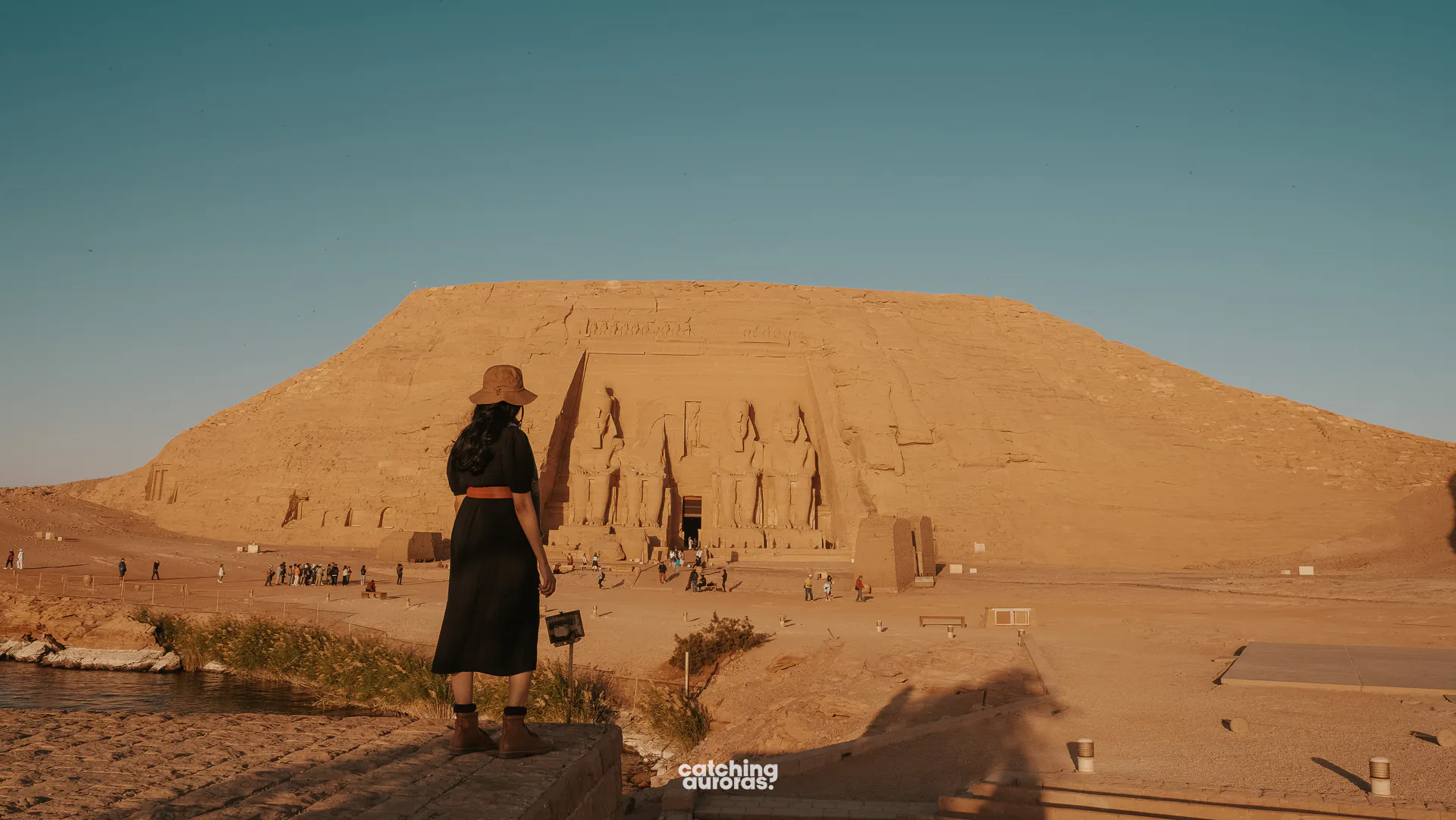
If you want somewhere more luxurious, Seti Abu Simbel Lake Resort is a 4-star property with views of Lake Nasser. Azal Lagoons Resort Abu Simbel is another 5-star property located 5 km from the temples.
For a more budget-friendly option, you have Tuya Hotel Abu Simbel which is on the road leading up to the temple. We stayed here overnight and would highly recommend it. The hosts are super-friendly and they helped us get the Sound and Light tickets at no extra cost and booked the mini bus back to Aswan. The food here was great too.
Like most places we ate in Egypt, the restaurant in Tuya had plenty of vegetarian options. Their ful medames was one of the best we had on the trip.
Abu Simbel day trip vs overnight: which should you choose?
If you are still wondering whether to do Abu Simbel as a day trip or stay here overnight, this was the exact comparison I made before I left.
| Day trip from Aswan | Overnight in Abu Simbel | |
|---|---|---|
| Start time | Usually around 3:30–4:30 AM | Leave Aswan when you choose |
| Time at the temples | Usually around 2 hours | Two visits if you want: evening and early morning. If you are a photographer, you get the temples under all kinds of light |
| Sound and Light Show | Not possible on a standard day tour | Yes |
| Cost | Lower | Higher because of hotel and separate transfers |
| Best for | Tight itineraries and budget travellers | Anyone who dislikes 3 AM pickups or wants a slower visit |
A day trip is still worth doing if the alternative is skipping Abu Simbel. But if you have room for one extra night, my vote is to stay. You get the temples after dark, a quieter morning visit, and a trip that feels less like a race against the return bus.
The Sun Festival (February and October)
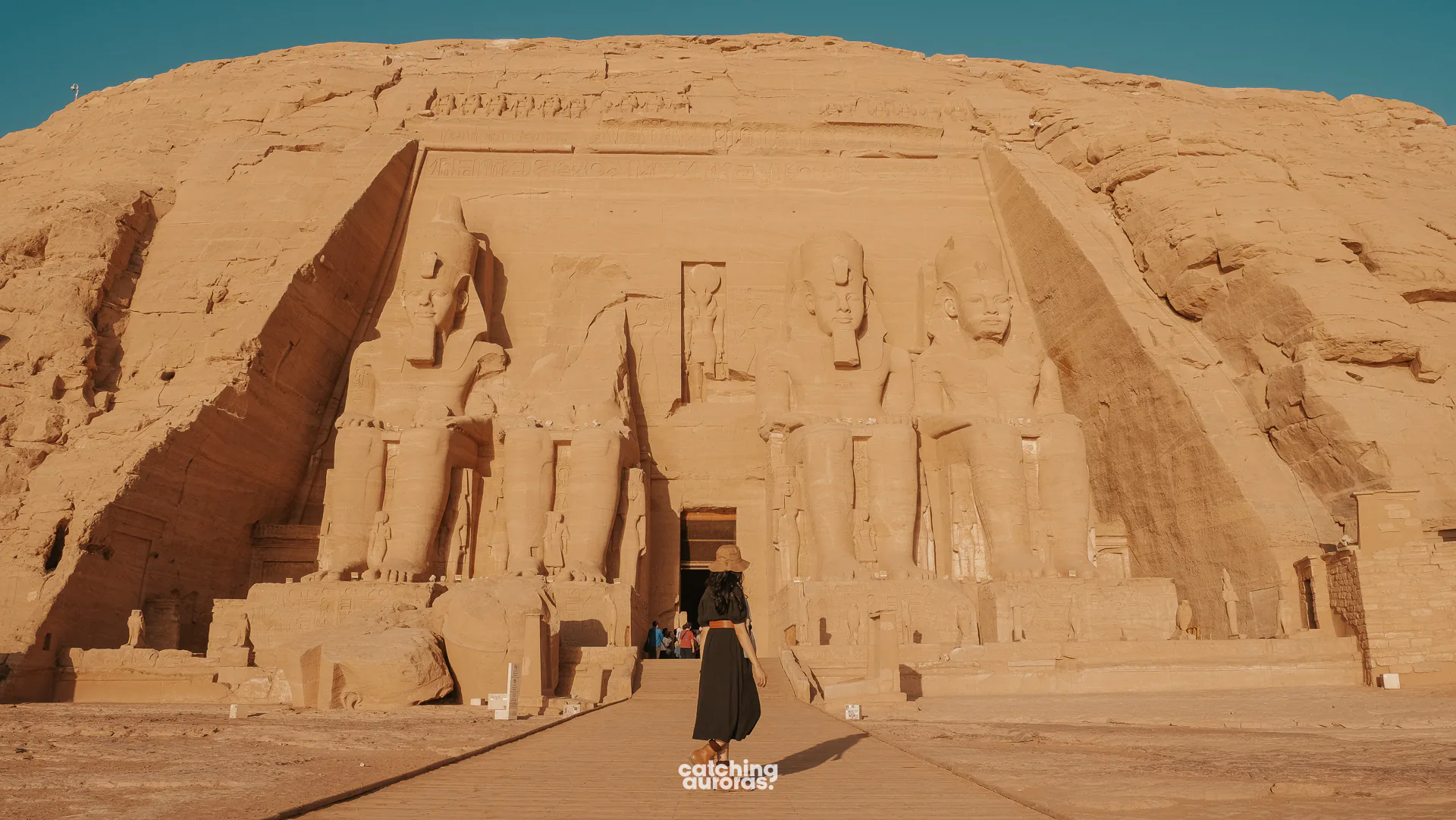
The Sun Festival is a biannual event in Abu Simbel which happens on 22 February and 22 October. On those mornings the sun strikes three of the four statues inside. Ptah, the god associated with the underworld, stays in the dark on purpose.
Expect very large crowds and sold-out rooms. The ticket prices are also higher during these days.
When the temple was built in the 13th century BC, the alignment happened on 21 February and 21 October. But after the temple was moved during the construction of the Aswan High Dam, the dates shifted by a day.
Before you go: practical Abu Simbel tips
A few things that made the trip easier:
- Carry your physical passport. You may be asked for it at police checkpoints on the road from Aswan. A phone photo is not always enough.
- Guides. You can hire a licensed tour guide at the entrance gate. I didn’t notice them early in the morning but I wasn’t looking for them either.
- Bring cash. The hotel took cards, but we paid for the minibus in cash.
- Start early in summer. There is very little shade around the facade, and Abu Simbel gets really hot.
- Carry water and sunscreen. Buy them in Aswan if you can; the choice in Abu Simbel is more limited.
- Do not rely on a fixed public-transport timetable. Ask your hotel or host to confirm the bus or minibus timing the day before.
- Check the Sound and Light Show with your hotel. It may not run if there are too few people, and the language can depend on the audience that evening.
- Plan for luggage. If you are relying on public transport, some microbuses might not have enough space in the back if you have several bags. We took a minibus back and the driver had to stuff our one suitcase in the back with some difficulty.
- Photography: No restrictions on cameras when we visited in January 2026.
Is Abu Simbel worth the detour?
Yes. The journey from Aswan is long, and the overnight version takes more planning than a standard day trip. But standing in front of the facade at 6 AM, after seeing it lit up the night before, made the extra night feel worth it.
If you only have time for a day trip, go anyway. Abu Simbel is still one of the most memorable sites in Egypt. But if you can spare a night, do it.
Seeing the colossi lit up under a sky full of stars is a sight I’ll remember for a long time. And if I were to do it again, I would still go through all the hassle and stay overnight.