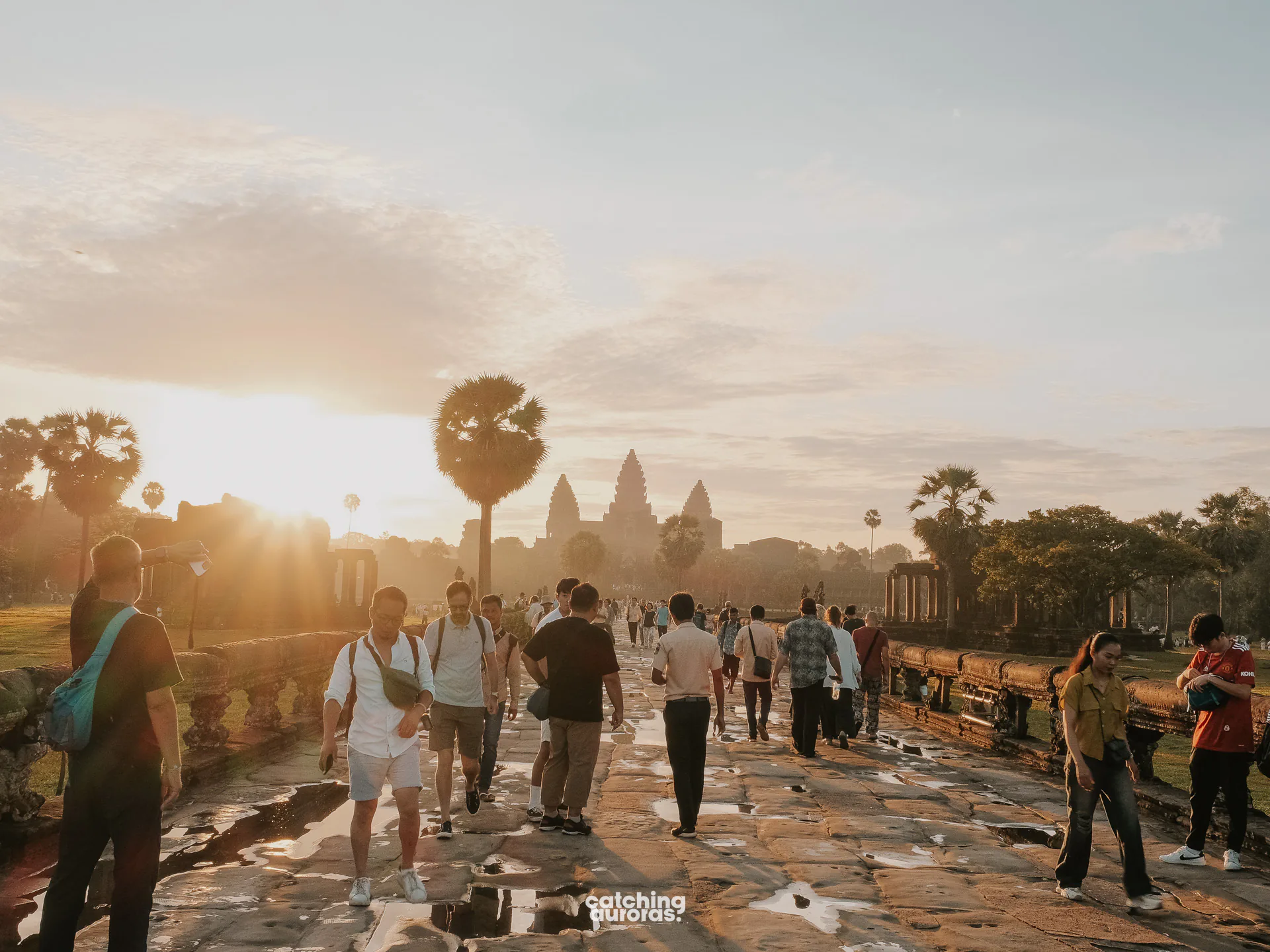
Angkor Wat, the temple on Cambodia’s flag, is for many visitors the first and the main attraction in Siem Reap. The site teems with tour buses early in the morning, but one look at it and you can clearly understand why it’s been crowned, unofficially, as the 8th Wonder of the World.
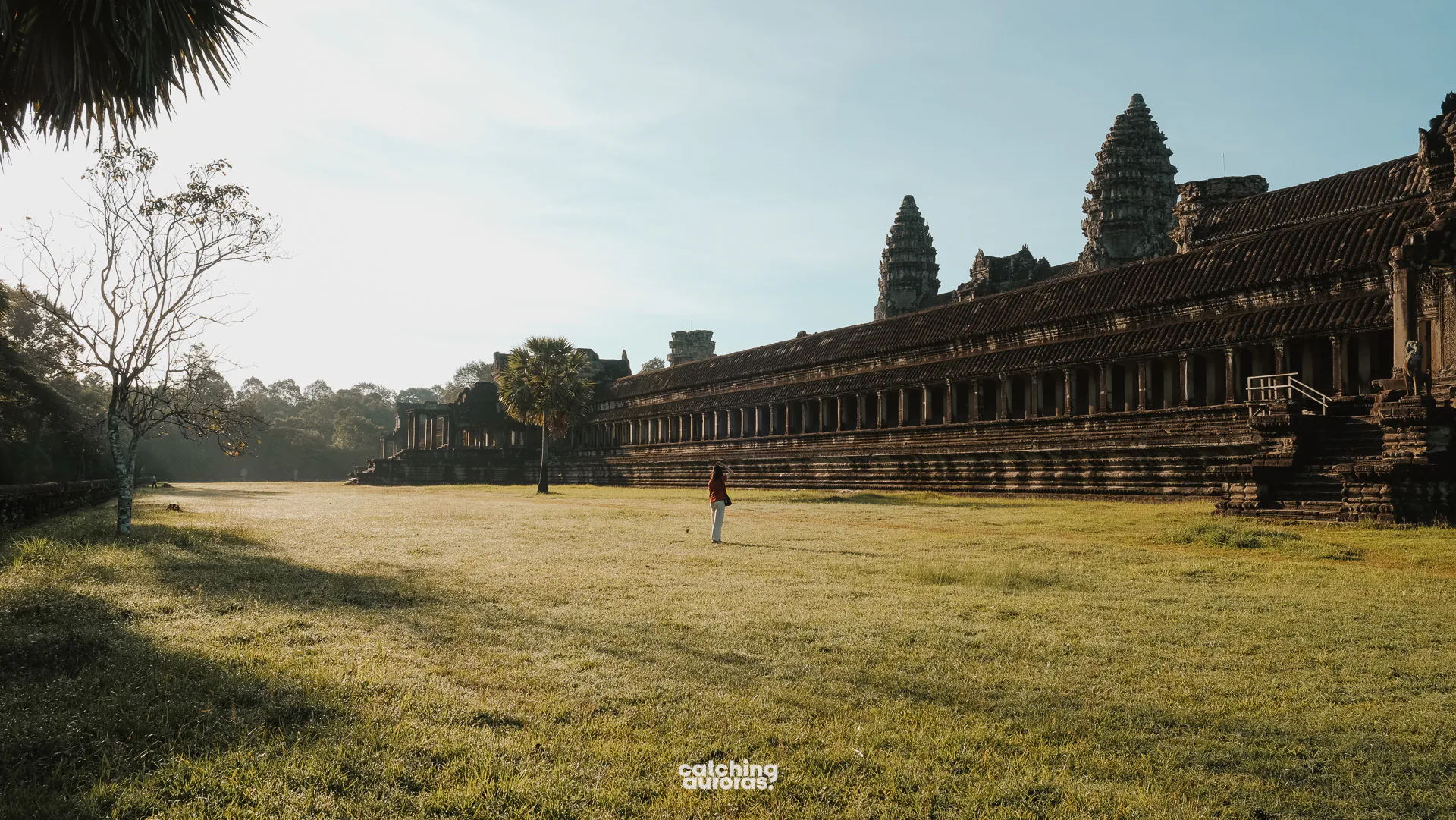
This Angkor Wat guide covers everything you need for a visit: the Angkor Pass, which entrance to use, what to look for inside, what to wear and how much time to allow. There’s a short section on sunrise, plus a full sunrise guide if you want to plan it in more detail.
If you’re visiting more than one temple, my 1, 2 and 3-day Angkor temples itinerary helps you plan which temples to visit and how to fit them into your trip.
Angkor Wat at a glance
| Detail | |
|---|---|
| Where | About 6 km north of Siem Reap town, inside Angkor Archaeological Park |
| Built | Early 12th century, under King Suryavarman II. Built for Vishnu, turned Buddhist later |
| Ticket | Angkor Pass only. There’s no separate Angkor Wat ticket |
| Pass prices | 1 day US$37, 3 days US$62, 7 days US$72 |
| Opening hours | 5 AM to 5:30 PM. The early entry is for sunrise |
| Time needed | 2.5 to 3 hours for the temple. Half a day if you add sunrise |
| Dress code | Shoulders and knees covered. Stricter if you want to access the top level of the temple |
| Best months | November to February |
Why Angkor Wat is worth the hype
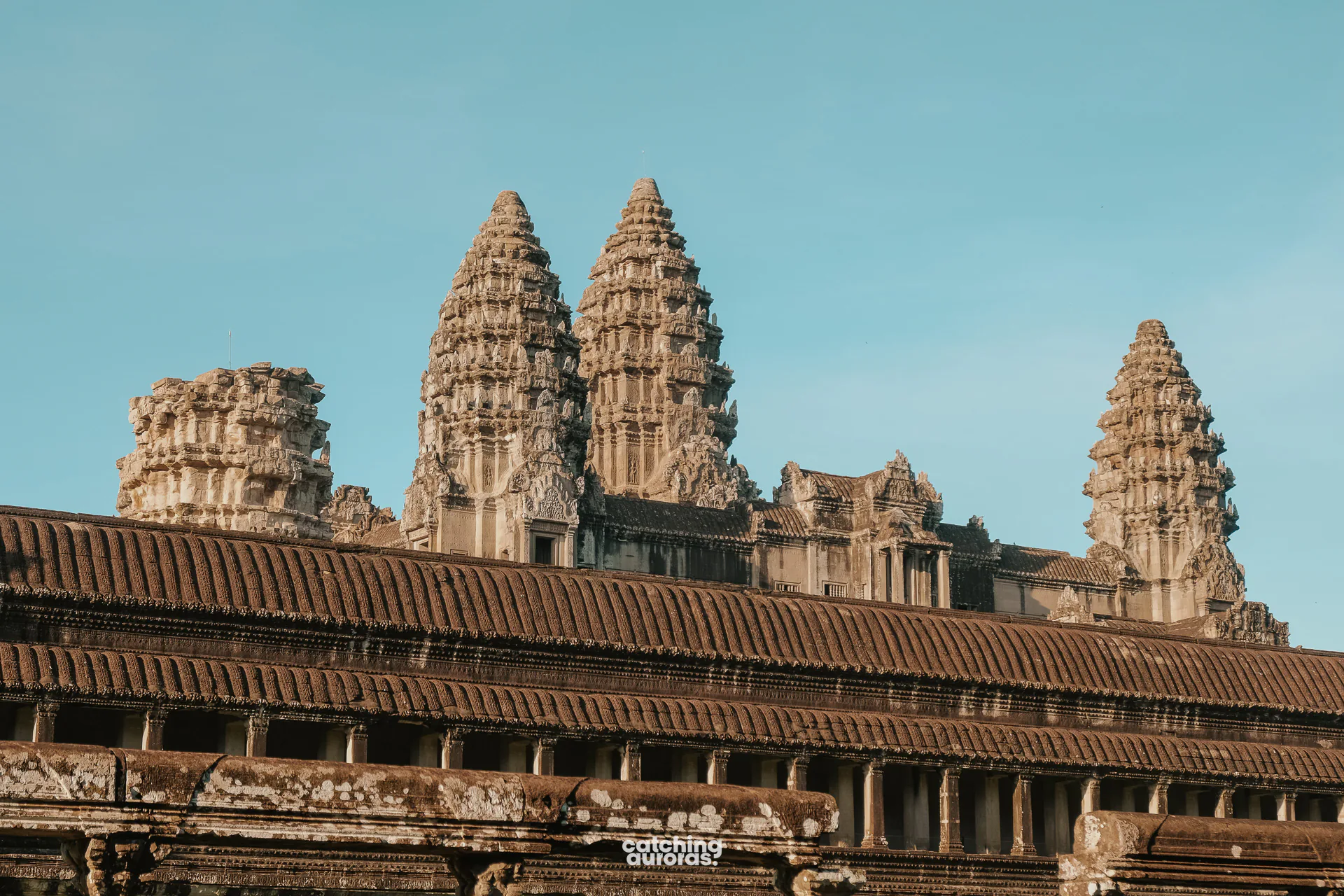
Angkor Wat is the largest religious monument in the world. The moat alone is about 190 metres wide and runs more than 5 km around the temple. The site covers roughly 402 acres.
The numbers are impressive and that scale is what captures your attention first. Then you step inside and get taken in by the details. Nearly every surface is carved, with dancing apsaras, lotus patterns, gods, demons, and scenes from mythology.
If you grew up in India, some of these stories may feel familiar. Long stone panels from the Ramayana and the Mahabharata line the outer gallery. The churning of the ocean of milk (Samudra Manthana) fills a whole wall, and Hanuman’s army appears in the middle of a battle elsewhere.
Angkor Wat history in two minutes
King Suryavarman II began building Angkor Wat around AD 1113, and construction took about 30 years. He dedicated it to Vishnu, while most Khmer kings of the time built temples for Shiva.
Angkor Wat also faces west, unlike most Khmer temples, which face east. West is associated with Vishnu and with death, leading some scholars to think the temple may also have been intended as the king’s funerary temple.
By the end of the 12th century, the Khmer empire had become Buddhist, and Angkor Wat transitioned into a Buddhist temple. Monks continued to use the temple over the centuries, which helped it remain in better condition than sites reclaimed by the jungle like Ta Prohm.
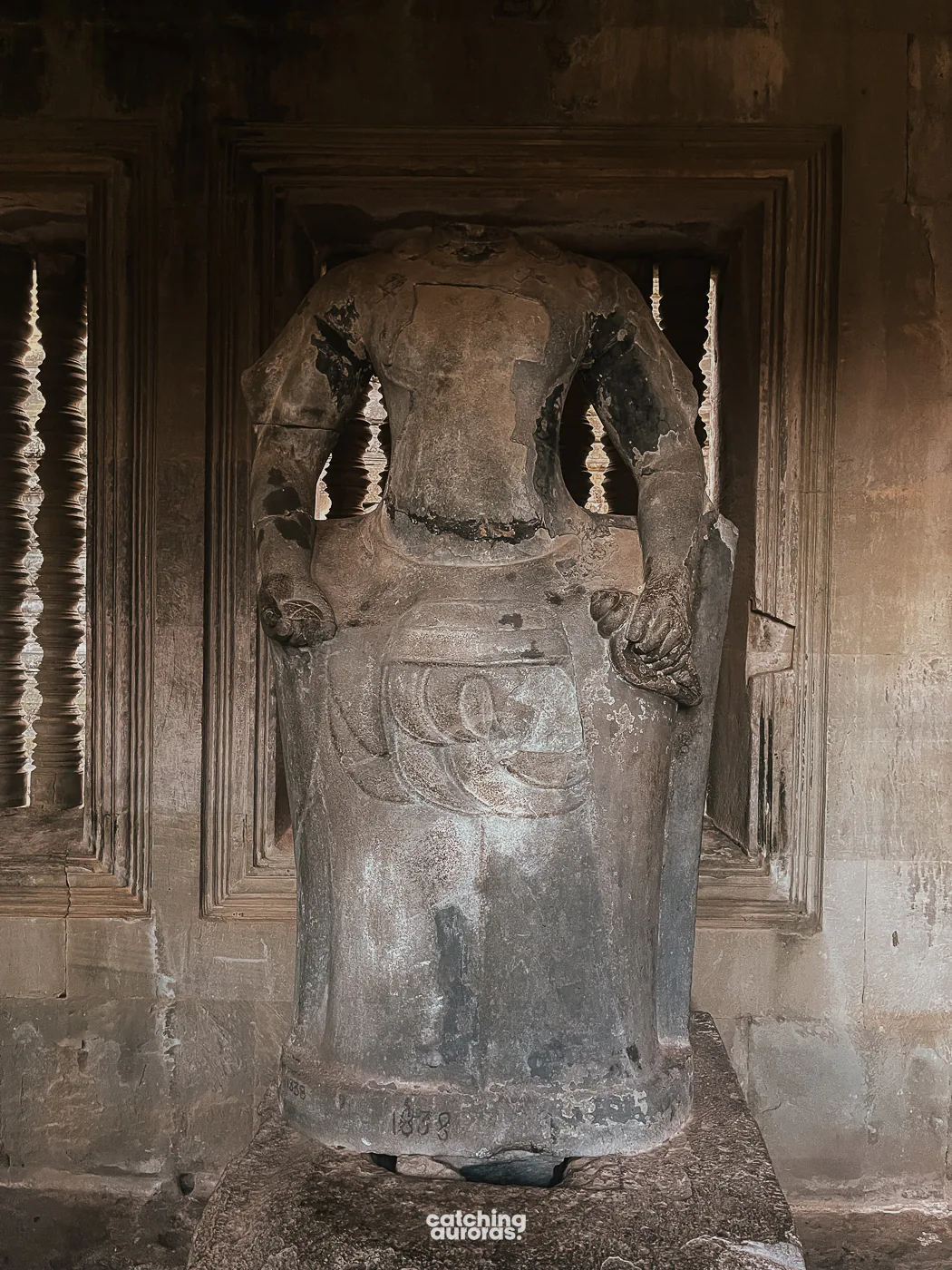
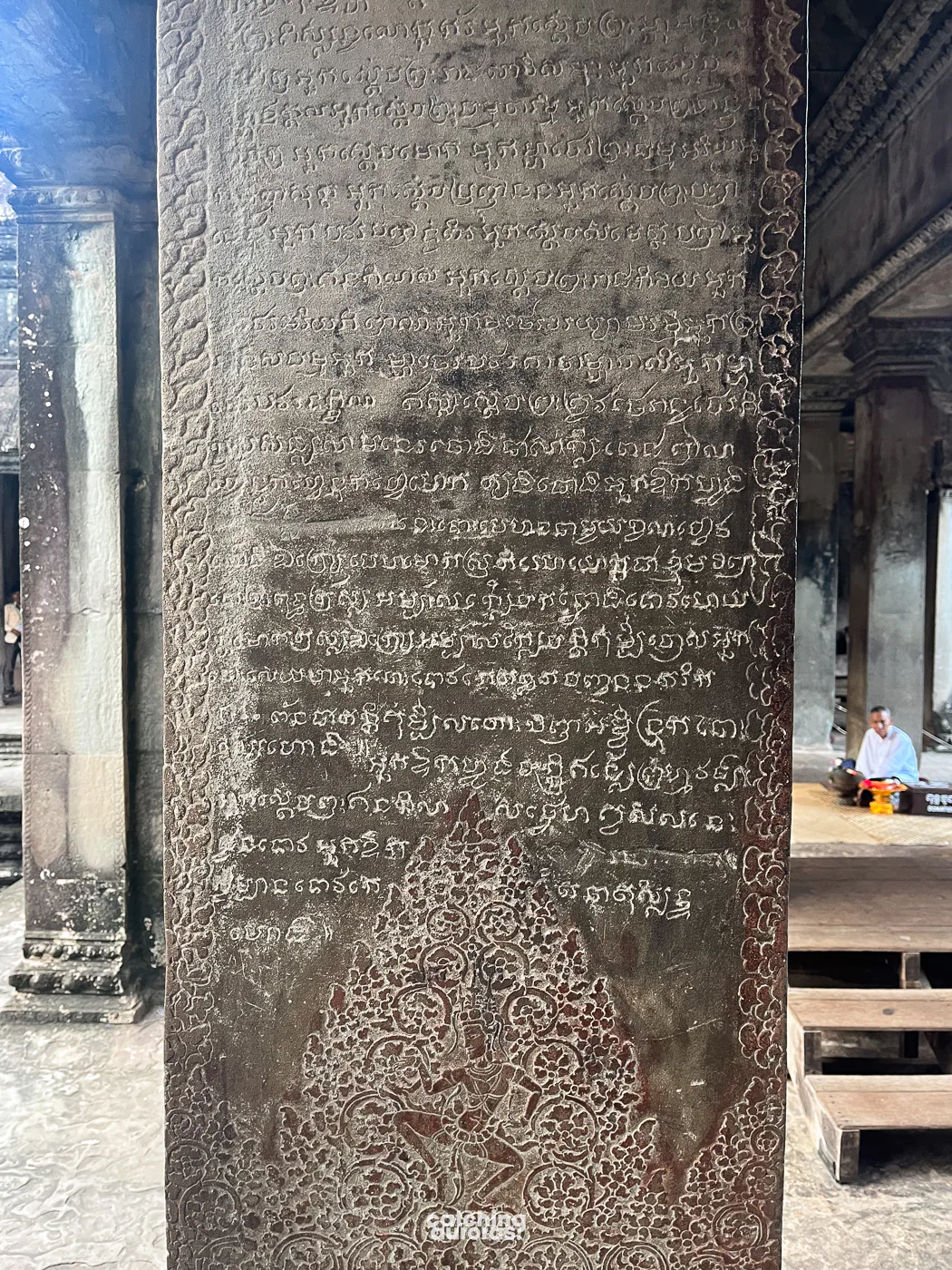
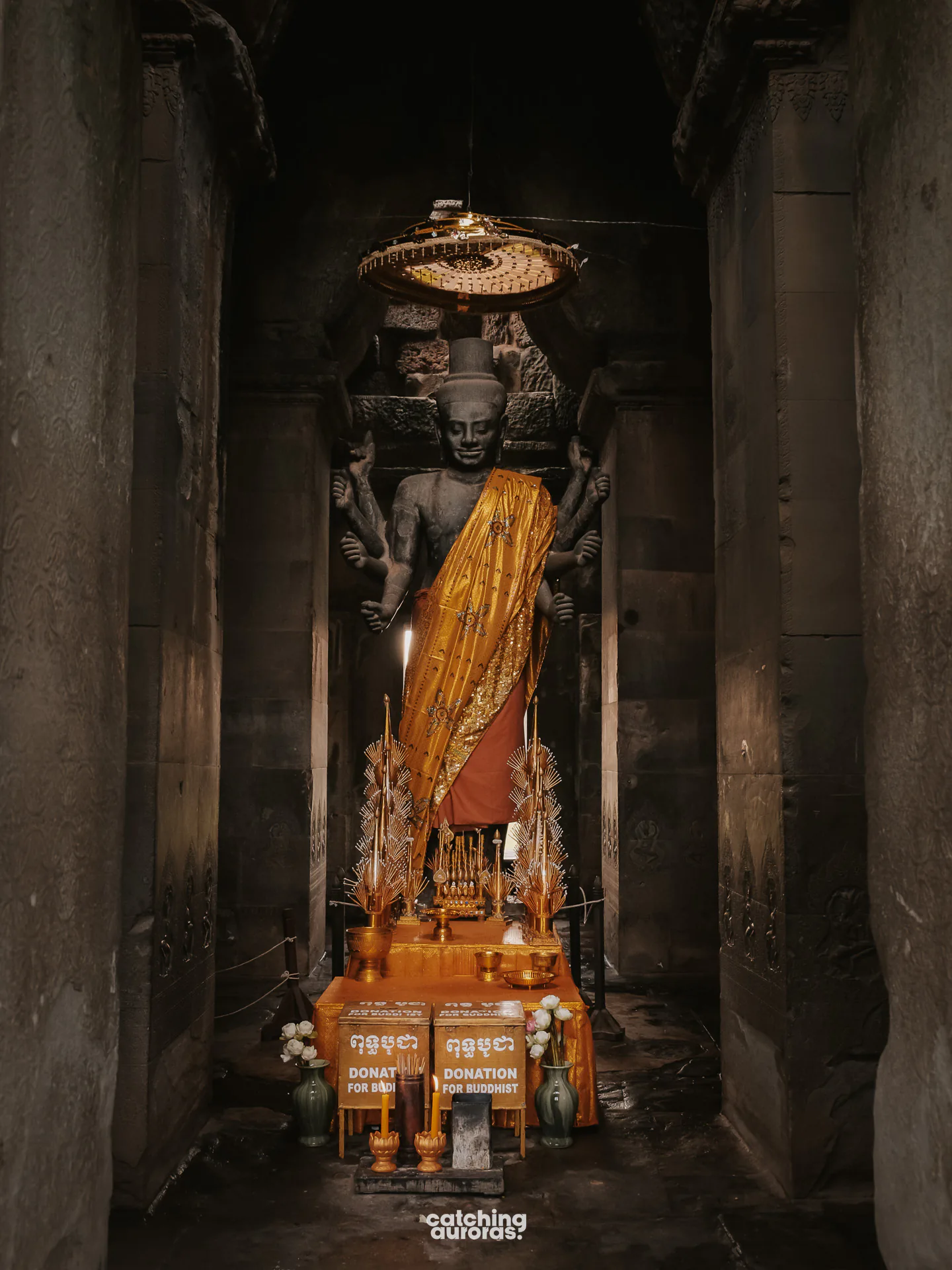
The deities and the statues inside changed too. You can see many of the damaged and adapted statues lining the temple corridors even now. We came across several statues with their heads replaced with that of Buddha. Ta Reach, the eight-armed Vishnu statue near the western entrance of Angkor Wat, has also undergone a similar adaptation.
Angkor Wat has remained a place of worship over the centuries. It also suffered damage and looting during periods of conflict, while successive conservation projects have worked to preserve the temple.
How to get to Angkor Wat from Siem Reap
Siem Reap is the natural base if you are visiting the temples, with well-paved roads leading to the park.
Flying in. Siem Reap-Angkor International (SAI), the city’s new airport, opened in late 2023. It’s about 50 km from town, so allow around an hour for the taxi or airport shuttle ride. Airport shuttle buses are a great option when it comes to commuting from the airport to the city.
From India. Most routes connect through Bangkok, Kuala Lumpur, Singapore or Ho Chi Minh City. Indian passport holders can apply for a Cambodian e-visa online or get a visa on arrival. Applying online can make arrival a little simpler; use the official evisa.gov.kh site. Visitors should also submit an e-Arrival form when entering Cambodia.
We got a visa on arrival and there was almost no queue when we arrived. Bring the exact fee in US dollars.
From town to the temple. Angkor Wat is 6 to 7 km north of the Old Market, around 15 to 20 minutes by tuk-tuk. If you haven’t bought your pass yet, your driver can stop at the ticket office on the way.
Getting around: tuk-tuk, guide or bike
Tuk-tuk with a driver. This is the most common option and a comfortable choice for most visitors. Hire a driver for the day, and agree on the start time, route, and price before setting off. This is convenient if you are not comfortable riding a two-wheeler and want a break from the sun.
The tuk-tuk drivers also share useful local tips and background about the temples. If you want someone to explain the carvings inside, consider hiring a licensed guide.
Licensed guide. A guide can add a lot at Angkor Wat, where you are most likely to miss a carving or not understand the context. Look for an official guide ID badge. You can find them near the causeway or the entrance.
If you do not want to hire a guide (like us, most of the time), carry a guidebook or read about the temples beforehand. This will help you save money and also give you the freedom to discover the temples at your own pace.
PassApp or Grab. Both offer one-way rides around Siem Reap. They’re convenient for getting to the park, though arranging a return from a more distant temple can be harder.
Motorbikes or bicycles. Our Airbnb included a motorbike, which we used to get to all the nearby temples in Siem Reap. There is parking outside the temples and the roads are good, making it easy to pop in and out of temples all day. We loved the freedom it gave us but there were times when the relentless sun had us questioning our life choices.
For more distant temples such as Beng Mealea or Banteay Srei, it is better to take a tuk-tuk instead.
If you are okay cycling in the heat, there are bicycles available for rent across the city as well.
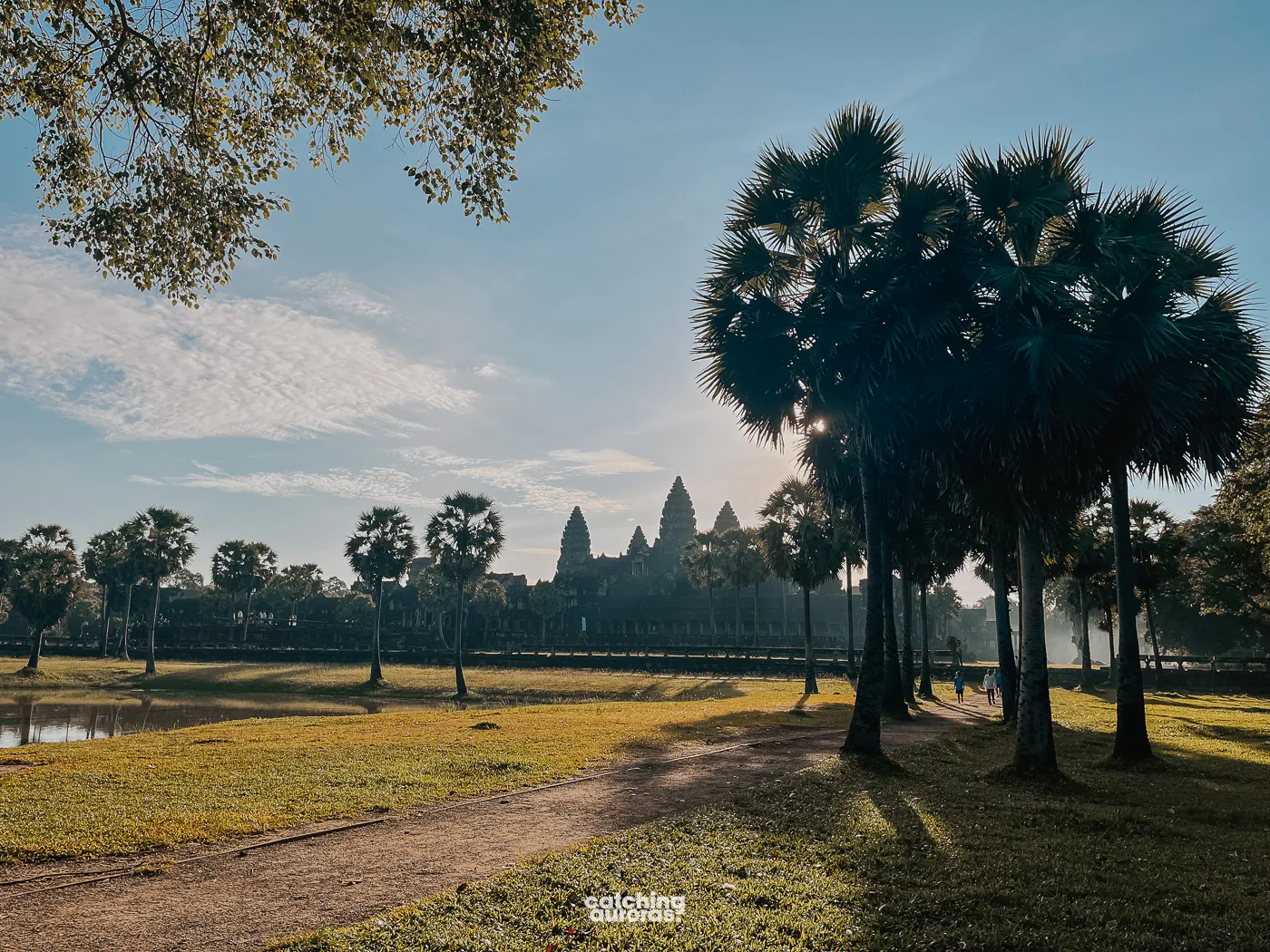
Angkor Pass: prices and where to buy
There isn’t a standalone Angkor Wat ticket. The Angkor Pass covers the temple and almost every other site in the park, and staff check it as you enter each one.
| Pass | Price | Valid for |
|---|---|---|
| 1 day | US$37 | Your selected visit date |
| 3 days | US$62 | Any 3 days within 7 days |
| 7 days | US$72 | Any 7 days within one month |
Children under 12 go free. Bring their passport as proof.
Where to buy it.
- Online on the official Angkor Enterprise site (angkorenterprise.gov.kh). You get an e-ticket. You skip the queue at the ticket office and you’re less likely to lose the ticket, especially if you have taken one of the multi-day passes.
- At the Angkor Ticket Office on Street 60, on the way to the park. It opens at 5 AM. They take your photo and print it on the pass.
If you’re planning to see sunrise, buying your pass the day before can save time in the morning. Tip: If you buy tomorrow’s 1-day pass after 4:45 PM, you can also enter the park for sunset that evening.
Keep your pass with you throughout the day. Guards check it at Angkor Wat, Bayon, Ta Prohm and on the road into the park. If you lose your physical pass, contact Angkor Enterprise with proof of purchase. Support may be able to verify or reissue it.
Which pass to get. If you have more than one day in Siem Reap, the 3-day pass gives you room to take things at a gentler pace. It costs US$25 more than the single-day pass, and you can take things easy.
Since we were in Siem Reap for over a week, we bought the 7-day pass online and used it to visit more than 30 temples around the town.
How to visit Angkor Wat: the layout and what to see
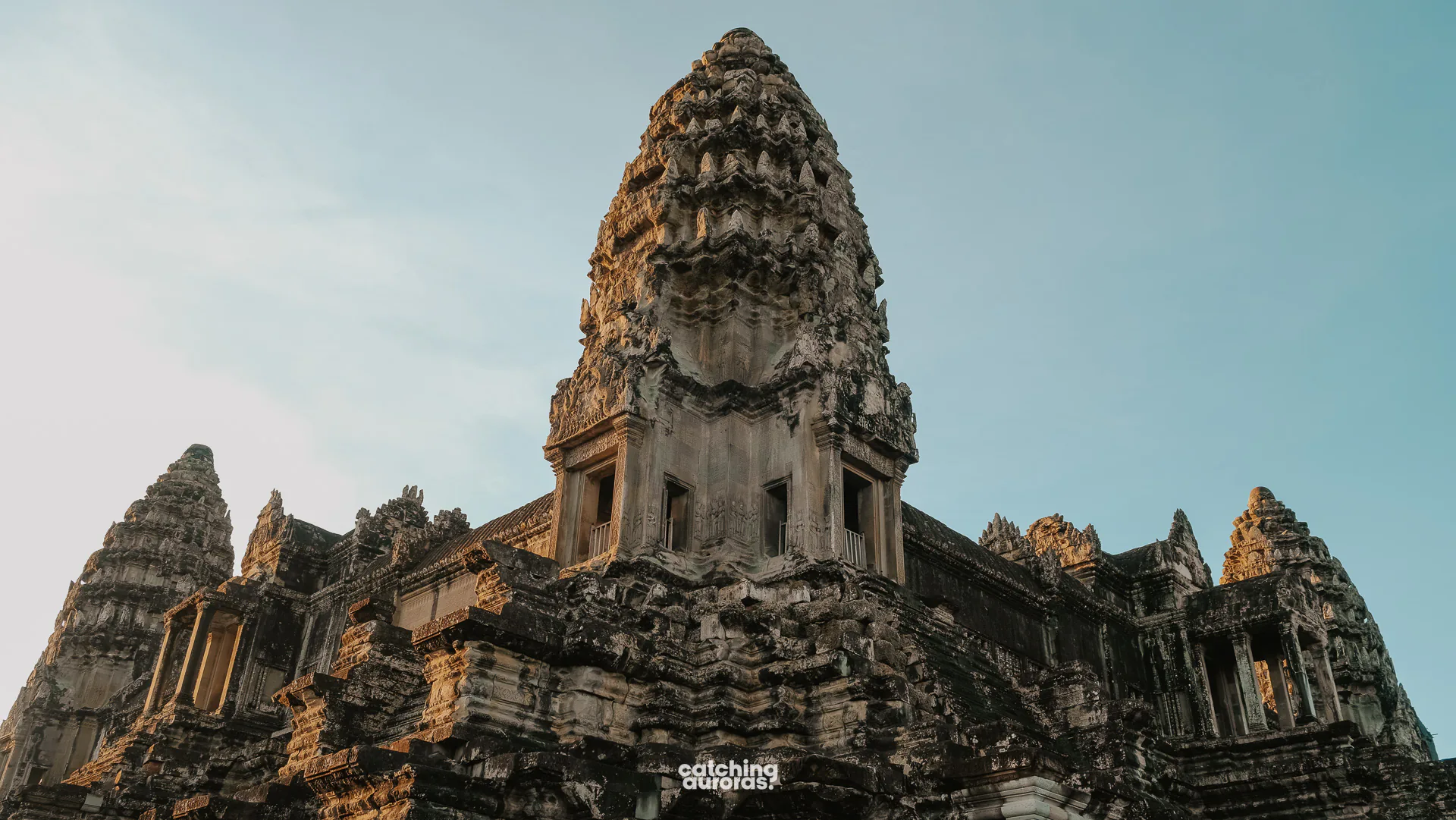
Angkor Wat is designed as a temple-mountain, with one level nested inside another and each rising higher than the last. As you walk in, you gradually make your way from the outer grounds towards the upper levels. It was designed to represent Mount Meru, so the upper levels (quite literally the home of the gods) were exclusive and accessible only to a few.
The west entrance and causeway
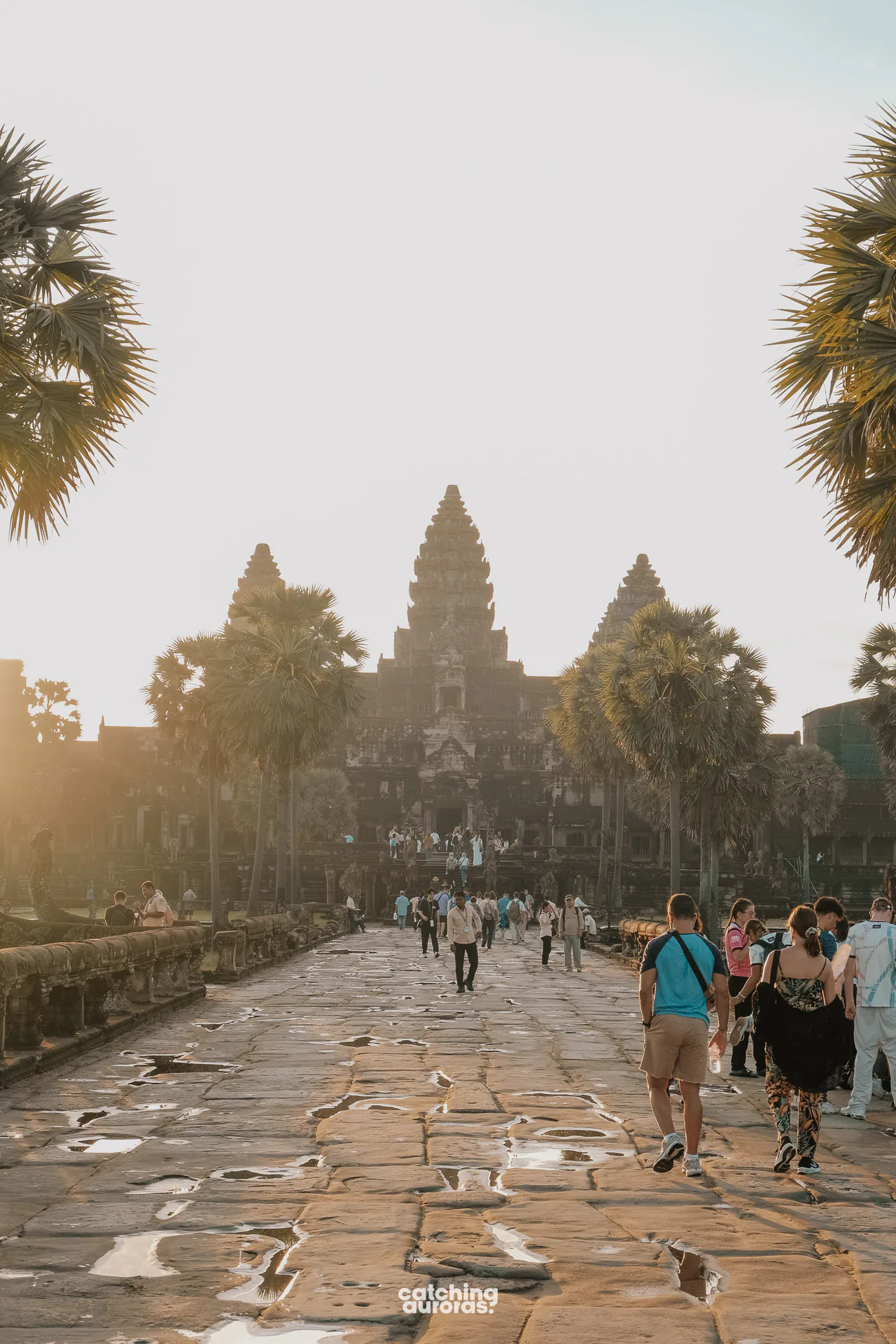
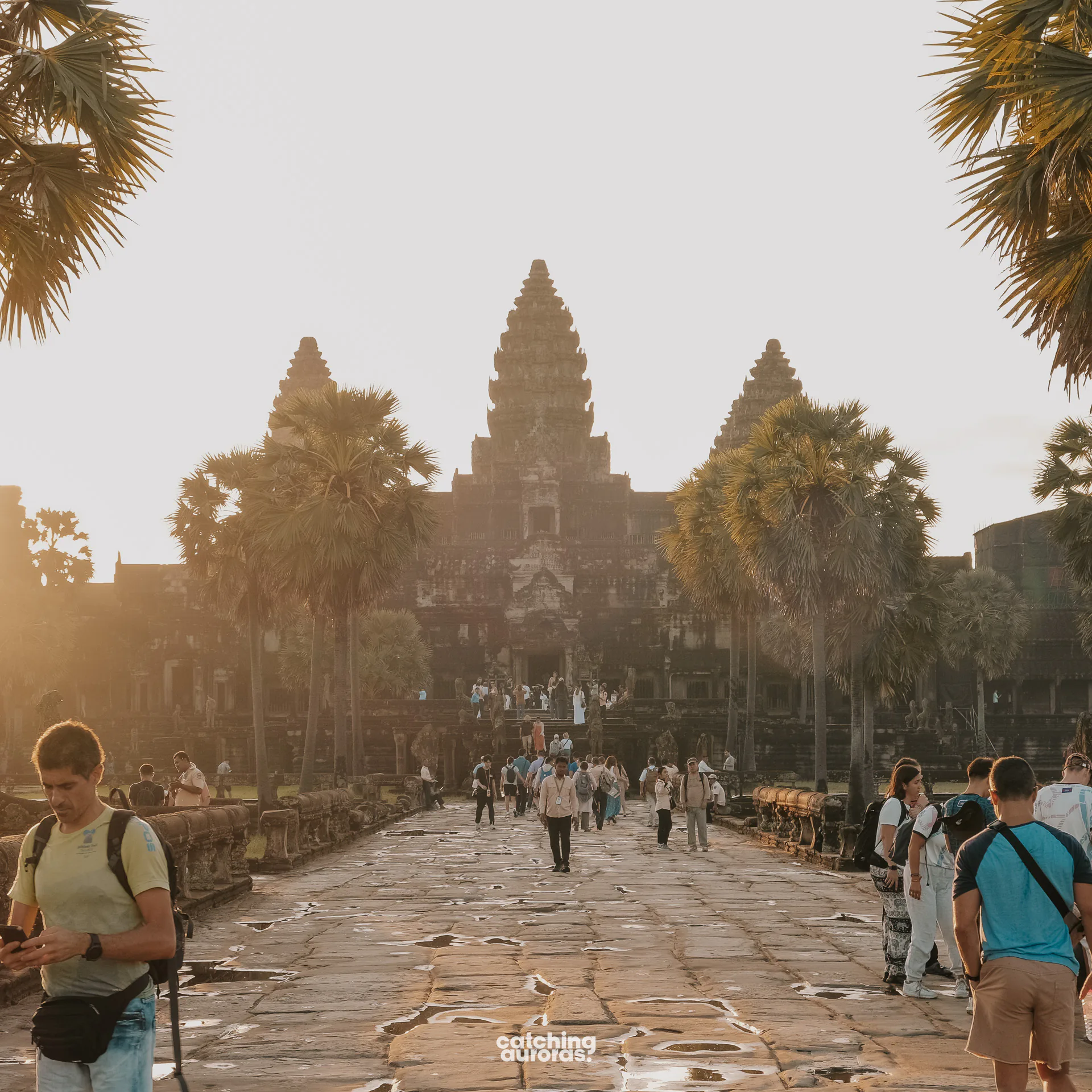
Most visitors enter from the west, crossing the moat on the western causeway. For your first visit, I always suggest taking the west entrance for that grand, first look at the temple.
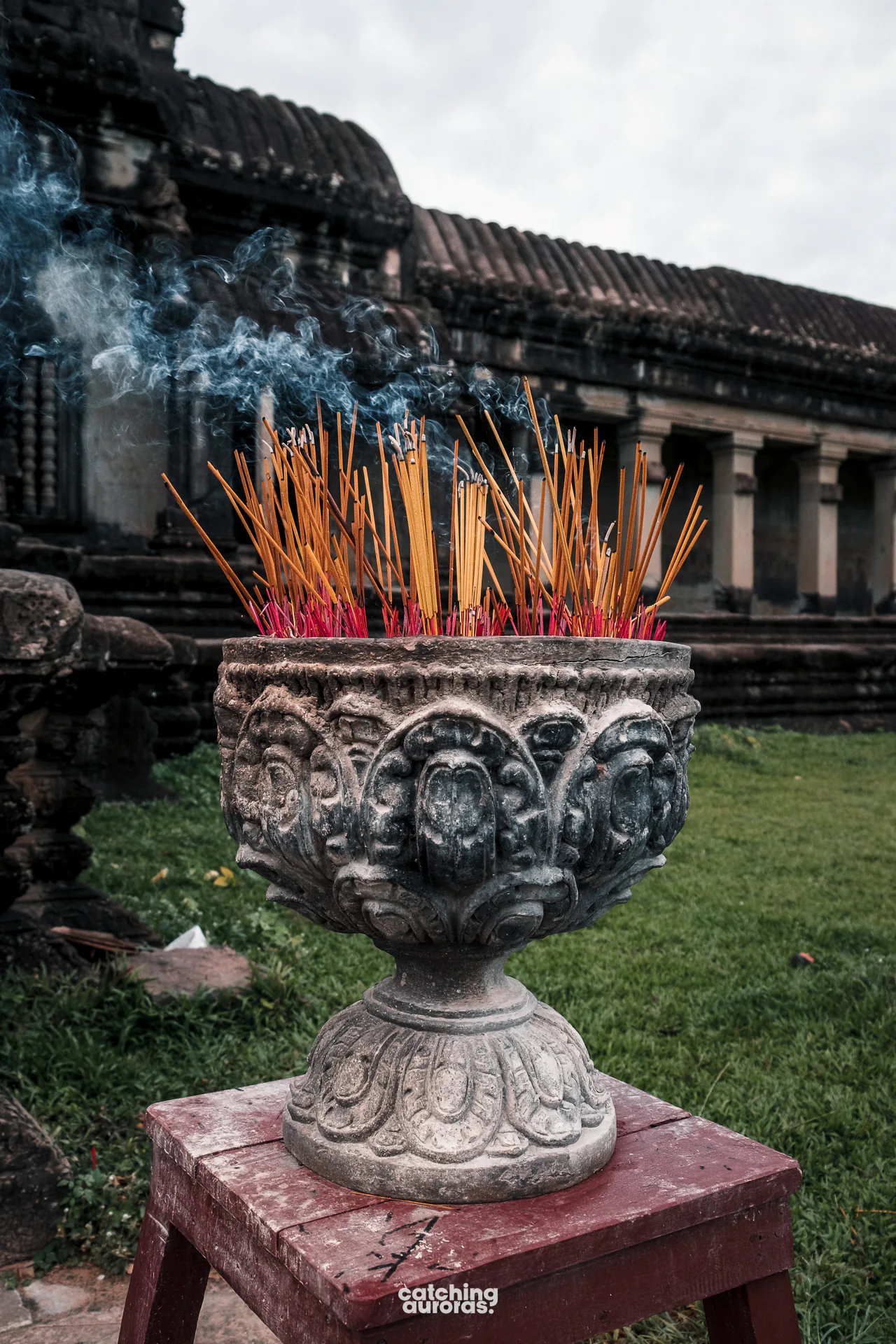
Once inside the outer wall, look for a tall, eight-armed statue of Vishnu near the southern tower. Locals call him Ta Reach, and visitors still leave offerings and incense there. It is believed to be the statue that was present in the central sanctum.
Lord Vishnu looks so ethereal here and I could just imagine how he would have looked in his original shrine.
The long walk and the two ponds
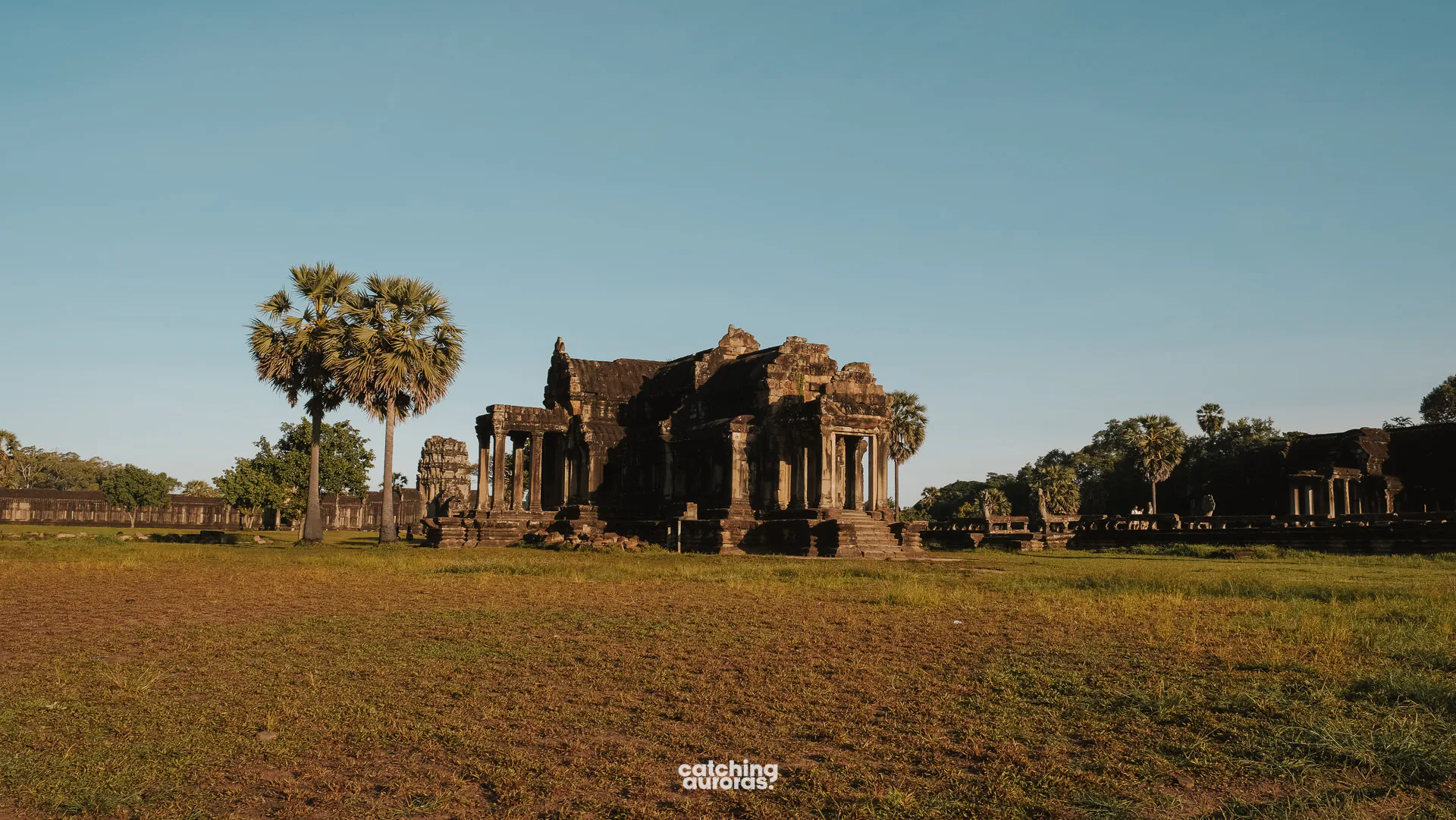
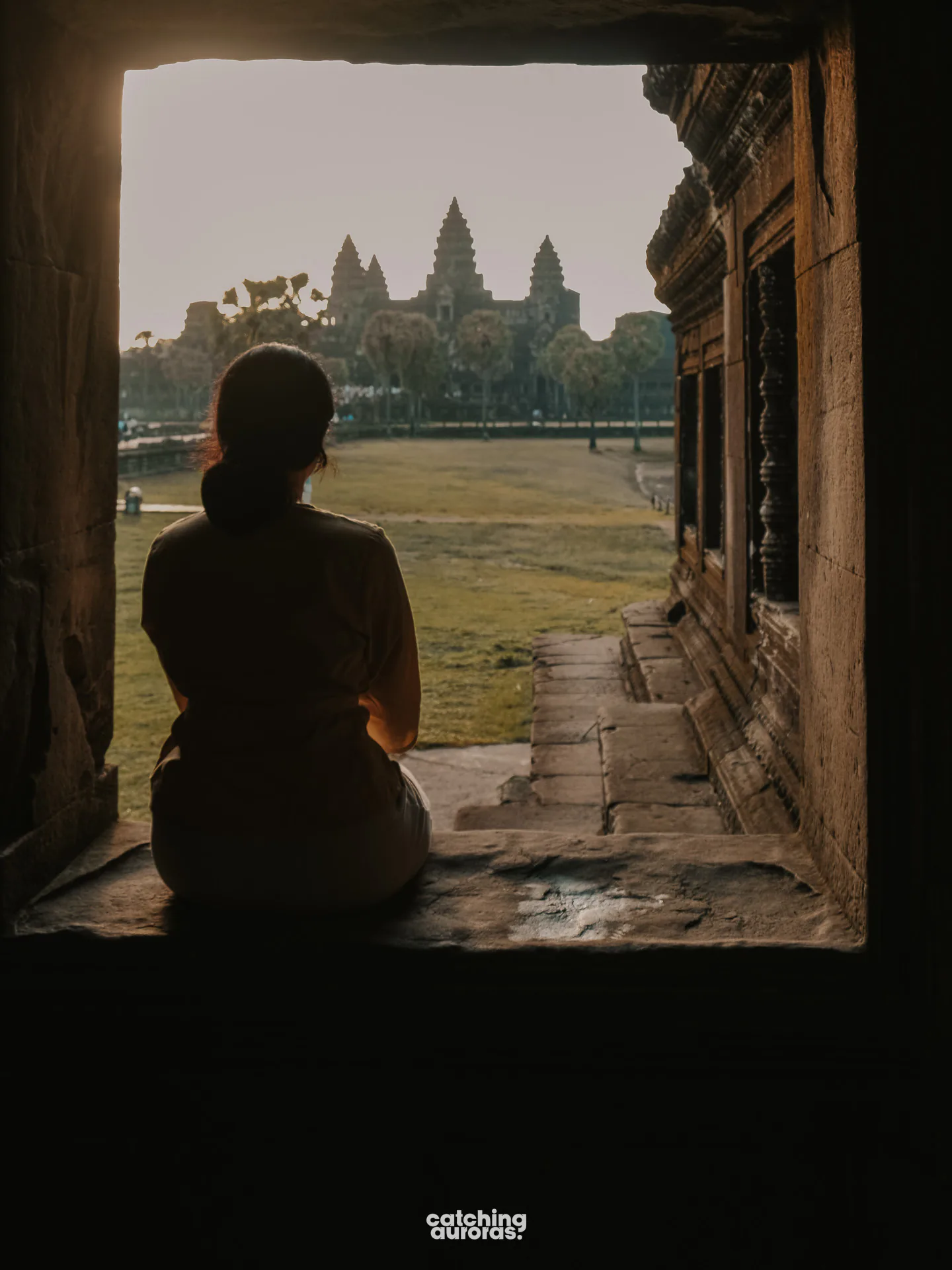
The 350-metre stone path leads towards the temple, passing two small library buildings (the northern and the southern libraries). Just before the main structure are two ponds, one on either side. The north pond, on your left, is the well-known reflection spot where sunrise visitors gather. When we visited, this was under restoration so we headed straight to the one on the right (the south pond) for the sunrise shot.
The two library buildings also offer good vantage points to take photos from, so don’t forget to visit them before you leave.
Level one: the bas-relief galleries
This is where having a guide will come in handy if you are not familiar with the history and mythology. The gallery circles the entire first level, with about 800 metres of carved wall to explore.
Start on the west side and walk anticlockwise, keeping the carvings on your left. Look out for these panels:
- Battle of Kurukshetra (west gallery, south side): from the Mahabharata. The Pandavas and Kauravas meet. Look for Bhishma on his bed of arrows.
- Suryavarman II’s procession (south gallery, west side): The king who built the temple, sitting with his court, then marching with his army.
- Heaven and Hell (south gallery, east side): 32 hells and 37 heavens from Hinduism.
- Churning of the Ocean of Milk (east gallery, south side): Devas on one side, asuras on the other, pulling the serpent Vasuki around Mount Mandara. Around 50 metres long and the most famous carving at Angkor. You see this scene everywhere around Siem Reap, including on the causeway leading to Angkor Thom.
- Battle of Lanka (west gallery, north side): from the Ramayana. You can see Rama, Ravana, Hanuman and the army of monkeys.
The cruciform gallery
Between the first and second levels, a cross-shaped courtyard has four sunken basins that once held water.
Level two: the apsaras
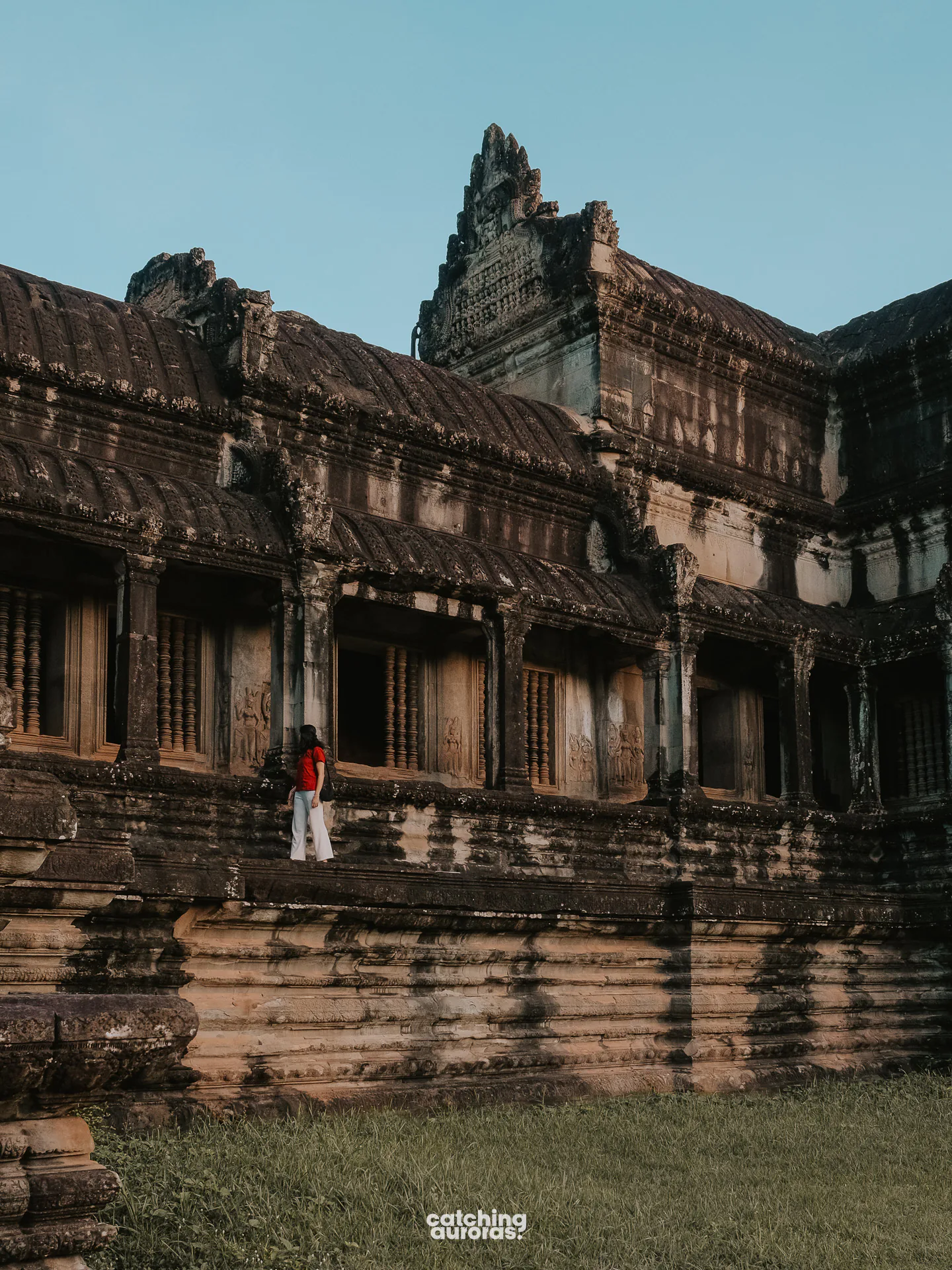
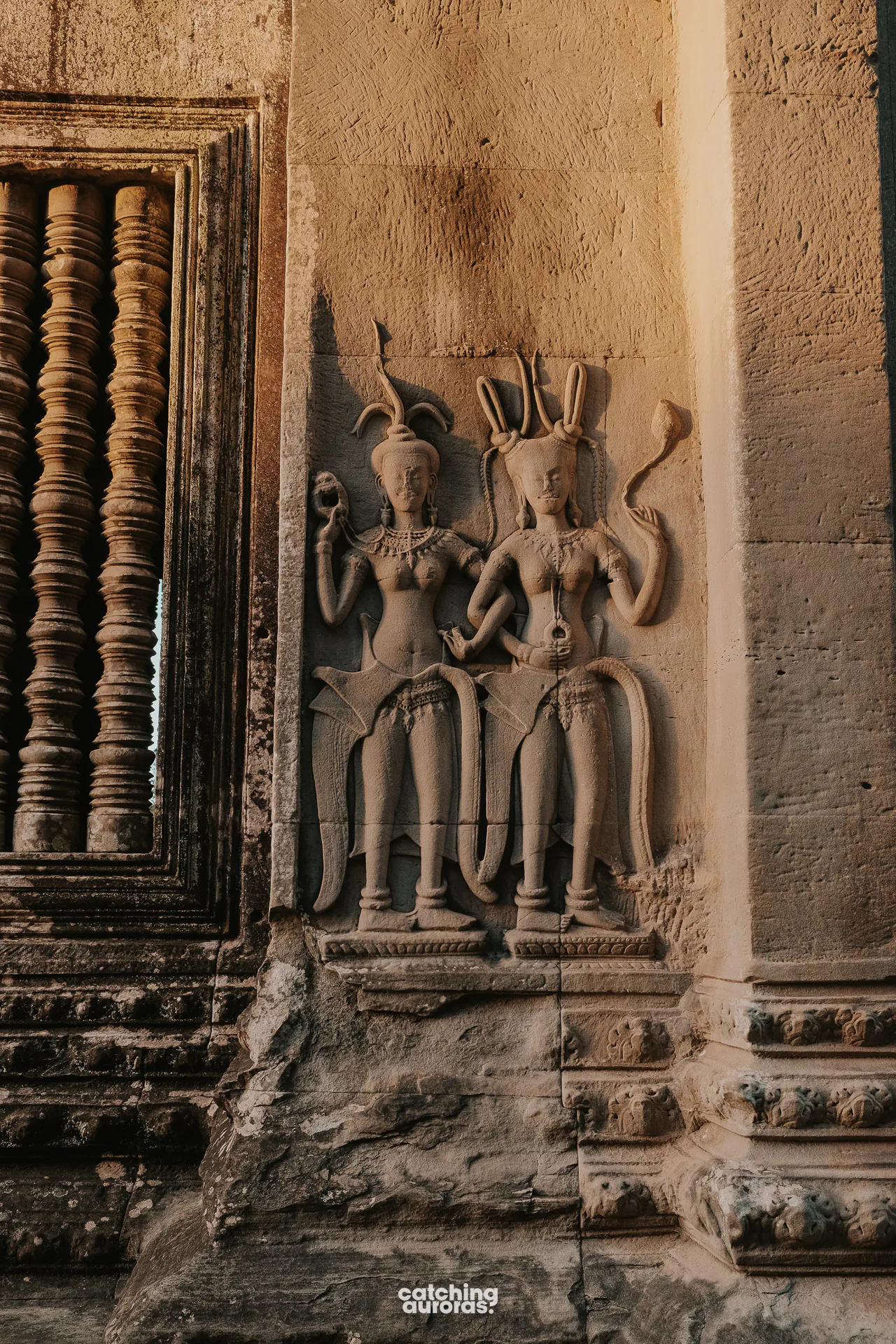
The second level feels quieter and darker. You will find a lot of apsaras and devatas lining its walls, each with distinct hair and jewellery.
Level three: the Bakan (the top)
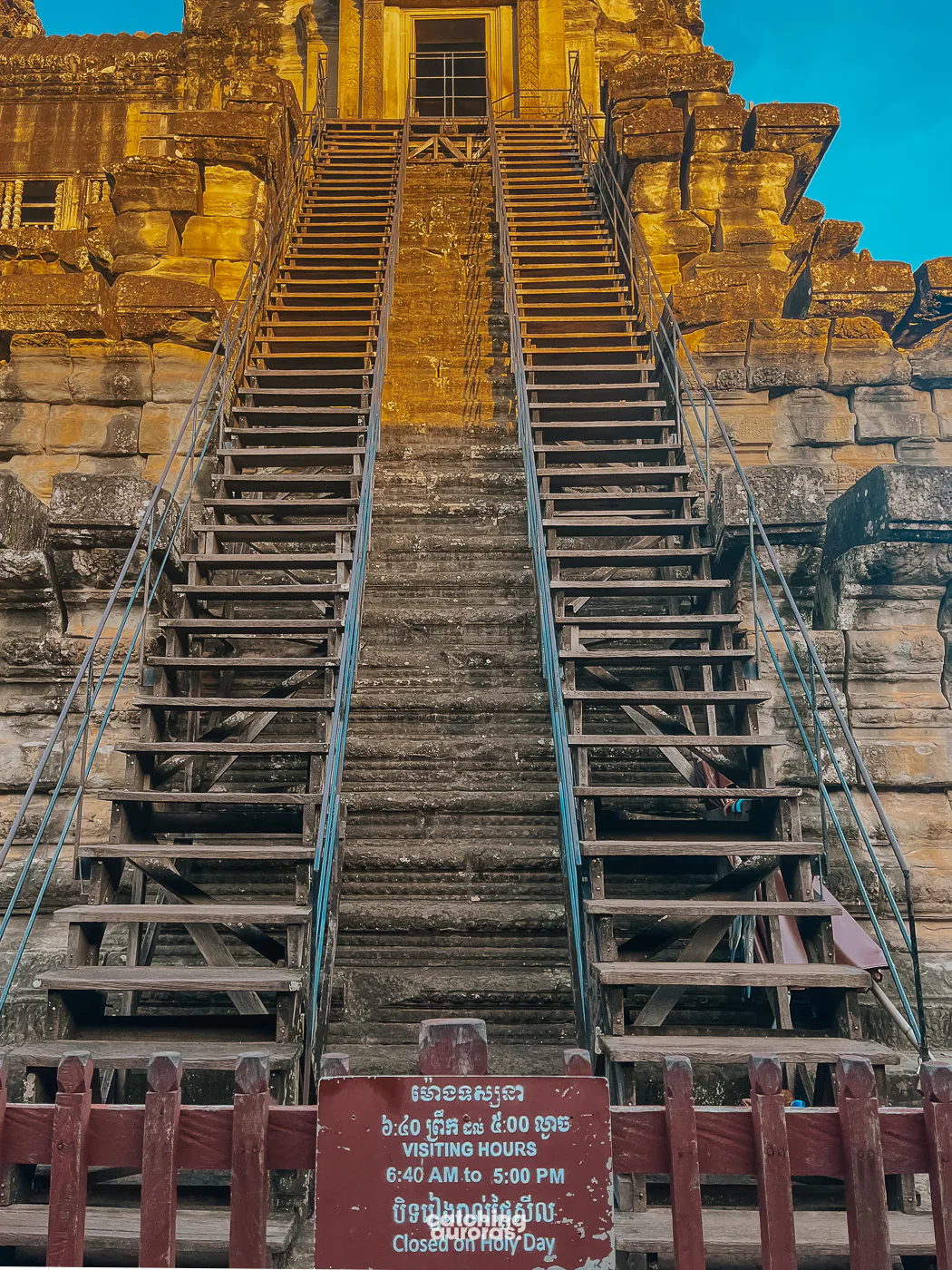
The top level, known as the Bakan, surrounds the central tower. A steep wooden staircase has been fitted over the original stone steps in recent times. From the top, you can look out across the courtyards.
A few rules apply here:
- Numbers are limited, so there may be a queue.
- Dress code is checked strictly. Shoulders and knees covered, no hats.
- Children under 12 aren’t allowed up.
- It is closed from 1 PM on the 14th and 28th of each month for conservation, as officially announced in June 2026. Earlier, it used to be closed on Buddhist holy days, which is no longer the case. It was, unfortunately, closed when we were there.
The four entrances to the central sanctuary, which used to house the statue of Vishnu, are now blocked with sandstone walls carved with standing Buddha figures.
Leave by the east gate
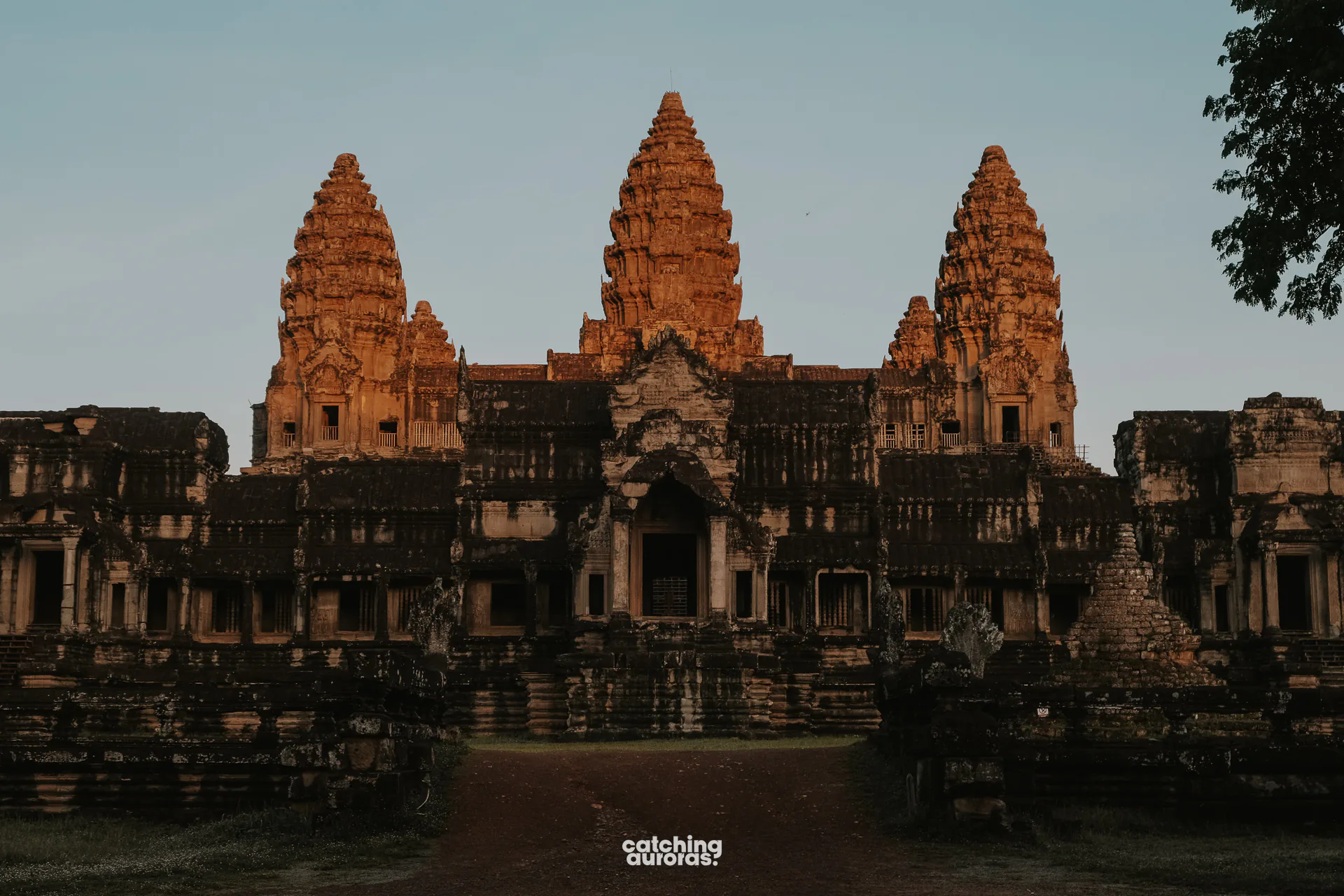
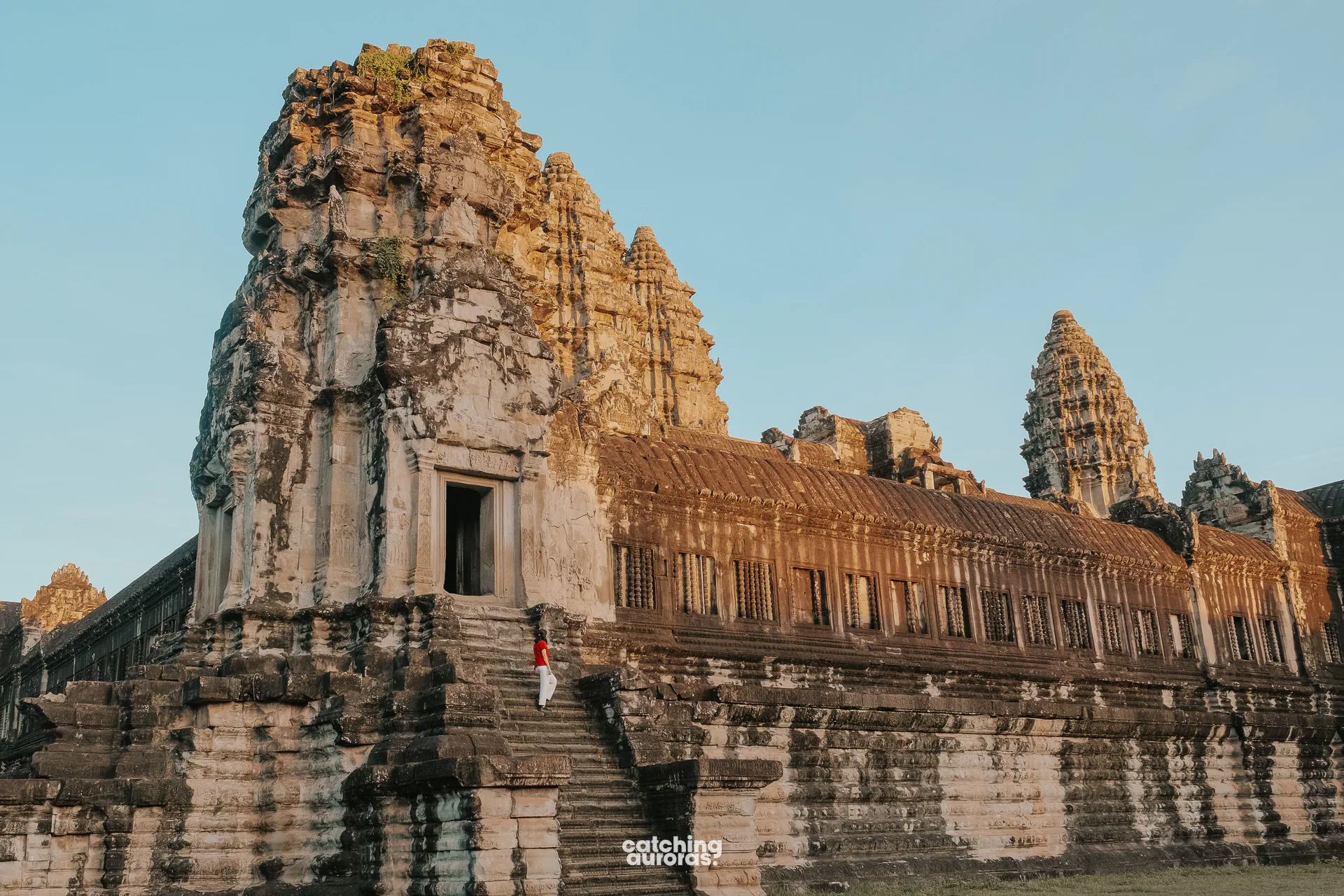
The east entrance is much quieter. If you are short on time, ask your tuk-tuk driver to meet you there and you can skip the walk back along the causeway. You’ll also get a look at the back of the temple, which looks beautiful in the morning light.
The first day we visited Angkor Wat, we chose to enter from the western entrance for that breathtaking first glimpse of the temple. On our second visit, we entered through the east gate because it was much more silent and peaceful and we could take in everything with almost no crowd.
Angkor Wat sunrise
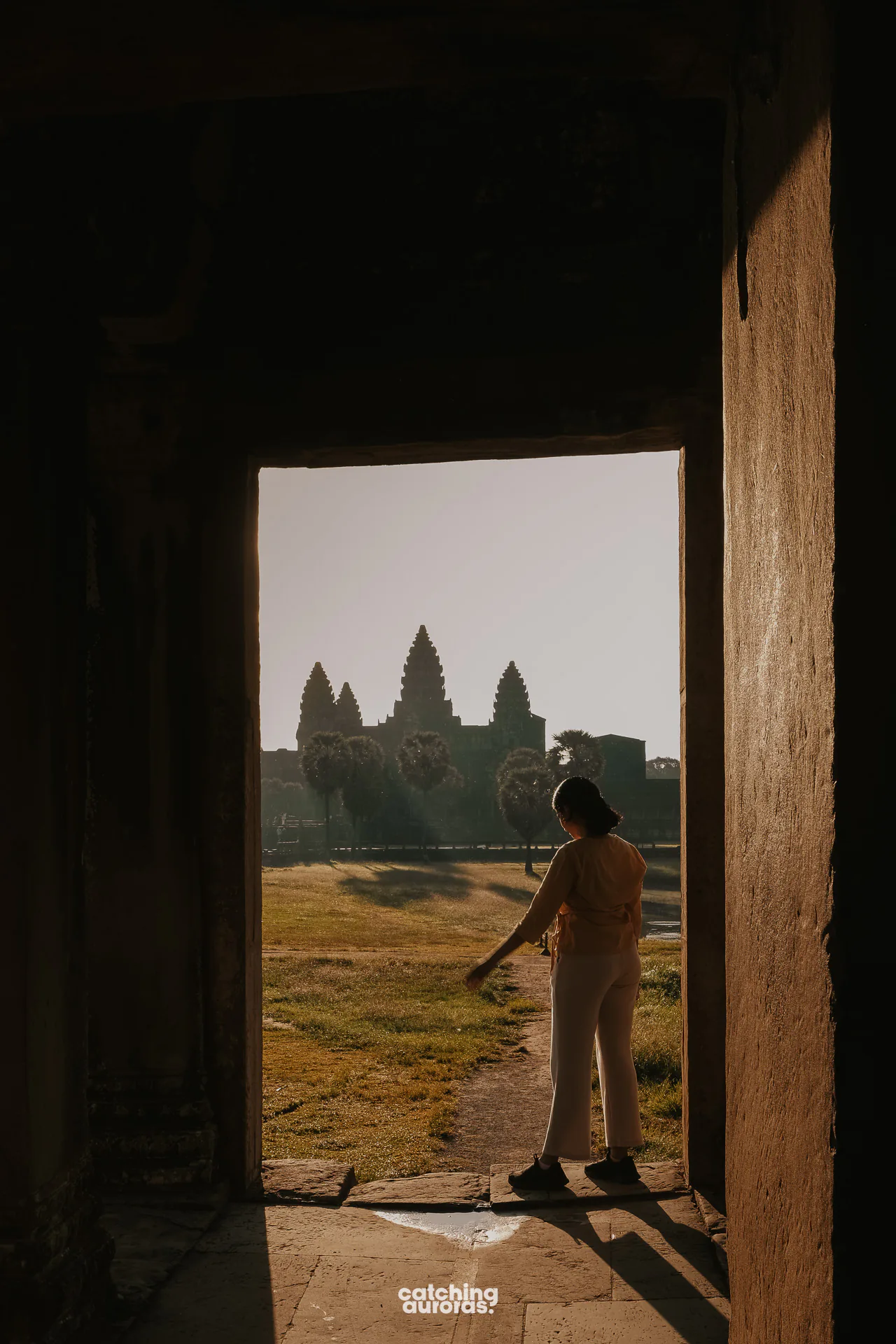
The gates open at 5 AM, and sunrise falls roughly between 5:40 and 6:30 depending on the month. Since the temple faces west, the sun rises behind the towers, making for the perfect silhouette shot.
For a better reflection shot, head to the north pond on the left. Arrive by 5:15 or earlier if you want a spot near the front. When we visited, the north pond was closed, so we headed to the south pond and got our shots. It was definitely worth the 3 AM alarm.
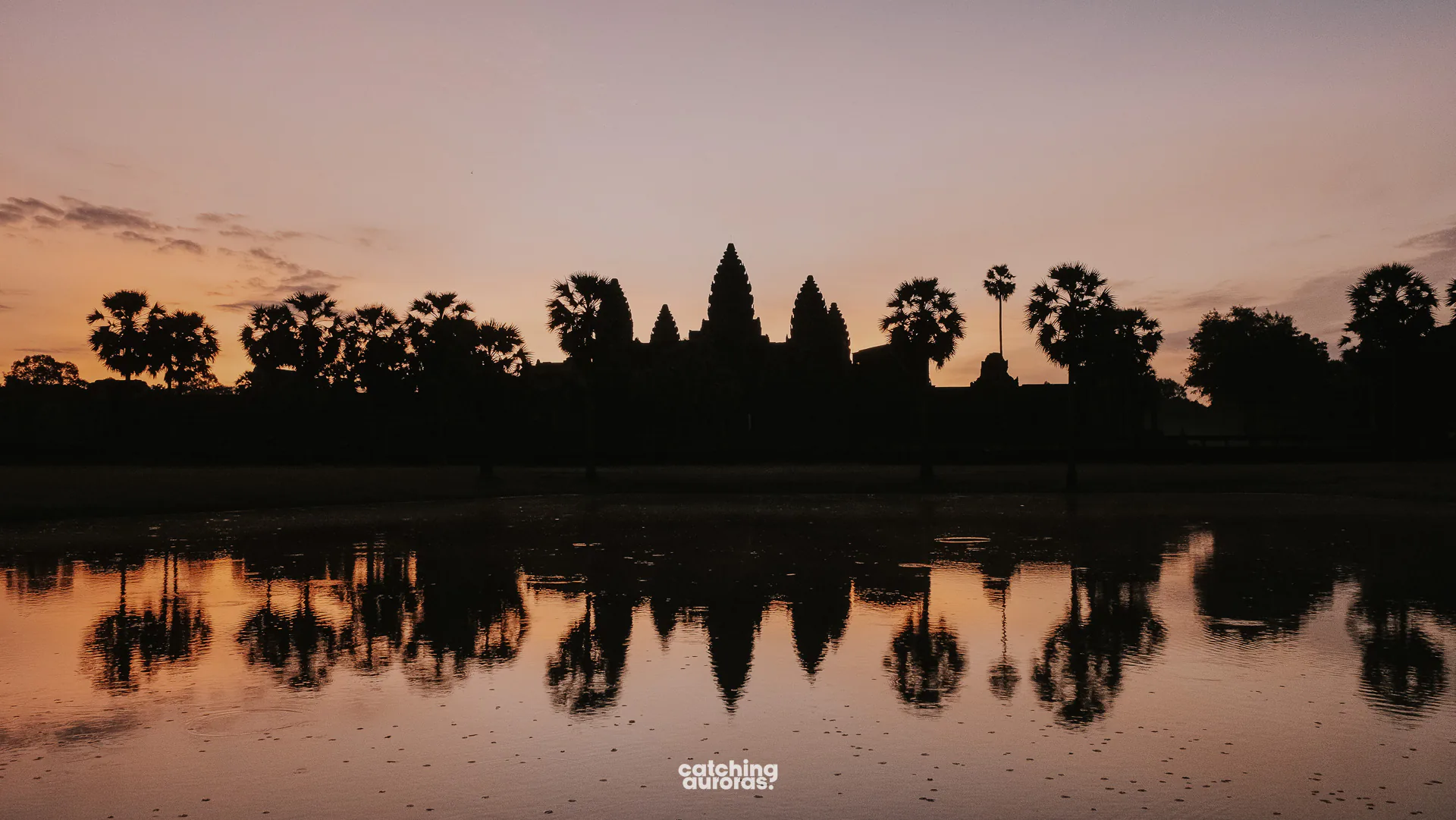
For other sunrise spots and what to bring, see my Angkor Wat sunrise guide.
Best time of day to visit Angkor Wat
- Straight after sunrise (6:30 to 8:30 AM). The crowd is still busy with the sunrise photos or they have headed off for breakfast. This is the best window of the day where there are fewer visitors, the heat is bearable and you can have entire sections to yourself.
- Mid-morning to early afternoon. This is when you will see a lot of tour groups, and the heat is unbearable. Not ideal for photography either since the light is too harsh and the shadows deep.
- Late afternoon (3 to 5:30 PM). Since the temple is west-facing, the front facade is bathed in warm light. It makes for better photographs, and there are also fewer people.
Angkor Wat dress code and temple etiquette
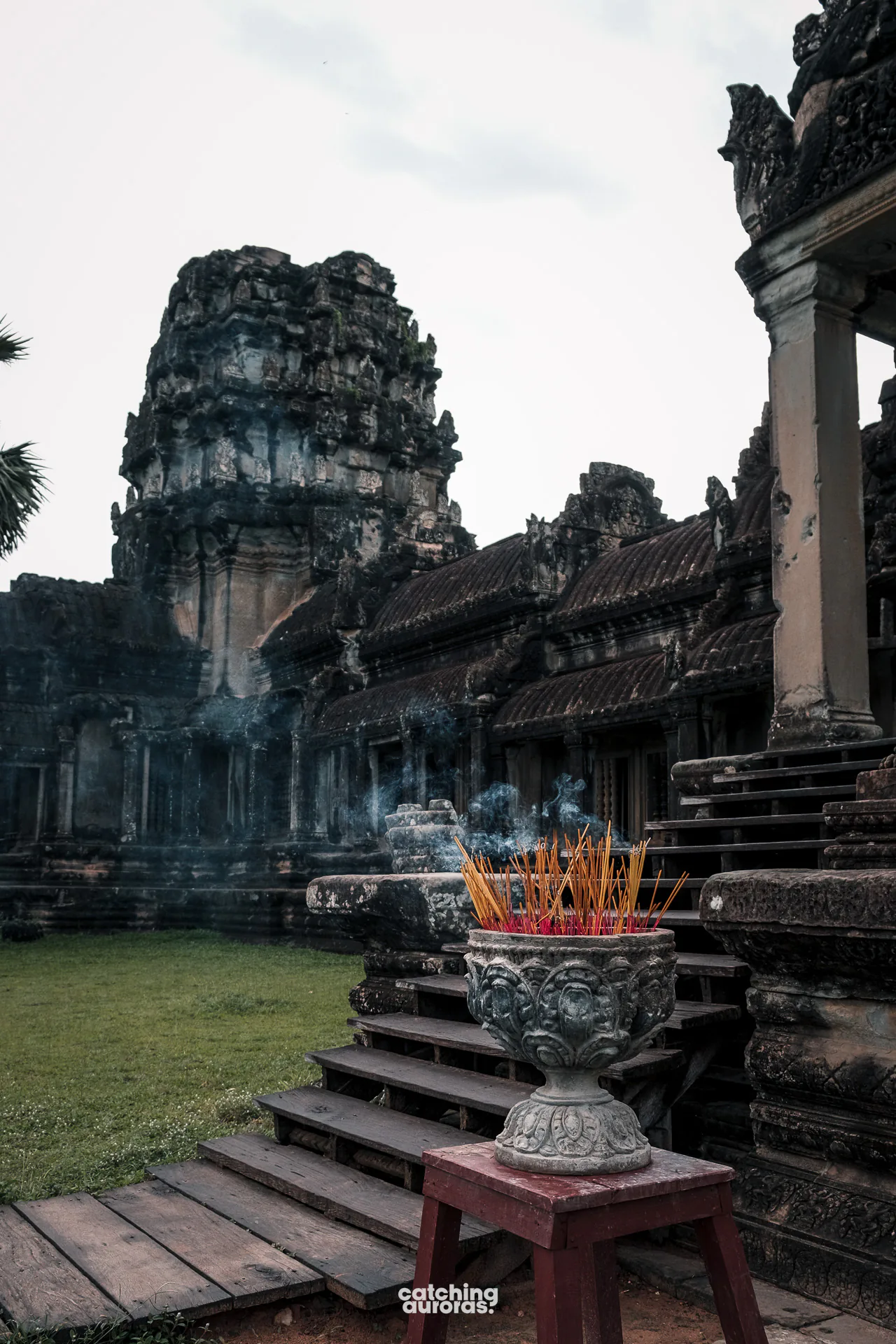
Angkor Wat remains an active Buddhist site, so you may see monks, offerings and people praying during your visit.
What to wear:
- Shoulders and knees covered. This applies to men and women.
- No sleeveless tops or short shorts. A scarf tied over a strappy top may not get you past the Bakan guards.
- Light, loose cotton or linen clothing. You’ll be sweating by 8 AM.
- Shoes with grip. The stairs are steep and the stones uneven.
Etiquette:
- Don’t touch, sit on or lean against carvings. Oils from hands can wear them down.
- No drones allowed without a permit.
- Ask before photographing a monk.
- Don’t buy from children selling souvenirs. The park authorities ask visitors not to, because it keeps kids out of school.
Angkor Wat tips
- Carry water and a snack. Especially if you are here early in the morning. Coffee shops (like Starbucks) have opened at the entrance near the food court area.
- Bring small US dollar notes. Dollars are used everywhere in Cambodia. You’ll need them for buying souvenirs, hiring a guide, or for having a professional photograph taken at the site.
- Use the toilets near the entrance. There are none once you’re inside.
- Don’t do Angkor Wat at noon. I cannot stress this enough. The sun is too harsh for photography and for your sanity.
- You will need more time for the galleries than the towers. This is something we underestimated.
My top tip here would be to arrive early or late in the afternoon when it’s not too hot. You will be sweating through your shirt by 8 AM and will want to forget about the galleries and head out to sit in a cafe instead. Even coming from southern India, I felt Cambodia’s heat was something else.
Best time to visit and how long you need
Best months. November to February is relatively cool and dry by Cambodian standards, with temperatures around 25 to 30°C. It’s also the busiest season. March to May can be very hot, often 35°C or more. During the wet season, from June to October, the ponds are full and the landscape is green. There are fewer visitors, though afternoon downpours are common.
How long you need at Angkor Wat. Allow 2.5 to 3 hours for the long walk in, the galleries, the second level and time in the queue for the Bakan. With sunrise and breakfast, the visit takes about half a day. We visited the temple on three consecutive days and still felt like we missed a few things.
Where to stay in Siem Reap
Siem Reap is small, but your neighbourhood still affects restaurant access, noise and travel time from the historic sites.
| Area | Best for | Trade-off |
|---|---|---|
| Old Market / Pub Street | First-timers, walkable to restaurants | Loud until late |
| Riverside / Wat Bo | Quieter, still walkable to food | A little further from the park |
| Sivatha / Taphul Road | Mid-range and budget hotels, central | Busy roads |
| Charles de Gaulle / Angkor Road | Closest to the park, resort-style hotels | Tuk-tuk needed for dinner |
We stayed for over a week in a rental house in the Krous Village area of Svay Dangkum, a little northwest of central Siem Reap. It was about a 15-minute motorbike ride to Angkor Archaeological Park and a short ride to the market.
After Angkor Wat
Angkor Thom is about 10 minutes to the north of Angkor Wat. Inside the walled city you’ll find the South Gate, the Terrace of the Elephants and Bayon’s famous stone faces. Read more in my Angkor Thom guide.
Ta Prohm, known for the tree roots growing through its ruins, a.k.a the Lara Croft temple, is about 15 minutes to the east. Many visitors pair it with Angkor Wat on their first day.
Whatever stops you choose, make sure you leave a little room in your itinerary to come back. On our first visit to Angkor Wat, we went for the sunrise. The second visit was to take in the details and actually go inside the temple. The third visit wasn’t really planned. The light was beautiful that morning, and as we were riding past the temple, I couldn’t help myself.
The temple has a way of pulling you in over and over again.